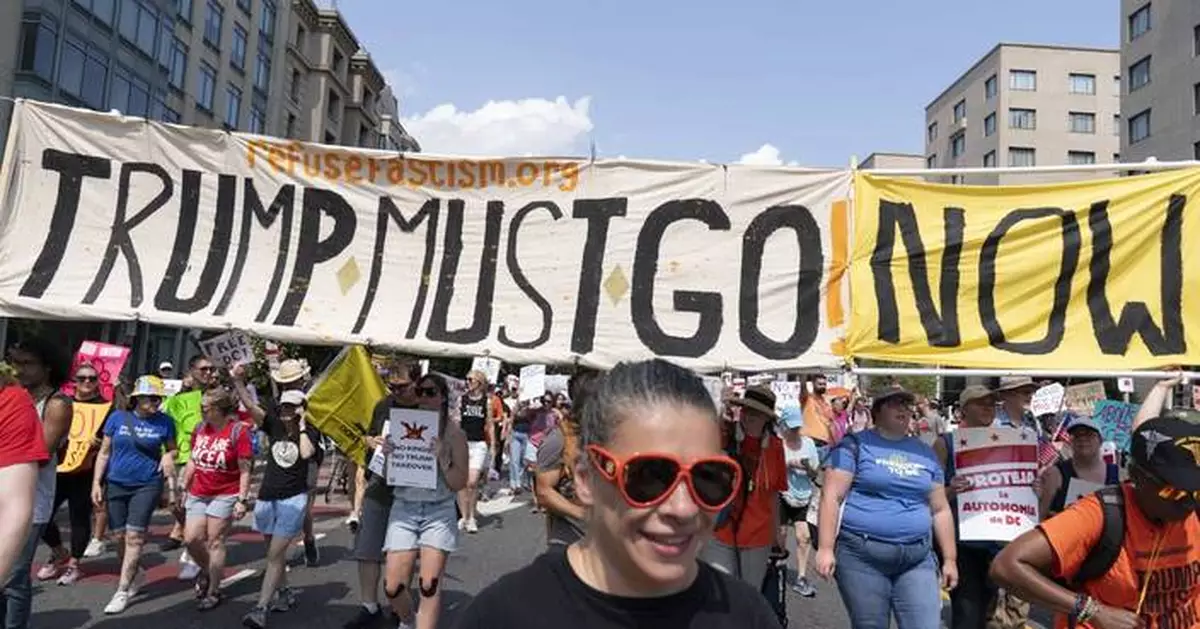
WASHINGTON (AP) — Thousands of protesters marched across Washington, D.C., on Saturday in one of the largest demonstrations against President Donald Trump's federal takeover of policing in the nation’s capital.
Behind a bright red banner reading “END THE D.C. OCCUPATION” in English and Spanish, protesters marched over two miles from Meridian Hill Park to Freedom Plaza near the White House to rail against the fourth week of National Guard troops and federal agents patrolling D.C.’s streets.
Click to Gallery
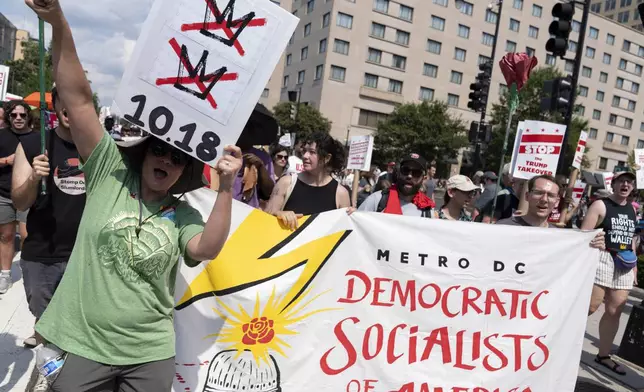
Demonstrators protest against President Donald Trump's deployment of federal law enforcement and National Guard troops in Washington during a march on Saturday, Sept. 6, 2025. (AP Photo/Jose Luis Magana)
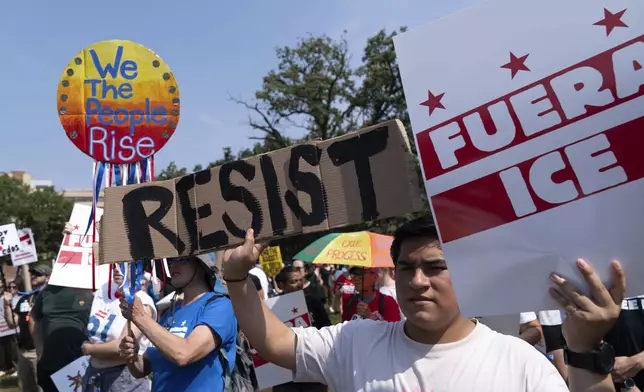
Demonstrators protest against President Donald Trump's deployment of federal law enforcement and National Guard troops in Washington during a march on Saturday, Sept. 6, 2025. (AP Photo/Jose Luis Magana)

Demonstrators protest against President Donald Trump's deployment of federal law enforcement and National Guard troops in Washington on Saturday, Sept. 6, 2025. (AP Photo/Jose Luis Magana)
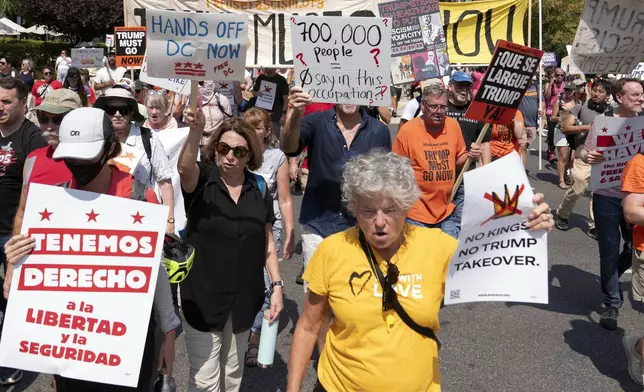
Demonstrators protest against President Donald Trump's deployment of federal law enforcement and National Guard troops in Washington during a march on Saturday, Sept. 6, 2025. (AP Photo/Jose Luis Magana)
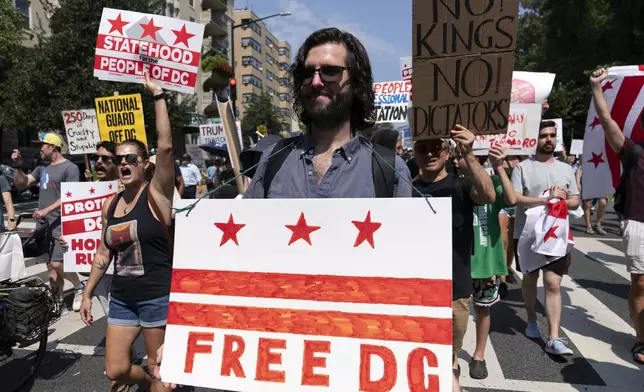
Demonstrators protest against President Donald Trump's deployment of federal law enforcement and National Guard troops in Washington during a march on Saturday, Sept. 6, 2025. (AP Photo/Jose Luis Magana)
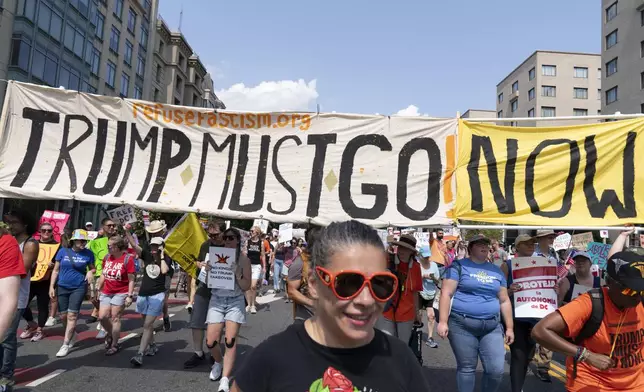
Demonstrators protest against President Donald Trump's deployment of federal law enforcement and National Guard troops in Washington during a march on Saturday, Sept. 6, 2025. (AP Photo/Jose Luis Magana)
The “We Are All D.C.” protest — put together by local advocates of Home Rule and the American Civil Liberties Union — was perhaps the most organized demonstration yet against Trump's federal intervention in Washington. The president justified the action last month as a way to address crime and homelessness in the city, even though city officials have noted that violent crime is lower than it was during Trump’s first term in office.
Trump targeted D.C. after deploying the National Guard to Los Angeles earlier this summer as the administration ramped up its immigration enforcement efforts and attempted to quell protests. The White House then turned to Washington, which presented a unique opportunity for Trump to push his tough-on-crime agenda because of its subservient status to the federal government.
The presence of armed military officers in the streets has put Washington on edge and spurred weeks of demonstrations, particularly in D.C. neighborhoods. Trump’s emergency declaration taking charge of D.C. police is set to expire on Wednesday.
Mark Fitzpatrick, a former U.S. diplomat who has been a D.C. resident for around a decade, told The Associated Press on Saturday that he's worried about the “authoritarian nature” in which the administration is treating D.C.
“Federal agents, national guards patrolling our streets, that’s really an affront to the democracy of our city," he said, adding that it’s worse for D.C. residents due to their lack of federal representation. "We don’t have our own senators or members of the House of Representatives, so we’re at the mercy of a dictator like this, a wanna-be dictator.”
Among the protesters Saturday were also former D.C. residents like Tammy Price, who called the Trump administration's takeover “evil" and “not for the people.”
Jun Lee, a printmaker artist living in Washington, showed up with a “Free DC” sign that she made on a woodcut block. She said she came to the protest because she was “saddened and heartbroken” about the impact of the federal intervention on her city.
“This is my home, and I never, ever thought all the stuff that I watched in a history documentary that I’m actually living in person, and this is why this is important for everyone, this is our home, we need to fight, we need to resist,” she said.
Also on Saturday, Trump repeated threats to add Chicago to the list of other Democratic-led cities he wants to target for expanded federal enforcement. His administration is set to step up immigration enforcement in Chicago, similar to what took place in Los Angeles, and deploy National Guard troops. Like the District of Columbia, Chicago's recent crime data does not reflect the war zones Trump has repeatedly compared it to.
Violent crime in Chicago dropped significantly in the first half of the year, representing the steepest decline in over a decade, according to city data. Shootings are down 37%, and homicides have dropped by 32%, while total violent crime dropped by over 22%.
In response to Trump's threats, Illinois Gov. JB Pritzker, a Democrat, called the president a “wannabe dictator," who is “threatening to go to war with an American city.”
“This is not a joke," Pritzker wrote on X. "This is not normal.”
Amiri reported from New York.
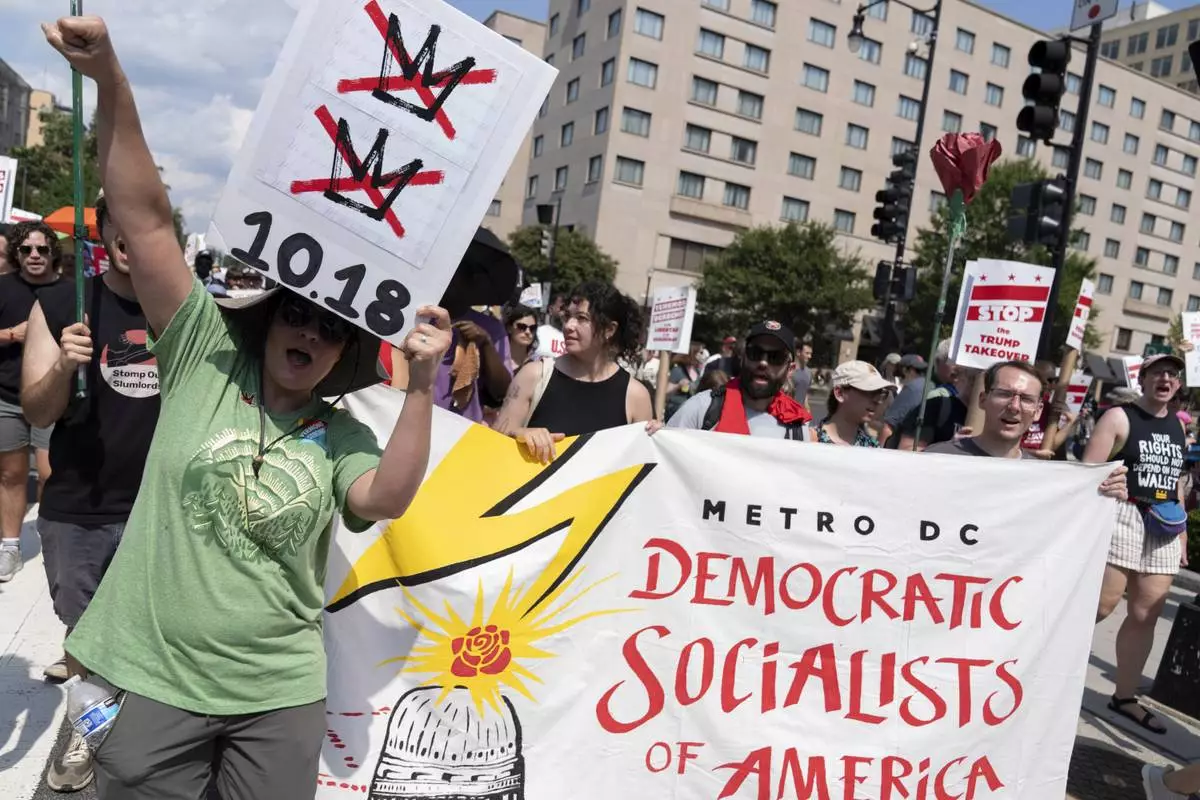
Demonstrators protest against President Donald Trump's deployment of federal law enforcement and National Guard troops in Washington during a march on Saturday, Sept. 6, 2025. (AP Photo/Jose Luis Magana)
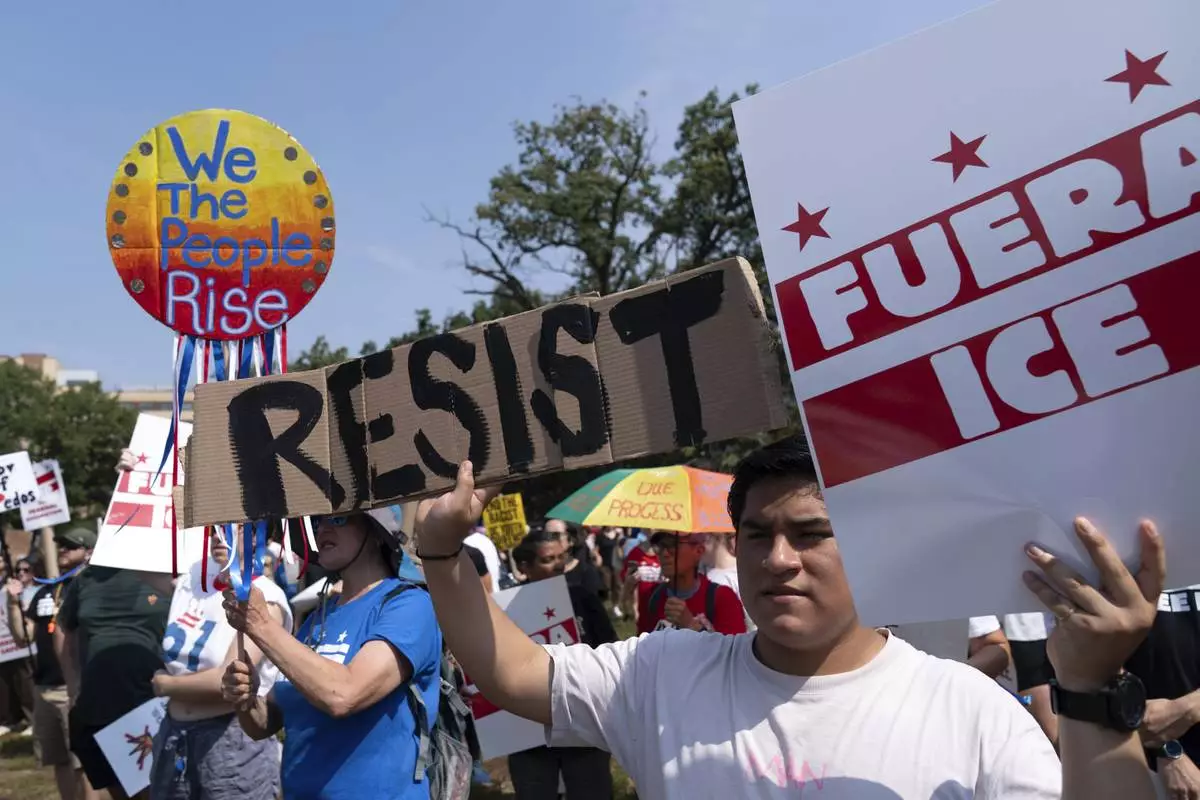
Demonstrators protest against President Donald Trump's deployment of federal law enforcement and National Guard troops in Washington during a march on Saturday, Sept. 6, 2025. (AP Photo/Jose Luis Magana)
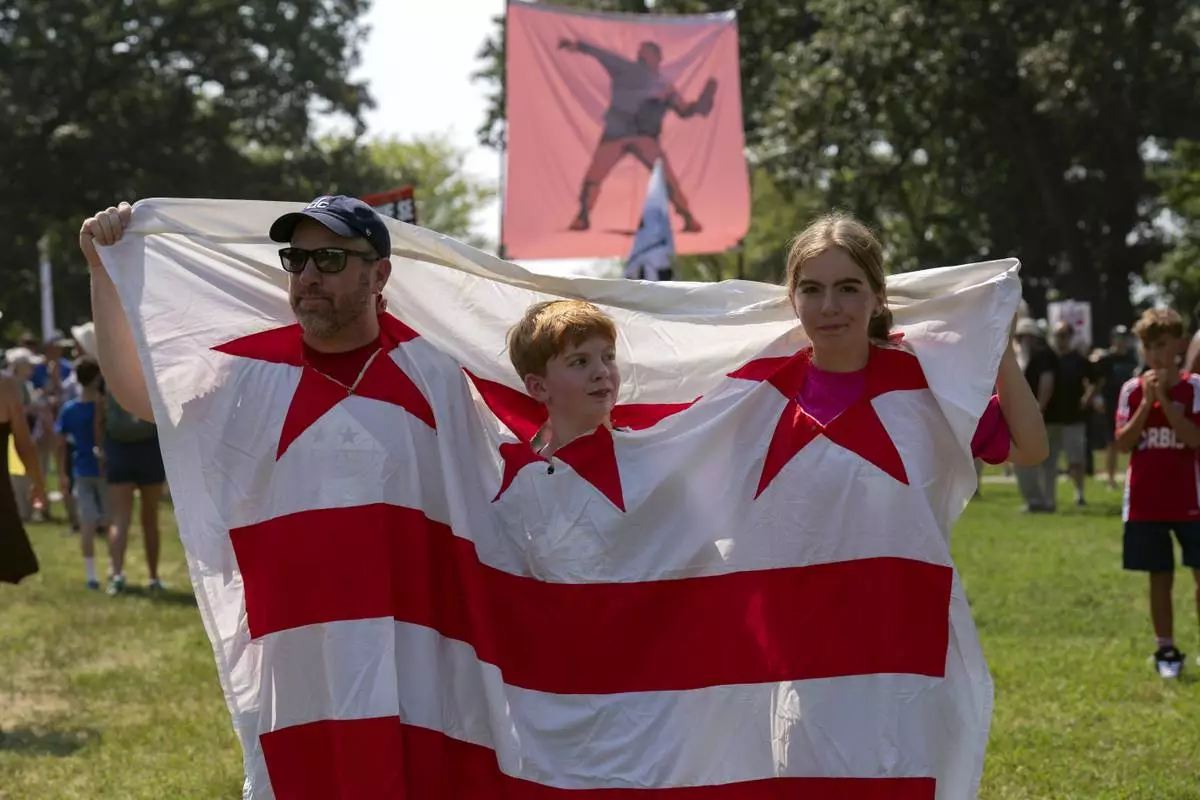
Demonstrators protest against President Donald Trump's deployment of federal law enforcement and National Guard troops in Washington on Saturday, Sept. 6, 2025. (AP Photo/Jose Luis Magana)
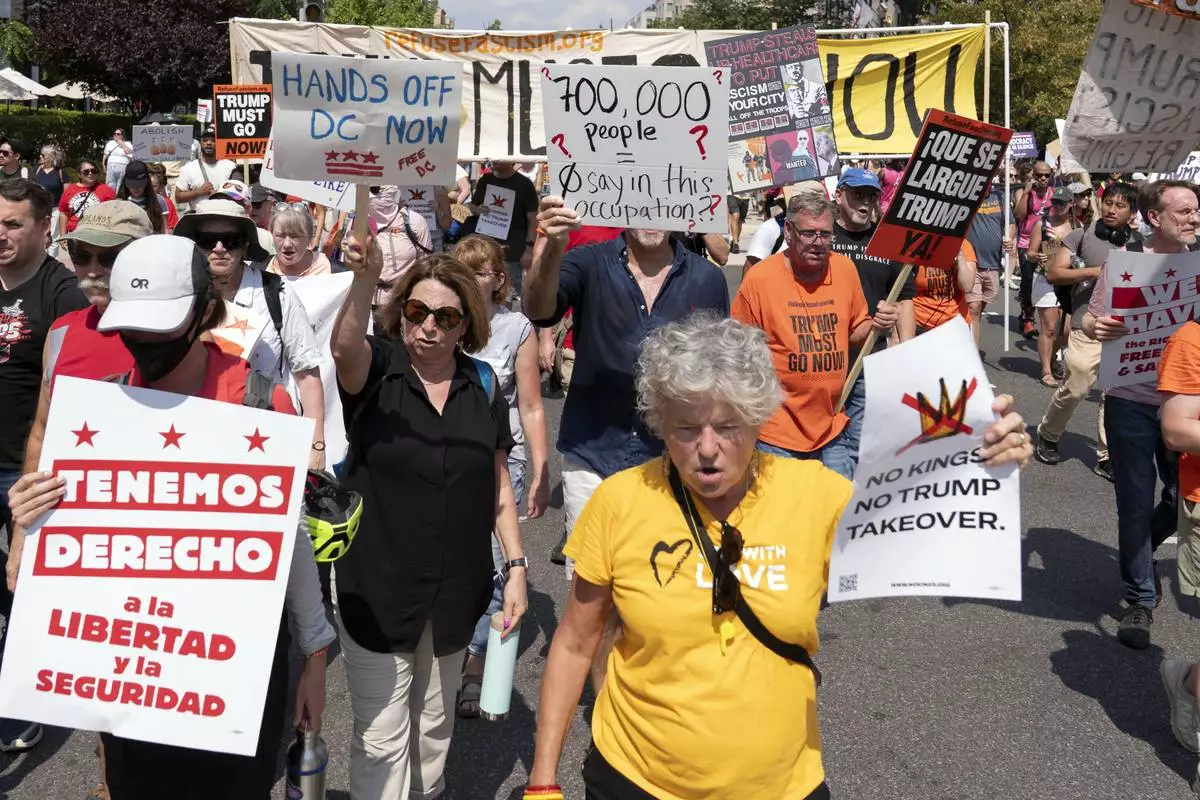
Demonstrators protest against President Donald Trump's deployment of federal law enforcement and National Guard troops in Washington during a march on Saturday, Sept. 6, 2025. (AP Photo/Jose Luis Magana)
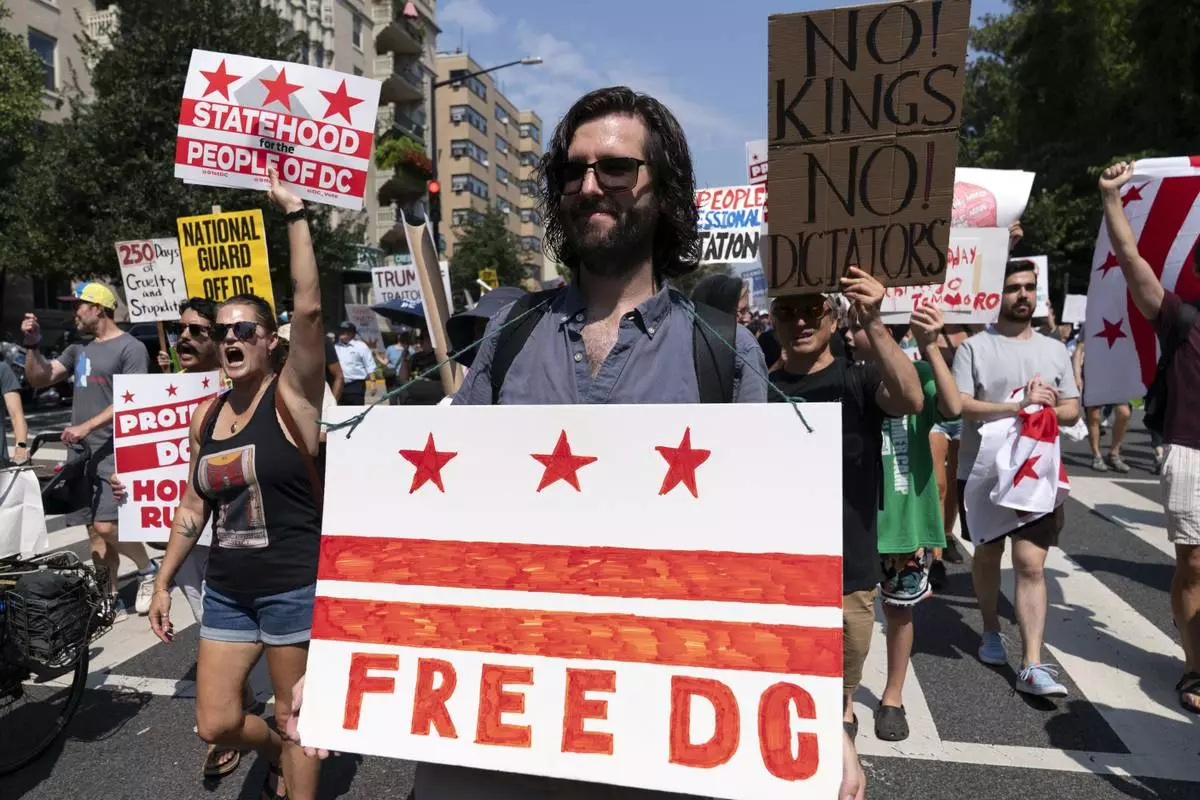
Demonstrators protest against President Donald Trump's deployment of federal law enforcement and National Guard troops in Washington during a march on Saturday, Sept. 6, 2025. (AP Photo/Jose Luis Magana)
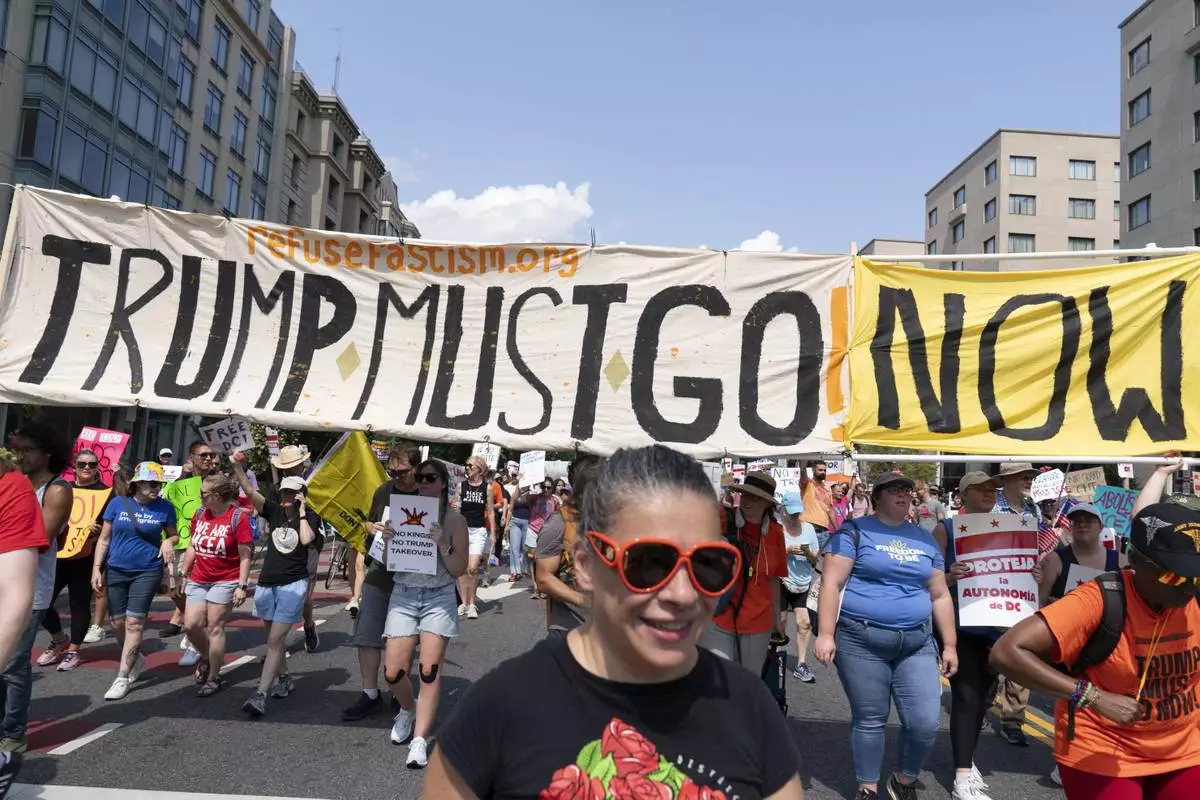
Demonstrators protest against President Donald Trump's deployment of federal law enforcement and National Guard troops in Washington during a march on Saturday, Sept. 6, 2025. (AP Photo/Jose Luis Magana)