LONDON (AP) — U.S. Homeland Security Secretary Kristi Noem said Monday she doesn’t think the detention of hundreds of South Koreans in an immigration raid at a Hyundai plant in Georgia will deter investment in the United States because such tough actions mean there is no uncertainty about the Trump administration’s policies.
The detention of 475 workers, more than 300 of them South Korean, in the Sept. 4 raid has caused confusion, shock and a sense of betrayal among many in the U.S.-allied nation.
Click to Gallery
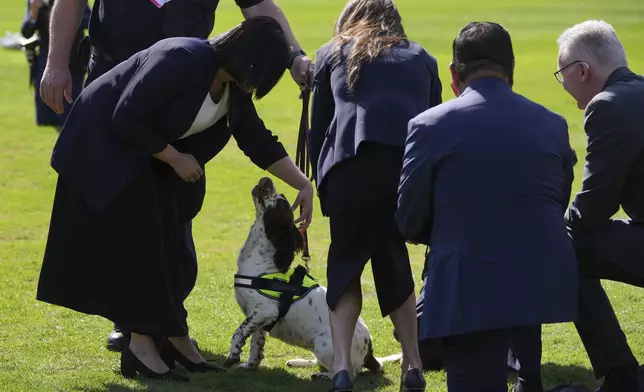
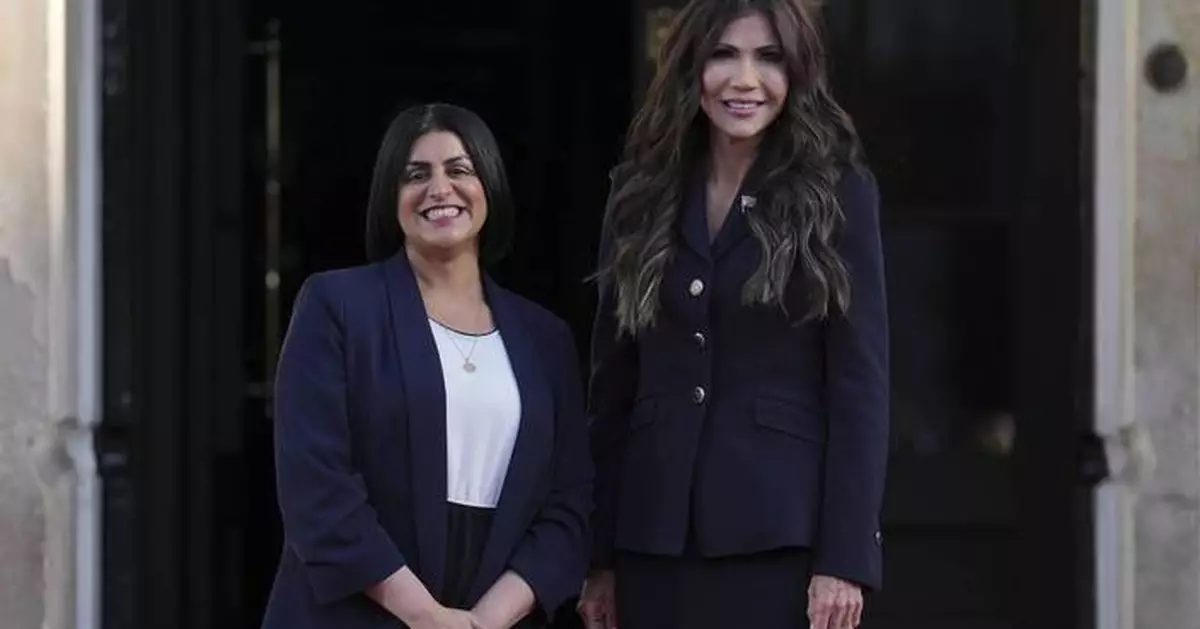
Britain's Home Secretary Shabana Mahmood, left, and United States Homeland Security Secretary Kristi Noem, center, pet a dog during the Five Country Ministerial meeting at the Honourable Artillery Company in London, Monday, Sept. 8, 2025. (AP Photo/Kin Cheung)
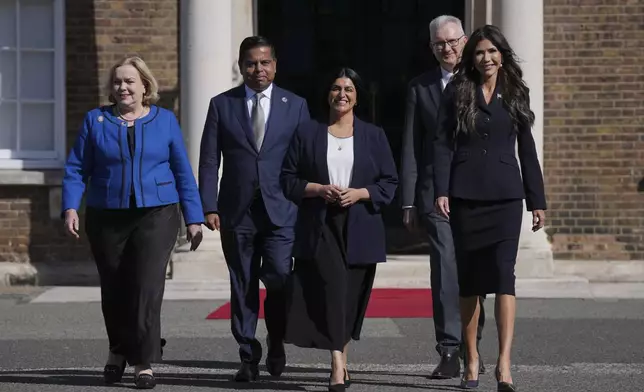
From left, New Zealand's Minister Judith Collins, Canada Minister of Public Safety Gary Anandasangaree, Britain's Home Secretary Shabana Mahmood, Australia Minister for Home Affairs Tony Burke and United States Homeland Security Secretary Kristi Noem arrive for a family photo during the Five Country Ministerial meeting at the Honourable Artillery Company in London, Monday, Sept. 8, 2025 as interior ministers of the UK, US, Canada, Australia and New Zealand will discuss some of the major security threats facing our nations. (AP Photo/Kin Cheung)
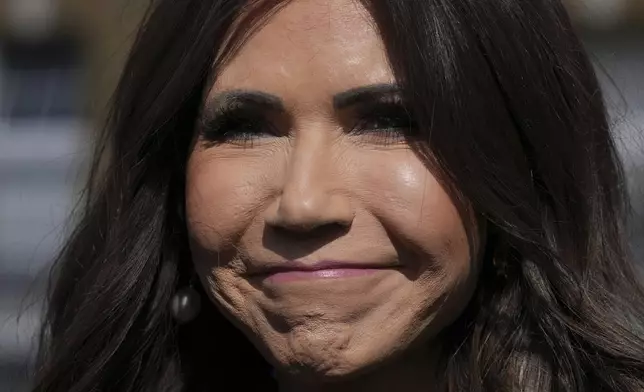
United States Homeland Security Secretary Kristi Noem speaks to media during the Five Country Ministerial meeting at the Honourable Artillery Company in London, Monday, Sept. 8, 2025 as interior ministers of the UK, US, Canada, Australia and New Zealand will discuss some of the major security threats facing their nations. (AP Photo/Kin Cheung)
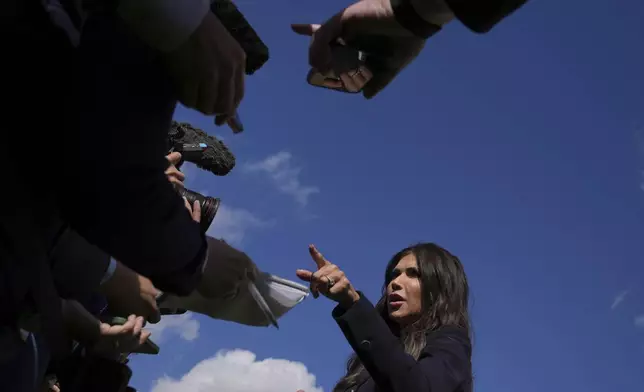
United States Secretary of Homeland Security Kristi Noem speaks to the media during the Five Country Ministerial meeting at the Honourable Artillery Company in London, Monday, Sept. 8, 2025. (AP Photo/Kin Cheung)
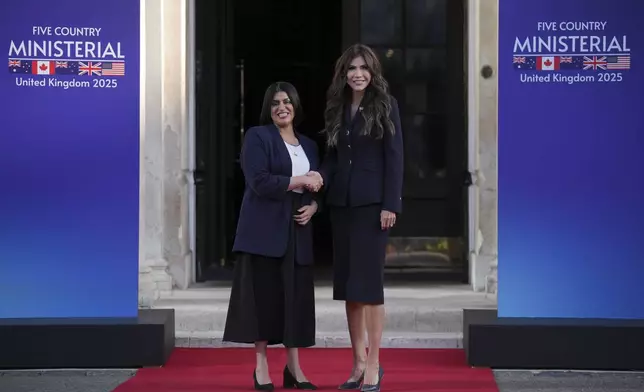
Britain's Home Secretary Shabana Mahmood, left, greets United States Homeland Security Secretary Kristi Noem prior to the Five Country Ministerial meeting at the Honourable Artillery Company in London, Monday, Sept. 8, 2025 as interior ministers of the UK, US, Canada, Australia and New Zealand will discuss some of the major security threats facing our nations. (AP Photo/Kin Cheung)
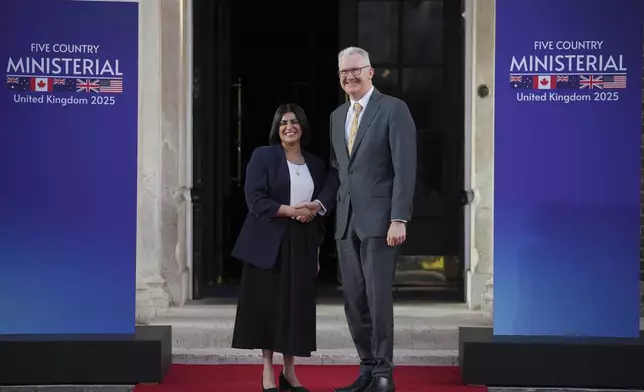
Britain's Home Secretary Shabana Mahmood, left, greets Australia Minister for Home Affairs Tony Burke prior to the Five Country Ministerial meeting at the Honourable Artillery Company in London, Monday, Sept. 8, 2025 as interior ministers of the UK, US, Canada, Australia and New Zealand will discuss some of the major security threats facing our nations. (AP Photo/Kin Cheung)
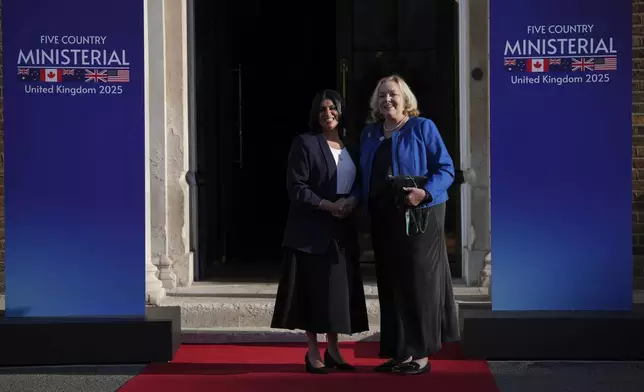
Britain's Home Secretary Shabana Mahmood, left, greets New Zealand's Minister Judith Collins prior to the Five Country Ministerial meeting at the Honourable Artillery Company in London, Monday, Sept. 8, 2025 as interior ministers of the UK, US, Canada, Australia and New Zealand will discuss some of the major security threats facing our nations. (AP Photo/Kin Cheung)
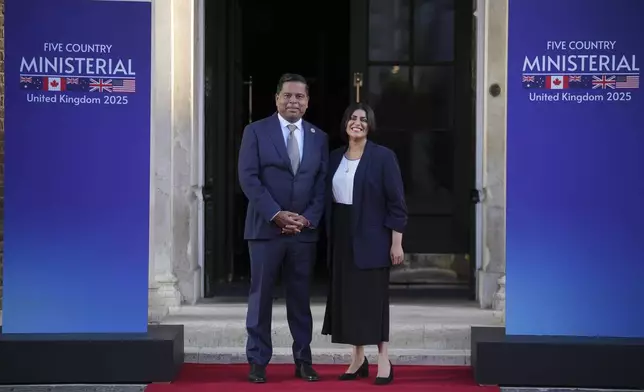
Britain's Home Secretary Shabana Mahmood, right, greets Canada Minister of Public Safety Gary Anandasangaree prior to the Five Country Ministerial meeting at the Honourable Artillery Company in London, Monday, Sept. 8, 2025 as interior ministers of the UK, US, Canada, Australia and New Zealand will discuss some of the major security threats facing our nations. (AP Photo/Kin Cheung)

Britain's Home Secretary Shabana Mahmood, left, greets United States Homeland Security Secretary Kristi Noem prior to the Five Country Ministerial meeting at the Honourable Artillery Company in London, Monday, Sept. 8, 2025 as interior ministers of the UK, US, Canada, Australia and New Zealand will discuss some of the major security threats facing our nations. (AP Photo/Kin Cheung)
“This is a great opportunity for us to make sure that all companies are reassured that when you come to the United States, you’ll know what the rules of the game are,” Noem said at a meeting in London of ministers from the “Five Eyes” intelligence-sharing partnership focused on border security.
“We’re encouraging all companies who want to come to the United States and help our economy and employ people, that we encourage them to employ U.S. citizens and to bring people to our country that want to follow our laws and work here the right way,” she told reporters.
The detained Koreans would be deported after most were detained for ignoring removal orders, while “a few” had engaged in other criminal activity and will “face the consequences," Noem said.
Newly appointed U.K. Home Secretary Shabana Mahmood welcomed Noem and ministers from Canada, Australia and New Zealand to the 18th-century headquarters of the Honourable Artillery Company for talks on countering unauthorized migration, child sexual abuse and the spread of opioids.
Mahmood, who was given the interior minister job in a shakeup of Prime Minister Keir Starmer’s Cabinet on Friday, said the ministers would “agree new measures to protect our borders with our Five Eyes partners, hitting people-smugglers hard.”
The far-flung countries are close allies with some common problems but also widely differ in their approaches to migration. The Trump administration’s program of street raids, mass detentions and large-scale deportations of unauthorized migrants has drawn domestic and international criticism and a host of legal challenges.
Noem said there had not been disagreements among the ministers in talks focused on sharing information on criminal gangs, using technology to disrupt their networks and speeding extradition arrangements.
“I don’t think that the discussion today has covered politics at all,” she said. “It is what resources do we have that we can share so we can each protect our countries better?”
Noem said that “when we put tough measures in place, the more that we can talk about that and share that is an inspiration to other countries to do the same.”
She denied a plan to expand immigration raids and deploy the National Guard in Chicago, which has met with opposition from local and state authorities, was on hold.
“Nothing’s on hold. Everything is full speed ahead,” Noem told reporters, saying “we can run as many operations every single day as we need to, to keep America safe.”
Also attending Monday's talks were Canadian Public Safety Minister Gary Anandasangaree, Australia’s Home Affairs Minister Tony Burke and Judith Collins, the attorney general and defense minister of New Zealand.
Britain’s center-left Labour government is struggling to bring down the number of migrants crossing the English Channel in small boats, some 30,000 so far this year. It faces calls from opposition parties to leave the European Convention on Human Rights in order to take tougher action.
The government says it won’t do that, but may tweak the interpretation of the rights convention in British law. It has struck a deal with France to return some migrants who cross the channel and is working on similar agreements with other countries.
Mahmood said Monday that the U.K. could suspend issuing visas to people from countries that do not agree to take back their citizens with no right to remain in Britain, though she did not name any potential countries.
“We do expect countries to play ball, play by the rules, and if one of your citizens has no right to be in our country, you do need to take them back,” she said.
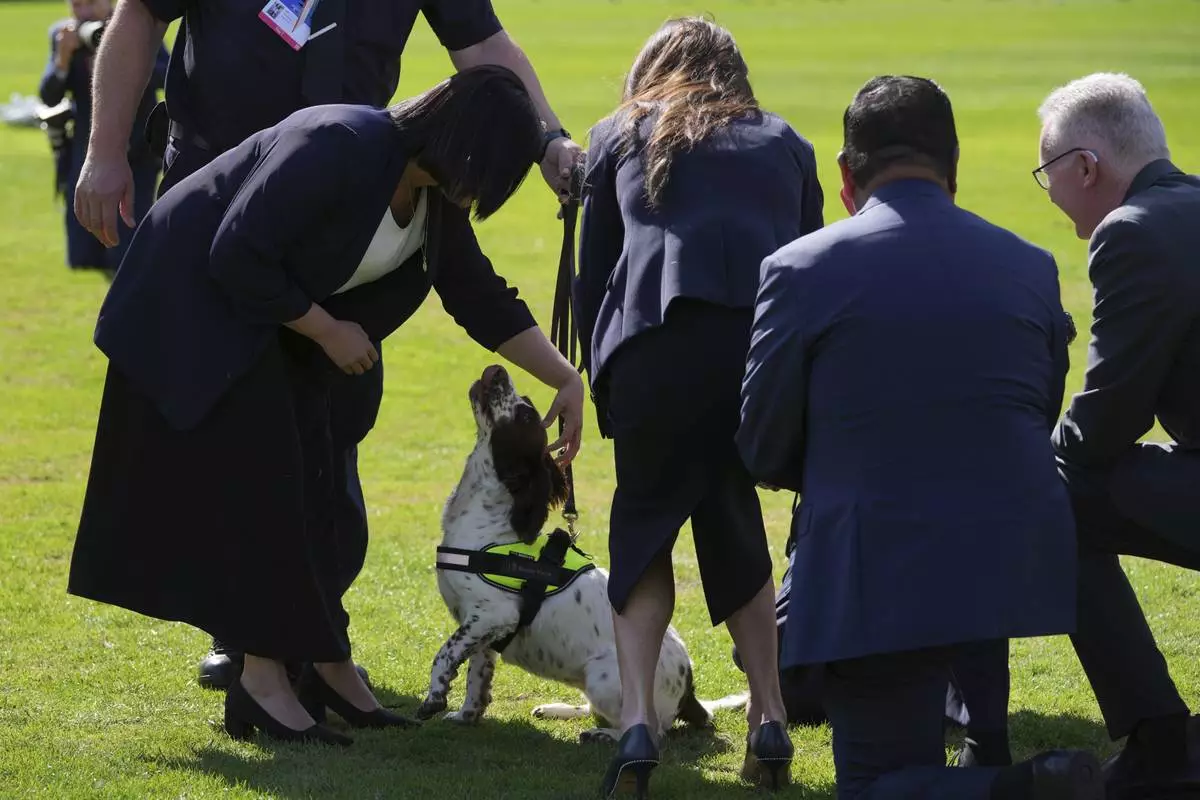
Britain's Home Secretary Shabana Mahmood, left, and United States Homeland Security Secretary Kristi Noem, center, pet a dog during the Five Country Ministerial meeting at the Honourable Artillery Company in London, Monday, Sept. 8, 2025. (AP Photo/Kin Cheung)

From left, New Zealand's Minister Judith Collins, Canada Minister of Public Safety Gary Anandasangaree, Britain's Home Secretary Shabana Mahmood, Australia Minister for Home Affairs Tony Burke and United States Homeland Security Secretary Kristi Noem arrive for a family photo during the Five Country Ministerial meeting at the Honourable Artillery Company in London, Monday, Sept. 8, 2025 as interior ministers of the UK, US, Canada, Australia and New Zealand will discuss some of the major security threats facing our nations. (AP Photo/Kin Cheung)
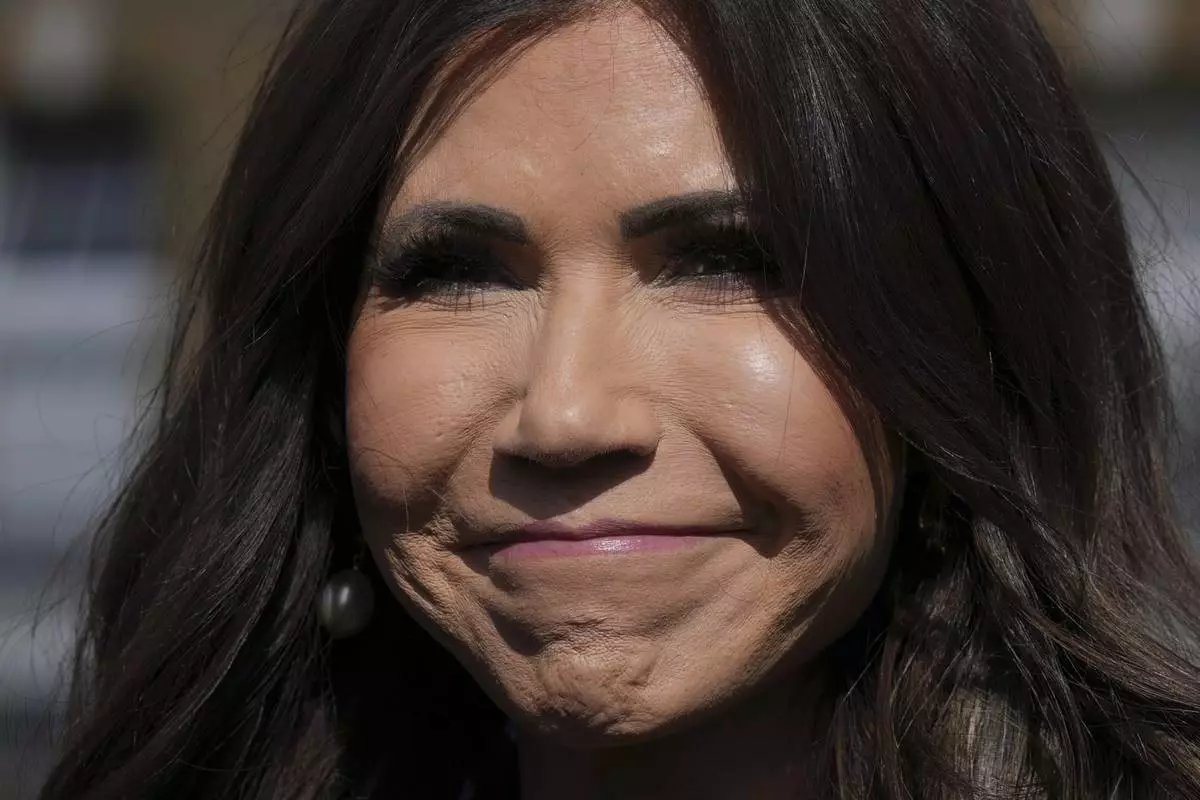
United States Homeland Security Secretary Kristi Noem speaks to media during the Five Country Ministerial meeting at the Honourable Artillery Company in London, Monday, Sept. 8, 2025 as interior ministers of the UK, US, Canada, Australia and New Zealand will discuss some of the major security threats facing their nations. (AP Photo/Kin Cheung)
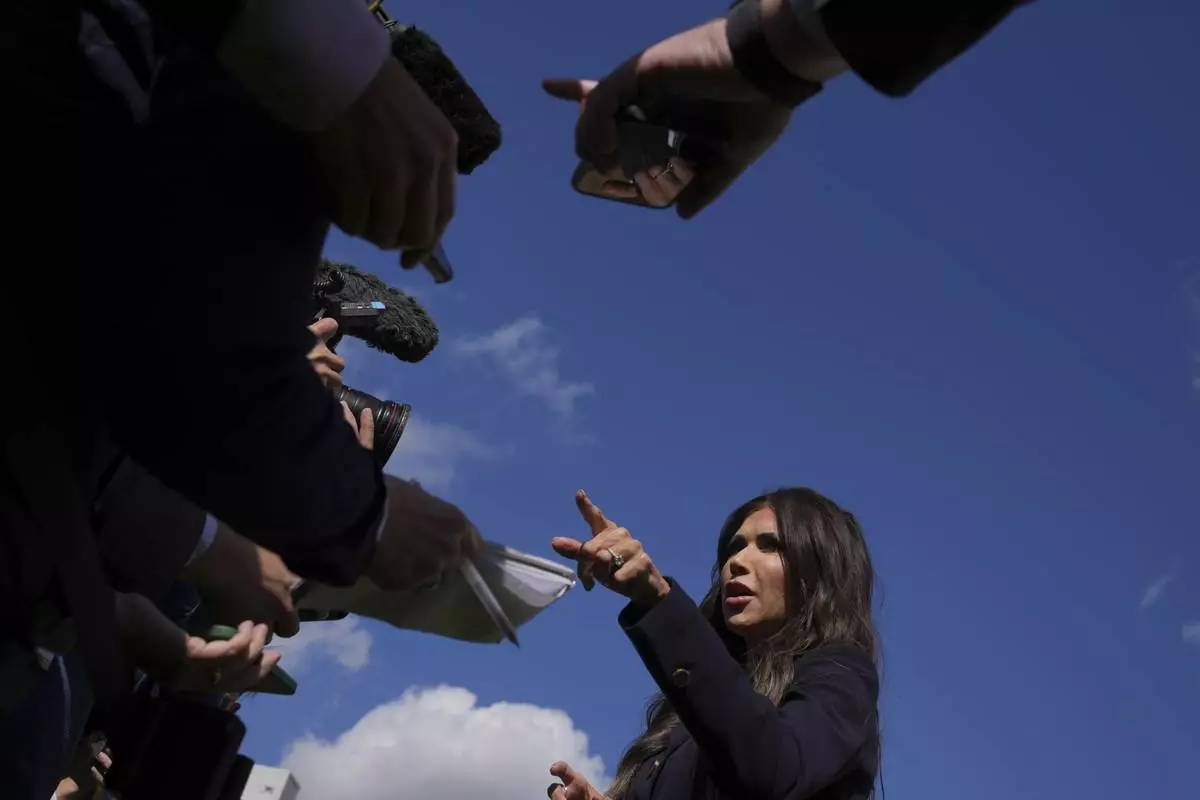
United States Secretary of Homeland Security Kristi Noem speaks to the media during the Five Country Ministerial meeting at the Honourable Artillery Company in London, Monday, Sept. 8, 2025. (AP Photo/Kin Cheung)
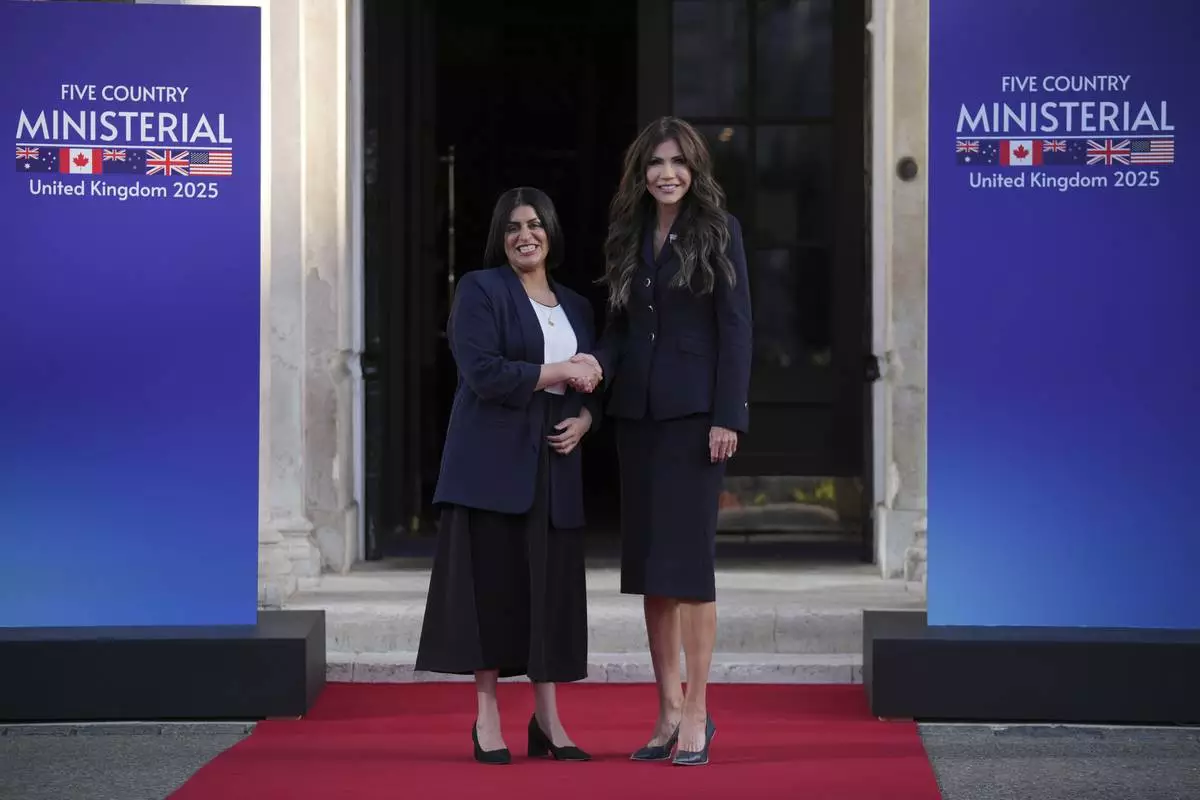
Britain's Home Secretary Shabana Mahmood, left, greets United States Homeland Security Secretary Kristi Noem prior to the Five Country Ministerial meeting at the Honourable Artillery Company in London, Monday, Sept. 8, 2025 as interior ministers of the UK, US, Canada, Australia and New Zealand will discuss some of the major security threats facing our nations. (AP Photo/Kin Cheung)
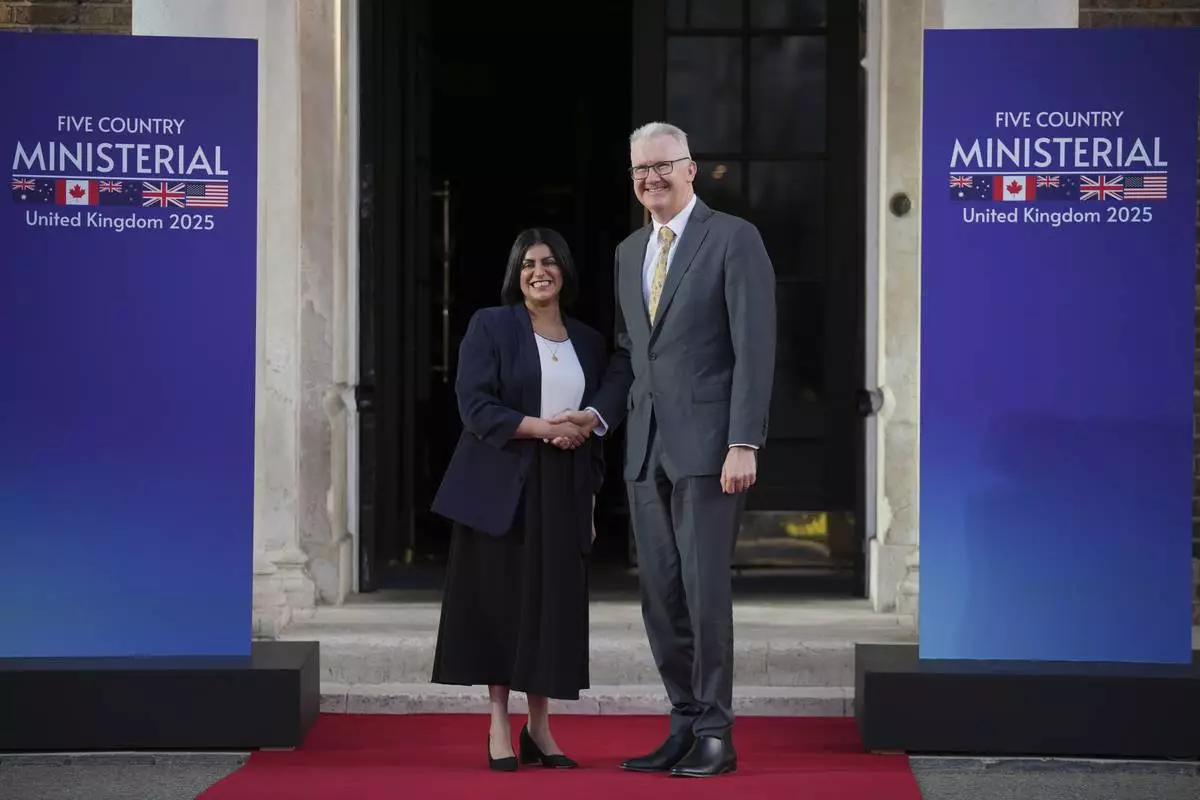
Britain's Home Secretary Shabana Mahmood, left, greets Australia Minister for Home Affairs Tony Burke prior to the Five Country Ministerial meeting at the Honourable Artillery Company in London, Monday, Sept. 8, 2025 as interior ministers of the UK, US, Canada, Australia and New Zealand will discuss some of the major security threats facing our nations. (AP Photo/Kin Cheung)
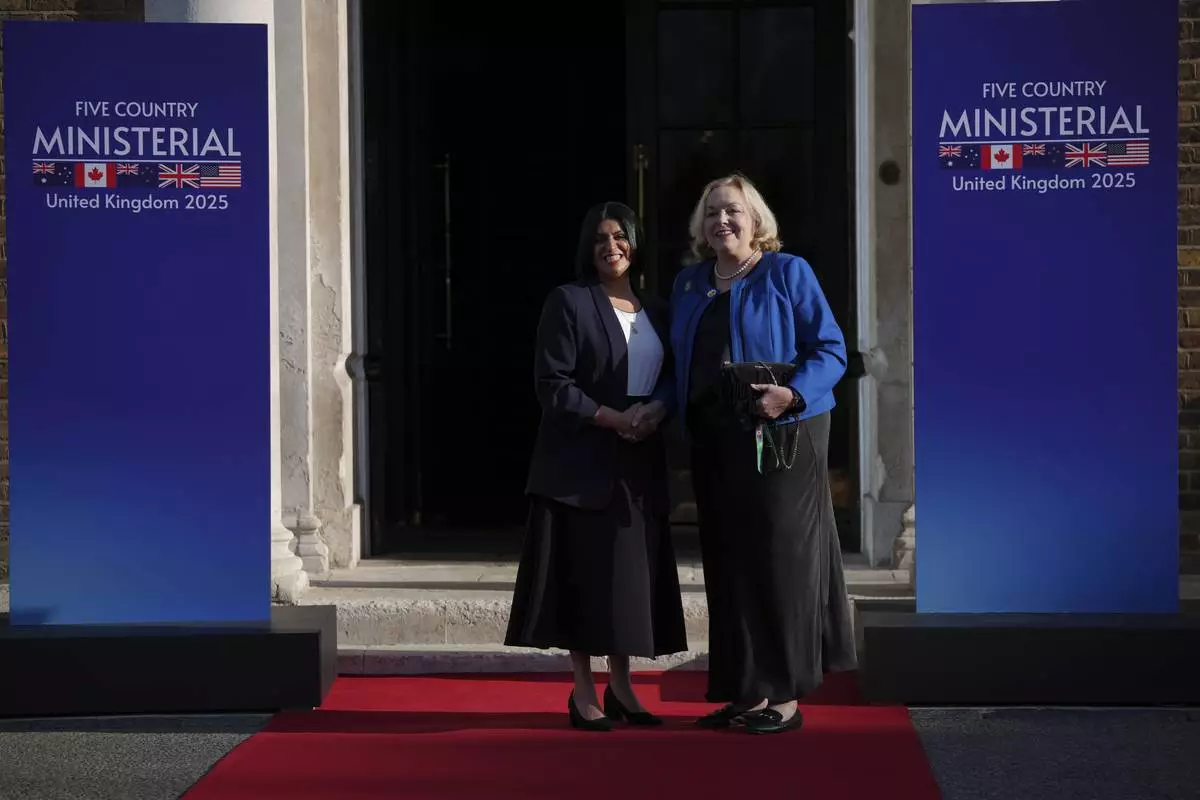
Britain's Home Secretary Shabana Mahmood, left, greets New Zealand's Minister Judith Collins prior to the Five Country Ministerial meeting at the Honourable Artillery Company in London, Monday, Sept. 8, 2025 as interior ministers of the UK, US, Canada, Australia and New Zealand will discuss some of the major security threats facing our nations. (AP Photo/Kin Cheung)
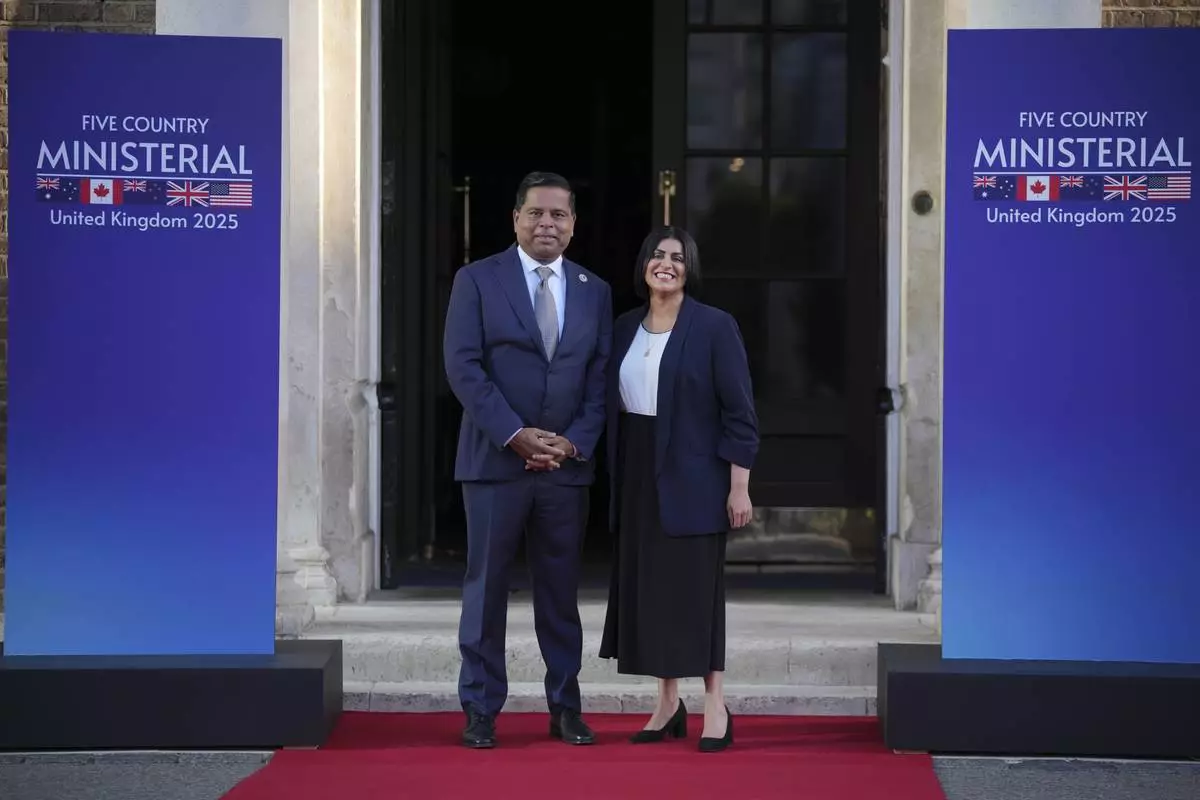
Britain's Home Secretary Shabana Mahmood, right, greets Canada Minister of Public Safety Gary Anandasangaree prior to the Five Country Ministerial meeting at the Honourable Artillery Company in London, Monday, Sept. 8, 2025 as interior ministers of the UK, US, Canada, Australia and New Zealand will discuss some of the major security threats facing our nations. (AP Photo/Kin Cheung)
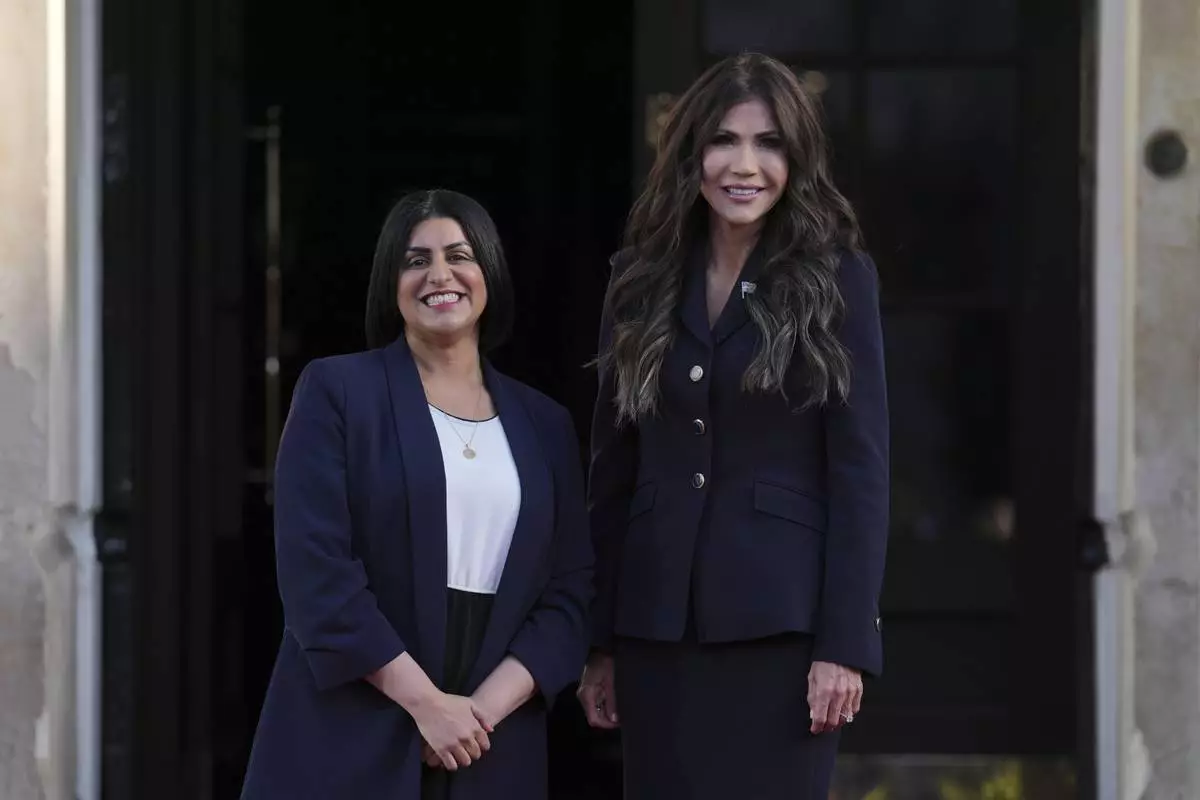
Britain's Home Secretary Shabana Mahmood, left, greets United States Homeland Security Secretary Kristi Noem prior to the Five Country Ministerial meeting at the Honourable Artillery Company in London, Monday, Sept. 8, 2025 as interior ministers of the UK, US, Canada, Australia and New Zealand will discuss some of the major security threats facing our nations. (AP Photo/Kin Cheung)