NEW YORK--(BUSINESS WIRE)--Jan 14, 2026--
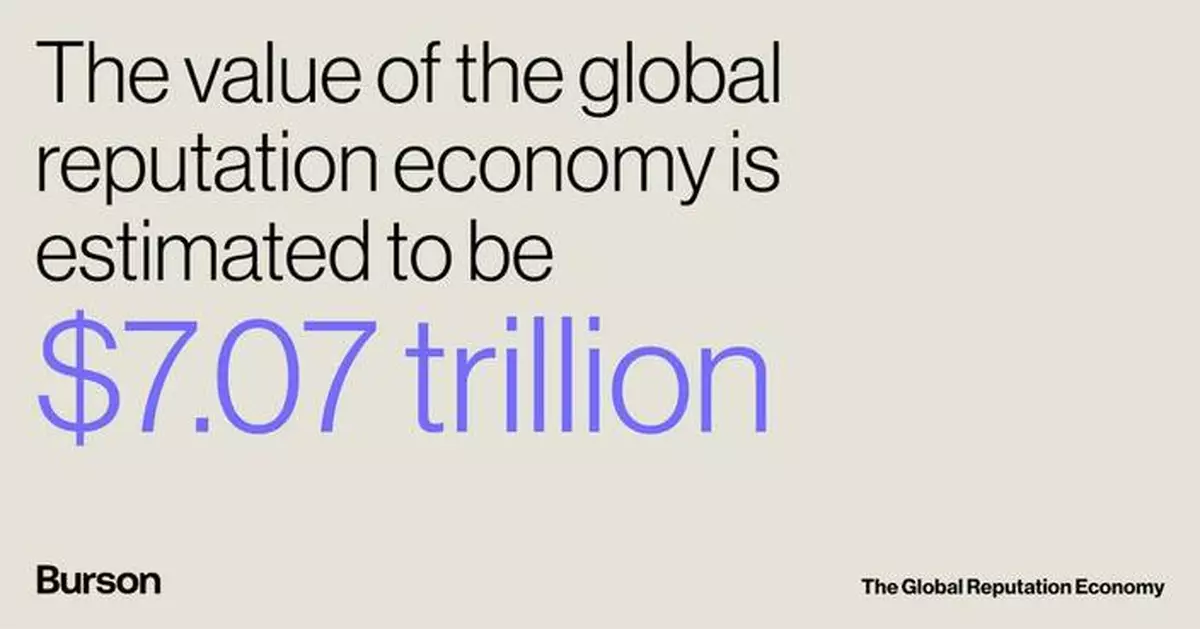
Corporate reputation now has measurable value: companies with strong reputations can realize as much as 4.78% in additional unexpected annual shareholder returns, creating a global "Reputation Economy" worth an estimated $7.07 trillion, according to a landmark new study from Burson.
This press release features multimedia. View the full release here: https://www.businesswire.com/news/home/20260113192212/en/
The research, “The Global Reputation Economy: A New Asset Class for a New Era,” has successfully quantified the financial value of reputation, moving it from a soft concept to a hard asset. The analysis found that among the companies studied, the magnitude of this “reputation return” could add anywhere from $2 million to as much as $202 billion in unexpected shareholder returns, above what would be expected strictly from standard financial performance metrics.
“For decades, leaders have known intuitively that reputation matters, but they’ve never been able to quantify it as a financial asset; now, we can,” said Corey duBrowa, Global CEO, Burson. “Our research shows that reputation is an interconnected system that, when rigorously managed, can yield billions in measurable returns, build resilience against shocks, and give leaders the confidence to make bold moves. A strong reputation that can deliver financial impact goes well beyond the simple binary of trust.”
The New Reputational Battleground: AI and the Workplace
While reputation leaders excel across the board, the research identified the workplace as presenting both a significant opportunity and challenge. Though ranked lowest in terms of perceived importance (11%) among the eight drivers of reputation in the study, it showed a performance gap of 11.8% between the top performing and worst performing companies in the research.
The study warns this gap may become a crisis for companies that mishandle the integration of artificial intelligence.
“Businesses must go beyond having an ‘AI strategy’ and create an ‘AI people strategy,’ because how they manage this transition will be a powerful statement about how they value their employees,” said Matt Reid, Global Corporate and Public Affairs Lead, Burson, and U.S. CEO, Burson Buchanan. “Organizations that invest in reskilling their workforce and co-create the future with their people will earn a reputation dividend. Conversely, those that view AI merely as a tool for headcount reduction will pay a reputation tax, with any efficiency gains offset by reputational losses.”
Additional Key Findings
“Our research proves that the historical models for studying reputation were at best static and at worst not actionable,” duBrowa continued. “Reputation is organic and constantly evolving, so with a clear understanding of which components of reputation are strong or require action, businesses can focus with precision on predicting and influencing the forces that drive perception and fuel financial outcomes.”
Burson’s complete report, “The Global Reputation Economy: A New Asset Class for a New Era,” can be found here.
About the Research
Between October 2024 and October 2025 Burson used its Reputation Capital methodology to model 66 publicly traded companies in the United States and throughout the world, using advanced data and AI models to predict the potential impact of the media environment, news, perceptions, narratives, events, or actions on each lever. The models ingest and analyze information 24/7 from proprietary sources and technology platforms, capturing signals ranging from client-owned information to primary research to digital and social media. This analysis yields an always-on reputation score that illustrates how a brand is perceived overall and isolates which specific levers (Citizenship, Creativity, Governance, Innovation, Leadership, Performance, Products, Workplace) need action to improve reputation with a direct impact on business.
About Burson
Burson is the global communications leader built to create value for clients through reputation. With highly specialized teams, industry-leading technologies and breakthrough creative, we help brands and businesses redefine reputation as a competitive advantage so they can lead today and into the future. Burson operates under WPP (LSE/NYSE: WPP), the creative transformation company. Learn more at www.bursonglobal.com.
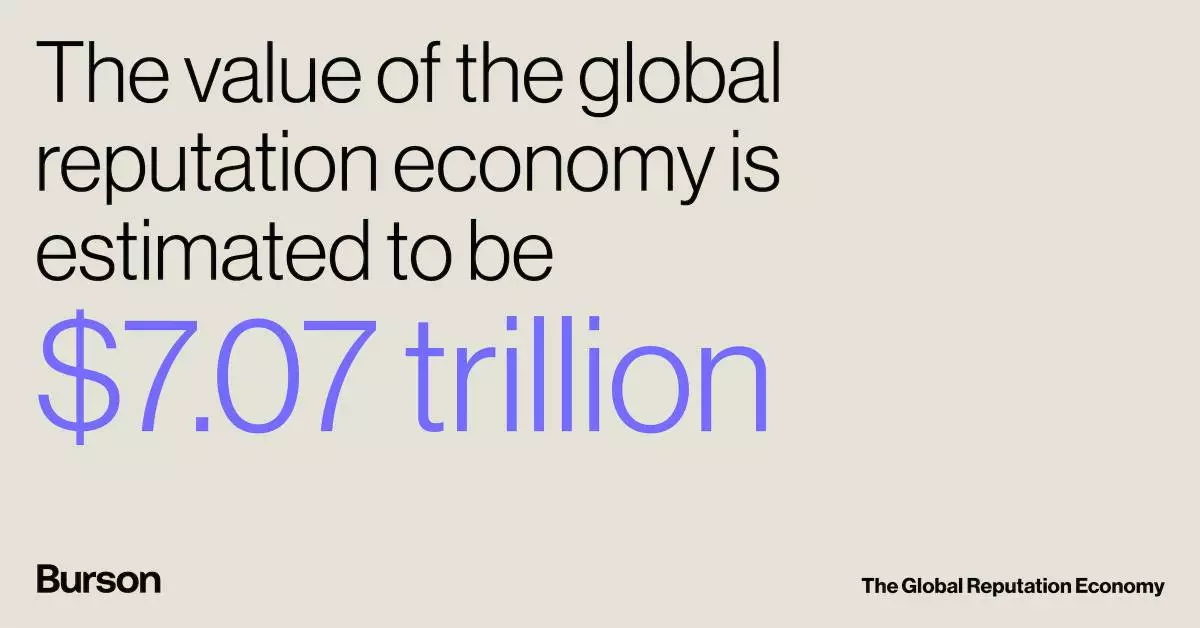
Burson Quantifies the Value of Reputation, Revealing a $7 Trillion Global “Reputation Economy”
PROVO, Utah (AP) — The man accused of killing Charlie Kirk on a Utah college campus was back in court Friday as a state judge weighs whether certain documents and proceedings should be open to the public.
The outcome will set the stage for an April hearing in which attorneys for Tyler Robinson will make their case to exclude TV cameras, microphones and photographers from the courtroom.
Judge Tony Graf has been weighing the public’s right to know details about the case against concerns by defense attorneys that the media attention could undermine Robinson’s right to a fair trial. Prosecutors, Kirk’s widow and attorneys for news organizations have urged Graf to keep the proceedings open.
Prosecutors intend to seek the death penalty for Robinson, 22, who is charged with aggravated murder in the Sept. 10 shooting of the conservative activist on the Utah Valley University campus in Orem. Robinson has not yet entered a plea.
Attorneys on Friday debated whether the defense's written request to exclude cameras, which was classified by the court as private, should be made public.
Staci Visser, an attorney for Robinson, told the judge that the defense is not arguing in the court of public opinion.
“There seems to be an idea that flooding the public sphere with information from this courtroom will somehow dispel conspiracy theories or shift public narratives. That, in and of itself, is concerning to the defense,” Visser said. “All we should be worried about is protecting what happens in this courtroom.”
Robinson’s defense team went on to say that an upcoming hearing will involve discussions about prejudicial pretrial publicity — for example, evidence that has yet to be admitted, confessions, personal opinions about guilt or public statements that would otherwise be inadmissible in court.
“We don’t want to be in that position of bringing in front of the court all of this prejudicial information and having the press regurgitate it yet one more time, and reinflicting a wound that we’re seeking to avoid,” defense attorney Michael Burt said.
Christopher Ballard, a prosecutor with the Utah County Attorney’s Office, dismissed those arguments. He said careful questioning during jury selection and tools like expanding the jury pool can ensure a defendant gets a fair trial.
“So just saying that this a content tornado or there's been a barrage of media coverage doesn't necessarily mean that there is going to be prejudice to the defendant,” Ballard said.
Ballard also said most of the evidence that will be discussed at the April 17 hearing is already public, so most of it should be open. But he agreed with the defense that parts of the hearing concerning personal privacy should be closed.
The judge will decide whether the hearing will be open or partially closed.
Media access has been a focal point of several recent hearings, with the judge placing temporary restrictions on local TV stations for showing Robinson's shackles in violation of a court order and filming close-up shots that might allow viewers to interpret what he was discussing with his attorneys.
The judge also has prevented full video recordings of Kirk’s shooting from being shown in court after defense attorneys argued the graphic footage would interfere with a fair trial. An estimated 3,000 people attended the outdoor rally to hear Kirk, a co-founder of Turning Point USA who helped mobilize young people to vote for President Donald Trump.
Prosecutors have said DNA evidence connects Robinson to the killing.
At a hearing in February, the judge declined to disqualify the local county attorney’s office from prosecuting the case after the defense argued there was a conflict of interest because a prosecutor’s daughter was present when Kirk was shot.

Prosecuting and defense attorneys and defendant Tyler Robinson, right, accused in the fatal shooting of conservative activist Charlie Kirk, attend a hearing in 4th District Court, Friday, March. 13, 2026, in Provo, Utah. (Laura Seitz/The Deseret News via AP, Pool)

Prosecutor Chad Grunander, center, listens, Friday, March. 13, 2026, in 4th District Court in Provo, Utah, during a hearing for Tyler Robinson, who is accused in the fatal shooting of conservative activist Charlie Kirk. (Laura Seitz/The Deseret News via AP, Pool)

Attorney Richard Novak, left, and defendant Tyler Robinson, accused in the fatal shooting of conservative activist Charlie Kirk, attend a hearing, in 4th District Court, Friday, March. 13, 2026, in Provo, Utah. (Laura Seitz/The Deseret News via AP, Pool
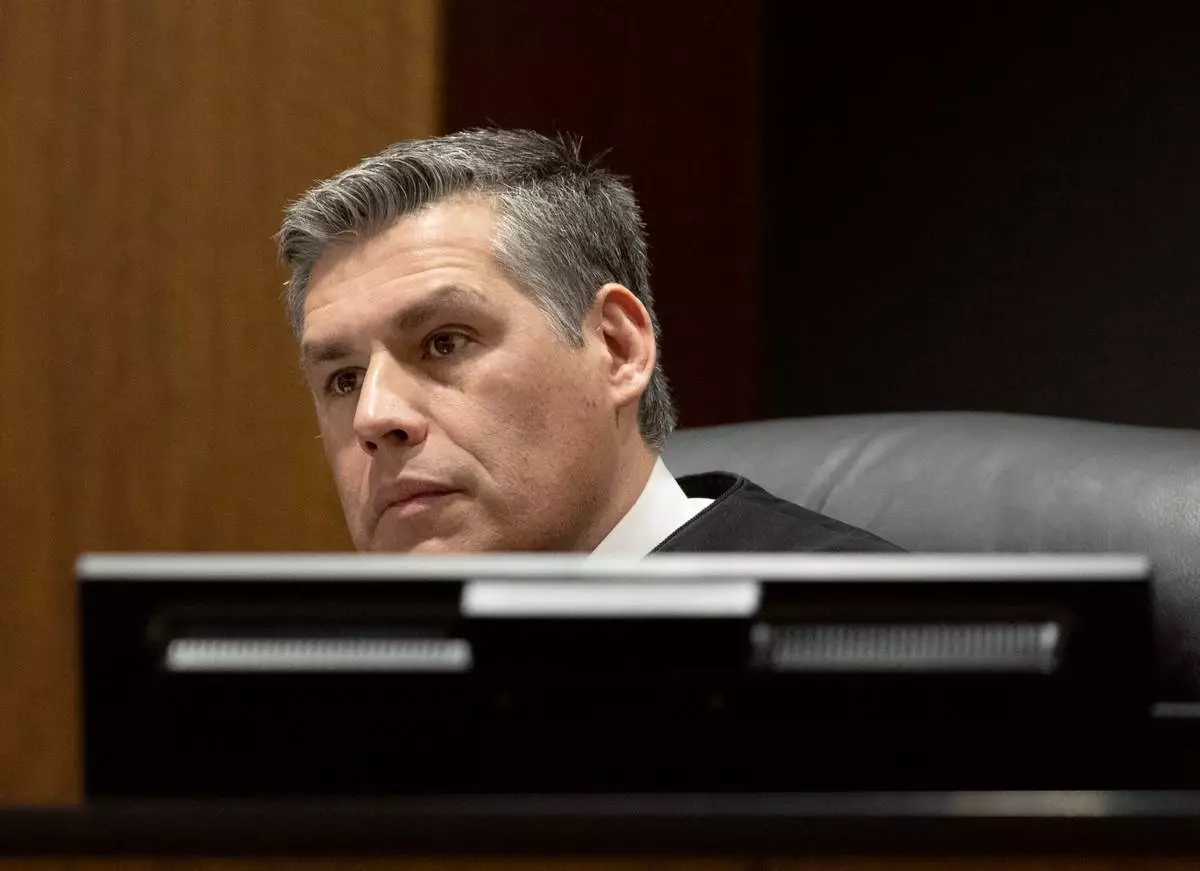
Fourth District Court Judge Tony Graf presides, Friday, March. 13, 2026, in 4th District Court in Provo, Utah, during a hearing for Tyler Robinson, who is accused in the fatal shooting of conservative activist Charlie Kirk. (Laura Seitz/The Deseret News via AP, Pool)

FILE - Tyler Robinson, who is accused of fatally shooting Charlie Kirk, appears during a hearing in Fourth District Court, in Provo, Utah, Dec. 11, 2025. (Rick Egan/The Salt Lake Tribune via AP, Pool, File)

FILE - Fourth District Court Judge Tony Graf presides over a hearing for Tyler Robinson, accused in the fatal shooting of conservative activist Charlie Kirk, in 4th District Court, Feb. 3, 2026, in Provo, Utah. (Trent Nelson/The Salt Lake Tribune via AP, Pool, File)