The 25th China International Fair for Investment and Trade (CIFIT) opened Monday in the city of Xiamen, east China's Fujian Province, attracting numerous Taiwan businesses and entrepreneurs seeking investment and growth opportunities on the mainland.
To promote cross-Strait economic and trade exchanges and cooperation, this year's CIFIT has for the first time ever established a "cross-Strait integrated development exhibition area." Under the theme of "New Integration, Connecting the Two Sides of the Strait, Creating the Future," the exhibition area features a central exhibition zone, a Taiwan enterprise exhibition zone, and a roadshow promotion zone.
Mutiple Taiwan enterprises from sectors including smart manufacturing, industrial design, and smart home technology are showcasing their new technologies and products at the venue.
"We are participating in this fair to enhance our brand visibility and gain recognition across various industries. It will also help promote economic and technological exchanges between the two sides of the Taiwan Strait," said Lin Yanqing, a representative of the Taiwan business community.
Jiang Fangna, another representative of the Taiwan business community, said, "By taking part, we aim to better understand trends of national policies. This will enhance our company's future strategic planning and enable us to better integrate into the mainland's economic development."
Smart manufacturing and biomedicine have emerged as hot topics in cross-Strait industry exchanges at this year's CIFIT.
"We are looking to enter the big health industry and explore collaboration opportunities in this sector. I am particularly interested in this field," said Xu Yijie, an entrepreneur from Taiwan.
"As a fund manager, I focus on investment areas such as robotics, AI healthcare, and aerospace technology," said Peng Weilun, another Taiwan entrepreneur attending the event.
At the fair, Xiamen's tax authorities provided detailed explanations to Taiwan businesses and entrepreneurs on the mainland's new policy regarding tax credits for reinvestment of profits by overseas investors.
"There are many Taiwan enterprises and investors at the venue. We introduced the new policy to them in detail, encouraging them to expand their investments, to cultivate a promising policy environment," said Yan Huangshan, deputy section chief of a tax service and taxation administration in Tong'an District of Xiamen.
The fair has also drawn attention from within Taiwan. Some commentators noted that the continuous emergence of new development opportunities in the mainland market should encourage Taiwan businesses to leverage platforms like CIFIT to explore more growth prospects.
"Through platforms like the CIFIT, the two sides of the Taiwan Strait can discuss future global trends and foster integrated innovation. By combining strengths in emerging industries, the investment and entrepreneurship of Taiwan compatriots can help develop sectors that lead global high-tech innovation. This will greatly benefit cross-Strait economic and trade relations," said Deng Daixian, secretary-general of the Straits Economic and Cultural Interchange Association in Taiwan.
This year's CIFIT has attracted visitors from over 120 countries and regions. Focusing on three major areas -- "Invest in China," "Chinese investment" and "International investment" -- the four-day event includes more than 100 investment-themed activities and features Britain as the guest country of honor.
First launched in 1997, the CIFIT, organized by the Ministry of Commerce, has become an important platform for boosting investment and facilitating global development.
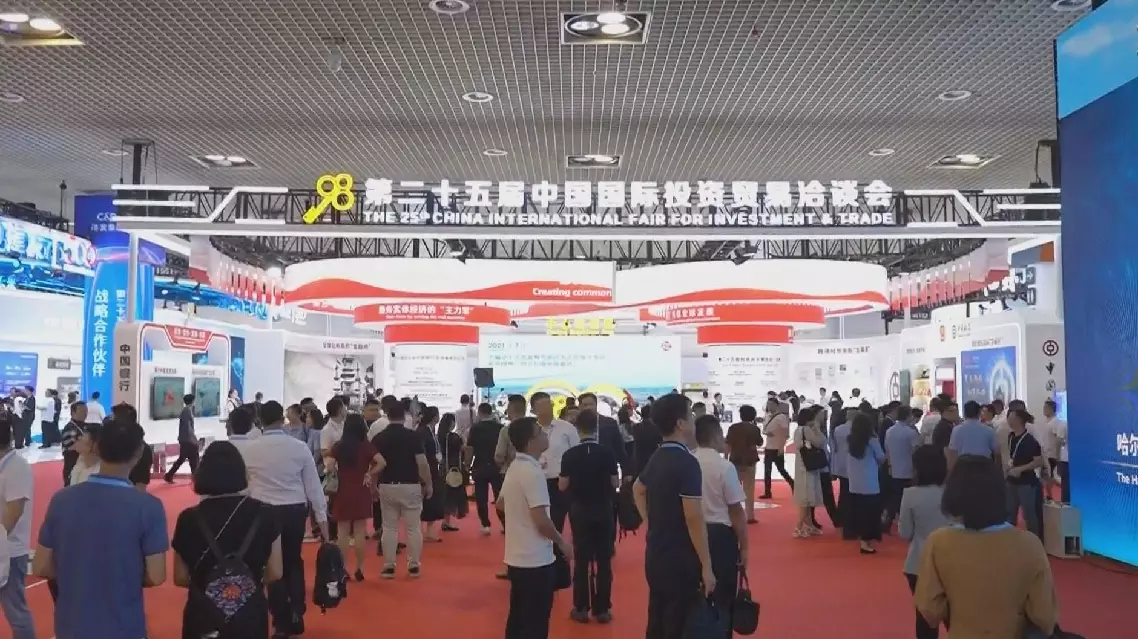
Entrepreneurs from Taiwan seek opportunities at international investment, trade fair in mainland