Trump's War on Chinese Students Changes Everything
The golden age of Chinese students flooding American campuses is officially over. As Trump tightens visa restrictions and slashes university funding, the once-irresistible allure of a US degree is rapidly crumbling for Chinese students. The Financial Times dropped some serious truth bombs on September 6, revealing that mainland students are openly admitting what everyone already knew: American degrees just don't carry the same weight with Chinese employers anymore, and the US job market has become downright hostile to international students. Their solution? Pack up and head to University of Hong Kong – that perfect "bridge between East and West."

Chinese students are ditching America for Hong Kong – and the Financial Times is taking notice.
Professor Heiwai Tang, HKU’s Victor and William Fung Professor in Economics and Director of the Asia Global Institute, isn't mincing words here. He's straight-up admitting that America's new political climate is actually a gift to Hong Kong, allowing HKU to scoop up talent that would have otherwise headed to the States.
Smart Students Are Making Smart Choices
Vanora Li, a 23-year-old economics whiz who studied at Columbia University's Barnard College, had originally planned to pursue graduate studies in the US, but reality hit hard. Instead, she's made the savvy decision to return to Chinese soil and study at HKU. Her reasoning? Brutal honesty about the declining value of American master's degrees and the increasingly unfriendly US job market for international students.
The Financial Times remarked that the 114-year-old University of Hong Kong has long been the go-to hub for East-West academic exchange, but many wondered if the 2019 social unrest would kill its reputation. The truth is, HKU has been on a hiring spree, with academic staff numbers jumping 13% since 2018. One-third of HKU's academic staff are now from mainland China, up from just 22% in 2018.
The numbers don't lie. The business school alone has grown from 84 academic staff in 2018 to 117 this year. Meanwhile, total student number has exploded from 29,099 in 2018 to 42,330 in 2025, with mainland students under government-funded programmes jumping from 15% to 24%.
As one HKU social science lecturer put it perfectly: many mainland students studying overseas are coming to HKU specifically to "receive a Western education."
HKU Crushes American Elite Universities in Rankings
Let's talk about the elephant in the room: rankings. HKU has skyrocketed to 11th place in the 2026 QS World University Rankings, jumping from 17th place last year. That puts it ahead of Yale University at 21st and Princeton University at 25th. Meanwhile, China's top dogs – Peking University and Tsinghua University – sit comfortably at 14th and 17th respectively.
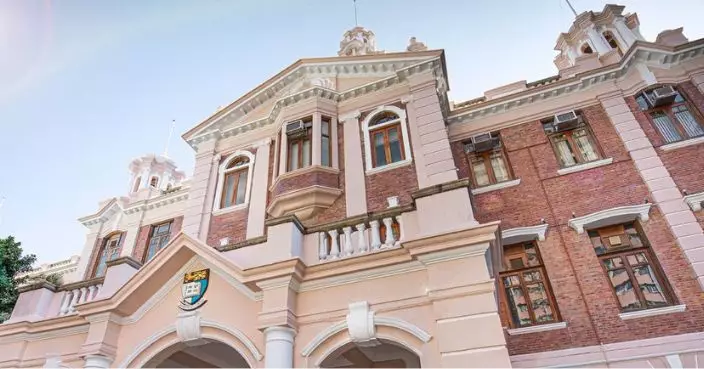
HKU just crushed Yale and Princeton in global rankings, jumping from 17th to 11th place in one year.
Professor Teng is refreshingly candid about what's happening. America's hostile political climate is literally driving talent away, and Hong Kong is ready to catch what falls. Trump's policies targeting top US universities are encouraging American professors to look elsewhere, and Hong Kong is one of the few places globally that can match American university salaries.
Star Academics Are Making the Switch
The proof is in the pudding. Neuroscientist Michael Häusser jumped ship from University College London to become HKU's Dean of Biomedical Sciences last year. Political scientist Robert Thomson also made the leap from Australia's Monash University to head up HKU's Politics and Public Administration department. Thomson's take? HKU has the perfect combination of history, tradition, and the hungry ambition you only see in newer universities.
One HKU associate professor who previously studied in the US summed it up perfectly: "There's turbulence everywhere, but it's quite stable here in Hong Kong." Teng echoes this sentiment, emphasizing Hong Kong's dual role as both an international education center and financial hub.
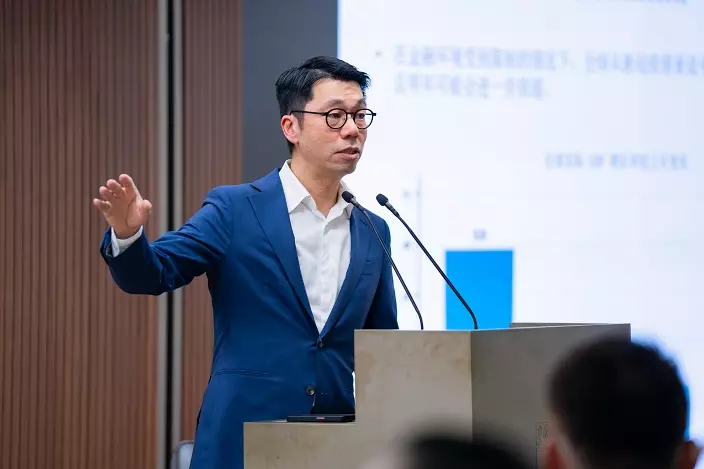
Professor Francis Teng of HKU isn't sugar-coating it: America's hostile politics are driving top talent straight into Hong Kong's arms.
Trump's Iron Fist Approach Backfires
Since returning to the White House, Trump hasn't just implemented his promised "iron-fist reforms" against prestigious US institutions like Harvard and Columbia – slashing their education funding – he's also doubled down on targeting Chinese students with tighter visa review procedures. Secretary of State Marco Rubio announced in May that the administration would revoke student visas for those with ties to the Chinese Communist Party and strengthen scrutiny of new applicants.
The numbers tell the story. Chinese students studying in the US peaked at 373,000 during the 2019-2020 academic year, but by 2023-2024, that number had dropped to just over 277,000 – a 4% decline from the previous year. Recent months have seen increasing numbers of Chinese students struggling with visas and entry issues due to security reviews and policy tightening.
Trump's Confusing Mixed Messages
But here's where Trump being Trump gets interesting. During a White House meeting with South Korean President Lee Jae-myung on August 25, he completely contradicted his own policies by telling media that the US would allow 600,000 Chinese students to enter American universities. He called Chinese students "very important," saying that without them, the American university system would "go to hell very quickly." Yet in the same breath, he emphasized the US would conduct "careful" screening to determine who could study in America.
The Real Reasons Behind the Shift
Industry insiders reveal the deeper truth: for university scholars and researchers, choosing where to build their careers goes beyond salary and benefits. Work environment, sense of belonging, and political stability are crucial factors. And what weigh most is long-term development potential. China's continuously improving academic and scientific capabilities, combined with its massive reservoir of young talent, are likely the main attractions driving this shift.
Ariel
** 博客文章文責自負,不代表本公司立場 **