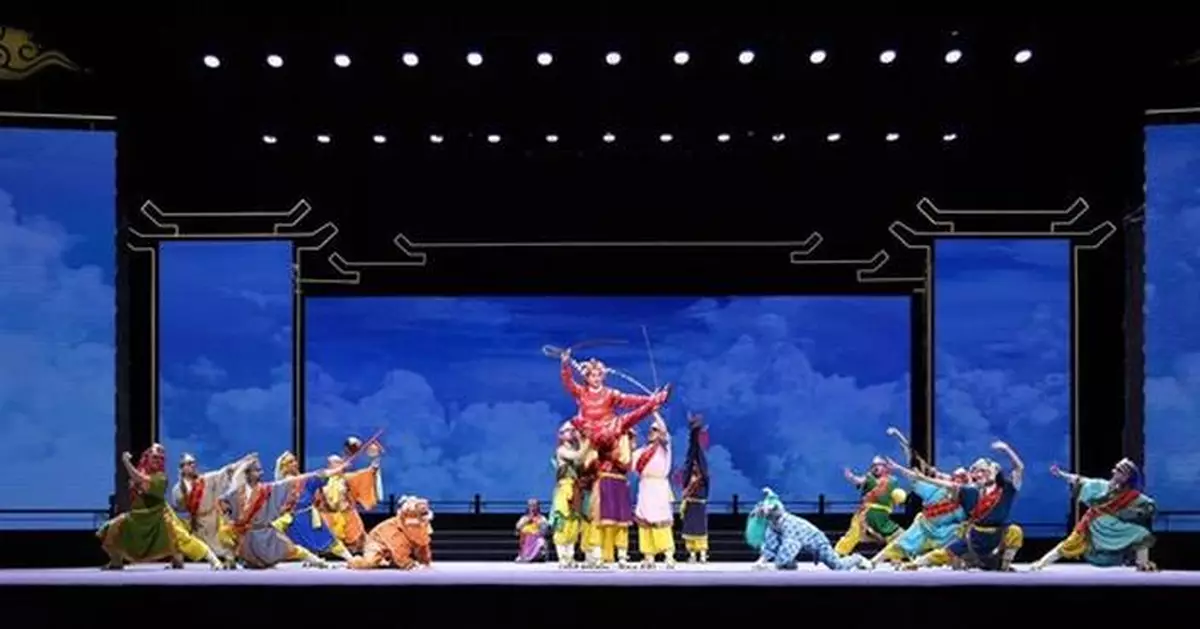
KUNSHAN, China, Sept. 10, 2025 /PRNewswire/ -- The 2025 Chinese Opera (Kunshan) Festival, co-organized by the Ministry of Culture and Tourism and the Jiangsu Provincial People's Government, opened on September 8 in Kunshan, Jiangsu Province. Building on past festivals that highlighted the classic role types of Sheng (male), Dan (female), Jing (painted face), and Chou (clown), this year's program focuses on martial arts theater. The opening performance featured martial arts excerpts presented by six renowned masters of Chinese opera, and throughout the festival—which continues through September 20—20 martial artists from across China will present 10 joint performances, reflecting the ongoing preservation and innovation of traditional Chinese opera.
At the opening ceremony, certificates were awarded to participants selected for the 2025 National Leading Talent Development Program for Chinese Opera, along with honors for institutions recognized by the Ministry of Culture and Tourism between 2020 and 2024 as Outstanding Opera Production Initiatives.
This year's festival is anchored by five signature programs: opening and closing ceremonies, a national showcase of opera performers (martial arts theater), invited performances of acclaimed productions, opera symposia, and initiatives to preserve endangered opera forms. It also includes five extension programs: opera exchange and promotion activities, the "Watch Opera, Visit Jiangsu" cultural tourism campaign, a special exhibition at the Chinese Opera Museum, a traditional opera cultural marketplace, and a digital promotion platform.
Over the course of the festival, 39 performances will be staged, featuring 107 productions from 53 ensembles representing 31 distinct opera traditions. Performances and activities will be hosted at a variety of venues, including traditional theaters, historic towns, museums, universities, and scenic sites, offering audiences immersive cultural experiences.
Kunshan, the birthplace of Kunqu Opera, the earliest form of Chinese opera, is hosting the festival for the seventh consecutive year. A new three-year action plan has now been launched to guide its future development. From 2018 to 2024, the festival presented 348 opera genres, including puppetry and shadow theater, bringing together 494 organizations that staged 295 performances featuring 606 excerpts, while drawing record audiences both in person and online.
** The press release content is from PR Newswire. Bastille Post is not involved in its creation. **
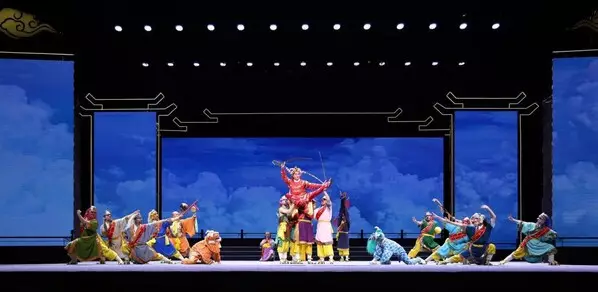
2025 Chinese Opera (Kunshan) Festival Opens, Celebrating the Vitality of Traditional Chinese Opera
|
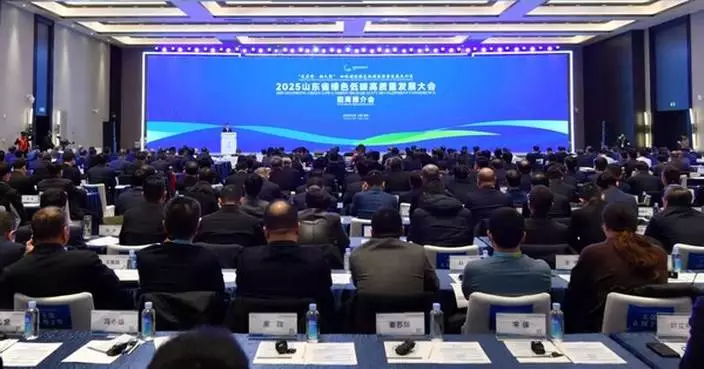
YANTAI, China, Dec. 8, 2025 /PRNewswire/ -- On December 4, the 2025 Shandong Green Low-carbon High-quality Development Conference was held in Yantai, Shandong province. Against the backdrop of the fifth anniversary of China's 'dual carbon' goals, Yantai's achievements—as one of the country's first pilot cities for carbon peaking and for realizing the value of ecological products—are more than local practice; they represent a notable example in the global conversation about sustainable development pathways for bay areas.
From the precision manufacturing of Tokyo Bay to the financial innovation of New York Bay and the deep integration of the Guangdong–Hong Kong–Macao Greater Bay Area, bay areas have become pivotal geographic units driving global economic and technological changes. On the shores of the Yellow Sea and the Bohai Sea, Yantai—a representative bay–area economy—is addressing contemporary challenges through its green development practices.
As a cradle of China's modern industry, Yantai's industrial system spans 37 of the country's 41 major industrial categories. It is the first ordinary prefecture–level city in the northern part of China to join the 'one–trillion–yuan GDP club,' and is hailed as the region's strongest prefecture–level city. Yantai is currently home to more than 50 listed companies with a combined market value exceeding 1.2 trillion yuan.
In recent years, Yantai has prioritized clean energy as one of its 16 key industrial chains, building a new energy system that coordinates nuclear, wind, solar, and hydrogen power alongside energy storage and liquefied natural gas (LNG). It has advanced major projects in nuclear power, offshore wind power, and offshore photovoltaics, forging a distinct clean-energy identity.
The development of clean energy in Yantai boasts eight notable 'firsts': producing Shandong's first kilowatt-hour of nuclear power and first kilowatt-hour of offshore wind power; delivering China's first kilowatt-hour from a pile–based fixed offshore photovoltaic project and the world's first from a deep–sea floating offshore photovoltaic project; completing the country's first integrated demonstration of offshore wind power and marine ranching; constructing the country's largest coastal photovoltaic-plus-energy-storage station; bringing the country's first commercial nuclear energy heating demonstration project into operation; and achieving the highest installed clean-energy capacity in Shandong. These accomplishments represent a systemic revolution in energy use, not merely a collection of projects.
Data show that, over the past three years, Yantai has cut its energy consumption intensity by a cumulative 20.9%, meeting its energy saving and carbon reduction targets for 19 consecutive years. Its installed clean-energy capacity has now surpassed 17 million kilowatts.
Looking ahead, Yantai is charting a new growth path with six future-oriented industries—life sciences, deep-sea and aerospace technologies, next–generation nuclear power, artificial intelligence, new electronic materials, and humanoid robotics—which are expected to drive green, low–carbon, high–quality development. The city projects that total output value of industrial enterprises above the designated size will exceed 1.7 trillion yuan by 2027, a target supported by sustained investment in innovation.
YANTAI, China, Dec. 8, 2025 /PRNewswire/ -- On December 4, the 2025 Shandong Green Low-carbon High-quality Development Conference was held in Yantai, Shandong province. Against the backdrop of the fifth anniversary of China's 'dual carbon' goals, Yantai's achievements—as one of the country's first pilot cities for carbon peaking and for realizing the value of ecological products—are more than local practice; they represent a notable example in the global conversation about sustainable development pathways for bay areas.
From the precision manufacturing of Tokyo Bay to the financial innovation of New York Bay and the deep integration of the Guangdong–Hong Kong–Macao Greater Bay Area, bay areas have become pivotal geographic units driving global economic and technological changes. On the shores of the Yellow Sea and the Bohai Sea, Yantai—a representative bay–area economy—is addressing contemporary challenges through its green development practices.
As a cradle of China's modern industry, Yantai's industrial system spans 37 of the country's 41 major industrial categories. It is the first ordinary prefecture–level city in the northern part of China to join the 'one–trillion–yuan GDP club,' and is hailed as the region's strongest prefecture–level city. Yantai is currently home to more than 50 listed companies with a combined market value exceeding 1.2 trillion yuan.
In recent years, Yantai has prioritized clean energy as one of its 16 key industrial chains, building a new energy system that coordinates nuclear, wind, solar, and hydrogen power alongside energy storage and liquefied natural gas (LNG). It has advanced major projects in nuclear power, offshore wind power, and offshore photovoltaics, forging a distinct clean-energy identity.
The development of clean energy in Yantai boasts eight notable 'firsts': producing Shandong's first kilowatt-hour of nuclear power and first kilowatt-hour of offshore wind power; delivering China's first kilowatt-hour from a pile–based fixed offshore photovoltaic project and the world's first from a deep–sea floating offshore photovoltaic project; completing the country's first integrated demonstration of offshore wind power and marine ranching; constructing the country's largest coastal photovoltaic-plus-energy-storage station; bringing the country's first commercial nuclear energy heating demonstration project into operation; and achieving the highest installed clean-energy capacity in Shandong. These accomplishments represent a systemic revolution in energy use, not merely a collection of projects.
Data show that, over the past three years, Yantai has cut its energy consumption intensity by a cumulative 20.9%, meeting its energy saving and carbon reduction targets for 19 consecutive years. Its installed clean-energy capacity has now surpassed 17 million kilowatts.
Looking ahead, Yantai is charting a new growth path with six future-oriented industries—life sciences, deep-sea and aerospace technologies, next–generation nuclear power, artificial intelligence, new electronic materials, and humanoid robotics—which are expected to drive green, low–carbon, high–quality development. The city projects that total output value of industrial enterprises above the designated size will exceed 1.7 trillion yuan by 2027, a target supported by sustained investment in innovation.
** The press release content is from PR Newswire. Bastille Post is not involved in its creation. **

Yantai offers global bay areas a paradigm of low-carbon transformation

Yantai offers global bay areas a paradigm of low-carbon transformation