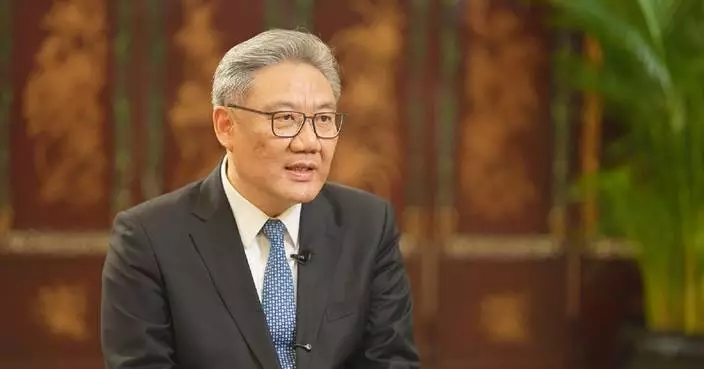
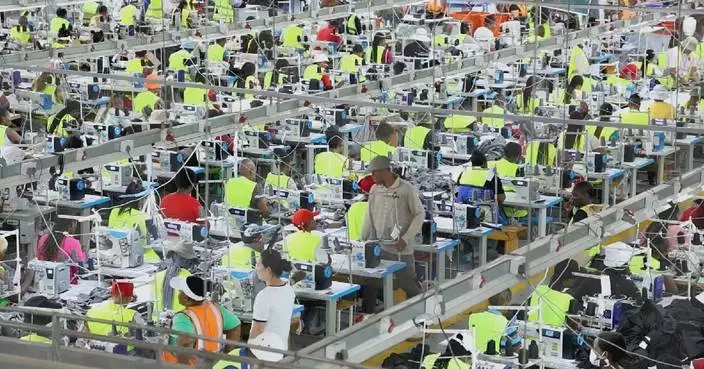
Unilever will continue its in-depth exploration of the Chinese market which features certainty, said Zeng Xiwen, global vice-president of the London-based consumer goods giant, while attending the ongoing 25th China International Fair for Investment and Trade (CIFIT).
The 25th CIFIT opened Monday in the city of Xiamen, east China's Fujian Province, attracting delegations from over 120 countries and regions.
Focusing on three major areas -- "Invest in China," "Chinese investment" and "International investment," the four-day event includes more than 100 investment-themed activities and features Britain as the guest country of honor.
"As a multinational corporation, Unilever is mainly a 'marathoner.' We sell fast-moving consumer goods, so we mainly consider two factors. The first is population base, and the second is income growth of the population. In this regard, China is the largest market, and is also the place with the most complete supply chain and the source of many of our raw materials. For us, a 'long-distance runner' has a long-term vision, so the most important thing is certainty. China has always emphasized adhering to opening-up to the outside world, which is a basic state policy. This actually gives us a kind of certainty and assurance," said Zeng.
Unilever has launched its zero-carbon renewable technology innovation center in Yancheng City of east China's Jiangsu Province. The company is collaborating with Chinese research institutes and industrial partners to accelerate the green and low-carbon transformation of the chemical industry.
"We are now going in the direction of open innovation. Unilever has just established its zero-carbon renewable technology innovation center, which will carry out joint research with the Chinese Academy of Sciences, many universities and innovation enterprises. With the growth of innovation in China, including in aspects such as AI, Unilever is collaborating with China's innovative enterprises and research institutions, instead of doing things alone," said Zeng.
Unilever put its all-category food production base in China into operation on Aug. 15, marking a milestone in its efforts to advance smart manufacturing and supply chain integration in the country.
Located in south China's Guangdong Province, the facility is designed to enhance Unilever's operational capabilities in southern China and strengthen its supply chain network in the Chinese market.
A logistics park opened alongside the new base, serving as a key hub for cross-regional distribution of Unilever's food business. Its warehouse boasts about 70 percent higher storage density than standard warehouses, while its receiving and dispatching capacity has risen by 60 percent.
"Unilever's all-category food production factory just opened in mid August. It is a phase-II project of our production base in Guangdong, and the third of its kind in China. We did that because we are to deepen our exploration of the Chinese market and embrace global opportunities. The new factory is fully digitized. It was built according to standards of the 'lighthouse factories,' so it is one of the most advanced in the world. Unilever's global headquarters was very happy about the factory's coming into being, which may show the development direction for other factories globewide," said Zeng.
As one of the world's largest consumer goods companies, Unilever operates a regional headquarters and a global research and development center in Shanghai.
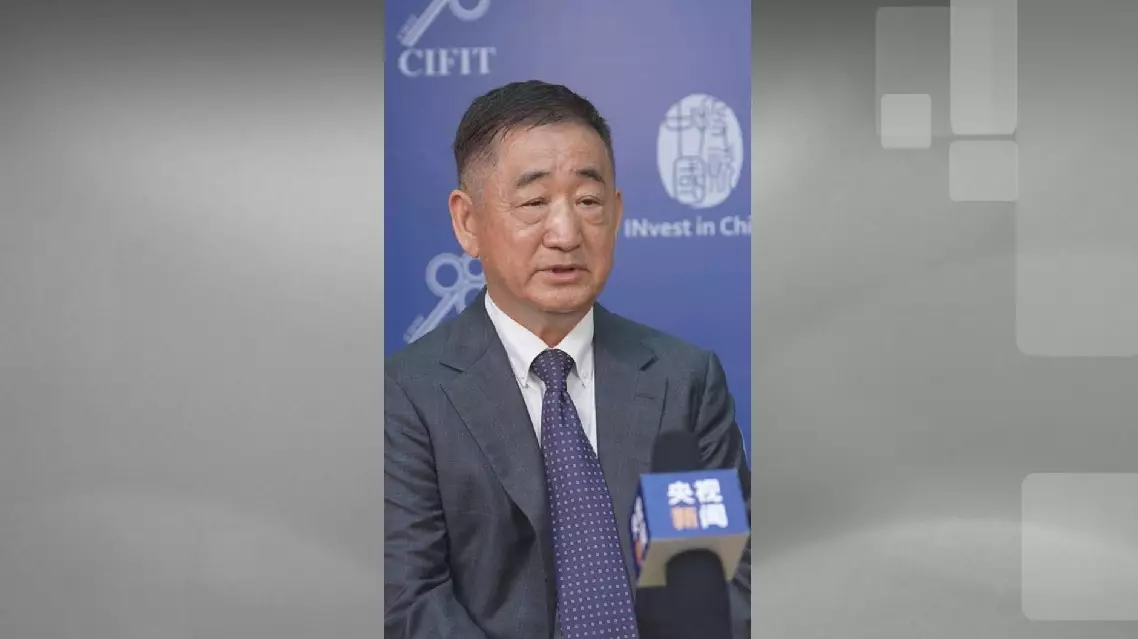
Unilever vice-president on in-depth exploration of Chinese market