Residents from all walks of life across China say they have drawn inspiration from Chinese President Xi Jinping's speech delivered during last week's Victory Day commemoration events in Beijing, saying they will draw strength from the history, carry forward the great spirit of the War of Resistance, and devote themselves to Chinese modernization while writing a new chapter in strengthening the country and rejuvenating the nation. Xi delivered his speech just before the start of a massive military parade held in Tian'anmen Square on the morning of Sept. 3 to mark the 80th anniversary of China's victory in World War II.
During his speech, Xi, also general secretary of the Communist Party of China Central Committee and chairman of the Central Military Commission, reviewed the glorious course of the Chinese People's War of Resistance Against Japanese Aggression (1931-1945) and solemnly declared the Chinese people's firm stance of "remembering history, honoring martyrs, cherishing peace, and creating a better future."
His inspiring remarks resonated with people across China, with many feeling a sense of pride at how the country has grown in recent decades and expressing their resolve to continue this development journey.
"We deeply feel that a strong motherland is our greatest source of confidence. As urban infrastructure has improved and transportation has become more convenient over the years, our sense of happiness, fulfillment, and security has greatly increased. All of this is inseparable from the leadership of the Party and the care of the General Secretary. We must bear in mind the General Secretary's instructions and work together with people of all ethnic groups to make Xinjiang more beautiful," said Zumretgul Ablet, the head of a local community in Kashgar City of northwest China's Xinjiang Uygur Autonomous Region.
The V-Day commemorations were particularly poignant for Yang Huafeng, a 92-year-old veteran who lost both his parents to Japanese invaders. He said he is proud of how his motherland has risen from the devastation of World War II to become a confident nation.
"Our country has grown stronger. We will never invade any country, nor will we allow any country to invade China. I feel the greatness of the Communist Party of China. Only when our country develops better and faster, will our people live happier lives," said Yang.
Xi's speech has also inspired Chinese people to further carry forward the great spirit of the War of Resistance in the new era, and fulfill their duties and responsibilities in their respective fields. "The General Secretary's important speech has filled us with confidence and motivated us to forge ahead. On the path of sci-tech innovation and the application of scientific and technological achievements, we must grapple with tough problems, and integrate innovation into every production line, every piece of equipment, and every line of code. We will use more high-quality scientific research results to continuously elevate Made in China to a new height," said Wu Yan, a researcher with the Qin Chuang Yuan Innovation-driven Platform launched by northwest China's Shaanxi Province.
"It is the bloody battles our revolutionary martyrs fought that have brought us peace today. I will bear in mind General Secretary Xi Jinping's instructions, carry forward the great spirit of the War of Resistance, sustain our revolutionary legacy, live up to my youth and shine in the new era," said Xie Qiming, a young volunteer from Baishan City in northeast China's Jilin Province.
Japan officially surrendered on Sept. 2, 1945, by signing the Instrument of Surrender, with China designating Sept. 3 as its Victory Day over Japan.
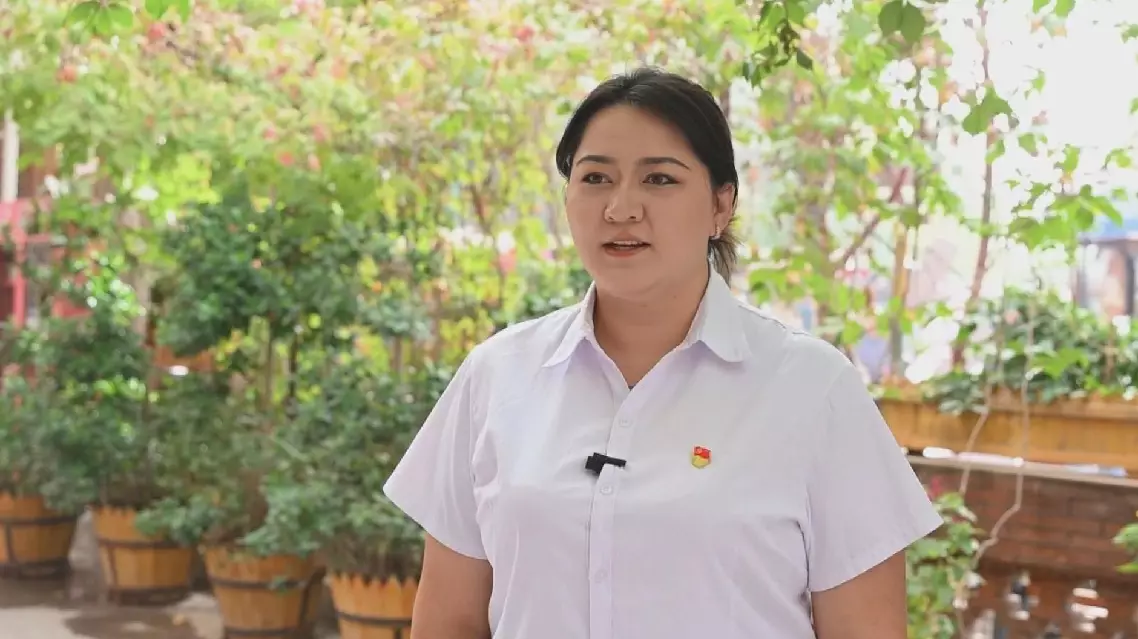
Xi's V-Day speech inspires Chinese people to strive for national rejuvenation