SAO PAULO (AP) — Former Brazilian President Jair Bolsonaro was not present in the room when a Supreme Court panel convicted and sentenced him to 27 years and three months in prison on charges of attempting a coup.
With Bolsonaro under house arrest and in poor health, his lawyer has said that the ex-leader was too sick to attend the final hearings. But despite frailty and his conviction, Bolsonaro's political influence will certainly endure.
Click to Gallery
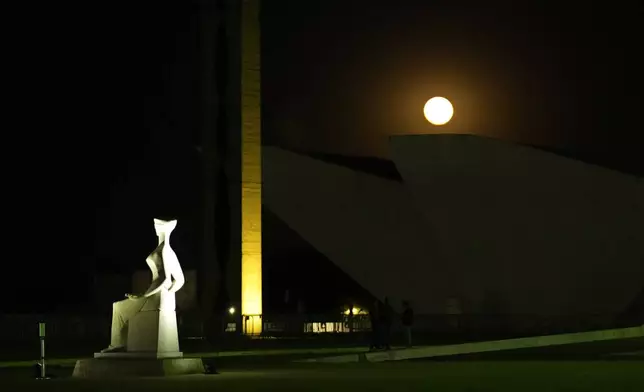
The moon rises over the Supreme Court, a day before former President Jair Bolsonaro's trial, in Brasilia, Brazil, Monday, Sept. 8, 2025. (AP Photo/Eraldo Peres)
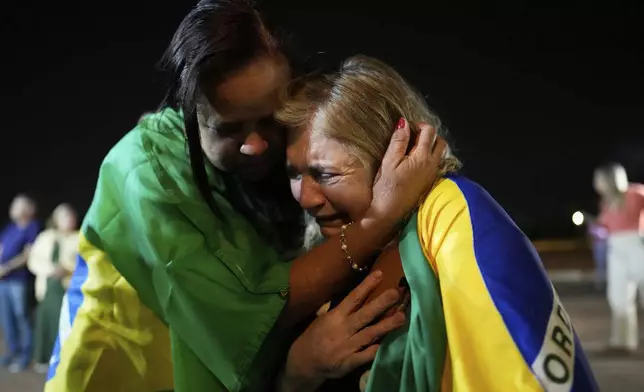
Supporters of former President Jair Bolsonaro cry during a vigil in his support near his home where he is under house arrest in Brasilia, Brazil, Thursday, Sept. 11, 2025. (AP Photo/Eraldo Peres)
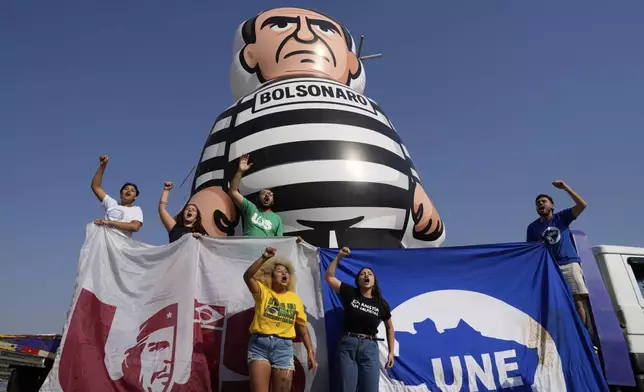
University students display an inflatable doll of Brazil's former President Jair Bolsonaro wearing prisoner garb in Brasilia, Brazil, Friday, Sept. 12, 2025, the morning after the Supreme Court convicted and sentenced him to prison for attempting a coup to remain in office despite his 2022 electoral defeat. (AP Photo/Eraldo Peres)
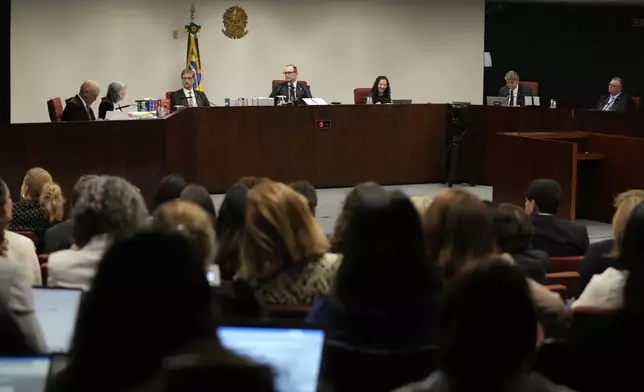
Justices of the Brazilian Supreme Court meet for the verdict and sentencing phase of a trial for those charged in an alleged coup plot to keep Brazil's former President Jair Bolsonaro in office after his 2022 election defeat, in Brasilia, Brazil, Thursday, Sept. 11, 2025. (AP Photo/Eraldo Peres)

Brazil's former President Jair Bolsonaro stands at the entrance of his home where he is under house arrest in Brasilia, Brazil, Tuesday, Sept. 2, 2025. (AP Photo/Luis Nova)
Even after his sentencing, public opinion is divided on whether he committed a crime and should go to prison, a debate that exists even though experts agree the far-right politician will continue to have a significant influence on the political landscape of the Latin American giant.
“Maybe we’ll see something relatively new in Brazilian politics: a public figure who is under house arrest, who cannot formally take part in politics because of a conviction and ineligibility, but who still influences the course of politics,” said anthropologist Isabela Kalil, coordinator of the Extreme Right Observatory, a research group based in Minas Gerais state.
Four days before his conviction, tens of thousands of Bolsonaro supporters took to the streets across Brazil on Independence Day. Among them was Luiz Niemeyer, a 62-year-old businessman in Rio de Janeiro, who sees the former president as a “hero” who has built an unstoppable political movement.
“Ideals are not killed, ideals are not arrested," he said. "You can arrest Bolsonaro, you can kill Bolsonaro, but these ideals will not die.”
Opinion polls have shown that Bolsonaro remains central to Brazil’s polarized landscape. Even behind bars, he could determine who carries his coalition's flag into the 2026 election. Observers say that to become a competitive contender against President Luiz Inácio Lula da Silva, who is expected to run for reelection, any opposition candidate must first secure the crucial electoral base and explicit support of far-right leader Bolsonaro.
Recent polls show Lula regaining his popularity, suggesting he will be a competitive candidate in the next election.
But a poll released Aug. 28 by AtlasIntel shows Lula in a statistical tie with Bolsonaro in a hypothetical election scenario, if elections were to be held then and with the same 2022 candidates on the ballot. In a first-round scenario, Bolsonaro would have 45.4% of the vote, while Lula would have 44.6%. The poll surveyed 6,238 voters online from Aug. 20 to 25, 2025. The margin of error is 1 percentage point.
The country is also divided over Bolsonaro’s conviction. A Datafolha poll from August found that 48% of Brazilians wanted to see Bolsonaro imprisoned, while 46% wanted him to remain free. The survey, which has a margin of error of 2 percentage points, was conducted in person with over 2,000 people across 130 municipalities.
“When people ask me if I think Bolsonaro is weakened, my answer is that it depends on perspective,” Kalil, from the Extreme Right Observatory group, said.
“If you consider that January 8 happened, that all of this happened, and yet he still has a base and continues to shape the direction of the far right and much of the right, I don’t see that as a sign of weakness,” she said referring to the 2023 episode when Bolsonaro supporters stormed public buildings in Brasilia in what the Prosecutor-General’s Office saw as part of his plan to remain in power after his defeat.
Silas Malafaia, an evangelical pastor and one of Bolsonaro’s most influential allies, echoes the belief that the former president remains a key political figure despite his legal troubles.
“No one is going to take Bolsonaro’s prominence away from him, whether he’s in prison or not," he said in late August, before preaching in front of a packed church in Rio de Janeiro. “He’s the greatest right-wing leader in Latin America.”
In fact, as a way to show their support, some Bolsonaro’s allies are fighting to push an amnesty bill through Congress that would allow the former leader to avoid time behind bars. Some are even calling for a restoration of his political rights, as he's been barred from running for office until 2030 as part of a separate process against him.
“We should push for his endgame to grant Bolsonaro amnesty and make him eligible to run as our candidate,” Sen. Ciro Nogueira, a former chief of staff under Bolsonaro, told The Associated Press in a phone interview. “Without him, we won't win the election. He is the main leader, the guiding figure.”
But in practice, Brazilian right-wing leaders have already started considering a Plan B.
Nogueira leads Progressistas, one of Brazil’s most powerful right-wing parties, and has named Sao Paulo Gov. Tarcísio de Freitas and Parana Gov. Ratinho Junior as potential pro-Bolsonaro presidential candidates, as well as Sen. Flávio Bolsonaro, the former president’s eldest son.
Both governors have joined street demonstrations called by Bolsonaro, defending his innocence. But Bolsonaro's sons, who remain central to his inner circle, do not necessarily trust them.
As the governor of Brazil’s richest and most populous state, de Freitas is a strong contender for the 2026 election. The former Bolsonaro minister and military officer, is widely seen as the right's favorite candidate.
Private messages released by the Supreme Court in August showed Eduardo Bolsonaro, who lives in the U.S. and has ties to the MAGA movement, privately accusing de Freitas of failing to defend his father in the Supreme Court while quietly preparing his own presidential run.
De Freitas has declined to comment on the accusation, and while he has not admitted he would run for the presidency, he said that if elected in 2026, he would immediately grant amnesty to Bolsonaro.
The governor attended the Independence Day demonstration in Sao Paulo on Sunday. Mimicking the former president's former speeches, de Freitas called out the justice who oversaw the coup case at the Supreme Court. “Nobody can stand the tyranny of a justice like Moraes anymore,” he said, referring to Alexandre de Moraes.
Following the verdict de Freitas said on X that Bolsonaro and the other officers convicted with him were “victims of an unfair sentence with disproportionate penalties.”
“Stay strong, President. We will remain by your side!" he said.
Bolsonaro’s conviction could mark a new chapter in Brazilian politics.
Esther Solano, a sociologist at the Federal University of Sao Paulo and who has tracked Bolsonaro voters and evangelicals since 2017, calls it “Bolsonarism 2.0.”
Her surveys show supporters believe Bolsonaro was crucial to launching a conservative crusade, but the movement is now strong enough to outlive him. New figures are emerging, Solano notes, including de Freitas, former first lady Michelle Bolsonaro, lawmaker Nikolas Ferreira and other evangelical leaders.
"Bolsonarism is moving into a new phase: consolidation, fortification and a new ecosystem of leaders who will rise stronger from Bolsonaro’s downfall,” she said.
Follow the AP’s coverage of Latin America and the Caribbean at https://apnews.com/hub/latin-america
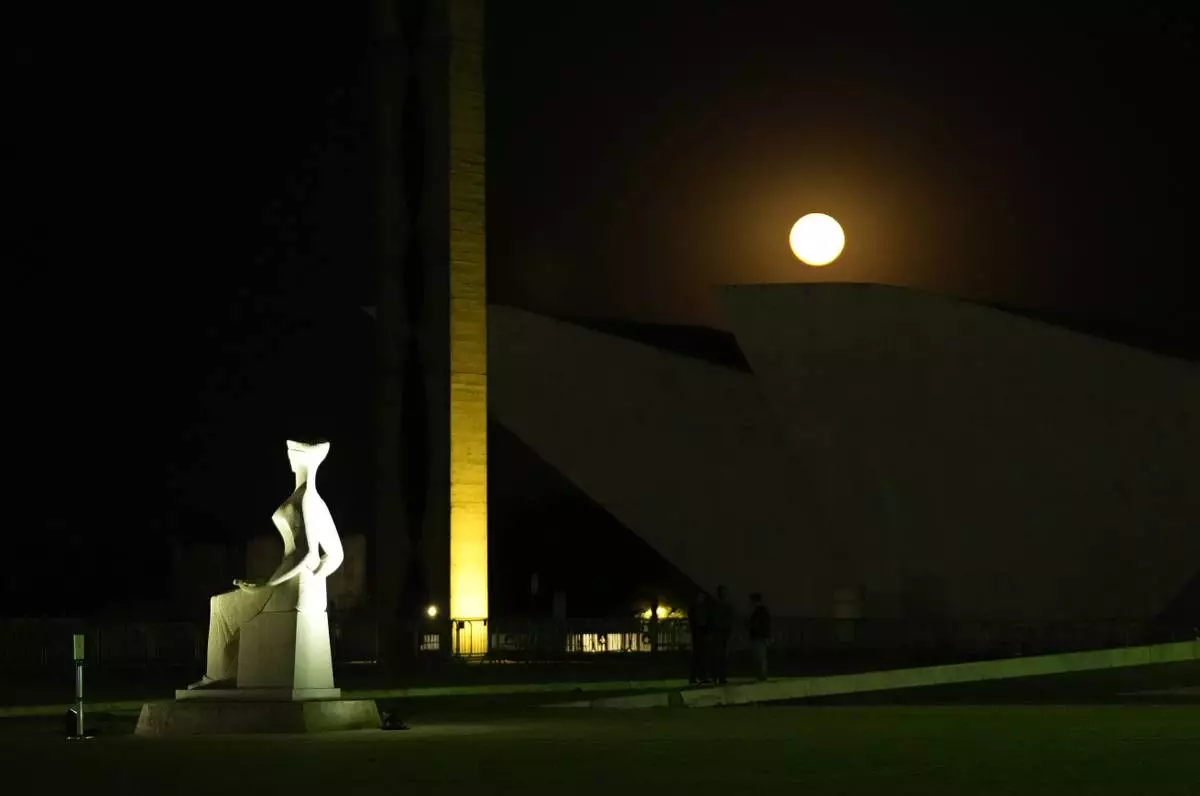
The moon rises over the Supreme Court, a day before former President Jair Bolsonaro's trial, in Brasilia, Brazil, Monday, Sept. 8, 2025. (AP Photo/Eraldo Peres)
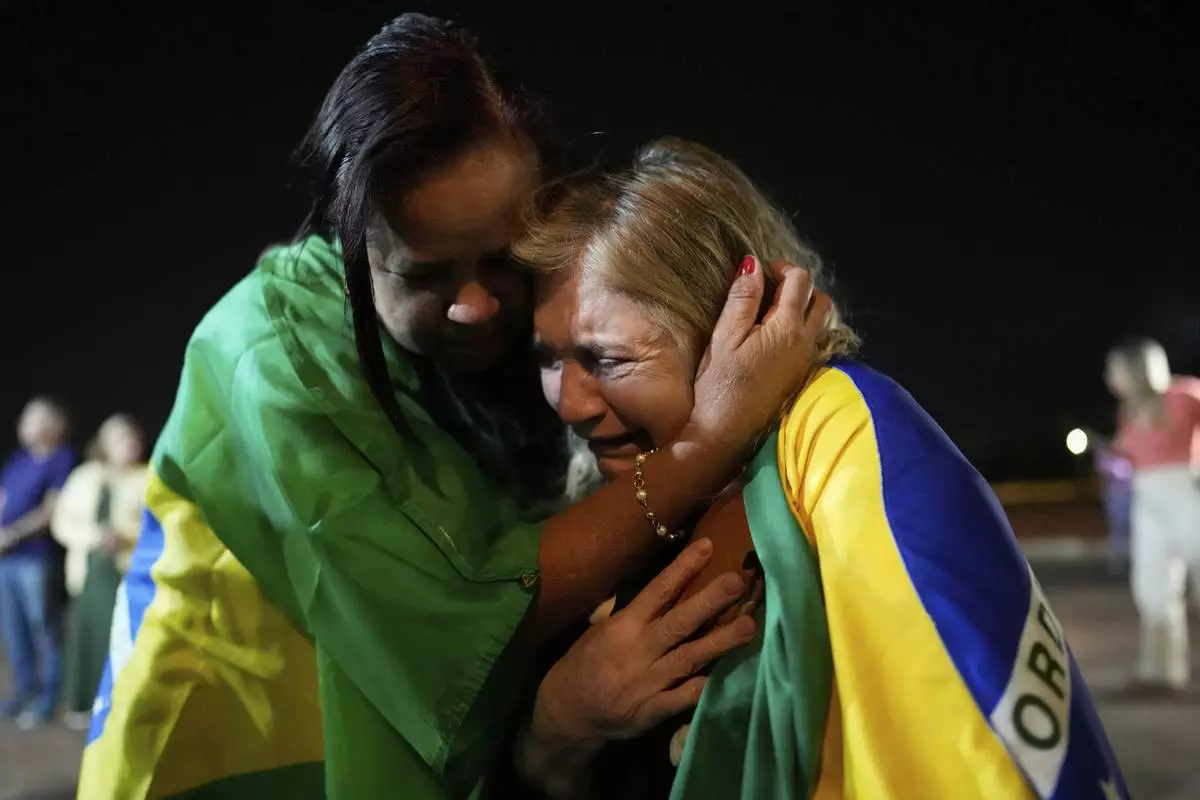
Supporters of former President Jair Bolsonaro cry during a vigil in his support near his home where he is under house arrest in Brasilia, Brazil, Thursday, Sept. 11, 2025. (AP Photo/Eraldo Peres)
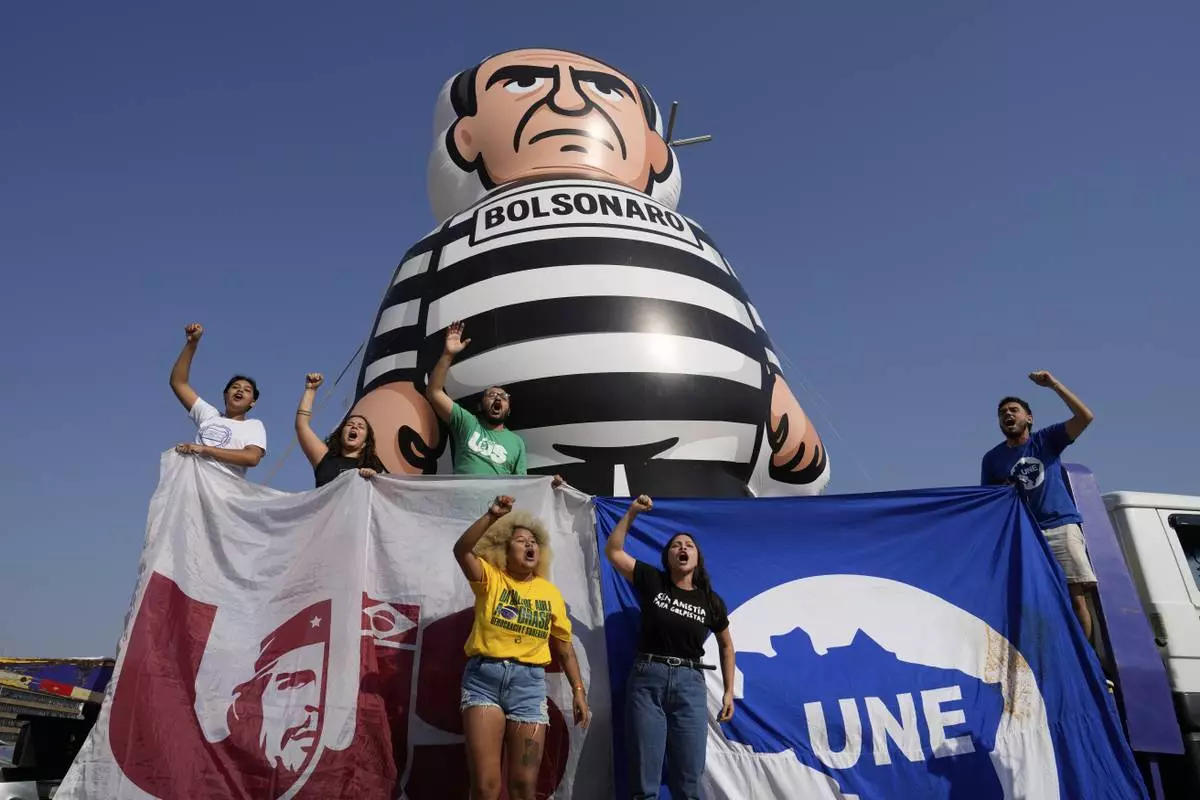
University students display an inflatable doll of Brazil's former President Jair Bolsonaro wearing prisoner garb in Brasilia, Brazil, Friday, Sept. 12, 2025, the morning after the Supreme Court convicted and sentenced him to prison for attempting a coup to remain in office despite his 2022 electoral defeat. (AP Photo/Eraldo Peres)
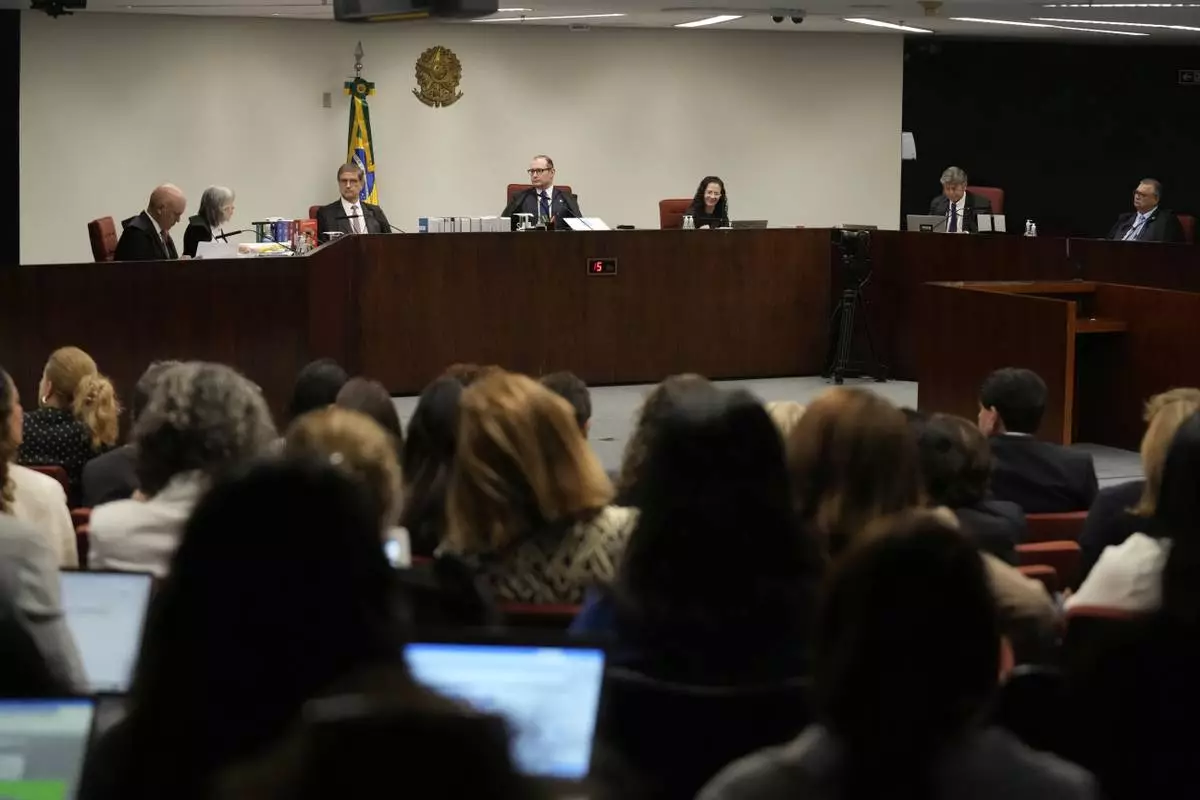
Justices of the Brazilian Supreme Court meet for the verdict and sentencing phase of a trial for those charged in an alleged coup plot to keep Brazil's former President Jair Bolsonaro in office after his 2022 election defeat, in Brasilia, Brazil, Thursday, Sept. 11, 2025. (AP Photo/Eraldo Peres)

Brazil's former President Jair Bolsonaro stands at the entrance of his home where he is under house arrest in Brasilia, Brazil, Tuesday, Sept. 2, 2025. (AP Photo/Luis Nova)