Skip to Content Facebook Feature Image

China's AI business leaders see potential to reshape industries

China

China

China

China's AI business leaders see potential to reshape industries

2025-09-14 14:05 Last Updated At:16:57

New and emerging applications for AI will bring huge opportunities for development and reshape entire industries, said business leaders attending the China AI-Generated Content (AIGC) Innovation and Application Forum 2025, held on Friday in Beijing.

As part of the 2025 China International Fair for Trade in Services (CIFTIS), the forum themed "from large models to intelligent agents: driving a new AI ecosystem" attracted many government officials, researchers and business leaders from global tech giants and startups like Siemens, Cisco, IBM, AgiBot Robotics, DEEP Robotics, Fabarta and SenseTime.

Guests discussed topics related to AIGC innovation and application, as well as the burgeoning investment opportunities brought by AI technology.

"We are talking about AI's role of reshaping industry. We're no longer talking about the AI technology itself. Any technology, when applied to industry, will create an effect where one plus one is greater and much greater than two, and can bring about industrial upgrading," said Gao Xuefeng, founder and CEO of Fabarta, an AI infrastructure company based in Beijing.

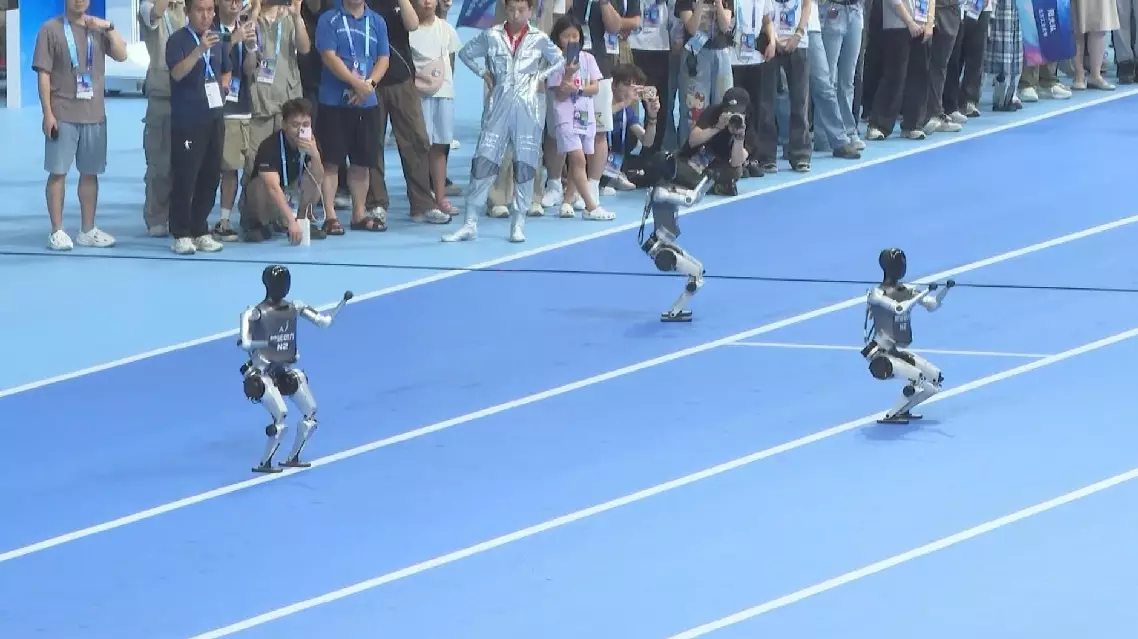
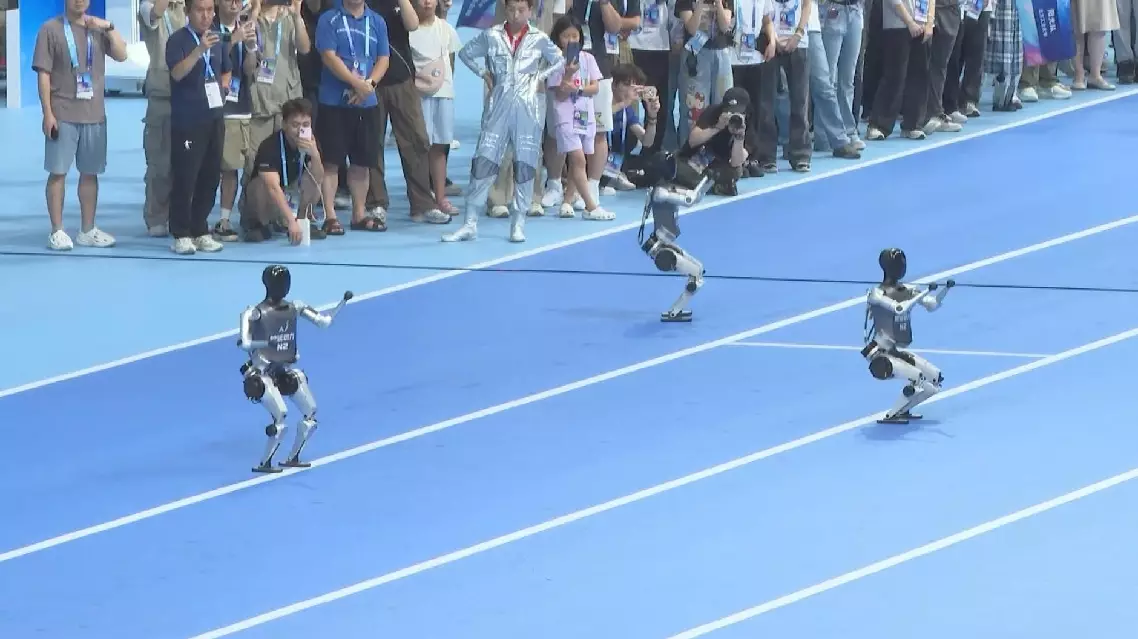
Thanks to the application of AI models, China has seen rapid growth of intelligent robotics in recent years. Robots developed by Chinese tech companies can operate in complex environments for patrols, inspections, search and rescue.

The forum guests said the robot application scenarios will become more diverse as stability and reliability improve and costs gradually decrease.

Senior executives from DEEP Robotics said the company's high-end quadruped robots combine power, agility, and flexibility and can replace humans in complex tasks. The company believes that four-legged robot dogs are particularly suited for dangerous scenarios such as rescue operations.

"The biggest advantage of quadruped robots is that they are well adaptable to muddy riverbanks, deserts, stairs and grass. They can replace humans to better complete some tasks whether indoors or outdoors," said Ge Yongle, deputy general manager of DEEP Robotics.
China's AI business leaders see potential to reshape industries
China's AI business leaders see potential to reshape industries

China's AI business leaders see potential to reshape industries

China's AI business leaders see potential to reshape industries
The European Commission's proposal to use frozen Russian assets as collateral to finance Ukraine "cannot deprive Russia of ownership of these assets", European Central Bank (ECB) President Christine Lagarde said on Wednesday.

Lagarde stated that this proposal is the closest one so far to complying with international law. She added that to address investor concerns, the European Union (EU) needs to explain that it is not "trying to seize Russian sovereign assets for its own benefit".

Lagarde has long expressed concerns about using frozen Russian assets. She said the ECB is keen to ensure that any outcome respects international law, otherwise the global reputation of the euro could be damaged.

In response, Russian Foreign Minister Sergey Lavrov said on Wednesday local time that Russia has no plans or intention to go to war with Europe, but Russia will respond to any deployment of European military forces in Ukraine as well as to attempts to seize Russian assets in Europe.

Following the outbreak of the Russia-Ukraine conflict in February 2022, Western countries froze approximately 300 billion U.S. dollars in Russian overseas assets. Among these, the EU froze about 200 billion euros (about 232 billion U.S. dollars) worth of assets belonging to the Russian central bank.

Approximately 90 percent of the frozen Russian assets within the EU are held by Euroclear Bank, based in Brussels, Belgium. Russia has repeatedly emphasized that, under international law, any seizure of its assets by Western governments constitutes "theft".

In September, European Commission President Ursula von der Leyen proposed establishing a "reparation loan" mechanism, intending to use frozen Russian assets as collateral to provide Ukraine with a total loan of about 140 billion euros (163 billion U.S. dollars).

However, Belgium and the ECB believe this plan carries significant risks in terms of international law and the financial stability of the eurozone.

ECB chief urges caution in using frozen Russian assets for Ukraine

ECB chief urges caution in using frozen Russian assets for Ukraine

Recommended Articles