Jengisgul Nurdahin, a native from northwest China's Xinjiang Uygur Autonomous Region, has been striving for years to preserve the traditional craftsmanship of yurts -- a round, tent-like structure used as dwelling places for nomadic Kazakh people in Xinjiang.
The 57-year-old craftswoman said she aspires to pay tribute to this ancient local art form by becoming the living embodiment of traditional yurt craftsmanship.
Born in Yining City of Xinjiang's Ili Kazakh Autonomous Prefecture, Jengisgul began studying clothing-making from a young age, and became a National Intangible Cultural Heritage Inheritor of Kazakh Traditional Clothing more than 10 years ago.
"Creating these garments feels like second nature to me, as though it's woven into my very being. But in my mind, the image of the yurt kept reappearing — its shape, its spirit, unforgettable," she said.
Having grown up in yurts, Jengisgul said she has a deep love for yurt culture besides clothing-making. That is why she decided to learn the traditional yurt craftsmanship several years ago and try to compile the types of decorative patterns into a document by studying historical records and visiting elderlies.
"Kazakh yurts are more than just homes — they are the beating heart of our tribal identity. They represent our entire way of life: how we eat, live, and make our way across the steppes as an ethnic group. So I have undertaken extensive research on the yurt," she said.
"For example, Kazakh yurts can be divided into 22 categories, all of which I've documented in detail. All traditional yurts share four key characteristics: their shapes, iconic architectural techniques, uniform door orientations, and the use of natural materials like felt and leather," she said.
When categorized, each yurt reveals distinctive symbolic patterns. Gold and yellow represent prosperity and noble status. Vibrant red interiors were usually seen in joyful and celebratory spaces for weddings.
"I began my work with yurts by first compiling an extensive research document. According to my findings, I systematically analyzed and compared ornamental patterns found on traditional garments with those on yurts. By carefully differentiating, categorizing, and synthesizing these design elements, I developed guidelines for authentic yurt construction. All preparatory documentation was completed before I began the physical production," she said.
Traditional yurt-making techniques are knowledge passed down from the elders by word of mouth. With their descriptions of how the yurts were built, the woodworking techniques are clear, as is the process of making felt.
However, for certain methods like rope-making and cord-wrapping, Jengisgul said they only know them in theory, without any practical ways of doing it. The most challenging part of yurt making is the enclosing belt made from a sort of feather grass, which is placed under the yurt's roof. It is handmade, and the craftsmen skilled in weaving the feather grass are typically between 60 and 70 years old, she said.
"Only a few yurt craftsmen are in their 50s. Younger people rarely master this skill. There are so many intangible cultural heritage elements tied to yurts, many of which are at risk of disappearing. That's why I feel an urgent need to become an inheritor for yurts," she said.
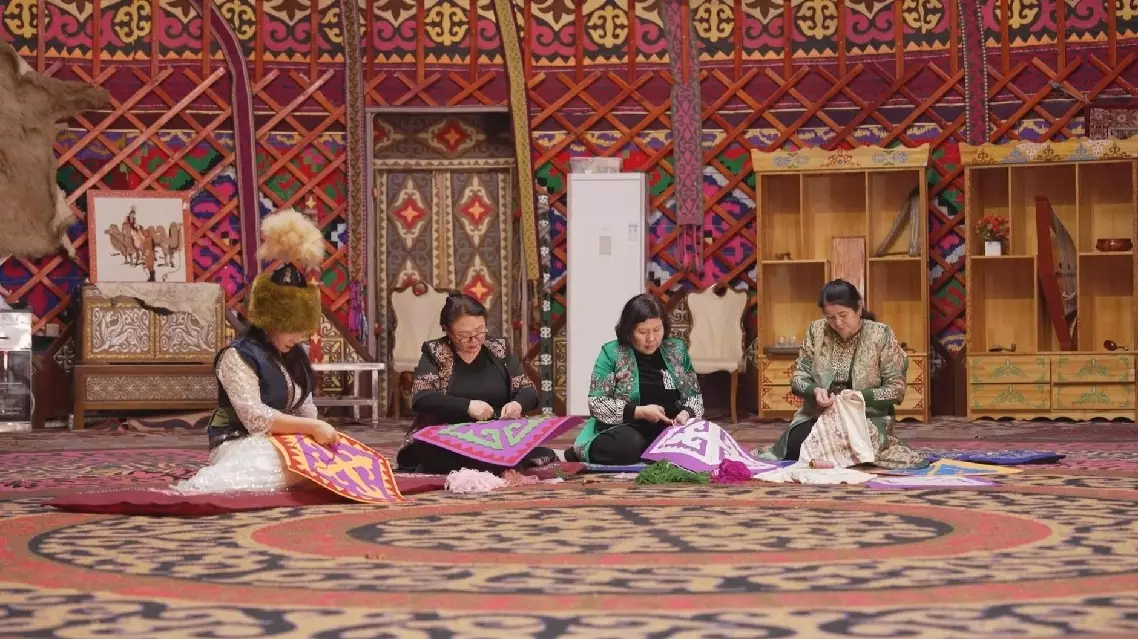
Craftswoman aspires to preserve traditional yurt heritage in Xinjiang
Craftswoman aspires to preserve traditional yurt heritage in Xinjiang