Modern transportation network has improved people's living standards in Yutian County of northwest China's Xinjiang Uygur Autonomous Region.
Located at the southern edge of the Taklimakan Desert, China's largest desert, the remote county of Yutian once was a poverty-stricken area difficult to reach from other parts of the country.
The situation has been improving after China started to build infrastructure projects in the area amid its national poverty alleviation campaign from 2015 to 2020 and established a modern transportation network in Xinjiang in recent years.
"There are many airports in Xinjiang, and you can get here by transferring in Urumqi," said Shi Jinxia, a tourist visiting the Kurban Tulum Museum in Yutian.
"We drove here all the way on the highway. It only took one hour and 20 minutes to get here from Cele County of Hotan," said a local tourist.
"We came here by car from Korla to Aksu, to Kashgar, then to Hotan," said a self-driving tourist.
The museum in Yutian is dedicated to Kurban Tulum, a late local peasant who wished to ride a donkey from Xinjiang to Beijing to visit Chairman Mao Zedong back in the 1950s.
While his first attempt at this bold adventure was stopped by local residents and officials, he finally realized his dream in 1958 when he was received by Chairman Mao.
"Now it takes two hours flying from Yutian to Urumqi and another four hours flying from Urumqi to Beijing. Back then, my great-grandfather prepared two large gourds filled with water and more than 100 naan bread for his journey to Beijing. He said as long as his donkey doesn't fall over and keeps going, he will reach Beijing in the east direction where the sun rises," said Rukyam Metseydi, great-granddaughter of Kurban Tulum who now serves as a guide at the museum.
Rukyam said the rail station of Yutian is operating four trains every day, connecting Yutian with other parts of the country. The local Yutian Wanfang Airport, completed in 2020, is providing eight air routes for travelers.
"Now, when I go to Beijing, I don't even need to bring naan bread with me. Sometimes I just bring them as gifts to friends. It's really convenient for us to travel now, and we have many options," she said.
Logistic services in the county are also improving with the modern transportation facilities. The local agricultural products like roses, walnuts, and red dates are being sent nationwide. Seafood is also farmed on what was once saline-alkali land.
"We transport the fish fry from the eastern coastal areas by air to ensure the freshness ultimately. After the harvest of the seafood, we will quickly transport them via highways to markets in Xizang and Qinghai," said Guan Zhixiong, manager of a local aquaculture base.
The well-developed transportation network has connected Yutian to the wider world outside, bringing new opportunities for people living in the county, Guan said.
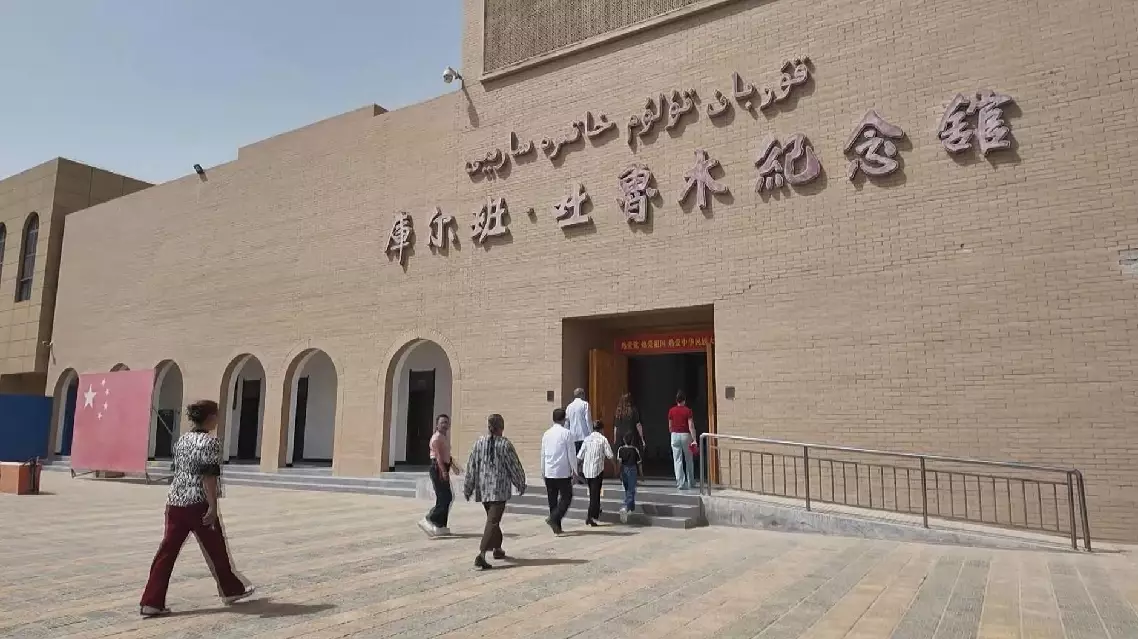
Modern transportation network improves living standards in desert county of Xinjiang