Fish breeding and release activities were carried out across China's five major river basins, including the Jinsha, Yalong, and Lancang rivers, on Thursday -- the World Environment Day, as part of a national drive themed "Comprehensive Green Transition for a Beautiful China". In the upper reaches of the Jinsha River, five hydropower stations, including Yebatan, Batang, and Suwalong, jointly carried out a fry release event for the first time. More than 680,000 fry of rare fish were released in the River.
Before being released, these fry of rare fish were given otolithic thermal marking or fluorescence markers -- a process akin to issuing an ID card for each fish. No matter where they swim in the future, they can be accurately identified, providing precise data to support scientific evaluation of the release effect. In this round of fish release, the Batang hydropower station in southwest China achieved 100 percent full coverage of tagged fish for the first time in a nationwide release activity.
In order to accurately track the migration of fish, engineers developed a "fish-face" recognition system. This system uses underwater high-definition cameras and other equipment, combined with AI recognition algorithms, to accurately identify each fish's species, size, and other information.
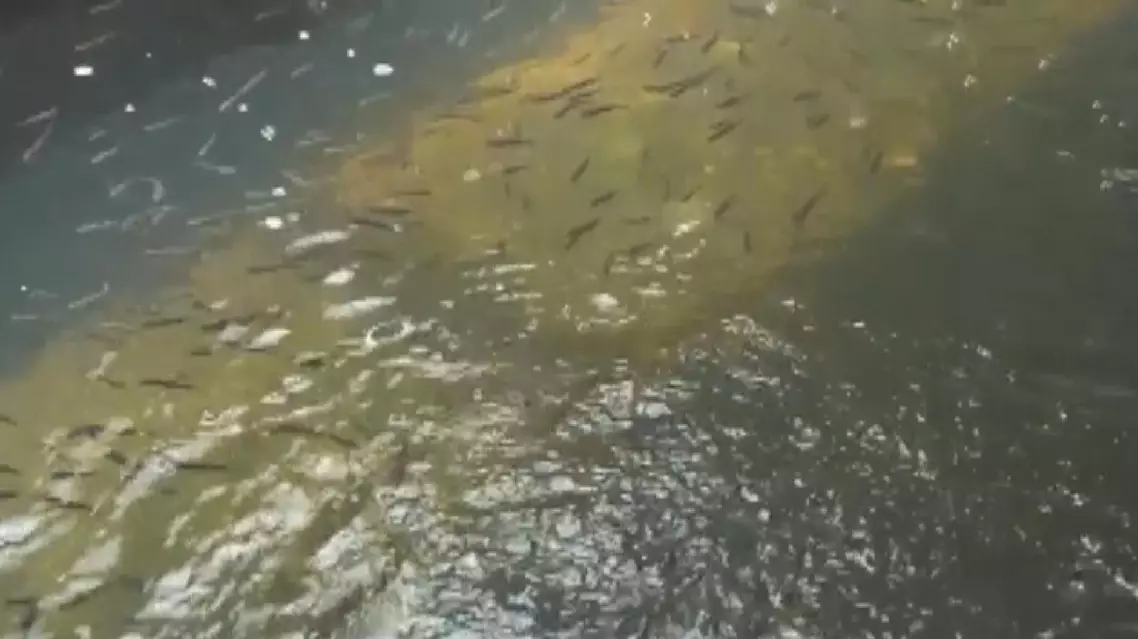
China conducts fry release events to increase fish stock, protect environment
China conducts fry release events to increase fish stock, protect environment