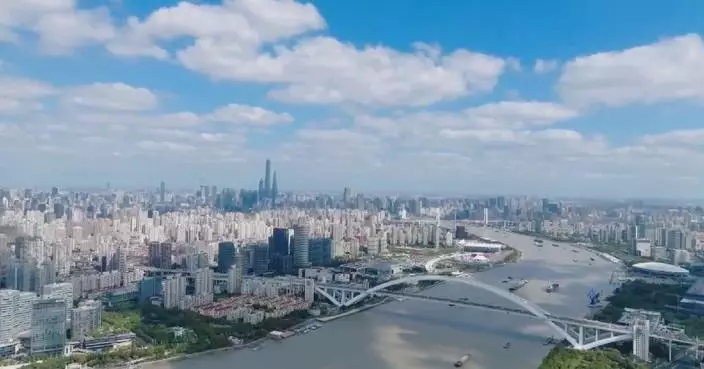
China is pushing forward with high-standard opening-up, and Shanghai, one of the world's top megacities, is at the forefront, boosting the country's growing influence in global trade.
At Shanghai's Haitong International Automotive Terminal in the Waigaoqiao Port Area, domestic vessels arrive daily from the Yangtze River, packed with China-made cars.
There, at the nation's largest roll-on/roll-off terminal for complete vehicles, the cargo is shifted onto oceangoing ships bound for export.
"At our terminals, we handle at least 10,000 vehicles per day. The export volume of China-made vehicles has been steadily growing. A decade ago, the business was almost entirely dominated by imported cars, and the crews were all foreign. Now, it’s all exports," said Wei Jiajian, dispatch manager in the Terminal Operations Department at Shanghai Haitong International Automotive Terminal.
In 2024, Haitong handled more than 3.6 million vehicles across its 'two ports, three terminals' network, topping the global rankings for the first time.
Between January and August 2025, Shanghai Waigaoqiao Port Customs recorded more than 960,000 vehicles exported through Haitong's Waigaoqiao terminal, a year-on-year increase of over 19 percent.
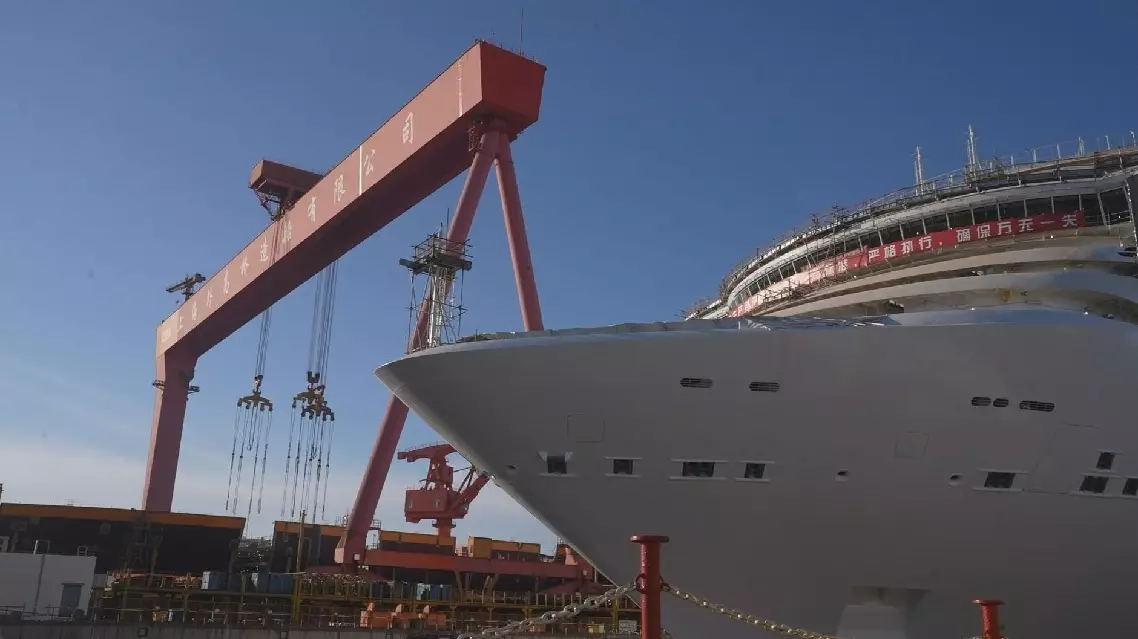
At the same time, the shipyard is also riding this wave of rapid growth.
"Based on the current order book, the total value will exceed 10 billion U.S. dollars. Annual deliveries are usually just over 20 vessels, but this year may surpass that, reaching 27 or 28. In fact, China's automobile exports have been setting new records in recent years," said Wei Yan, assistant marketing manager at the Shanghai Waigaoqiao Shipbuilding Company.
The strong momentum in manufacturing is being matched by steady advances in the financial markets, together shaping a new model of mutual empowerment. The Shanghai Futures Exchange now lists 43 futures and options contracts, providing real-sector enterprises with powerful tools to hedge against risk.
"When domestic and foreign enterprises engage in cross-border trade of products such as crude oil, bonded copper, and TSR20, they reference our futures prices in their contracts. In effect, they are using these benchmarks to conduct real commodity transactions with real money. I think this also reflects our influence on pricing," said Zhou Yu, senior manager in the International Cooperation Department at the Shanghai Futures Exchange.
The growing global influence of the "Shanghai Price" is transforming China's manufacturing strength into increased pricing power -- demonstrating how a dynamic China is actively shaping the future of world trade.
Shanghai powers China's global trade ascent
Japan's latest record-high defense budget and a broader shift in security policy since Prime Minister Sanae Takaichi took office have sparked alarm, with a Japanese military commentator warning that Tokyo's accelerating militarization deserves close international vigilance.
In an interview with China Media Group, Japanese military commentator Konishi Makoto said the trend signals a dangerous turn that could undermine regional peace.
Japan's draft defense budget was set at a record 9.04 trillion yen (about 58 billion U.S. dollars) for fiscal 2026, local media reported Friday.
The figure exceeds the then record initial budget of 8.7 trillion yen for the current fiscal 2025 starting in April and is in line with Japan's defense buildup plan to allot about 43 trillion yen to defense outlays from fiscal 2023 through 2027.
Konishi pointed out that Japan's moves toward debating nuclear weapons are not impulsive, but the result of long-term planning.
"[The Japanese government] is raising military spending to 2 percent, 2.5 percent, or even 3 percent of GDP. Japan is advancing militarism at an astonishing pace. In the past, Japan clearly rejected nuclear armament, but the logic has now shifted to discussion, then acceptance, and eventually nuclearization. Japan is currently moving along this path," he said.
He warned that policy moves since Takaichi took office have not only heightened regional tensions but could also pushed Japan closer to the front line of conflict, calling for heightened alertness and a strong curb on it.
"I think simply withdrawing the statements or issuing an apology is far from enough. If this process of militarization is not fundamentally stopped, the problem cannot be truly resolved," he said.
Konishi further noted that Japan's rightward shift in recent years is closely tied to a failure to properly reflect on its history of aggression.
"As a Japanese person, I feel deeply ashamed. Historical revisionism is resurfacing. Combined with the policy direction of the Takaichi administration, politicians' visits to the Yasukuni Shrine, and the Self-Defense Forces' so-called 'southwestern shift strategy,' it has formed an absurd logic: 'We are victims, so we must avoid failing again.' This way of thinking is spreading in society. The inferiority complex born from defeat is gradually turning into blind confidence, which is a key feature of the current ideological changes in Japan," he said.
Under the defense budget, 100.1 billion yen has been earmarked for building the "Shield" layered coastal defense system, which requires numerous aerial, surface and underwater vehicles, while 1.1 billion yen has been set aside to assess the use of long-endurance drones as a measure against airspace violations, Kyodo News reported.
Meanwhile, an 18.3 trillion yen supplementary budget enacted on Dec. 16 for the current fiscal year included 1.7 trillion yen for security and diplomacy, allowing Japan to bring defense-related spending to its target of 2 percent of gross domestic product within fiscal 2025, two years ahead of the previous schedule, the report said.

Military analyst calls for vigilance against Japan's accelerating militarization