Advanced digital tools and automated systems have been reshaping agriculture in northwest China's Xinjiang Uygur Autonomous Region, with local farms adopting high-tech systems to increase productivity and improve livelihoods.
In Bortala Mongolian Autonomous Prefecture, a cattle farm housing 55,000 animals has introduced digital ear tags that are embedded with intelligent chips. The tags can monitor each cow's age, weight, temperature, and health status from birth.
Cows are raised in pairs per unit in the barn, which is equipped with a ventilation system that provides warm air during the harsh winters, ensuring optimal living conditions all-year round.
Cattle grow from 380 kilograms to around 950 kilograms in just 13 months, thanks to the farm's 2,000 hectares of organic feed crops. Automated feed mixers blend alfalfa, wheat straw, and rolled corn into a high-nutrition diet.
With these technologies, the farm is helping local farmers build better lives.
As of 2024, Xinjiang is home to more than 84,000 large-scale livestock farms. The animal husbandry sector now has an output value of 15.6 billion U.S. dollars.
"Whether it's livestock breeding, crop cultivation, or even processing, we are collaborating with farmers. Through this approach, we help to increase their incomes," said Chen Rulong, vice president of Tian Lai Agri-Animal Husbandry Group.
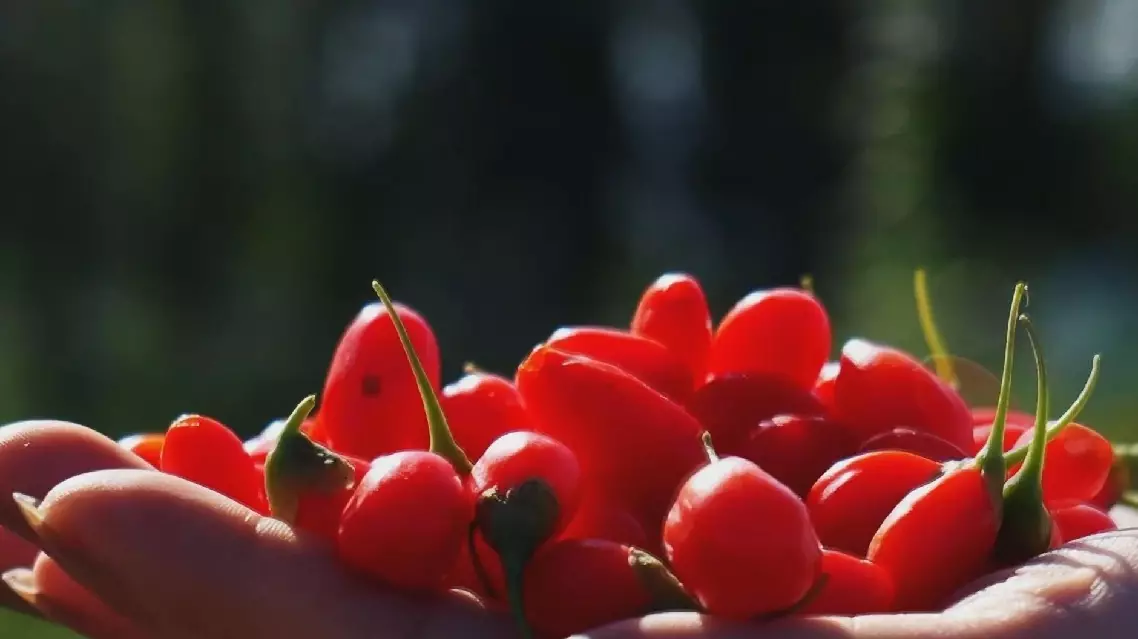
In Jinghe County, the heartland of China's goji berry production, technology is redefining agriculture.
"Our new varieties produce approximately 16.5 tonnes per hectare. Now, the entire process of weed control, pesticide application, and planting has been mechanized," said Yang Wenhao, deputy secretary of the Tori Township Committee of the Communist Party of China (CPC).
With long hours of sunshine and sharp temperature variations, Jinghe's climate offers perfect conditions for growing top-quality goji berries. These berries are exported to Central Asia and the European Union, aided by low-temperature vacuum-drying technology that extends freshness from one day to 12 months.
"We use low-temperature vacuum-drying preservation technology, which effectively maintains the nutritional content of goji berries, as well as its texture and flavor," said Zhao Yuying, vice president of Xinjiang Qimingxing Goji Berry Group.
High-tech innovations drive development of food production in Xinjiang
High-tech innovations drive development of food production in Xinjiang