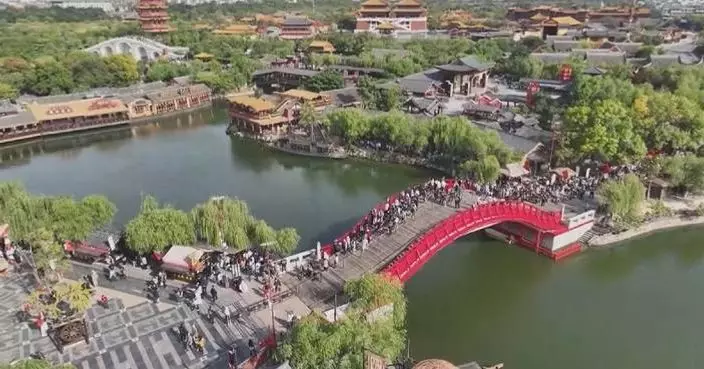
A museum in northwest China's Xinjiang Uygur Autonomous Region has used modern technology to showcase centuries-old burial customs, giving the gravestones the potential to speak across time.
In 2007, during the construction of an underground pass in Xinjiang's Kucha City, a tomb complex dating back to the Wei and Jin dynasties (220-420) was unexpectedly discovered.
The tombs were well-preserved, and the funerary objects were exquisite, providing invaluable physical evidence for the studies of the history of the Western Regions.
Kucha, known as Qiuci in ancient times, was one of the 36 states of the ancient Western Regions. It was an important hub on the ancient Silk Road and a key intersection for the convergence of Eastern and Western cultures.
Buddhist art, music, and murals flourished, giving rise to the unique Qiuci culture.
For these tombs that had been dormant for over 1,000 years, Ma Lili, curator of the Qiuci Wei and Jin Ancient Tomb Site Museum, pondered with her team over how to bring the historical value of these relics to the public's attention.
Ultimately, the team decided to use digital technology to bring the artifacts to life.
Through interactive exhibitions, the tombs and the funerary objects were restored to their original appearance, allowing visitors to personally appreciate the brilliance and charm of Kucha culture, and breathing new life into this ancient civilization in the modern age.
She elaborated on challenges and the team's design philosophy.
"We planned to exhibit 15 tombs. But we met a challenge, that is, how to showcase these tombs with a limited number of funerary objects, as most of the unearthed objects were pottery vessels, belonging to similar categories. Further, we hoped to preserve the relics in the exhibition without causing damage to the artifacts. Our team designed the exhibition from the visitors' perspective. We asked ourselves: 'What would you want to learn?' 'Where are we?' This led us to raise one question after another," said Ma.
Using one of the tomb relics as an example, the curator explained how the museum uses digital technology to offer visitors engaging educational experience.
"We chose to use digital displays, integrating the unearthed artifacts and funerary objects into the exhibition. We tried to enhance storytelling effects through interactive activities. We also prepared information boards. This combination allowed for an engaging and informative exhibition. Visitors could gain insights into the history behind the tombs, view the artifacts, and develop a deeper understanding of the tomb structures. This proved to be an effective approach, on the whole," said Ma.
"Tomb M3 is of great historic significance. With digital reconstructions, its screen wall vividly depicts the Four Celestial Guardians: Azure Dragon, White Tiger, Vermilion Bird, and Black Tortoise, identical to the brick-chambered tombs in the two Han dynasties in Wuwei, Gansu. The brick carvings also depict the legendary Tianlu (celestial deer) and Xiezhi (mythical law beast), along with the jade-disc and diamond patterns. Additionally, the tombs' architecture features Han-style bracket sets with one large inverted arch holding two small ones, which are consistent with Han-style tombs in the Hexi Corridor, indicating cultural continuity," she added.
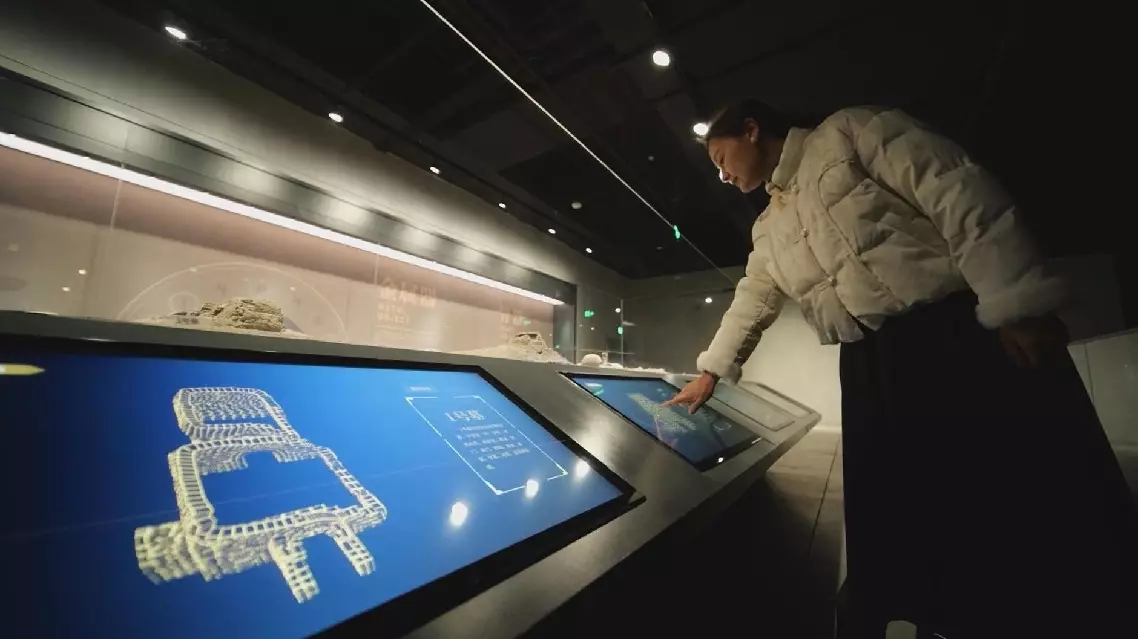
Xinjiang museum showcases centuries-old burial customs by applying modern technology
South China's Guangdong Province is accelerating its transformation into an international medical tourism hub, positioning itself as a destination for patients worldwide seeking affordable, high-quality care.
The push follows a joint initiative announced in late March by nine Chinese government departments, including the Ministry of Commerce, aimed at boosting spending by foreign tourists and enhancing exports of tourism services as part of broader efforts to expand the country's service sector.
Every day, some of the most complex surgeries are performed here. Li Zilun, deputy director of the division of vascular surgery at the First Affiliated Hospital of Sun Yat‑sen University, is among the doctors capable of carrying out these intricate procedures.
He recently completed surgery on a patient with an aortic aneurysm, a condition often described as a "time bomb" in the body’s main artery, increasingly common in aging societies around the globe. Li also specializes in highly difficult and pioneering procedures, including repairing leaks caused by failed grafts.
"This was a very challenging case. And then, we implanted the covered stent to eliminate the endoleak. Actually, the outcome was pretty good. The patient will be discharged today," said Li Zilun.
The ability to handle such complex cases -- combining international techniques with domestically produced devices -- is drawing patients from around the world to seek treatment. In addition, high safety standards and low costs are also major draws.
"Our government is encouraging innovation. So, lots of physicians -- including our vascular surgeons -- we are actively involved in the innovation that helps to increase the effectiveness and safety, and also bring down the cost," said Li.
This hospital is one of the first in Guangdong to be designated by the provincial health commission as a pilot site for building an international medical service hub.
The growing number of patients has pushed the hospital to explore new ways to transform every step -- from treatment to payment and everything in between -- into a seamless experience, reducing waiting times and delivering better care for patients.
"I think it's fast. When the patient come here for just about, I think, one week, you can solve the problem," said Xiao Haipeng, president of the First Affiliated Hospital of Sun Yat-sen University.
The hospital is also deepening its international cooperation with top-tier medical institutions, including those at Harvard University.
"Not just for China, for the whole globe, we are facing health care challenges -- emerging infectious disease and chronic, lung infectious diseases, and also the aging population, also the shortage of healthcare workforce," said Xiao.
In response to these challenges, China is promoting its own solutions, including aggressive innovation in artificial intelligence (AI)-driven workflows, while stepping up research and development investment and global engagement along the way.
"In recent years, the innovation in Western medicine is dramatically growing. An example of my hospital -- in the past few years, we have 140 innovations and seven of them are international leading innovations," said Xiao.
As global demand for medical tourism grows, China is positioning itself as a new destination. Official data shows that the number of foreign patients in Guangdong increased by 20 percent last year. Among them, the growth in inpatient admissions was even faster, rising by 76 percent.
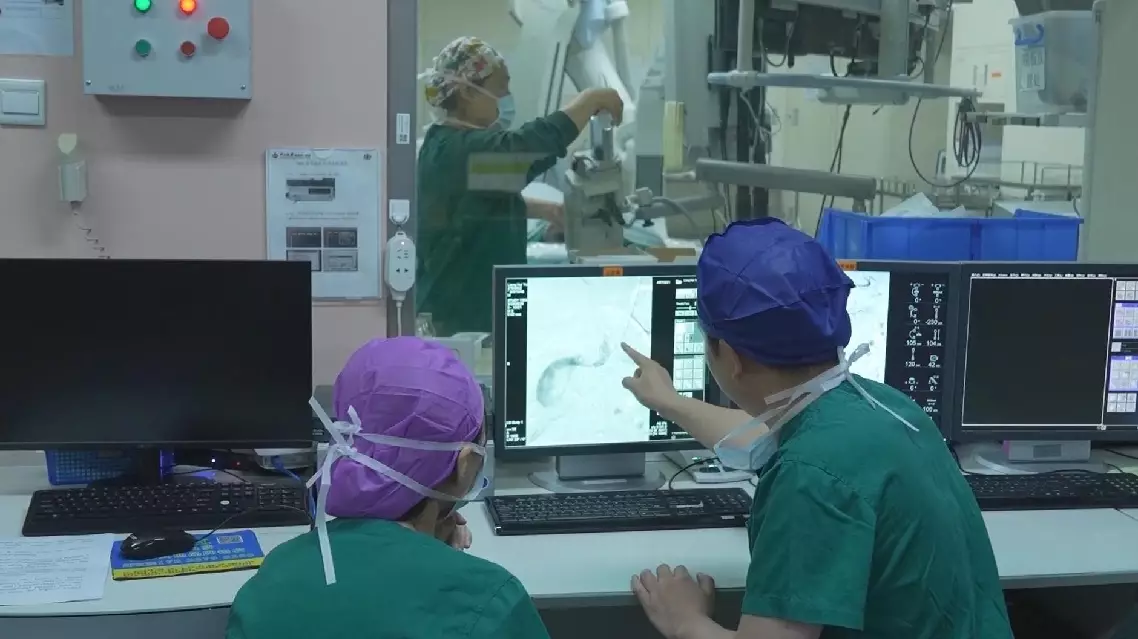
Guangdong fast-tracks pilot for int'l medical service hub