Skip to Content Facebook Feature Image

Utah campus where Charlie Kirk was shot provided less security than other venues as he toured nation

News

Utah campus where Charlie Kirk was shot provided less security than other venues as he toured nation
News

News

Utah campus where Charlie Kirk was shot provided less security than other venues as he toured nation

2025-09-16 14:29 Last Updated At:14:40

OREM, Utah (AP) — Less than two weeks before Charlie Kirk's assassination in Utah, a sheriff's department in central California conducted three days of reconnaissance to prepare for a speech by the conservative firebrand at a local church in politically friendly territory.

Officials researched potential escape routes and identified local activists opposed to Kirk. On the day of the indoor event in Visalia, which drew 2,000 people, some 60 law enforcement officials monitored Kirk's movements to and from the church, even deploying a drone to secure surrounding rooftops, said Tulare County Sheriff Mike Boudreaux.

“The very nature of Charlie Kirk coming in requires you take special attention to the nuances of what could possibly happen,” Boudreaux said. “He’s a high profile name and personality. Not only do we have to provide for the safety of people attending, we have to provide for the safety of him."

By contrast, Kirk's outdoor event at Utah Valley University last week was out in the open, but with far less security. Six campus police officers — about a quarter of the force — worked the event, which drew 3,000 people, Jeff Long, the campus police chief, said last week. The department hasn’t said whether they inspected nearby rooftops; the suspect shot and killed Kirk from atop a building hundreds of feet away.

As he crisscrossed the country to spread his conservative ideals at college campuses, Kirk preferred to be as close to students as possible, allowing him to strike up conversations with passersby. His level of protection varied greatly — campus police often took the lead on overall security, while Kirk's private detail focused on up-close protection.

His assassination at Utah Valley has drawn even more attention to the role that campus police departments play in protecting high-profile and divisive political figures who regularly make college visits. Security experts have questioned everything from the number of officers deployed to the decision to hold the event outside, where Kirk ended up in the direct line of sniper fire.

The university's security plan is not part of the Utah Department of Public Safety's investigation into the shooting, department Commissioner Beau Mason said.

Utah House Speaker Mike Schultz, a Republican, said lawmakers may order a review of security measures at Utah Valley following the assassination.

When Kirk spoke at Illinois State University in April, more than a dozen campus police officers patrolled the 700-person crowd, and more officers watched cameras trained on nearby buildings from an operations center. The same month, University of Wyoming police assigned about 15 officers to an indoor Kirk appearance.

In other cases, arrangements were similar to last week's debate in Utah. At an outdoor Michigan State University event, a student organizer with the campus Turning Point USA chapter said there were eight to 10 campus officers. Kirk was founder of Turning Point USA, one of the nation’s largest political organizations with chapters on high school and college campuses.

Kirk's own security team of around six people was present at each event.

Security experts told The Associated Press they expect to see more events held indoors to protect against similar attacks, as outdoor events greatly increase vulnerability. College campuses are generally open and accessible, making them extremely susceptible to shootings, said Don Aviv, CEO of the security firm Interfor International.

Without monitoring rooftop access and blocking shooter sightlines, Aviv said, “it doesn’t matter how many armed personnel you have ringing the speaker, you would not have been able to protect against a long gun.”

Kirk requested to speak outside at Utah Valley so that he could engage with students, spokeswoman Ellen Treanor told the Salt Lake Tribune. When he visited campus in 2019, he spoke in a ballroom.

The desire by Kirk's team to make him as accessible as possible complicated security planning, said Aaron Woodruff, police chief at Illinois State University.

“It makes it hard to protect somebody when you have people on all sides of him," Woodruff said.

Woodruff ran a security plan past Kirk’s team by phone and then did a walk-through on site. Security cameras trained on nearby buildings allowed officials to monitor rooftops and surrounding areas, Woodruff said.

The up-close nature of Kirk's interactions appealed to his followers, said Alex Bitzan, the TPUSA chapter president at Michigan State, who helped organize an April event held on a campus lawn.

“People are drawn to the open conversation. People are drawn to the fact that he’s unscripted,” Bitzan said. “When you’re outside in public like that, I don’t see what would solve what happened last Wednesday."

Daniel Schoenherr, a photographer who covered the Michigan State event for the campus newspaper, recalled police on foot and at least two or three campus police cars nearby. Access to the event was easy. Schoenherr estimated that more than 1,000 people were there, many of them non-students. Kirk's personal security focused on the immediate crowd.

“If someone was to throw a brick at Kirk — that wouldn’t happen. There was a lot of personal security close by,” Schoenherr said.

The attempted assassination of President Donald Trump last year in Butler, Pennsylvania, should have raised concerns about the vulnerability of sniper attacks from nearby rooftops, said James Hamilton, who founded the FBI’s close protection school.

“Butler told people it’s not that hard to get a rifle, get up on a roof and shoot,” Hamilton said.

Private sector security has to make compromises based on clients' desires, said Hamilton, who said it would have been much safer to hold Kirk’s events indoors.

A Utah Valley spokesperson did not respond to emailed questions seeking information about security planning, public safety officer assignments and whether rooftops were inspected.

“This is a police chief’s nightmare,” Long, the campus police chief, said last week. “You try to get your bases covered, and unfortunately today we didn’t, and because of that we had this tragic incident.”

For a University of Wyoming event in April, campus police reached out to Texas A&M and other universities Kirk had recently visited to better understand how they handled security, said campus Police Chief Josh Holland.

His officers checked the locks on building doors that would have allowed access to roof spaces. There were no metal detectors, Holland said, but the 1,800 attendees were prohibited from bringing bags into the venue at the university’s arts and sciences building. At Utah Valley, students were allowed to bring bags.

Turning Point USA did not respond to requests for comment about security protocol for Kirk’s events.

The organization said last week that Kirk had received “thousands” of threats but “always prioritized reaching as many young Americans as possible over his own personal safety.”

__

Brook reported from New Orleans and Lauer from Philadelphia. Associated Press journalists Jim Mustian and Jake Offenhartz in New York, Hannah Schoenbaum in Salt Lake City and Ed White in Detroit contributed reporting.
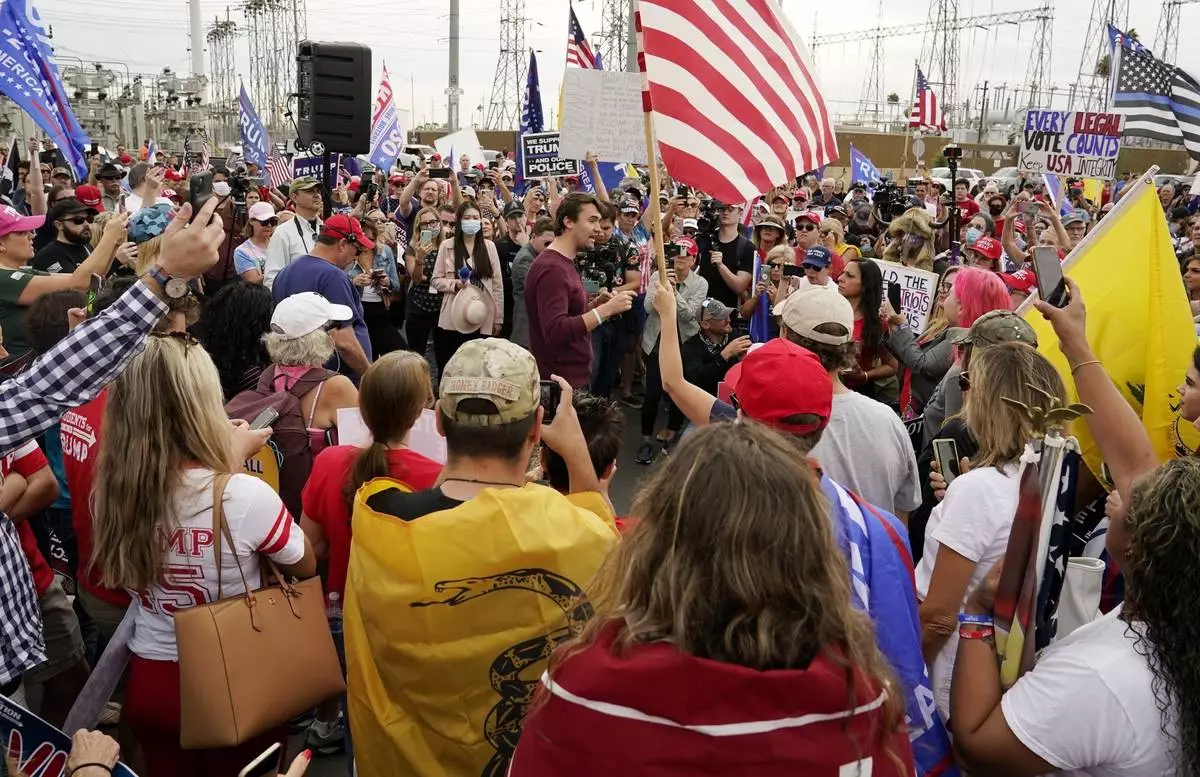
FILE - Charlie Kirk, center, conservative activist and founder of Turning Point USA, speaks to supporters of President Donald Trump at a rally, Nov. 6, 2020, in Phoenix. (AP Photo/Ross D. Franklin, File)
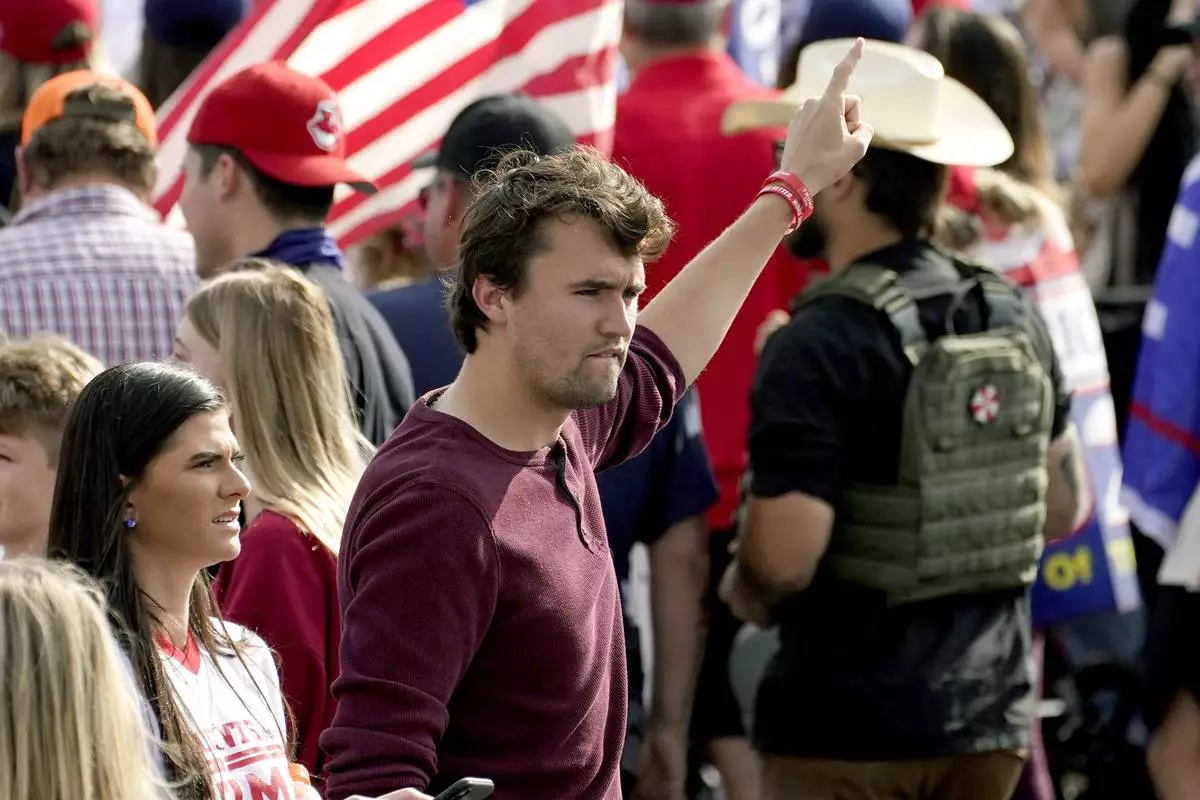
FILE - Charlie Kirk, center, conservative activist and founder of Turning Point USA, speaks to supporters of President Donald Trump at a rally, Nov. 6, 2020, in Phoenix. (AP Photo/Ross D. Franklin, File)

FILE - Charlie Kirk, conservative activist and founder of Turning Point USA, walks through the crowd at a pro Trump rally outside the Maricopa County Recorder's Office where elections officials continue to count ballots, Friday, Nov. 6, 2020, in Phoenix. (AP Photo/Matt York, File)
FILE - Charlie Kirk, conservative activist and founder of Turning Point USA, walks through the crowd at a pro Trump rally outside the Maricopa County Recorder's Office where elections officials continue to count ballots, Friday, Nov. 6, 2020, in Phoenix. (AP Photo/Matt York, File)

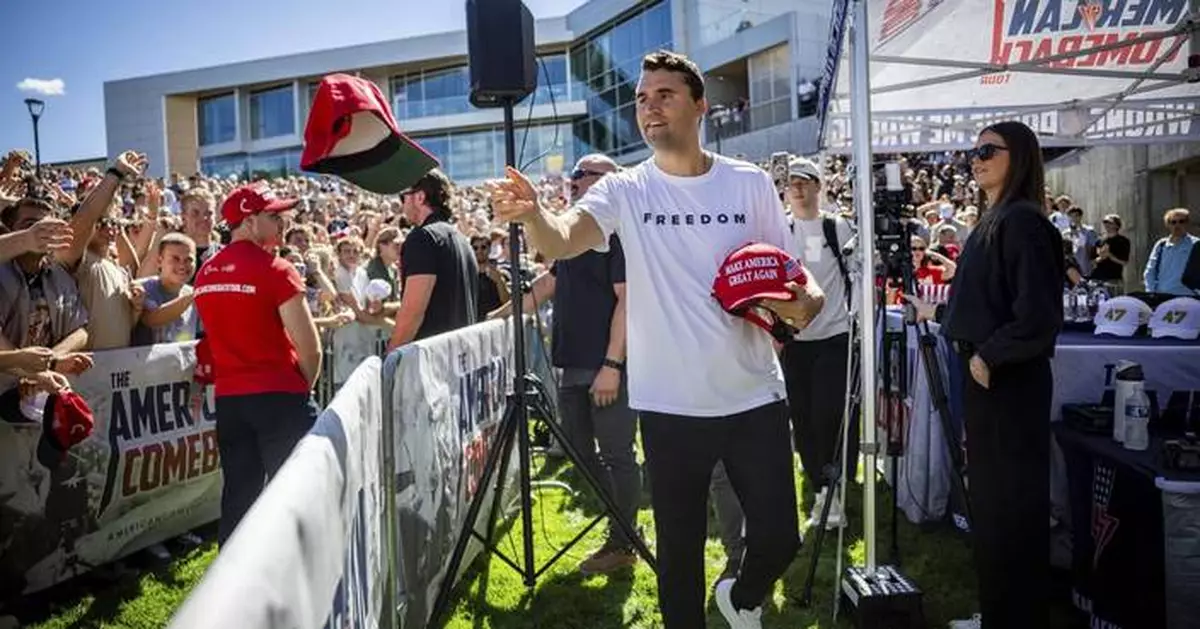
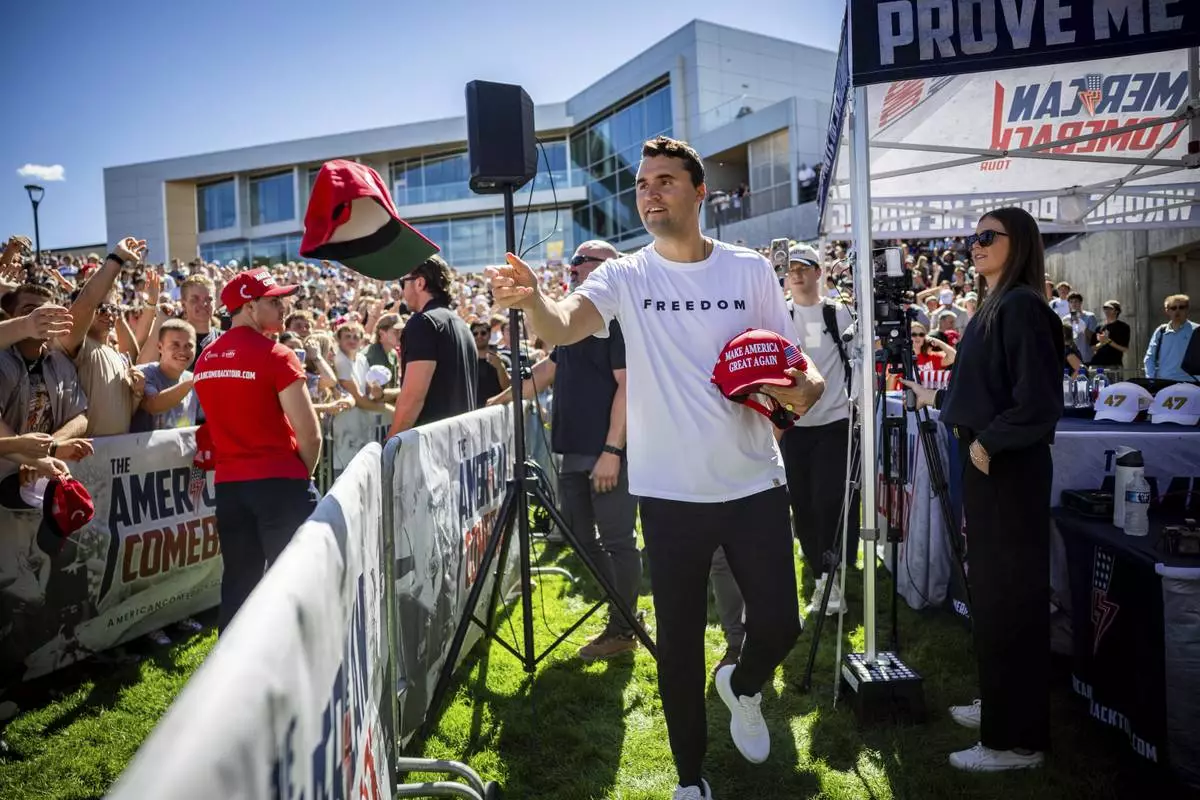
Charlie Kirk hands out hats before speaking at Utah Valley University in Orem, Utah, Wednesday, Sept. 10, 2025. (Tess Crowley/The Deseret News via AP)
Charlie Kirk hands out hats before speaking at Utah Valley University in Orem, Utah, Wednesday, Sept. 10, 2025. (Tess Crowley/The Deseret News via AP)
WASHINGTON (AP) — The Justice Department has ended its investigation into Federal Reserve chair Jerome Powell, clearing a major roadblock to the confirmation of his successor, Kevin Warsh.

U.S. Attorney for the District of Columbia Jeannine Pirro said on X on Friday that her office was ending its probe into the Fed’s extensive building renovations because the Fed’s inspector general would scrutinize them instead.

The move could lead to a swift confirmation vote by the Senate for Warsh, a former top Fed official whom President Donald Trump, a Republican, nominated in January to replace Powell. Powell's term as chair ends May 15. Sen. Thom Tillis, a North Carolina Republican, had said he would oppose Warsh until the investigation was resolved, effectively blocking his confirmation.

Republicans praised Warsh during a Tuesday hearing even as Democrats questioned his independence from Trump, the lack of transparency around some of his financial holdings, and what they said was his flip-flopping on interest rates. Still, Trump's previous appointment to the Fed's board of governors, Stephen Miran, was approved by the full Senate just 13 days after his nomination.

The probe was among several undertaken by the Justice Department into Trump’s perceived adversaries. For months it had failed to gain traction as prosecutors struggled to articulate a basis to suspect criminal conduct. Other efforts by the department to prosecute Trump's adversaries, including New York state Attorney General Letitia James, a Democrat, and former FBI Director James Comey, have also been unsuccessful.

A prosecutor handling the Powell case conceded at a closed-door court hearing in March that the government hadn’t found any evidence of a crime, and a judge subsequently quashed subpoenas issued to the Federal Reserve. The judge, James Boasberg, said prosecutors had produced “essentially zero evidence” to suspect Powell of a crime. Boasberg branded prosecutors’ justification for the subpoenas as “thin and unsubstantiated.”

The investigation was the most brazen attempt yet by the Trump administration to pressure the Fed to cut its short-term interest rate, which indirectly affects other borrowing costs for mortgages, auto loans and business loans. Trump has obsessively attacked Powell for not cutting the rate from its current level of about 3.6% to 1%, a level that no Fed official supports.

Instead, Fed policymakers, including Powell, have said they want to keep rates unchanged while they evaluate the impact of the Iran war, which has sent gas prices soaring, pushing up inflation. The increase could be a one-time shift but could also lead to more sustained inflation. The Fed seeks to restrain rising prices by keeping interest rates high, cooling borrowing and spending.

Powell said in January that the investigation was not really about the renovation or his testimony but “is a consequence of the Federal Reserve setting interest rates based on our best assessment of what will serve the public, rather than following the preferences of the President.”

More recently, prosecutors made an unannounced visit to a construction site at the Fed’s headquarters but were turned away, drawing a rebuke from a defense attorney in the case who called the maneuver “not appropriate.”

Warsh said during a hearing by the Senate Banking Committee on Tuesday that he never promised the White House that he would cut interest rates, even as the president renewed his calls for the central bank to do so.

“The president never once asked me to commit to any particular interest rate decision, period,” Kevin Warsh, a former top Fed official, said under questioning by the Senate Banking Committee. “Nor would I ever agree to do so if he had. ... I will be an independent actor if confirmed as chair of the Federal Reserve.”

Warsh’s comments came just hours after Trump, in an interview on CNBC, was asked if he would be disappointed if Warsh didn’t immediately cut rates and responded, “I would.”

Massachusetts Democratic Sen. Elizabeth Warren said during the hearing that Warsh would be a “sock puppet” for Trump. When she asked if Trump had won the 2020 presidential election — which he lost to Democrat Joe Biden but incorrectly claims was decided by fraud — Warsh said only that the Senate had certified Biden as the winner. When asked for an example of an economic policy on which he disagreed with Trump, Warsh did not name one.

The decision to abandon the Powell investigation represents a rare pullback for a Justice Department that over the last year has moved aggressively, albeit unsuccessfully, to prosecute public figures the president does not like.

Robert Hur, an attorney for the Federal Reserve Board of Governors, didn’t immediately respond Friday to an email seeking comment.

Trump has taken other unprecedented steps to try to pressure the Fed, including an attempt last August to fire Lisa Cook, a member of the Fed's governing board, who was appointed by Biden. Yet courts have temporarily blocked the firing, and, at an oral argument in January, the Supreme Court appeared sympathetic to the argument that Cook should keep her job.

A key question still to be resolved is whether Powell will remain on the Fed's board even after his term as chair expires next month. Powell, who serves a separate term as a governor that lasts until January 2028, has said he wouldn't leave until the investigation was dropped. Yet he did not promise to do so if it was. By remaining on the board, Powell would deprive Trump of the opportunity to fill another seat among its seven members, three of whom are Trump appointees.

Other presidents have pressured the Fed to keep borrowing costs low, notably Presidents Lyndon Johnson and Richard Nixon, though rarely as publicly as Trump. Johnson’s and Nixon’s demands for lower rates, however, are considered key contributors to the 15-year outbreak of high inflation that only ended in the early 1980s after then-chair Paul Volcker ratcheted the Fed's rate to an eye-watering 20%.

Associated Press writers Michael Kunzelman and Alanna Durkin Richer contributed to this report.

Follow the AP's coverage of the Federal Reserve System at https://apnews.com/hub/federal-reserve-system.

FILE - The Federal Reserve Board Building is seen as it undergoes renovations, Jan., 13, 2026, in Washington. (AP Photo/Pablo Martinez Monsivais, File)

FILE - The Federal Reserve Board Building is seen as it undergoes renovations, Jan., 13, 2026, in Washington. (AP Photo/Pablo Martinez Monsivais, File)

FILE - President Donald Trump listens to Federal Reserve Chairman Jerome Powell speak during a visit to the Federal Reserve, July 24, 2025, in Washington. (AP Photo/Julia Demaree Nikhinson, File)

FILE - President Donald Trump listens to Federal Reserve Chairman Jerome Powell speak during a visit to the Federal Reserve, July 24, 2025, in Washington. (AP Photo/Julia Demaree Nikhinson, File)

FILE - Federal Reserve Chair Jerome Powell addresses students at Harvard University, March 30, 2026, in Cambridge, Mass. (AP Photo/Charles Krupa, File)

FILE - Federal Reserve Chair Jerome Powell addresses students at Harvard University, March 30, 2026, in Cambridge, Mass. (AP Photo/Charles Krupa, File)

Kevin Warsh is sworn in during his nomination hearing to be a member and chairman of the Federal Reserve Board of Governors before the Senate Banking, Housing and Urban Affairs Committee on Capitol Hill, in Washington Tuesday, April 21, 2026. (AP Photo/Jose Luis Magana)

Kevin Warsh is sworn in during his nomination hearing to be a member and chairman of the Federal Reserve Board of Governors before the Senate Banking, Housing and Urban Affairs Committee on Capitol Hill, in Washington Tuesday, April 21, 2026. (AP Photo/Jose Luis Magana)

Federal Reserve Board Chairman Jerome Powell leaves after the International Monetary and Financial Committee (IMFC) meeting during the World Bank/IMF spring meetings at the IMF headquarters in Washington, Friday, April 17, 2026. (AP Photo/Jose Luis Magana)

Federal Reserve Board Chairman Jerome Powell leaves after the International Monetary and Financial Committee (IMFC) meeting during the World Bank/IMF spring meetings at the IMF headquarters in Washington, Friday, April 17, 2026. (AP Photo/Jose Luis Magana)

Recommended Articles