BOGOTA, Colombia (AP) — Colombia’s peace tribunal on Tuesday issued its first sentence on war crimes committed during decades of internal conflict, finding seven former leaders of the Revolutionary Armed Forces of Colombia, FARC, guilty of imposing policies that led to the kidnapping of 21,000 people.
The court said that the rebel group kidnapped civilians for ransom to finance its operations, while also depriving soldiers and politicians of their liberty in hopes of exchanging them for imprisoned rebels.
Click to Gallery
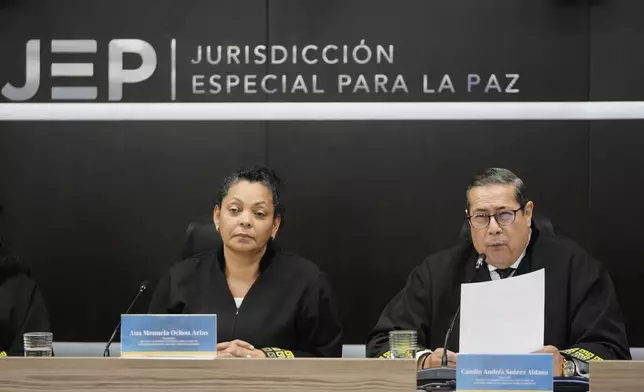
Camilo Andres Suarez, right, and Ana Manuela Ochoa, members of Colombia's peace tribunal, read a guilty sentence for war crimes by former leaders of the Revolutionary Armed Forces of Colombia, FARC, in Bogota, Colombia, Tuesday, Sept. 16, 2025. (AP Photo/Fernando Vergara)
Special Jurisdiction for Peace (JEP) President, Judge Alejandro Ramelli Arteaga, speaks to the press before the reading of a guilty sentence for war crimes by former leaders of the Revolutionary Armed Forces of Colombia, FARC, in Bogota, Colombia, Tuesday, Sept. 16, 2025. (AP Photo/Fernando Vergara)
Camilo Andres Suarez, right, and Ana Manuela Ochoa, members of Colombia's peace tribunal, read a guilty sentence for war crimes by former leaders of the Revolutionary Armed Forces of Colombia, FARC, in Bogota, Colombia, Tuesday, Sept. 16, 2025. (AP Photo/Fernando Vergara)
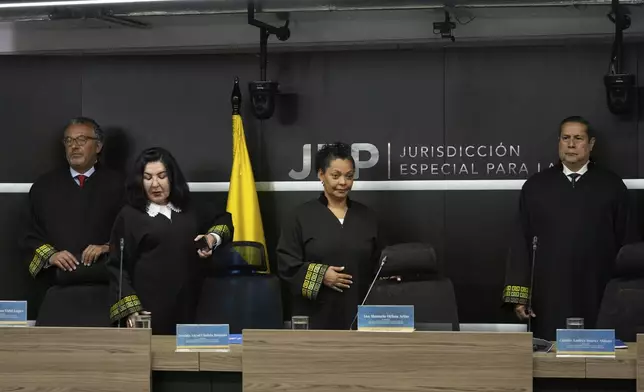
Members of Colombia's peace tribunal arrive to read a guilty sentence for war crimes by former leaders of the Revolutionary Armed Forces of Colombia, FARC, in Bogota, Colombia, Tuesday, Sept. 16, 2025. (AP Photo/Fernando Vergara)
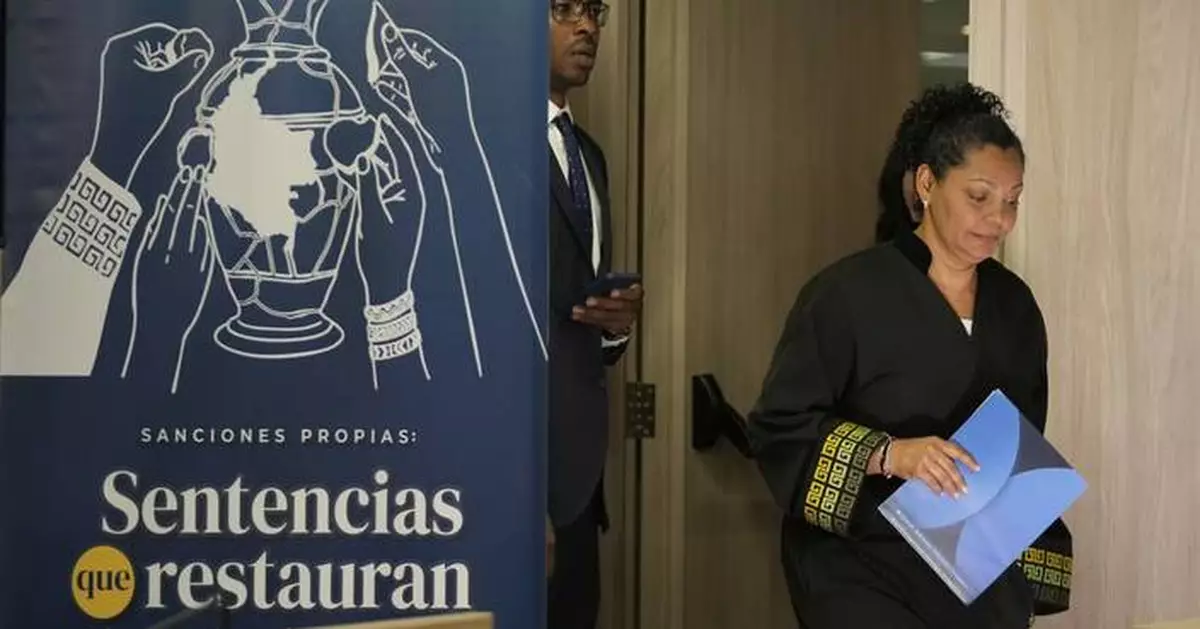
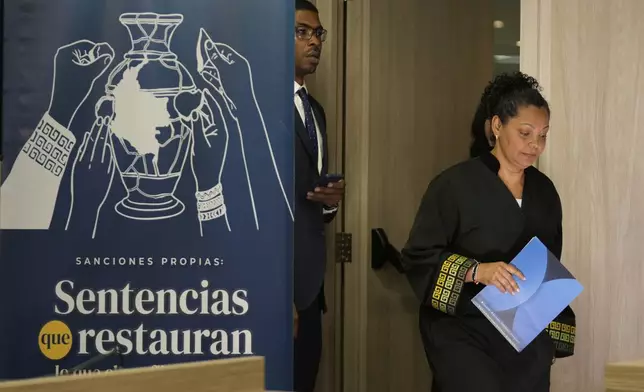
Ana Manuela Ochoa, member of Colombia's peace tribunal, arrives to read a guilty sentence for war crimes by former leaders of the Revolutionary Armed Forces of Colombia, FARC, in Bogota, Colombia, Tuesday, Sept. 16, 2025. (AP Photo/Fernando Vergara)
For the next eight years, the former rebel leaders must work on projects to find the bodies of missing people and remove landmines from rural areas. They will also have to engage in symbolic acts of reparation with their victims. To ensure compliance, the seven leaders will follow a strict schedule and have their movements monitored with electronic devices.
“This sentence does not erase the suffering of the victims,” said Camilo Suárez, the lead judge in the case. “But it is the voice that recognizes that what they went through was unjustifiable and inhumane.”
The court known as the Special Jurisdiction for Peace was created as part of the 2016 peace deal between the Colombian government and the FARC rebels. It has been praised by legal scholars who have argued that the tribunal has helped to document and uncover the grisly details of Colombia’s civil war. But it has also been criticized by Colombians who would like to see harsher punishments for perpetrators of war crimes.
Sebastián Velásquez, a spokesman for the Federation of Victims of Terrorism in Colombia, which represents more than 1,200 victims of Colombia's conflict, said he was disappointed with the ruling, because it did not force the former rebel leadership to provide economic compensation to communities affected by kidnappings.
The victims' group contends that during Colombia's conflict the FARC leadership amassed money in bank accounts and purchased homes, farms and cattle that were transferred to third parties, and could be sold to compensate victims — a claim denied by the former FARC leadership.
“They avoided going to prison, in exchange for telling the truth,” Velásquez said. “In our opinion they have not fully complied with that deal.”
Those who are summoned by the tribunal, accept its charges and collaborate with its investigations, are generally spared from prison time and are instead required to work on projects that include efforts to provide reparations to the victims of Colombia’s armed conflict.
Suspects who do not accept the peace tribunal’s charges but are found guilty of war crimes can face lengthy prison sentences.
In the early days of the kidnapping investigation, the FARC’s former secretariat accepted charges that its policies led to the kidnappings of 21,000 people, with its seven members attending several hearings where they were questioned by judges and victims.
During its investigation, the tribunal found that many victims were kept in chains or cages by the rebels, and that there were cases of sexual abuse. The rebel leaders who were on trial today, also acknowledged that they failed to control the conduct of fighters under their command.
Later this week, the peace tribunal is expected to rule on a second case involving extrajudicial executions committed by Colombia’s military.
Follow AP’s coverage of Latin America and the Caribbean at https://apnews.com/hub/latin-america
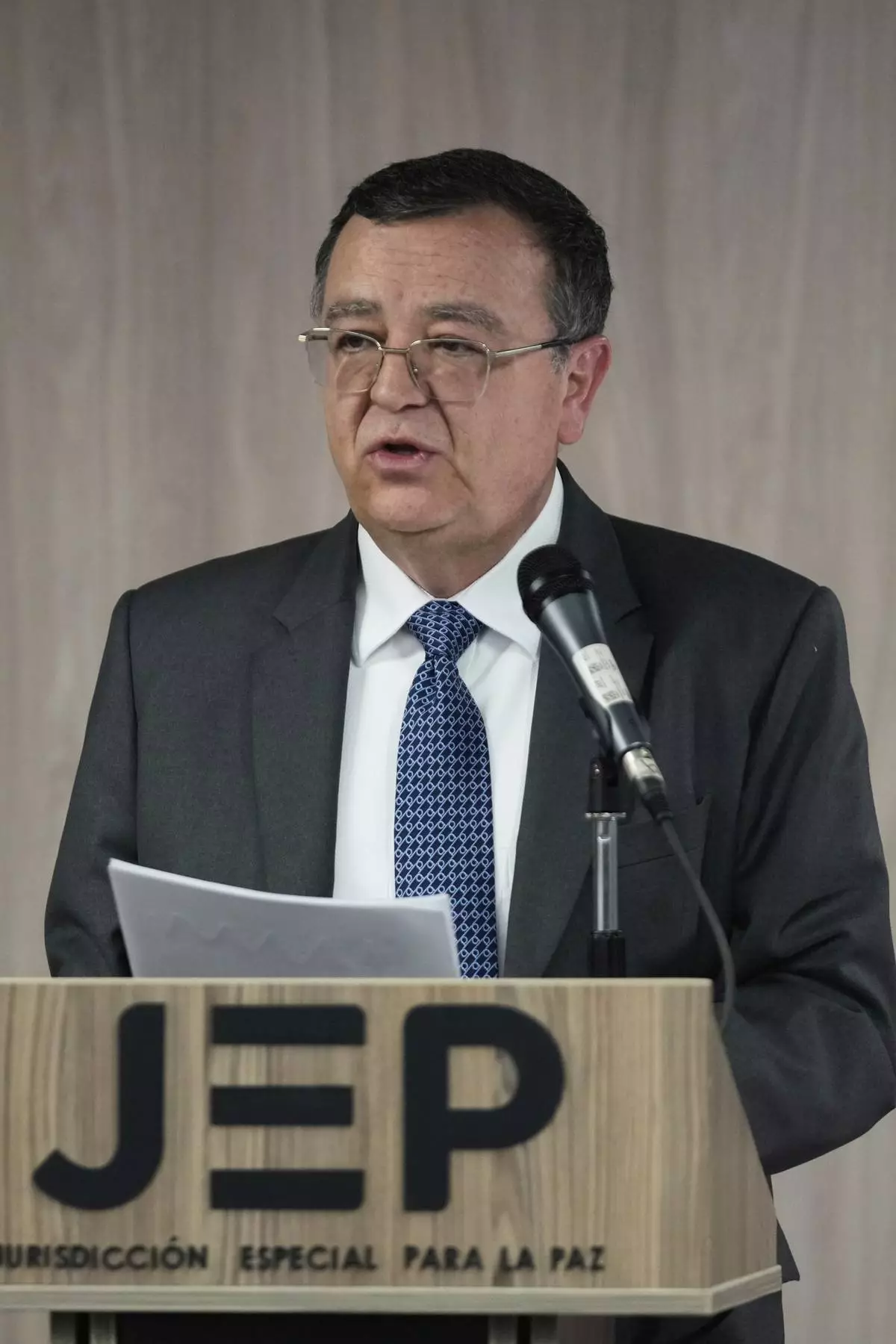
Special Jurisdiction for Peace (JEP) President, Judge Alejandro Ramelli Arteaga, speaks to the press before the reading of a guilty sentence for war crimes by former leaders of the Revolutionary Armed Forces of Colombia, FARC, in Bogota, Colombia, Tuesday, Sept. 16, 2025. (AP Photo/Fernando Vergara)
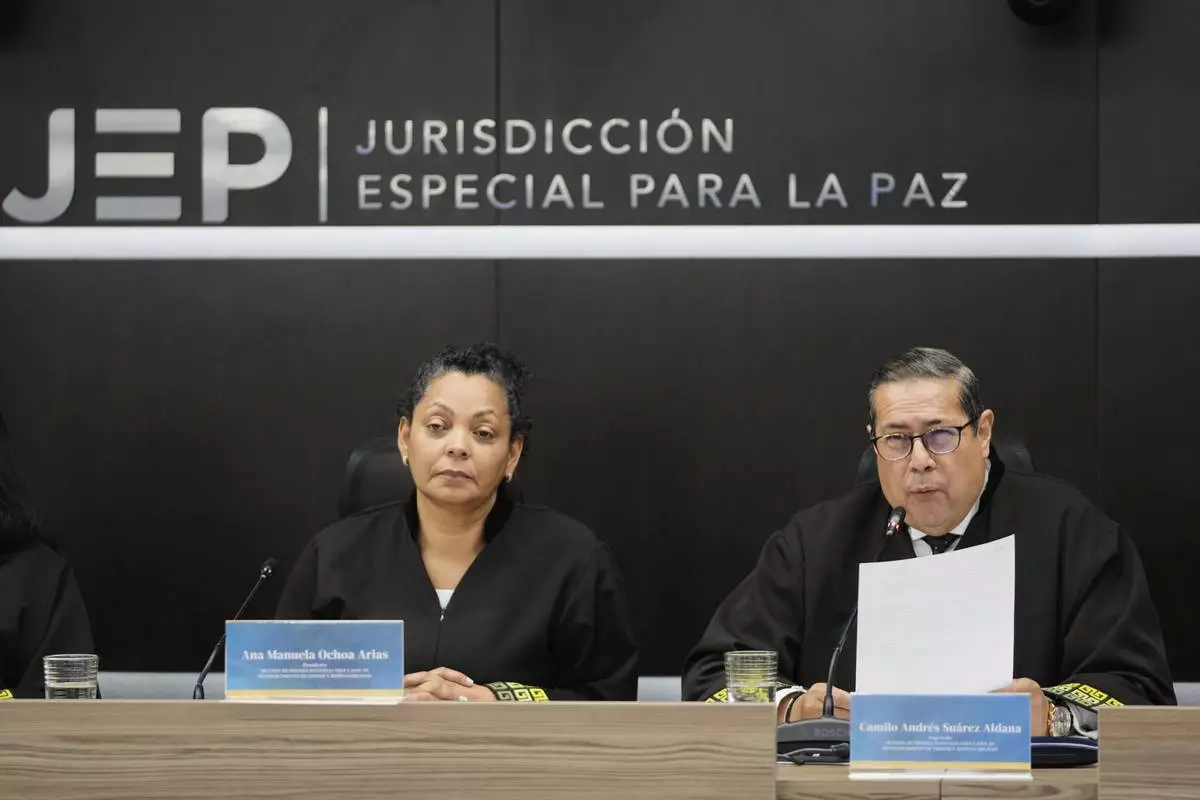
Camilo Andres Suarez, right, and Ana Manuela Ochoa, members of Colombia's peace tribunal, read a guilty sentence for war crimes by former leaders of the Revolutionary Armed Forces of Colombia, FARC, in Bogota, Colombia, Tuesday, Sept. 16, 2025. (AP Photo/Fernando Vergara)
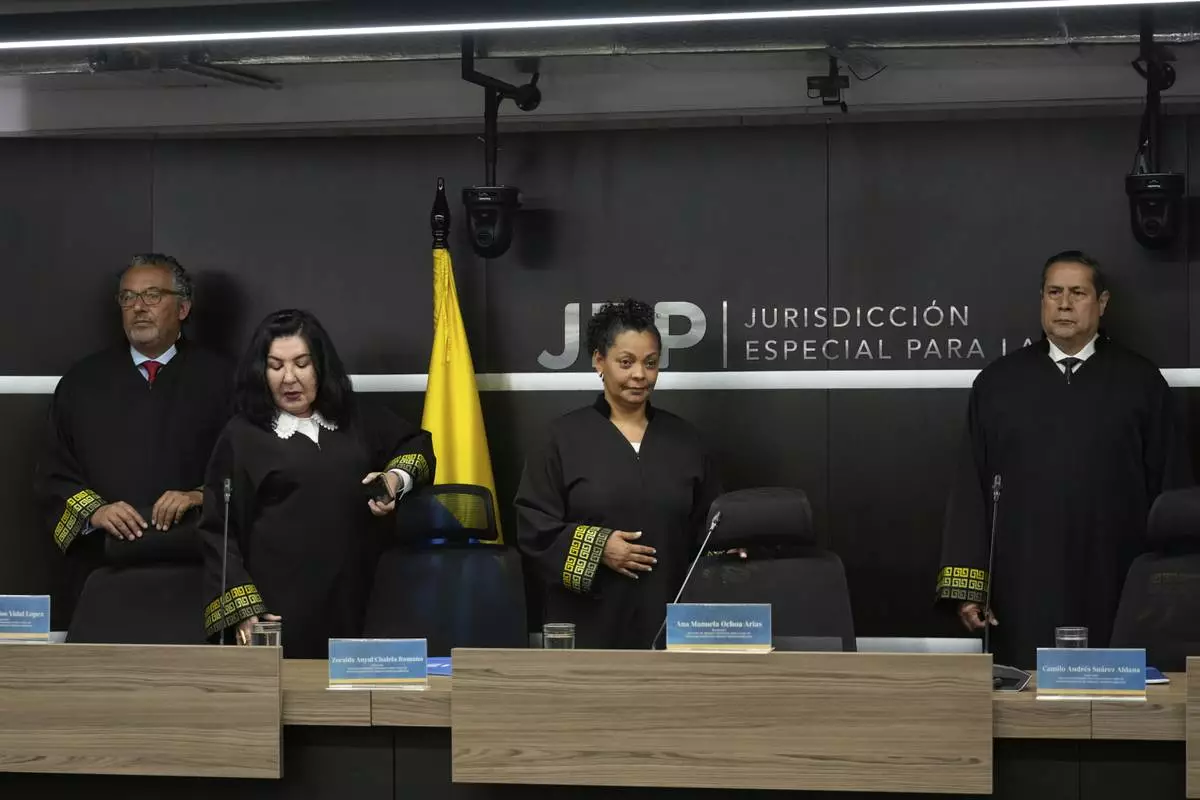
Members of Colombia's peace tribunal arrive to read a guilty sentence for war crimes by former leaders of the Revolutionary Armed Forces of Colombia, FARC, in Bogota, Colombia, Tuesday, Sept. 16, 2025. (AP Photo/Fernando Vergara)
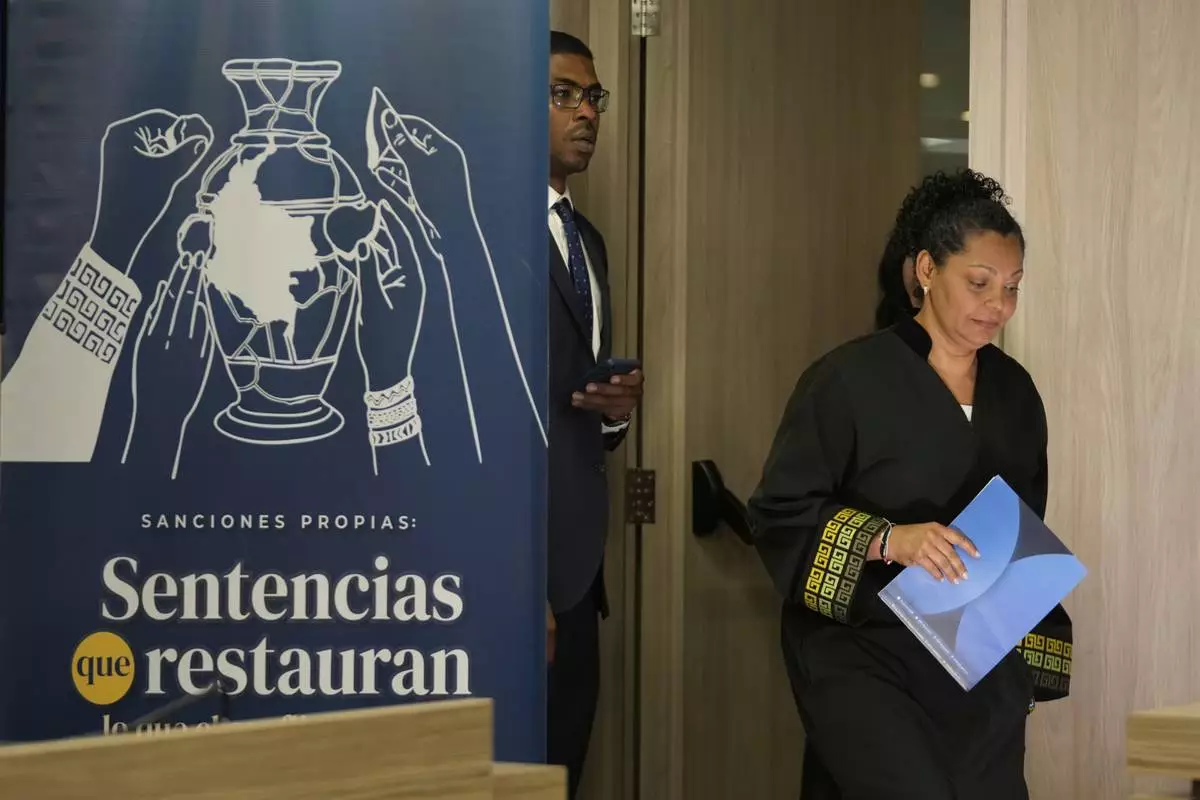
Ana Manuela Ochoa, member of Colombia's peace tribunal, arrives to read a guilty sentence for war crimes by former leaders of the Revolutionary Armed Forces of Colombia, FARC, in Bogota, Colombia, Tuesday, Sept. 16, 2025. (AP Photo/Fernando Vergara)
BOSTON (AP) — A woman who worked as a live-in personal chef for former New England Patriots receiver Stefon Diggs declined to answer questions Tuesday about financial demands made on her behalf, as defense attorneys pressed her over claims she was owed money and inconsistencies in what she said she was paid.
Defense attorneys pressed Jamila “Mila” Adams about money she said she was owed after working as a live-in chef. She testified she was paid about $2,000 a week and believed she had not been fully compensated after being sent home. They pointed to a $19,000 demand made on her behalf and suggested the amount grew over time, culminating in a separate claim that her attorney sought $5.5 million.
Diggs has pleaded not guilty to a felony strangulation charge and a misdemeanor assault and battery charge stemming from a December incident at his home.
When asked about the $5.5 million claim, Adams said, “I can’t speak on that,” and at other points told jurors, “I don’t understand the question” and “I don’t know how to answer the question.”
Defense attorneys also questioned Adams about a public statement she issued Feb. 13 in which she said, “I have never sought money to settle this matter,” and about hiring a lawyer by mid-April. Adams said she retained an attorney for a workers’ compensation claim, saying she believed she had been injured on the job.
They challenged her accounting of what she was owed, presenting records of payments and suggesting she had sought compensation for weeks she did not work. Adams said she had been confused about the amount and “sent the incorrect amount,” maintaining she believed she was owed money.
Prosecutors pushed back on the defense’s financial-motive argument, eliciting testimony that Adams viewed the dispute as a wage issue, not a settlement. She said her statement that she had “never sought money to settle this matter” referred to the criminal case and that she later retained an attorney for a workers’ compensation claim after she believed she was injured on the job.
At times during her second day on the stand, Adams was instructed by the judge to answer questions directly and not include additional details beyond what was asked. Portions of her responses were struck from the record as nonresponsive, with jurors told to disregard them.
“This is not an opportunity for you to interject your own narrative,” Judge Jeanmarie Carroll, told her at one point, warning that continued nonresponsive answers could result in her testimony being stricken.
The testimony followed sharply conflicting accounts presented to jurors a day earlier.
Adams testified Monday that Diggs “smacked me with an open hand” before wrapping his arm around her neck and choking her, leaving her struggling to breathe. She described what she called a “complicated” relationship, saying it had previously been sexual but was not at the time of the alleged assault. She said she lived in his home, preparing meals and snacks, and had known him for more than four years.
Defense attorneys told jurors the alleged attack never happened, pointing to a lack of medical records, photos or video documenting injuries and saying no one else in the home reported seeing or hearing anything unusual. They also suggested Adams had a financial motive.
Prosecutors say the case centers on what happened on Dec. 2, when they allege Diggs entered Adams’ bedroom, slapped her and put her in a headlock that made it difficult to breathe.
A jury was seated Monday in Norfolk County District Court in Dedham.

Former New England Patriots wide receiver Stefon Diggs appears in court during his trial at Norfolk County District Court, Tuesday, May 5, 2026, in Dedham, Mass. (AP Photo/Charles Krupa, Pool)
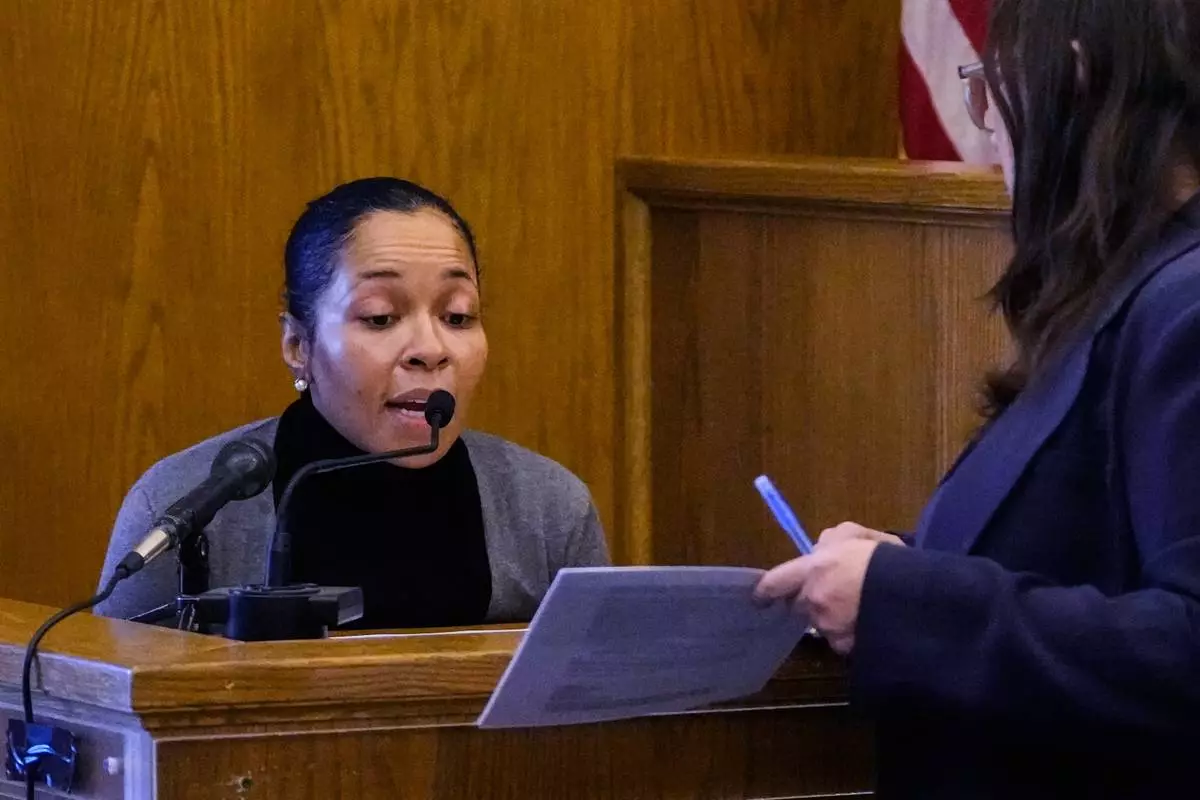
Witness Jamila Adams testifies during the trial of former New England Patriots wide receiver Stefon Diggs at Norfolk County District Court, Tuesday, May 5, 2026, in Dedham, Mass. (AP Photo/Charles Krupa, Pool)
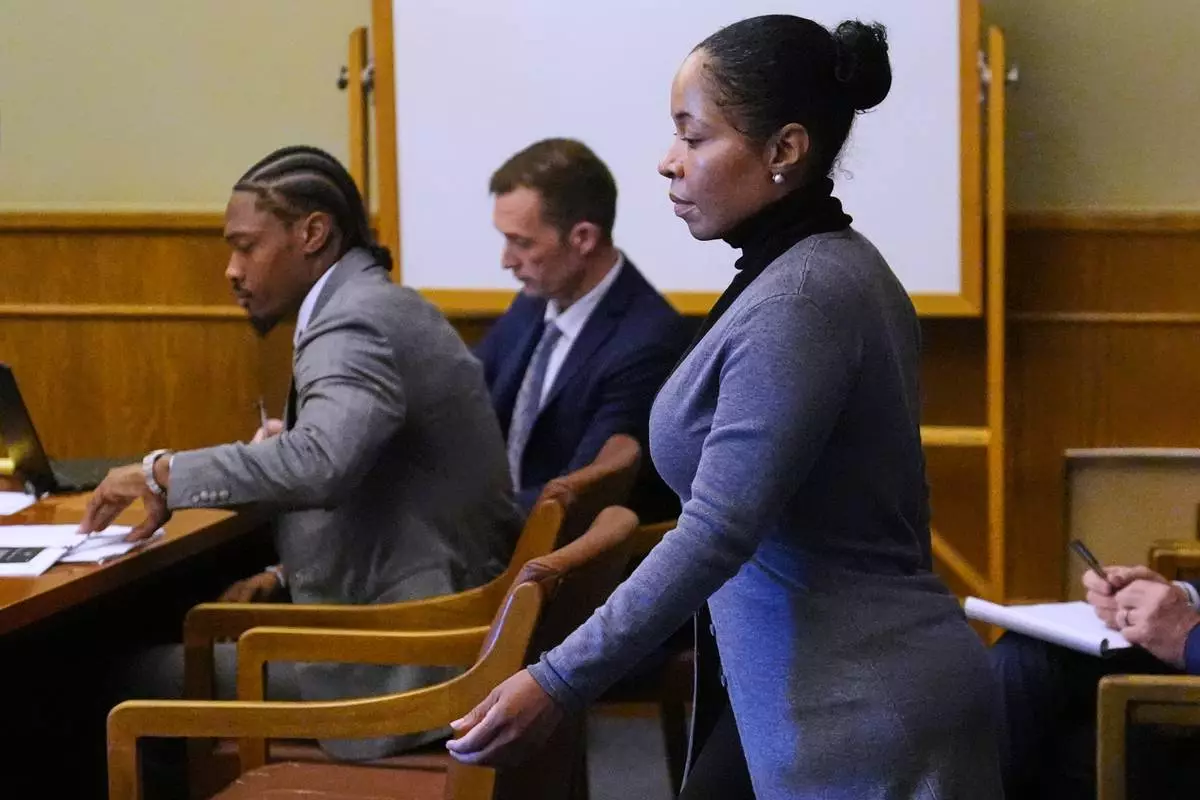
Witness Jamila Adams, right, walks past former New England Patriots wide receiver Stefon Diggs during Diggs' trial at Norfolk County District Court, Tuesday, May 5, 2026, in Dedham, Mass. (AP Photo/Charles Krupa, Pool)

Former New England Patriots wide receiver Stefon Diggs listens to his defense attorney cross examine witness Jamila Adams during his trial at Norfolk County District Court, Tuesday, May 5, 2026, in Dedham, Mass. (AP Photo/Charles Krupa, Pool)
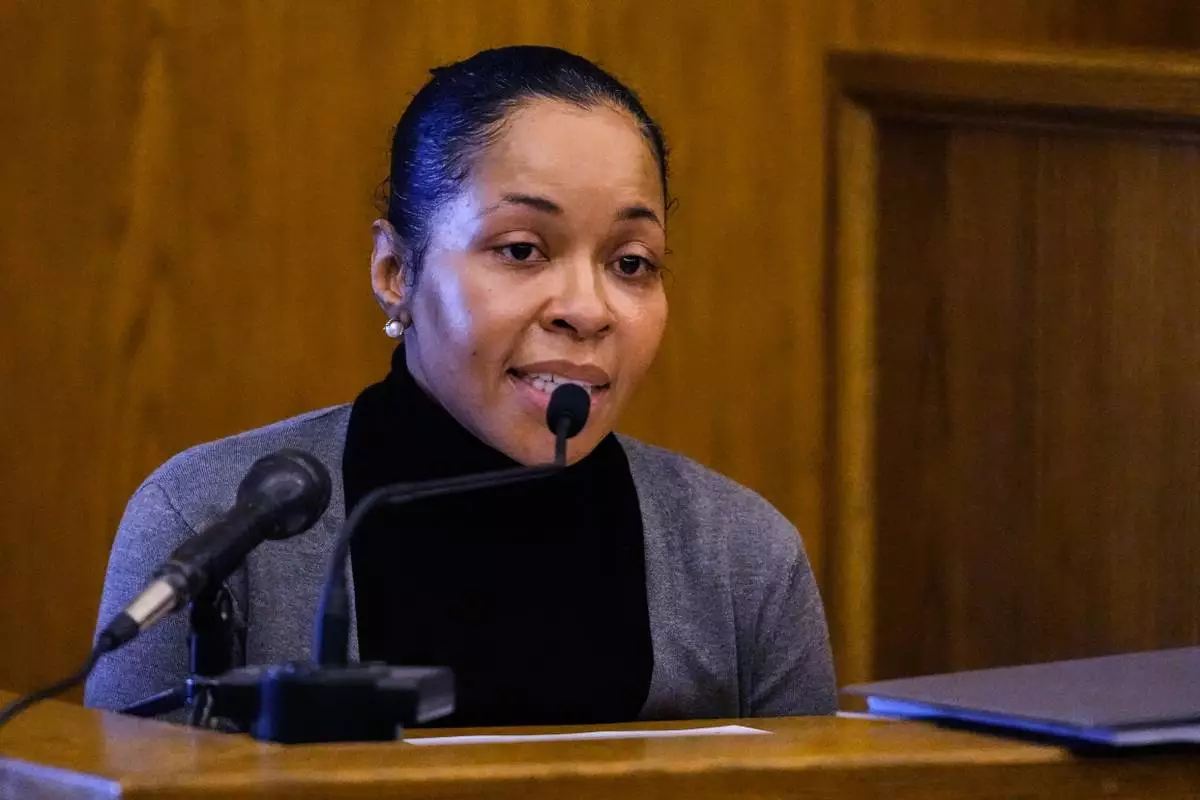
Witness Jamila Adams testifies during the trial of former New England Patriots wide receiver Stefon Diggs at Norfolk County District Court, Tuesday, May 5, 2026, in Dedham, Mass. (AP Photo/Charles Krupa, Pool)
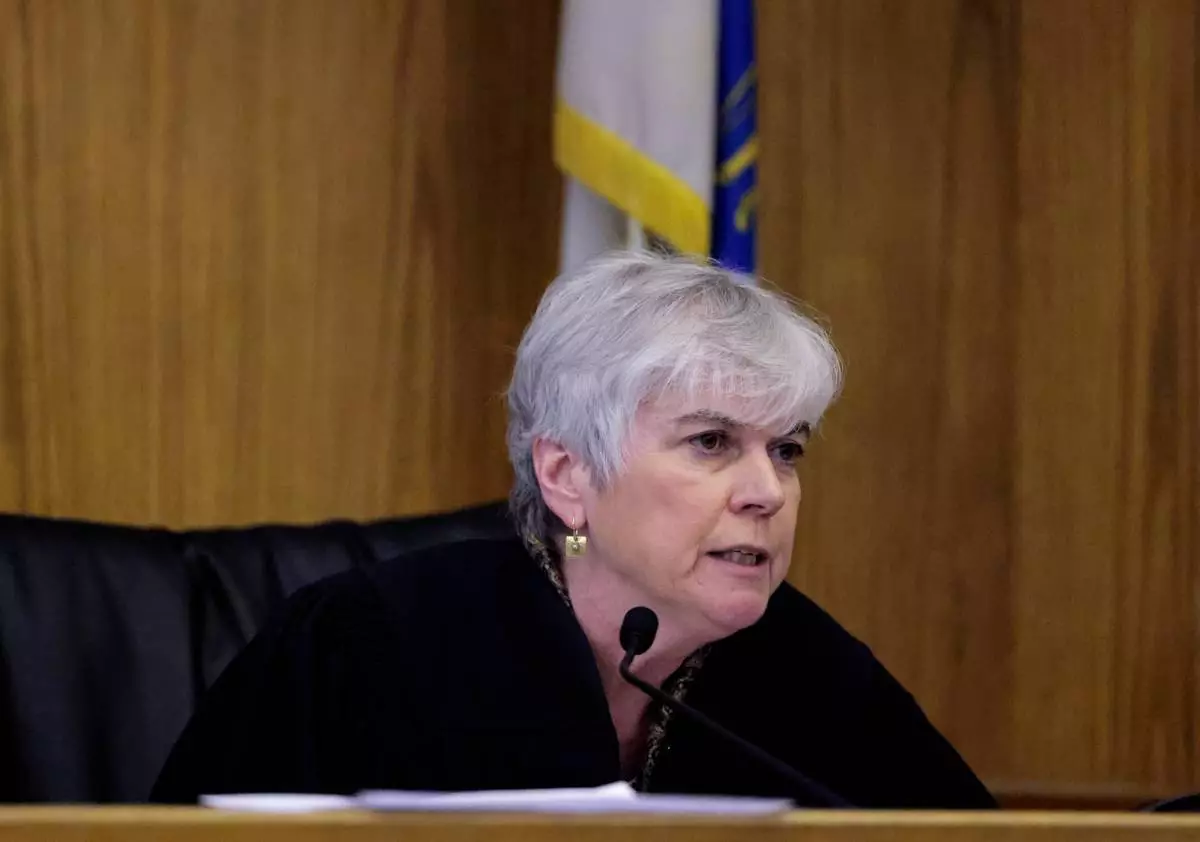
Judge Jeanmarie Carroll questions potential jurors as the assault trial of Stefon Diggs begins in Dedham, Mass., Monday May 4, 2026. (Pat Greenhouse/The Boston Globe via AP, Pool)

Former New England Patriots wide receiver Stefon Diggs leaves Norfolk County District Court, Monday, May 4, 2026, in Dedham, Mass. (AP Photo/Charles Krupa)
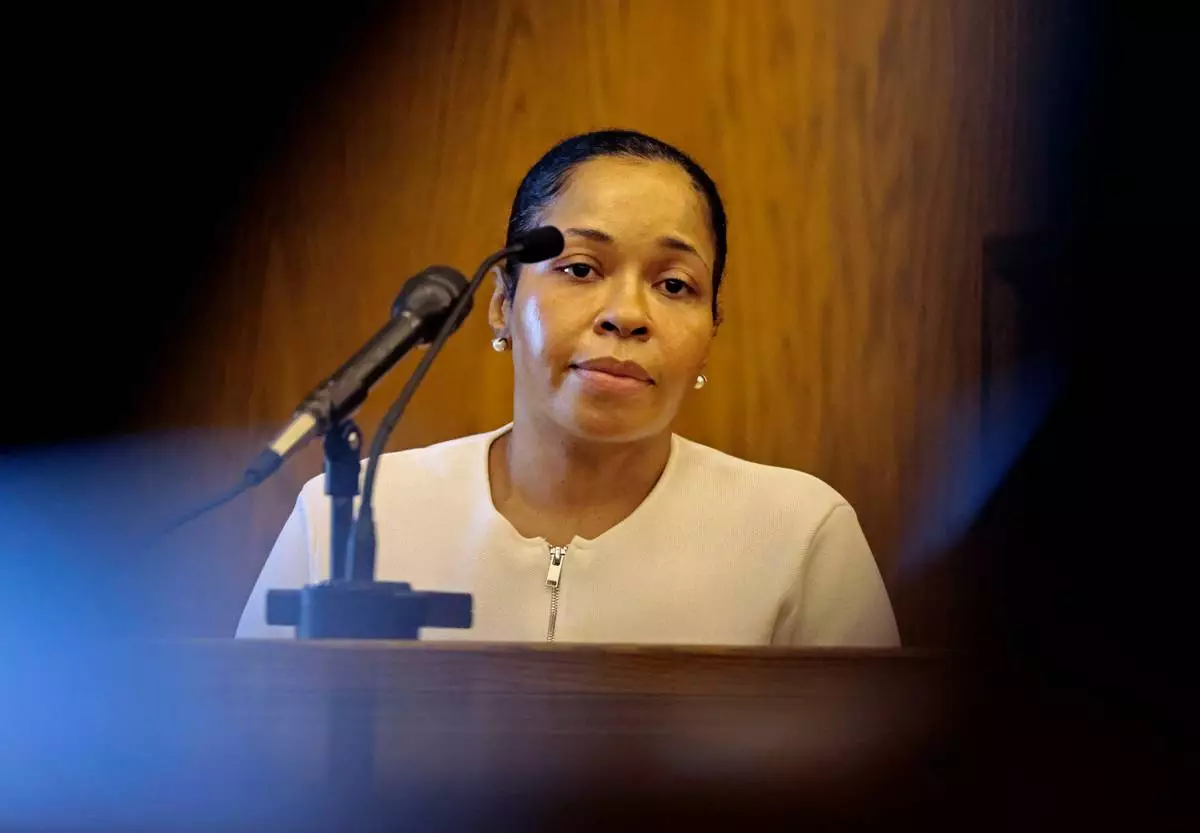
Stefon Diggs' former personal chef, Jamila Adams, is questioned by Assistant District Attorney Drew Virtue in Dedham District Court in Dedham, Mass., Monday May 4, 2026. (Pat Greenhouse/The Boston Globe via AP, Pool)
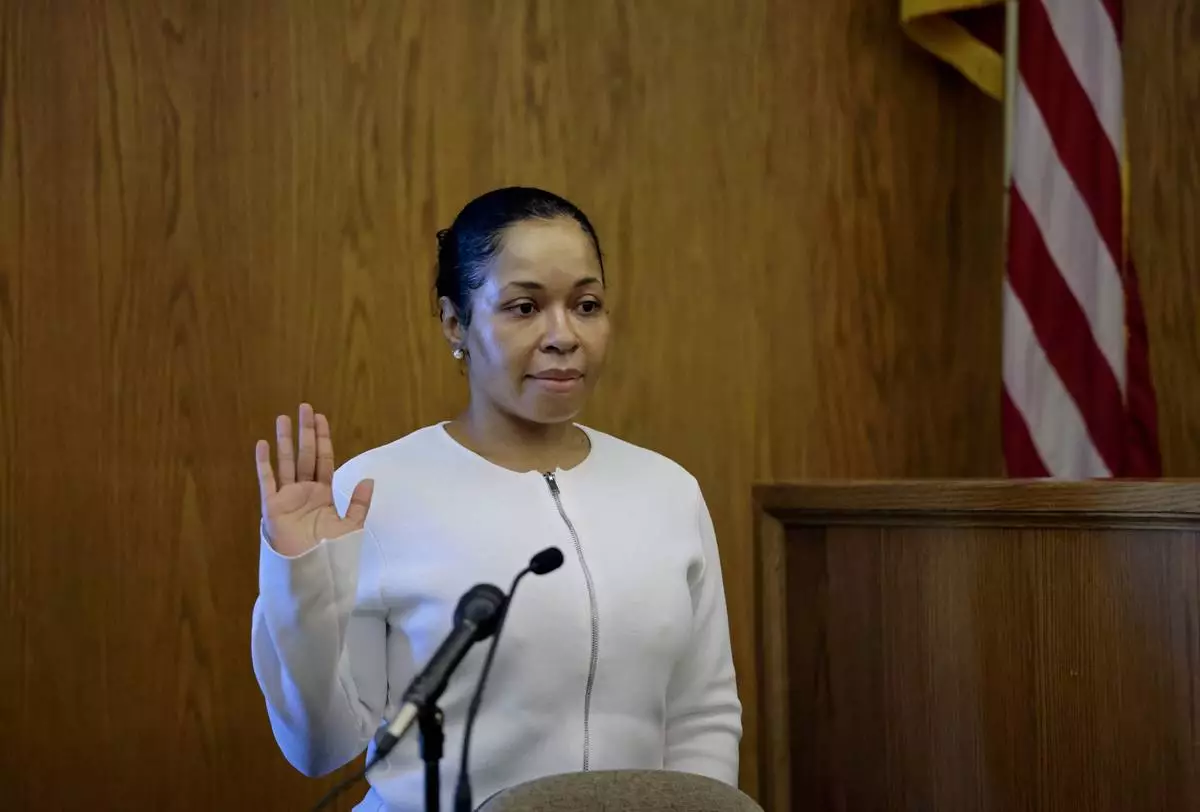
Stefon Diggs' former personal chef Jamila Adams is sworn in before giving testimony in Dedham District Court in Dedham, Mass., Monday May 4, 2026. (Pat Greenhouse/The Boston Globe via AP, Pool)

Former New England Patriots wide receiver Stefon Diggs returns to Norfolk County District Court, Monday, May 4, 2026, in Dedham, Mass. (AP Photo/Charles Krupa)