As the world reflects on Robert Redford’s death, his own words illuminate the essence of his career as an Oscar-winning actor, director and founder of the Sundance Film Festival who championed truth, independence and new voices.
Redford, who died Tuesday at 89, leaves behind a legacy of freedom, artistry and opportunity. His words — captured here by The Associated Press over numerous interviews — reflect the philosophy that guided his life and career from “Butch Cassidy and the Sundance Kid” to “All the President’s Men” and beyond.
“I was not a name equal to Paul’s. I was just sort of moving up at that time. There was a big argument that went on for months and months. They said it had to be a star. (Newman) said, ‘Well, I want to work with an actor,’ because Paul respected acting. Had it not been for Paul, I would not have gotten that break.”
— Redford in 2015, reflecting on how Paul Newman’s insistence on working with him changed the course of his career and life.
“Nixon had already resigned and the held opinion (in Hollywood) was ‘No one cares. No one wants to hear about this,’ And I said, ‘No, it’s not about Nixon. It’s about something else. It’s about investigative journalism and hard work.’”
— Redford in 2006, speaking about the film about how Washington Post reporters Bob Woodward and Carl Bernstein exposed the Watergate scandal, which ultimately led to President Richard Nixon’s resignation.
“I wanted to know who these guys were, who created all this disturbance. I thought, ‘Wow, one guy was a Jew, one guy was a WASP. One guy was a Republican, the other guy was a liberal. One guy was a good writer, the other wasn’t very good. They didn’t like each other, but they had to work together. Now that’s an interesting dynamic I’d love to know about.’”
— Redford reflecting on his fascination with Woodward and Bernstein, whose unlikely partnership unraveled the Watergate scandal.
“For me, the word to be underscored is ‘independence.' I’ve always believed in that word. That’s what led to me eventually wanting to create a category that supported independent artists who weren’t given a chance to be heard. The industry was pretty well controlled by the mainstream, which I was a part of. But I saw other stories out there that weren’t having a chance to be told and I thought, ‘Well, maybe I can commit my energies to giving those people a chance.’ As I look back on it, I feel very good about that.”
— Redford in 2018, speaking about how he came to create the Sundance Institute and Sundance Film Festival, which became a cornerstone for independent cinema and launched countless groundbreaking filmmakers.
“As it grew, so did the crowds, so did the development in Park City. Well, at some point, if both those things continue to grow, they’re going to begin to choke each other. So then I have to think about, oh, do we now risk being who we are in the first place? Do we risk (losing) the heart and soul of what we were when we started against the odds. … Do we have to now rethink things?”
— Redford in 2016, reflecting on how Sundance’s explosive growth brought both opportunity and risk, questioning whether swelling crowds and Park City’s development threatened the festival’s original spirit and authenticity.
“I’m enjoying it a lot. I’m going back to the way I started before I became a filmmaker which was to be an artist, a painter and a sketch artist. I missed that. That’s how I observe the world around me. I come to understand people by sketching them. If you sketch them can you see something deeper in them? It’s kind of a challenge but it’s fun.”
— Redford in 2020.
“I just figure that I’ve had a long career that I’m very pleased with. It’s been so long, ever since I was 21. I figure now as I’m getting into my 80s, it’s maybe time to move toward retirement and spend more time with my wife and family.”
— Redford in 2018 describing the movie and role of an aging bank robber that he said would be his farewell to acting. Redford had later on-screen roles in “Avengers: Endgame” and “Dark Winds.”
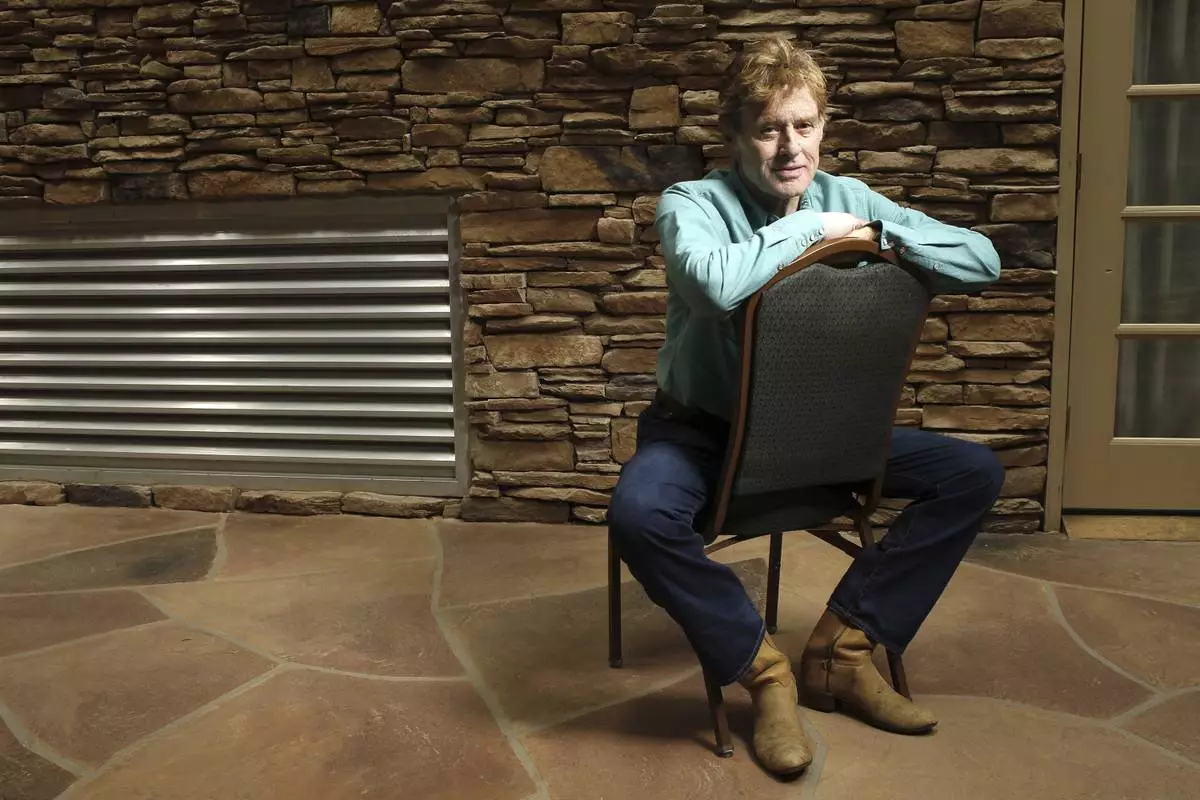
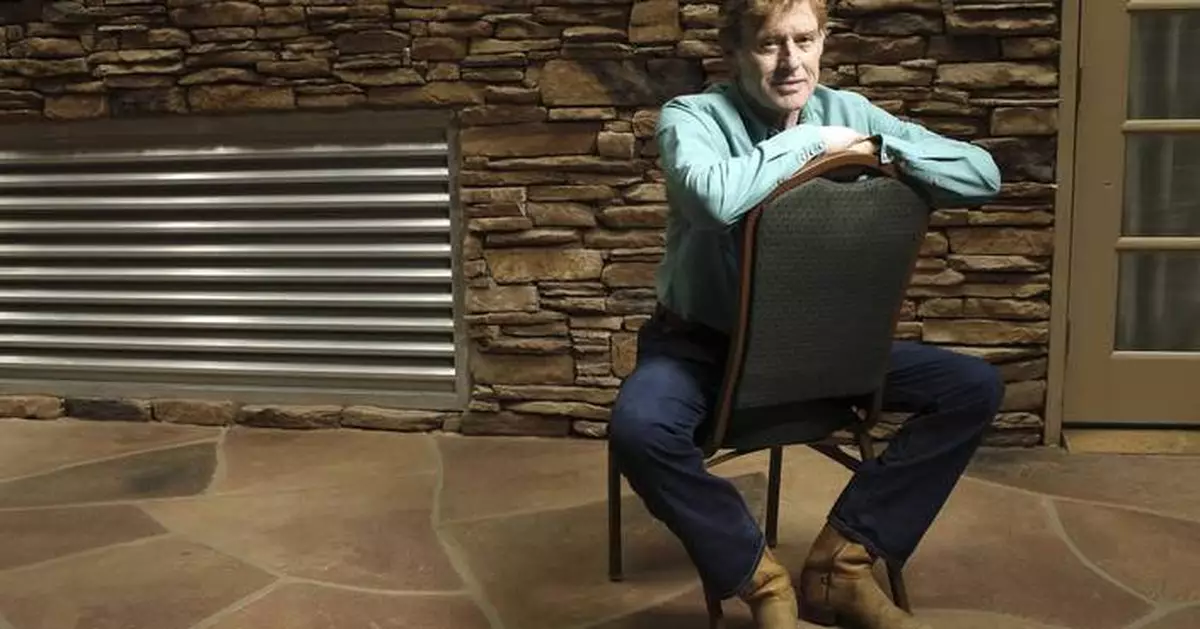
FILE - Robert Redford poses for a portrait during the Sundance Film Festival in Park City, Utah, on Jan. 21, 2010. (AP Photo/Carlo Allegri, File)
MINNEAPOLIS (AP) — Minneapolis was on edge Thursday following the fatal shooting of a woman by a federal officer taking part in the Trump administration’s latest immigration crackdown, with protesters venting their outrage, the governor demanding that the state take part in the investigation and schools canceling classes as a precaution.
State and local officials demanded that the immigration agents leave Minnesota after the unidentified Immigration and Customs Enforcement officer shot 37-year-old mother of three Renee Good in the head on Wednesday. But Homeland Security Secretary Kristi Noem said agents won't be going anywhere.
The Department of Homeland Security has deployed more than 2,000 officers to the area in what it says is its largest immigration enforcement operation ever. Noem said more than 1,500 people have already been arrested.
Dozens of protesters gathered Thursday outside of a federal building on the edge of Minneapolis that is serving as a major base for the immigration crackdown. They shouted “No More ICE,” “Go Home Nazis,” and other slogans as Border Patrol officers pushed them back from the gate, doused them with pepper spray and fired tear gas.
“We should be horrified," protester Shanta Hejmadi said. “We should be saddened that our government is waging war on our citizens. We should get out and say no. What else can we do?”
For Stephanie Abel, the shooting and protests stirred up memories of how Minneapolis felt after police killed George Floyd in 2020. Abel, whose daughter was taking part in the demonstration, said she's started carrying cash and making sure her gas tank is full because she thinks Good's killing could spark the sort of widespread protests that broke out after Floyd's death, which were sometimes violent.
“I’ve been saying for weeks to my friends and family: Somebody is going to get killed,” she said.
Gregory Bovino, a U.S. Customs and Border Patrol official who has been the face of the crackdowns in other cities, walked along the long line of officers, looking at the crowd as protesters yelled at him, including a man who shouted, “Border Patrol should be along the border!”
The anti-immigration enforcement protests weren't confined to Minneapolis, as demonstrations also took place or were expected to Thursday in New York City, Seattle, Detroit, Washington, D.C., Los Angeles, Philadelphia, San Antonio, New Orleans and Chicago. Protests were also scheduled for later this week in Arizona, North Carolina, and New Hampshire.
Bystanders captured video of Good's killing in a residential neighborhood south of downtown, and hundreds of people turned up for a Wednesday night vigil to mourn her.
The videos of the shooting show an officer approaching an SUV stopped across the middle of the road, demanding the driver open the door and grabbing the handle. The Honda Pilot begins to pull forward, and a different ICE officer standing in front of it pulls his weapon and immediately fires at least two shots at close range, jumping back as the vehicle moves toward him.
It isn't clear from the videos if the vehicle makes contact with the officer, and there is no indication of whether the woman had interactions with ICE agents earlier. After the shooting the SUV speeds into two cars parked on a curb before crashing to a stop.
In another recording made afterward, a woman who identifies Macklin Good as her spouse is seen crying near the vehicle. The woman, who is not identified, says the couple recently arrived in Minnesota and that they had a child.
Noem called the incident an “act of domestic terrorism” against ICE officers, saying the driver “attempted to run them over and rammed them with her vehicle. An officer of ours acted quickly and defensively, shot, to protect himself and the people around him.”
President Donald Trump made similar accusations on social media and defended ICE’s work.
But Minneapolis Mayor Jacob Frey called Noem’s version of events “garbage.”
“They are already trying to spin this as an action of self-defense,” Frey said. “Having seen the video myself, I wanna tell everybody directly, that is bullshit.”
He also criticized the federal deployment and said agents should leave.
Minnesota authorities had expected to work with the FBI on the shooting investigation. But the state Bureau of Criminal Apprehension said Thursday that the U.S. attorney’s office changed course Wednesday and barred it from taking part.
“Without complete access to the evidence, witnesses and information collected, we cannot meet the investigative standards that Minnesota law and the public demands. As a result, the BCA has reluctantly withdrawn from the investigation," Superintendent Drew Evans said in a statement.
Minnesota Gov. Tim Walz on Thursday demanded that the state be allowed to take part, as it would be the only way the public could be confident in its findings, noting it would be “very, very difficult for Minnesotans" to accept that an investigation that excludes the state could be fair.
“And I say that only because people in positions of power have already passed judgment from the president to the vice president to Kristi Noem, have stood and told you things that are verifiably false, verifiably inaccurate,” said Walz, who noted Wednesday that he was prepared to deploy the National Guard if needed.
But Noem said the FBI would investigate, and asked about whether the state would be included, she said Minnesota authorities “don’t have any jurisdiction in this investigation.”
The shooting marked a dramatic escalation of the latest in a series of immigration enforcement operations in major cities under the Trump administration. Wednesday's is at least the fifth death linked to the crackdowns.
The Twin Cities have been on edge since DHS announced the operation’s launch Tuesday, at least partly tied to allegations of fraud involving Somali residents.
In a scene that hearkened back to crackdowns in Los Angeles and Chicago, people chanted “ICE out of Minnesota” and blew whistles that have become ubiquitous during the operations.
Associated Press reporters Steve Karnowski, Giovanna Dell'Orto and Mark Vancleave in Minneapolis, Ed White in Detroit, Valerie Gonzalez in Brownsville, Texas, Graham Lee Brewer in Norman, Oklahoma, Michael Biesecker In Washington, Jim Mustian in New York and Hallie Golden in Seattle contributed.
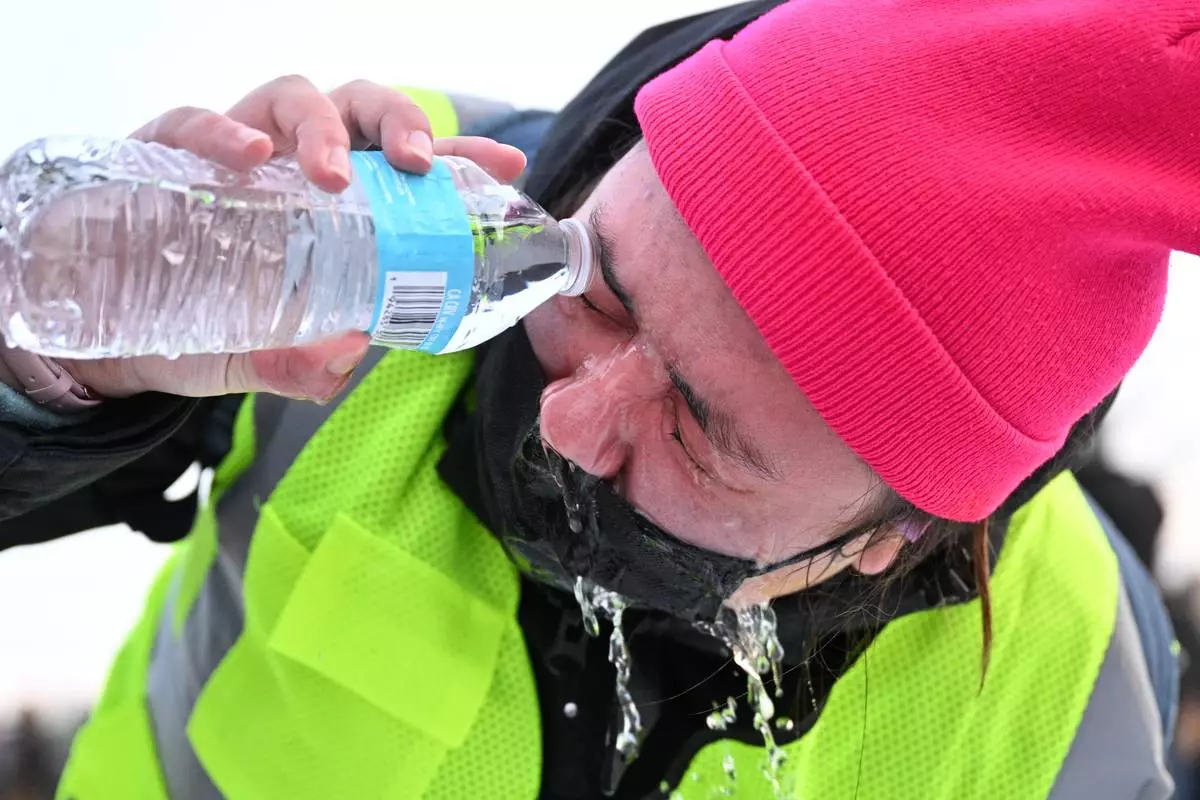
A protester pours water in their eye after confronting law enforcement outside the Bishop Henry Whipple Federal Building, Thursday, Jan. 8, 2026, in Minneapolis, Minn. (AP Photo/Tom Baker)
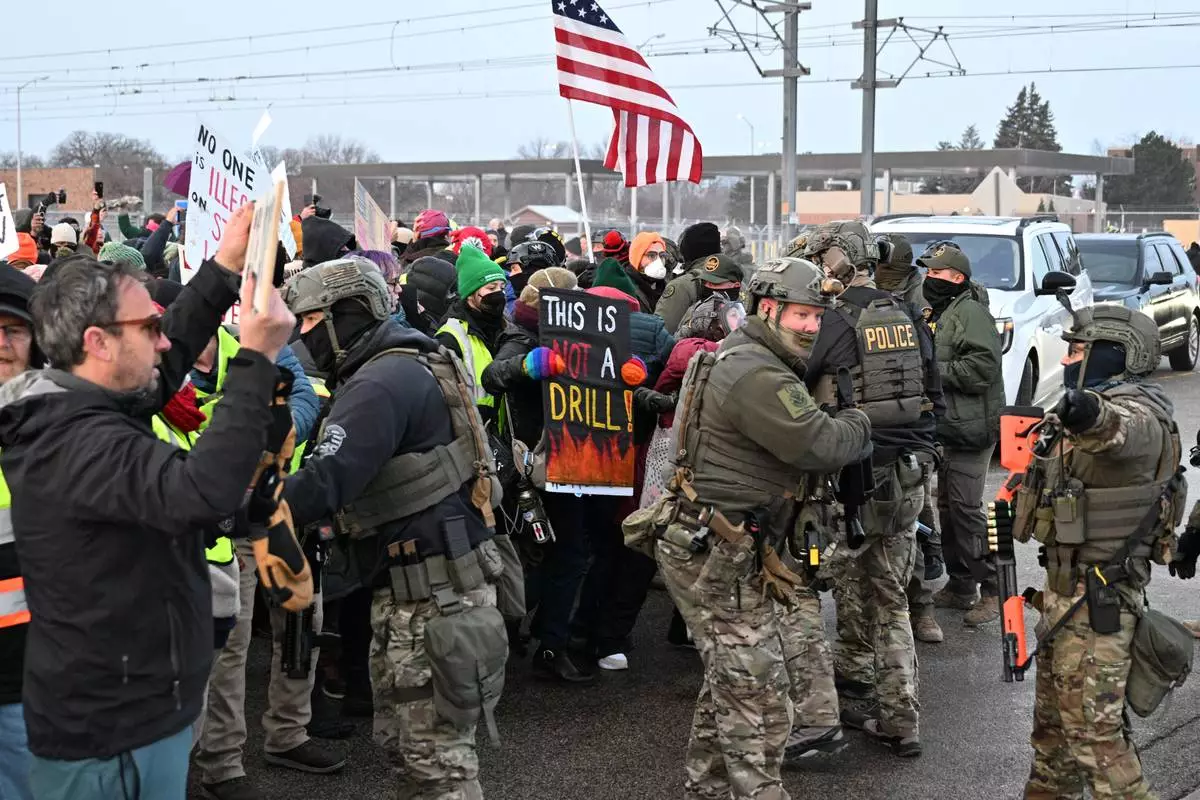
Protesters confront federal agents outside the Bishop Henry Whipple Federal Building, Thursday, Jan. 8, 2026, in Minneapolis, Minn. (AP Photo/Tom Baker)
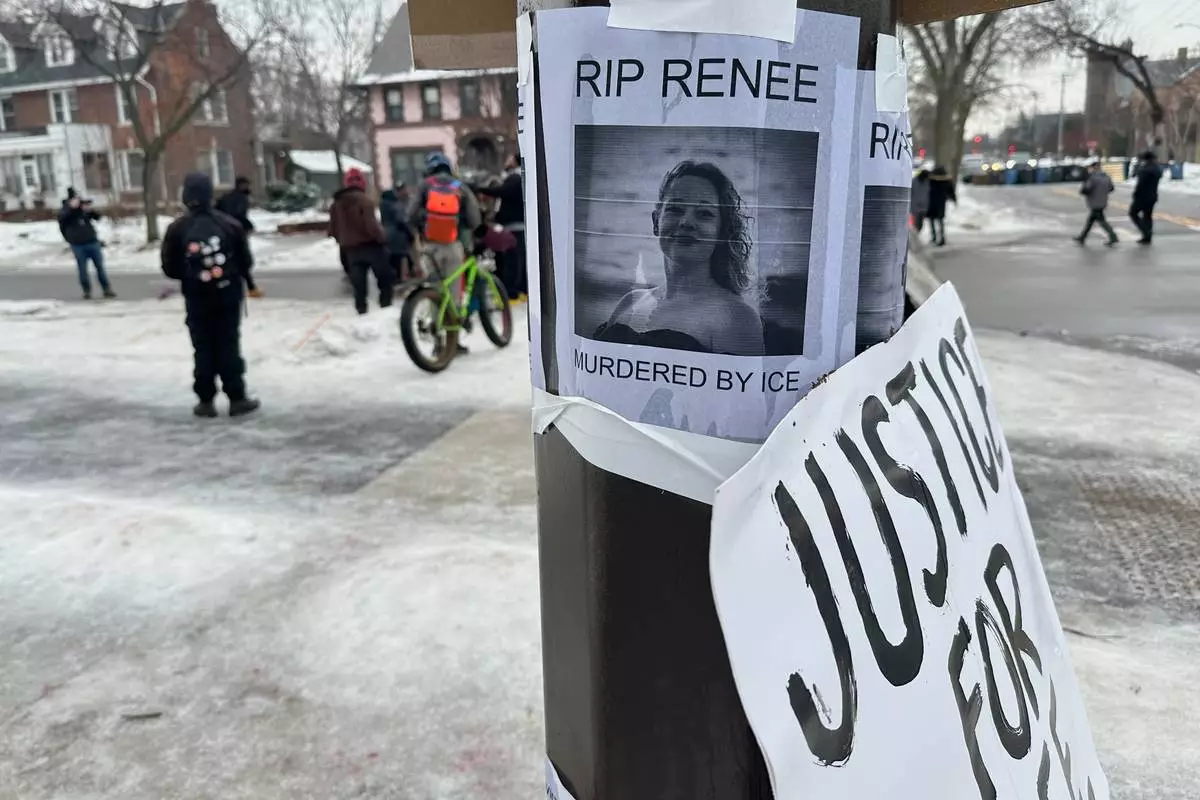
A makeshift memorial honoring the victim of a fatal shooting involving federal law enforcement agents is taped to a post near the site of the previous day's shooting, Thursday, Jan. 8, 2026, in Minneapolis, Minn. (AP Photo/Mike Householder)
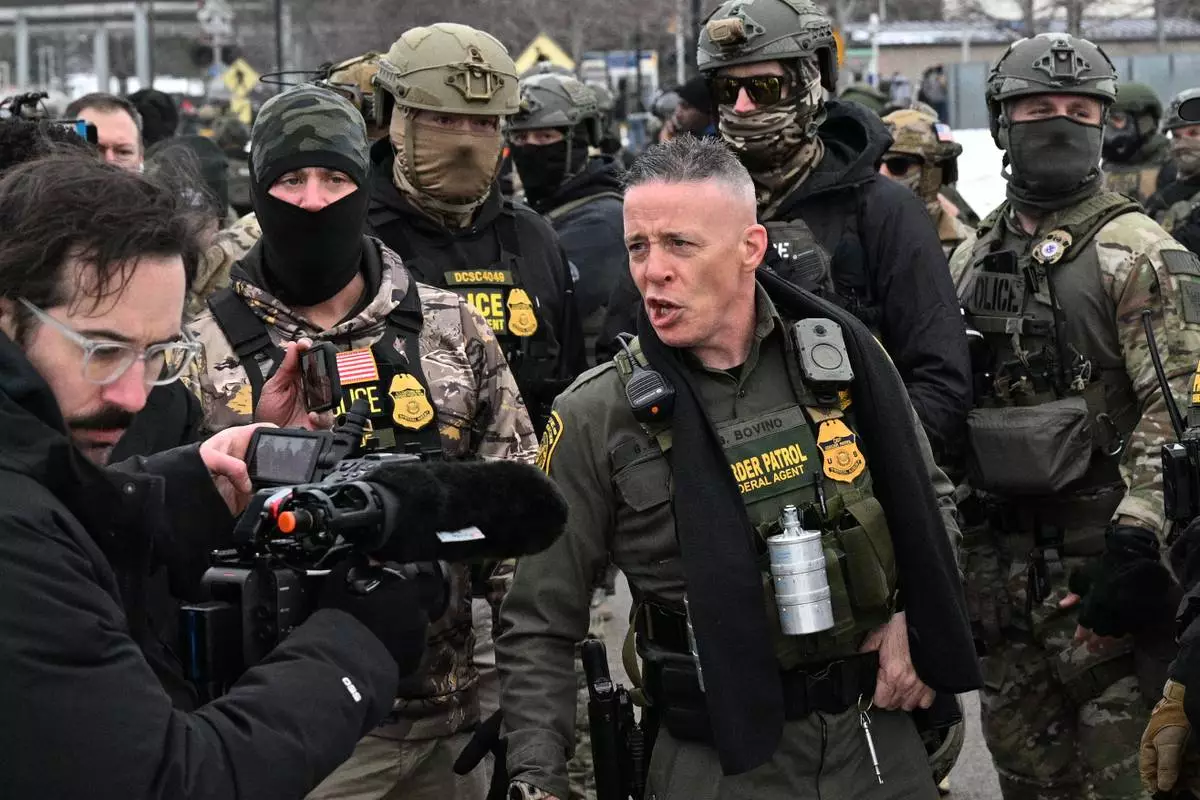
U.S. Border Patrol Cmdr. Gregory Bovino arrives as protesters gather outside the Bishop Henry Whipple Federal Building, Thursday, Jan. 8, 2026, in Minneapolis, Minn. (AP Photo/Tom Baker)
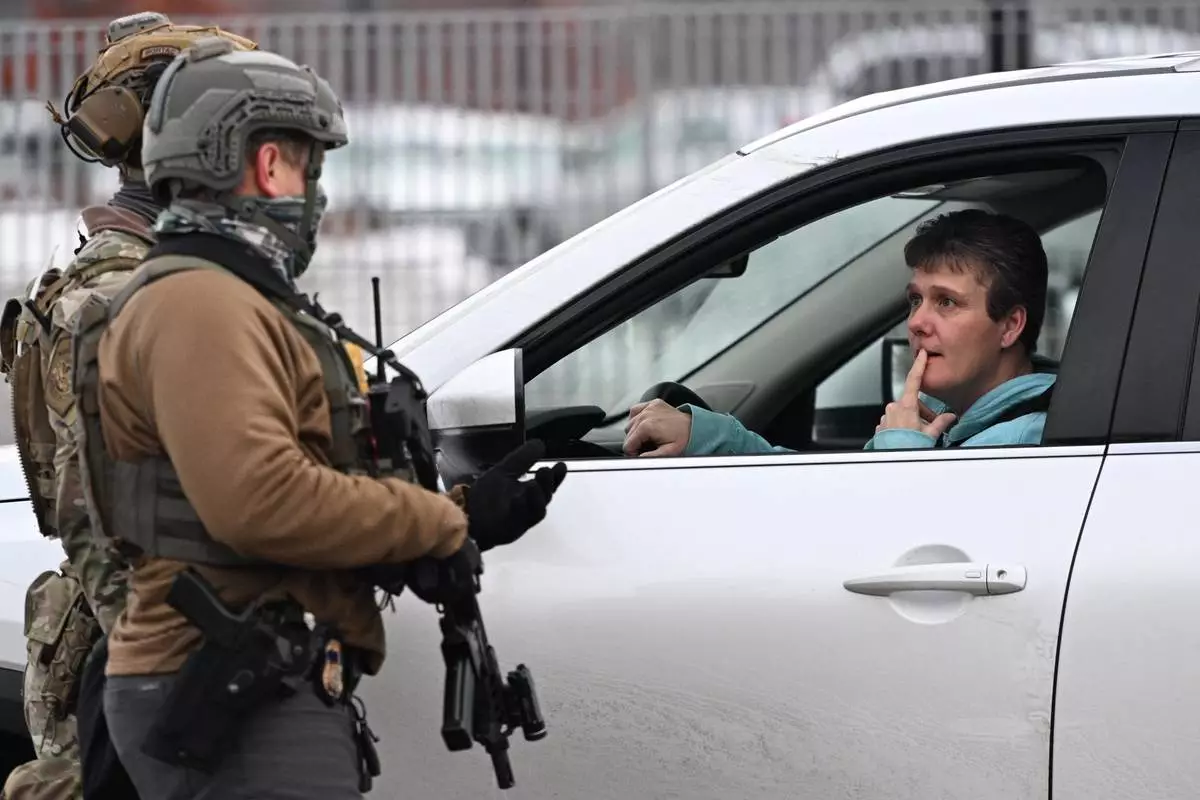
Federal agents talk with a person inside a vehicle outside the Bishop Henry Whipple Federal Building, Thursday, Jan. 8, 2026, in Minneapolis, Minn. (AP Photo/Tom Baker)
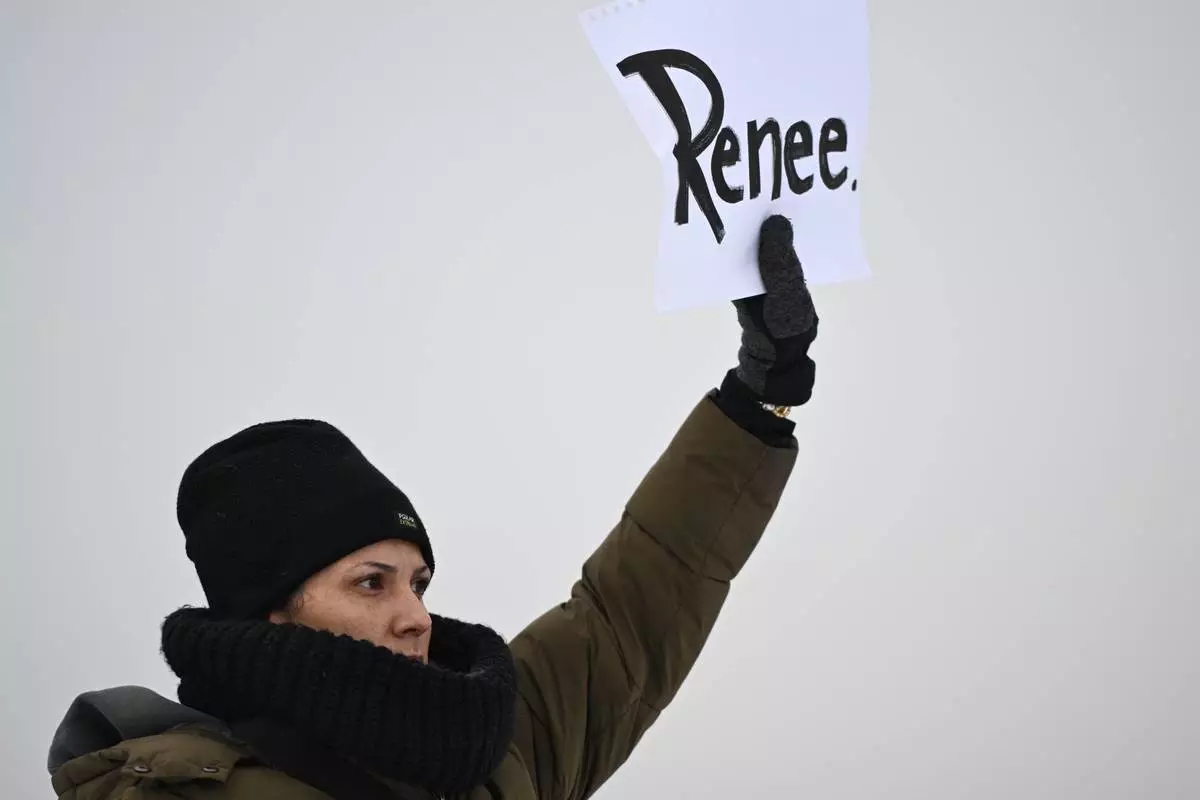
A protesters holds up a sign reading "Renee", the woman shot and killed by a U.S. Immigration and Customs Enforcement officer in Minneapolis on Wednesday, outside the Bishop Henry Whipple Federal Building, Thursday, Jan. 8, 2026, in Minneapolis, Minn. (AP Photo/Tom Baker)
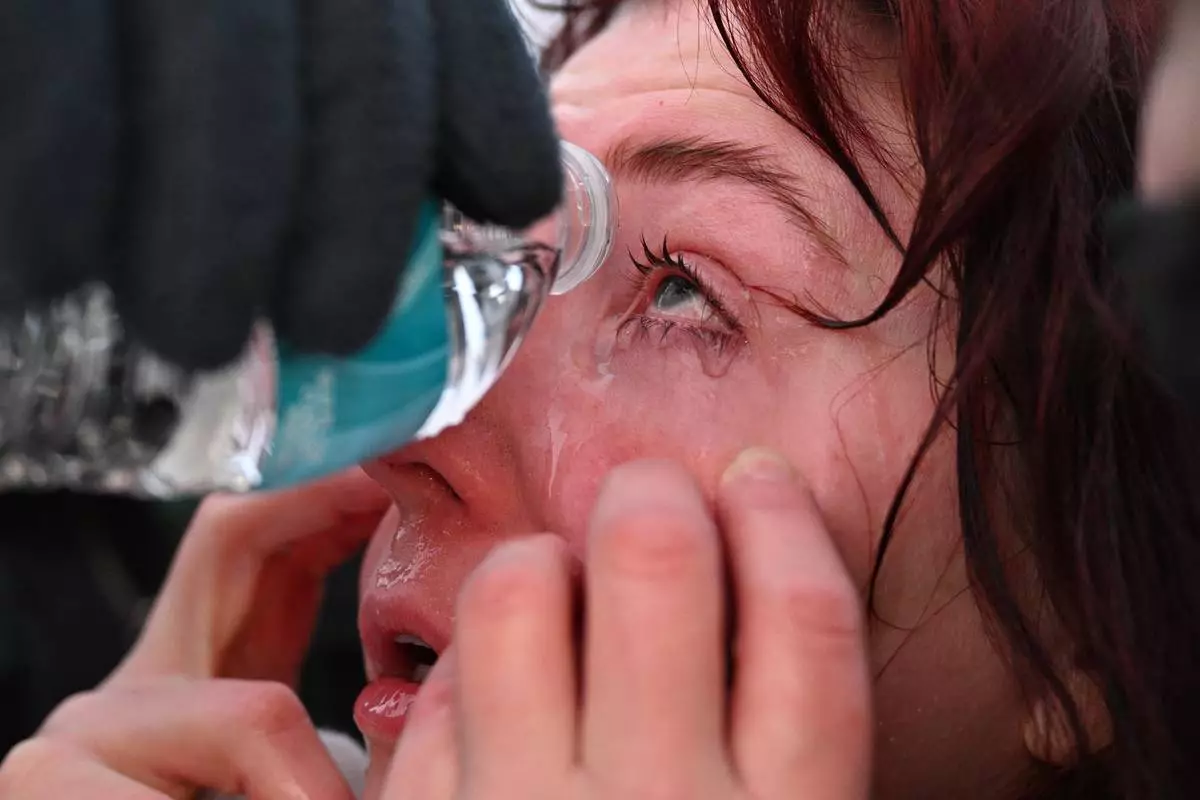
A protester receives aid after confronting law enforcement outside the Bishop Henry Whipple Federal Building, Thursday, Jan. 8, 2026, in Minneapolis, Minn. (AP Photo/Tom Baker)
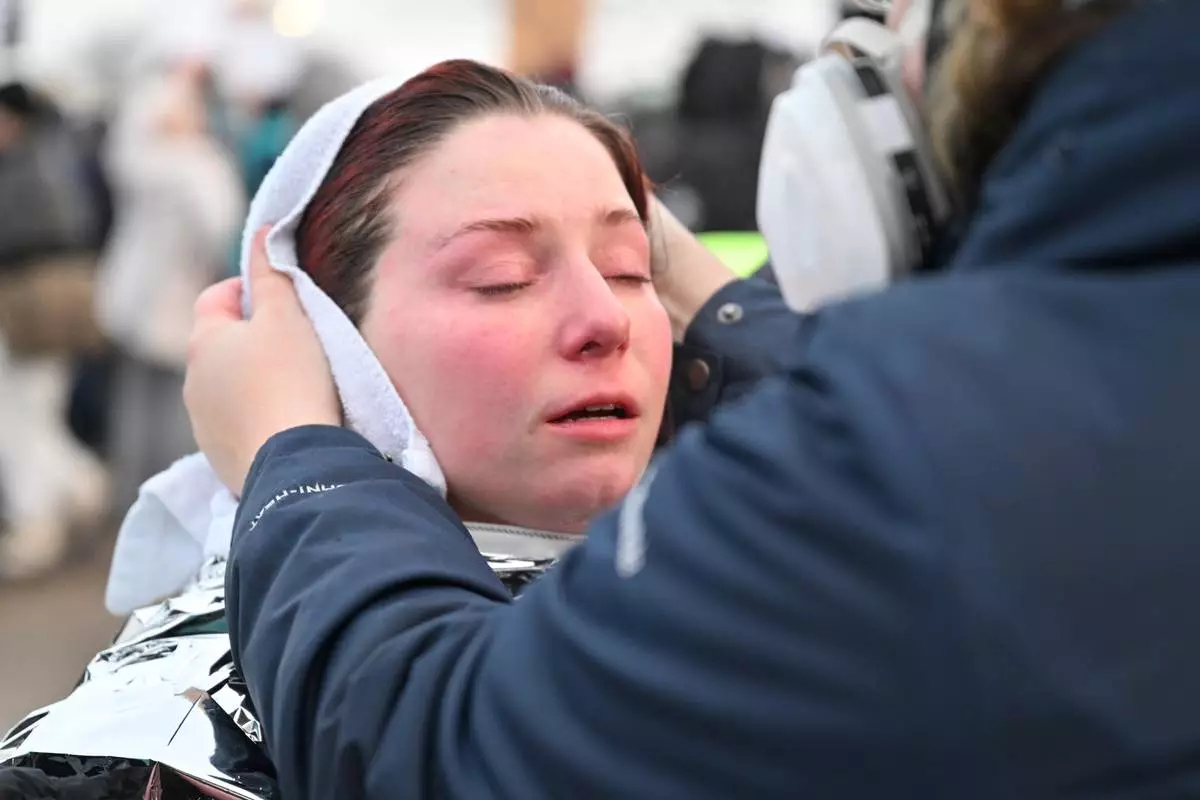
A protester revives aid after confronting law enforcement outside the Bishop Henry Whipple Federal Building, Thursday, Jan. 8, 2026, in Minneapolis, Minn. (AP Photo/Tom Baker)
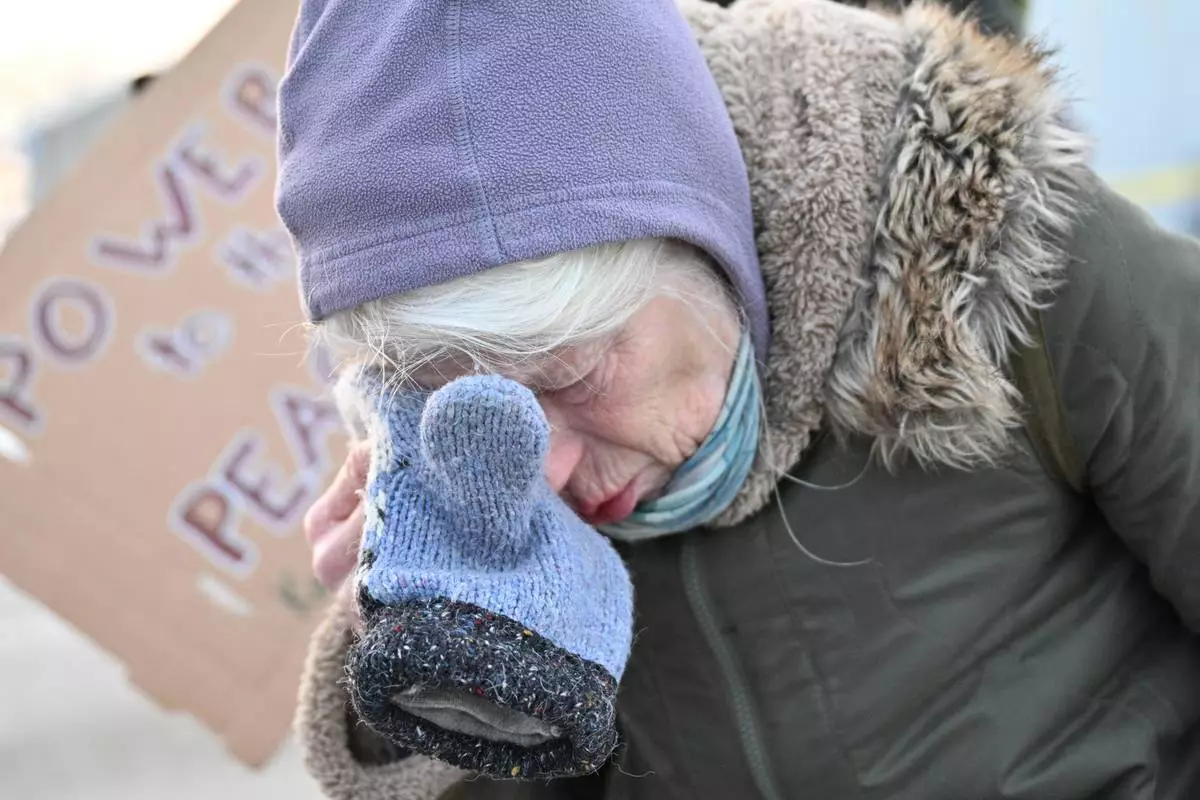
A protester covers their eyes after confronting law enforcement outside the Bishop Henry Whipple Federal Building, Thursday, Jan. 8, 2026, in Minneapolis, Minn. (AP Photo/Tom Baker)
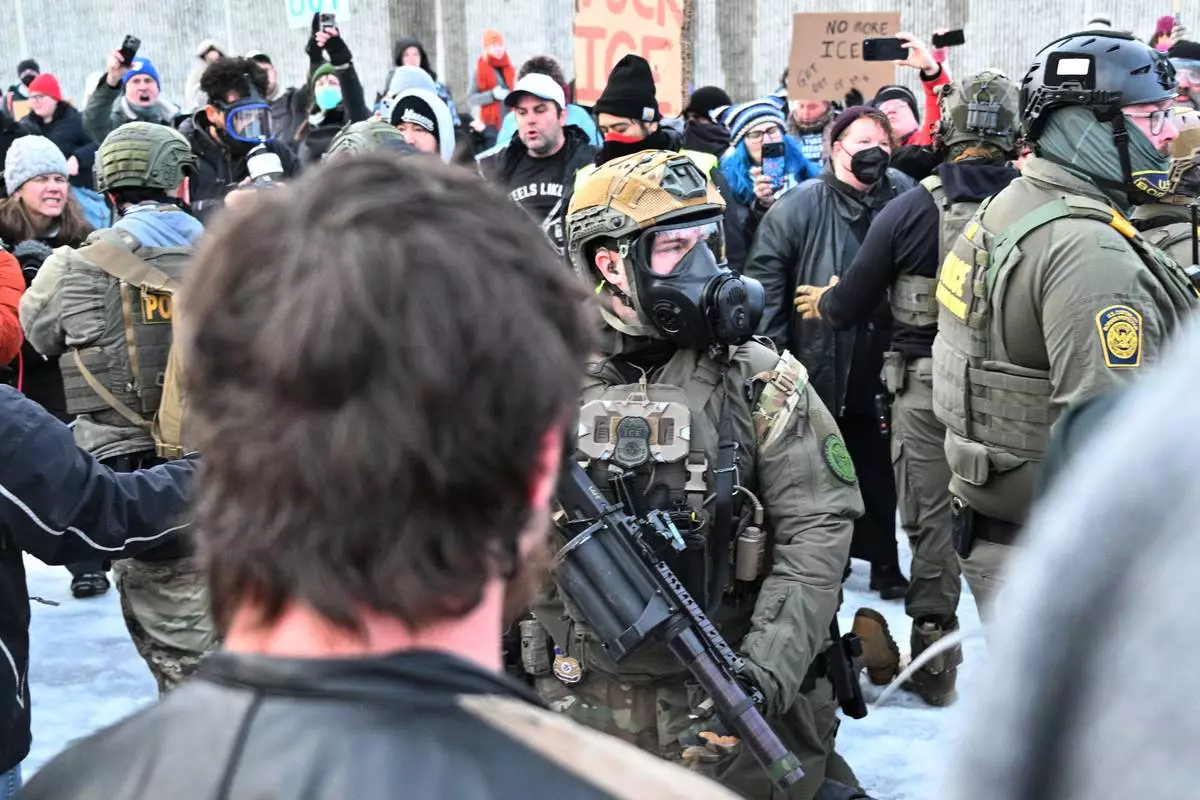
Federal agents confront protesters outside the Bishop Henry Whipple Federal Building, Thursday, Jan. 8, 2026, in Minneapolis, Minn. (AP Photo/Tom Baker)
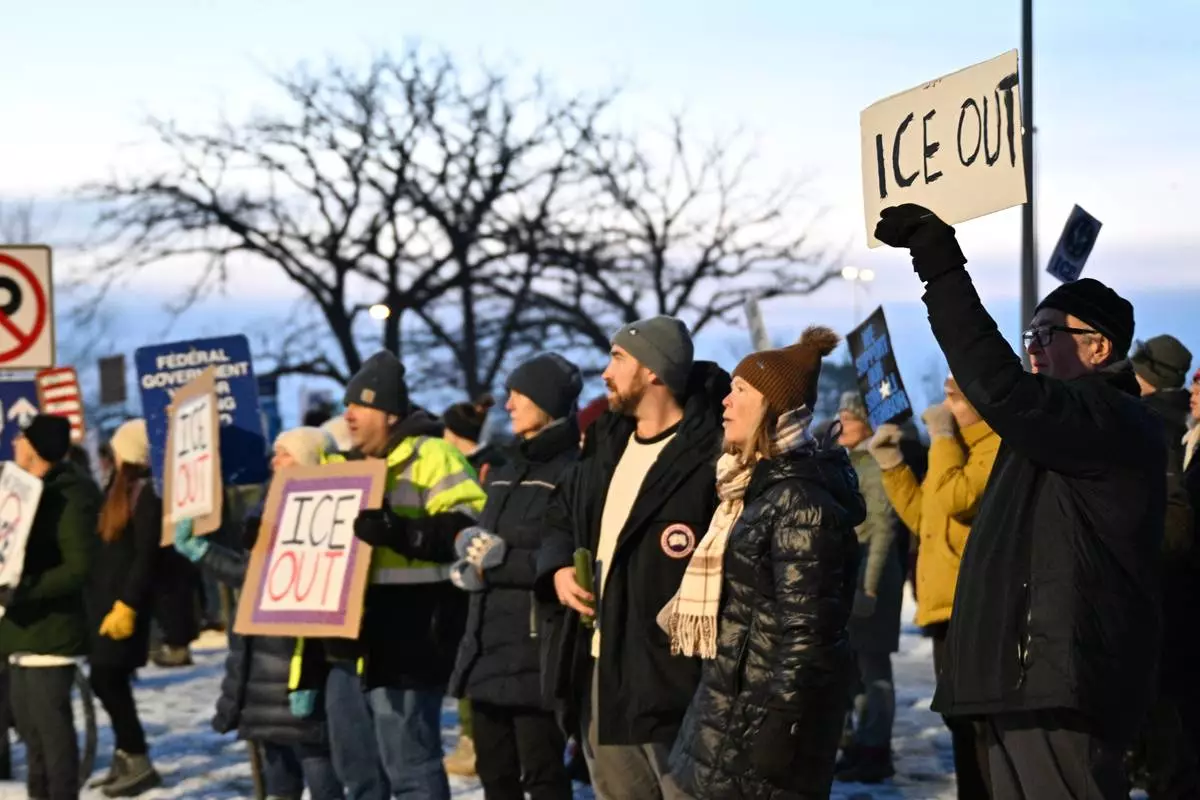
Protesters gather outside the Bishop Henry Whipple Federal Building, Thursday, Jan. 8, 2026, in Minneapolis, Minn. (AP Photo/Tom Baker)
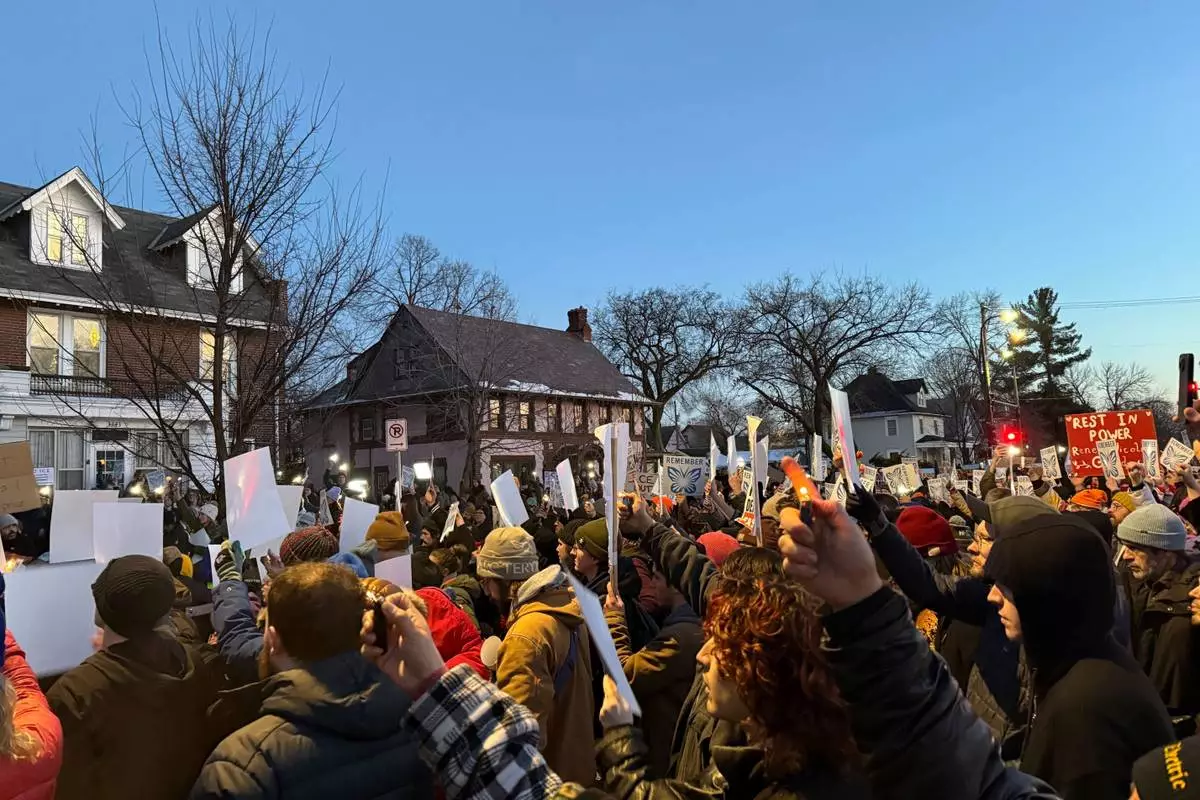
Demonstrators gather during a vigil near where an Immigration and Customs Enforcement officer shot and killed a woman in Minneapolis, Wednesday, Jan. 7, 2026. (AP Photo/Giovanna Dell'Orto)
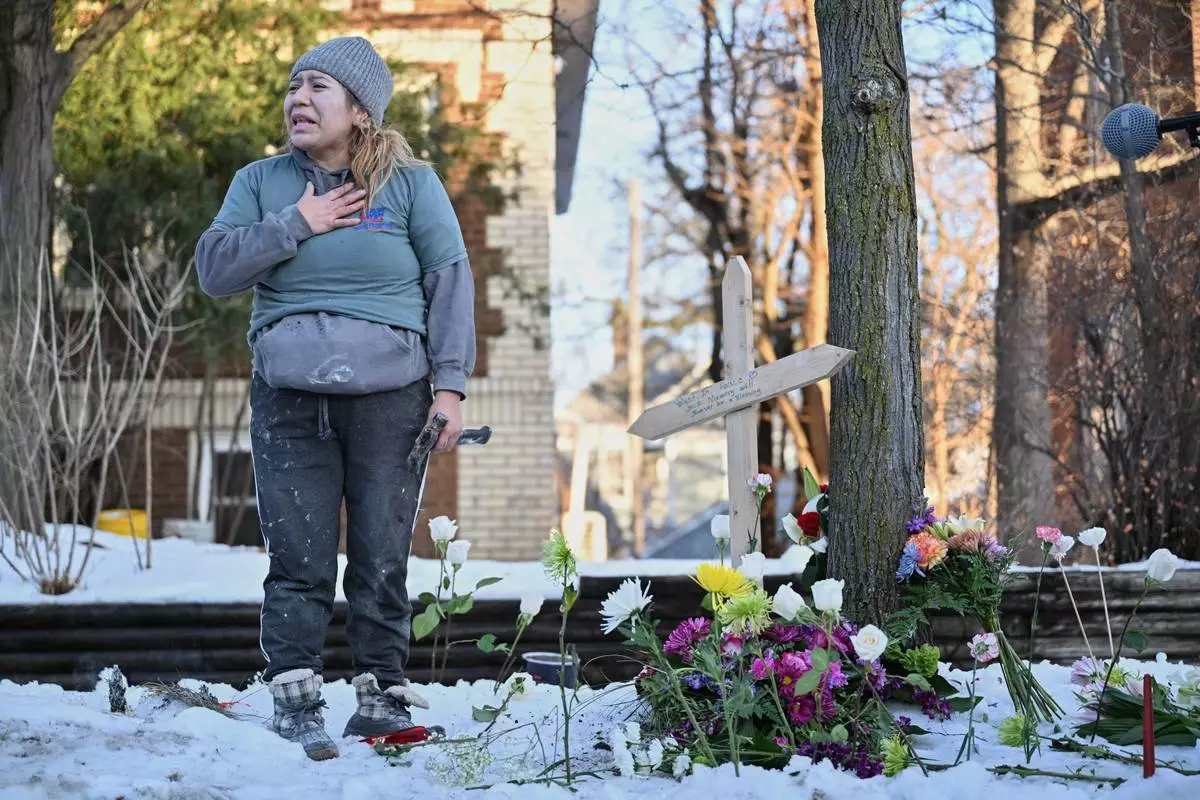
A protester stands next to a makeshift memorial honoring the victim of a fatal shooting involving federal law enforcement agents, near the scene in Minneapolis, Wednesday, Jan. 7, 2026. (AP Photo/Tom Baker)
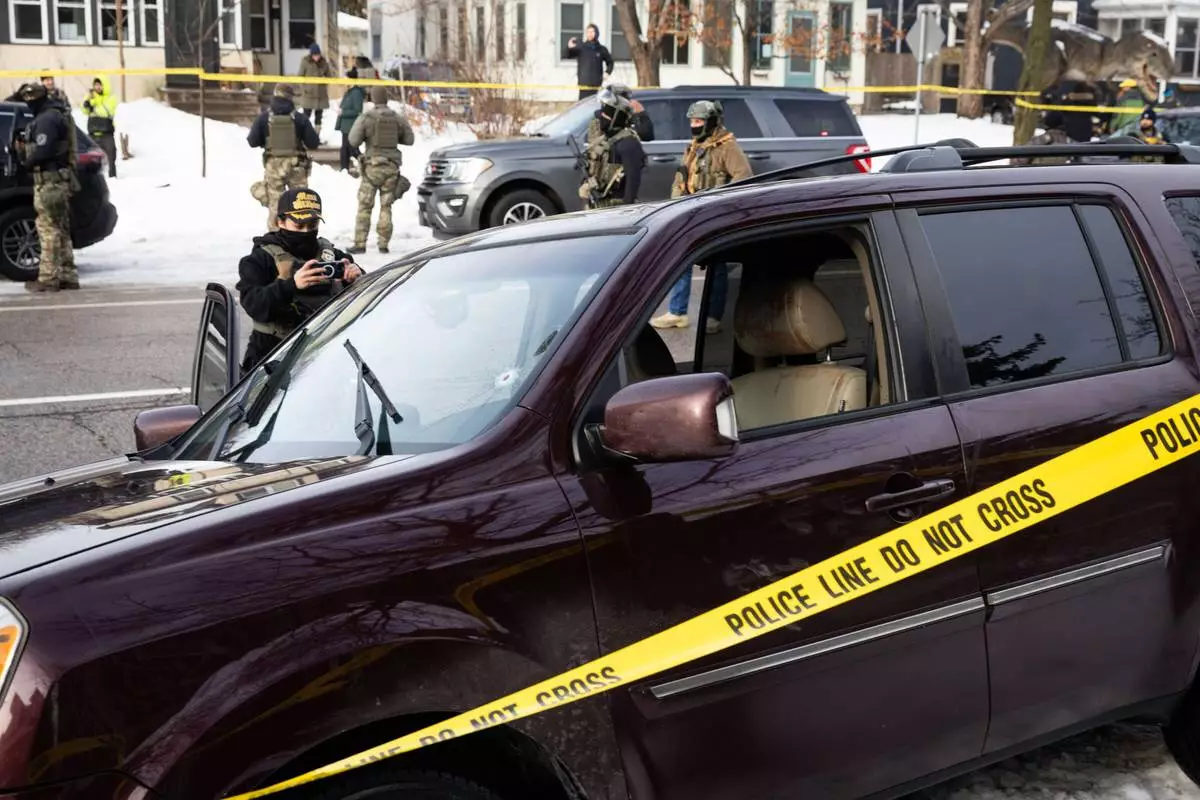
A bullet hole and blood stains are seen in a crashed vehicle on at the scene of a shooting in Minneapolis on Wednesday, Jan. 7, 2026. (Ben Hovland/Minnesota Public Radio via AP)
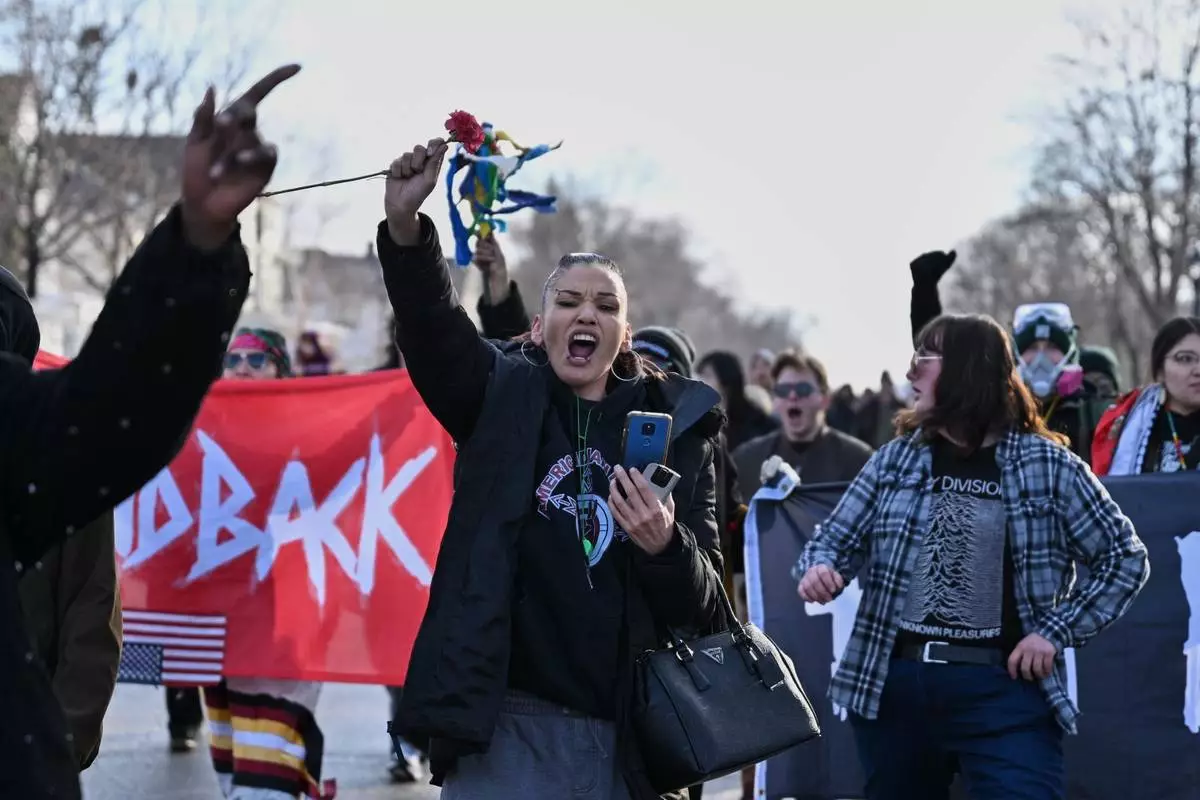
People protest as law enforcement officers attend to the scene of the shooting involving federal law enforcement agents, Wednesday, Jan. 7, 2026, in Minneapolis. (AP Photo/Tom Baker)