Surging gold prices in the United Arab Emirates(UAE) have triggered a shift in consumer behavior, with buyers increasingly favoring gold bars over traditional jewelry amid rising investment demand.
Due to its preferential tax policies, Dubai has become one of the world's major gold trading centers,attracting numerous investors and consumers with its competitive gold price.
However, the price of 24K gold per gram has exceeded 435 dirhams (about 118.45 U.S. dollars) in recent days, 50 percent higher than the previous year. Tawhid Abdulla, president of the Dubai Gold and Jewellery Group, said soaring prices have dampened demand for gold jewelry, while gold bars, which are primarily used for savings and investment, remain in strong demand.
Smaller bars weighing 10, 50, or 100 grams are especially popular across income groups, from high earners to budget-conscious buyers.
"They can take the gold bar and bring it to the jewelry store, and make it [some] form of necklace and chain and rings," said Abdulla.
Dubai's preferential tax policies typically make local gold prices 10 to 20 percent lower than global rates. However, with recent price surges, consumers have been forced to adjust their buying habits.
"Because of the price hike, I have decided to exchange my old jewelery for the new one. So at least it's affordable," said a tourist.
In Arabic culture, gold is not only for investment, but serves as essential gifts in important moments of life, such as marriage, birth and graduation. Such traditions keep gold in high demand.
Currently, "Made in UAE" jewelry accounts for around 15 percent of local demand, but manufacturers aim to double that share to 30 percent within five years, driven by rising production efficiency and consumer accessibility.
"We are extremely focusing on our local 'Made in UAE'. So, that gives us a better accessibility and gives us a better cost and gives us a better, faster delivery to the consumer," Abdulla said.
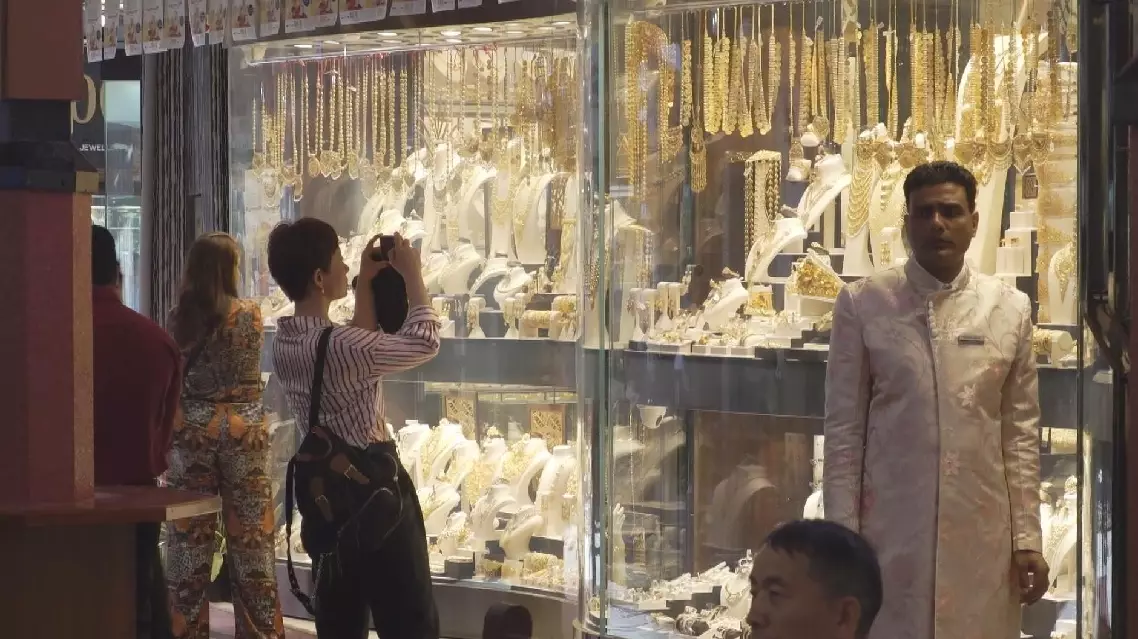
UAE buyers favor gold bars over jewelry as prices soar by 50 percent