LITTLETON, Colo. (AP) — When Lena Astilli first bought her home outside of Denver, she had no interest in matching the wall-to-wall green lawns that dominated her block. She wanted native plants — the kind she remembered and loved as a child in New Mexico, that require far less water and have far more to offer insects and birds that are in decline.
“A monoculture of Kentucky bluegrass is not helping anybody,” Astilli said. After checking several nurseries before finding one that had what she wanted, she has slowly been reintroducing those native plants to her yard.
Click to Gallery
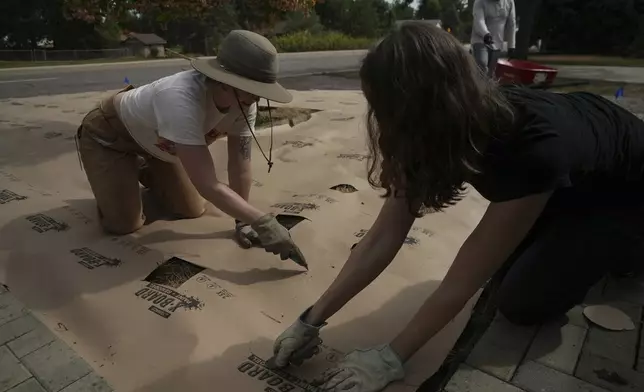
Homeowner Lena Astilli cuts holes in a weed barrier atop her dead grass where native seedlings will be planted Thursday, Aug. 28, 2025, in Littleton, Colo. (AP Photo/Brittany Peterson)
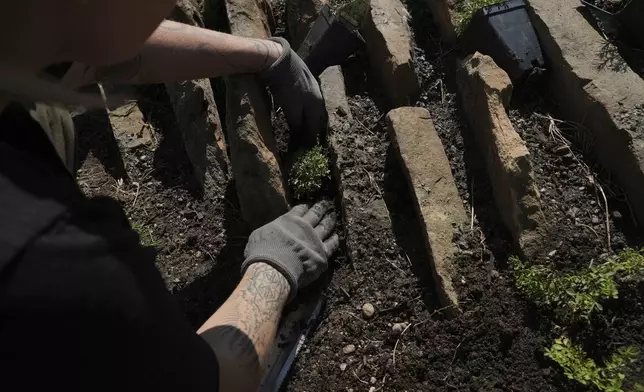
A person plants a native seedling in a crevice garden Thursday, Aug. 28, 2025, in Littleton, Colo. (AP Photo/Brittany Peterson)
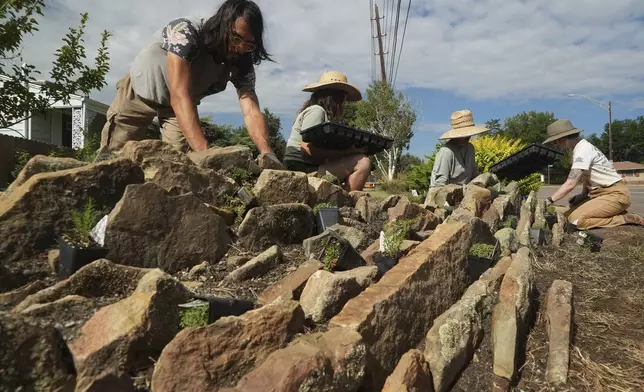
Greg Gorskiy plants a crevice garden Thursday, Aug. 28, 2025, in Littleton, Colo. (AP Photo/Brittany Peterson)
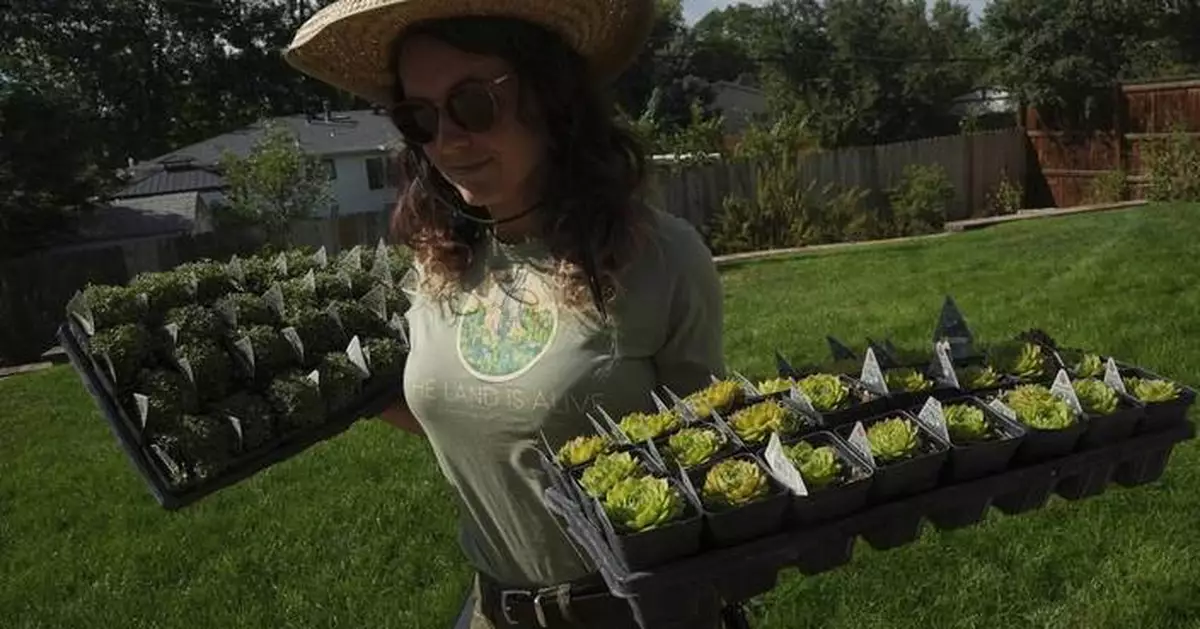
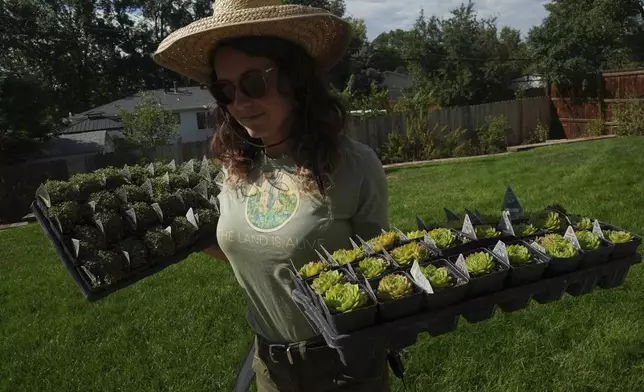
Eryn Murphy carries native plants Thursday, Aug. 28, 2025, in Littleton, Colo. (AP Photo/Brittany Peterson)
Though Astilli was replacing grass just last month, it remains ubiquitous in American yards. It's a tradition that began more than two centuries ago with the landed gentry copying the landscaping of Europe's wealthy, and grass now dominates as the familiar planting outside everything from single-family homes to apartment complexes to office parks and retail malls.
“In the absence of simple directions and guidance about what to do with their landscape, they default to lawn because it’s easy,” said Mark Richardson, executive director of the Ecological Landscape Alliance, a nonprofit that promotes sustainable landscaping.
Yet that grass is problematic in deserts and any place with limited water, such as the American West, where it won't do well without irrigation. As climate change makes the world hotter and triggers more extreme weather, including drought, thirsty expanses of groomed emerald are taxing freshwater supplies that are already under stress.
Enter xeriscaping — landscaping aimed at vastly reducing the need for irrigation, including by using native or drought-tolerant plants. (A utility here, Denver Water, says it coined the term in 1981 by combining “landscape” with the Greek word “xeros,” which means dry, to encourage reduced water use.)
The average U.S. family uses 320 gallons (1,211 liters) of water every day, according to the Environmental Protection Agency. Nearly a third of that is devoted to outdoor water use. It's even more for people with thirsty plants in dry places.
“Potable water is going to become harder and harder to come by,” said Richardson. “Lawn reduction is a fantastic way to limit the use of water in the landscape.”
His group isn't keen on grass even in areas like the Northeast or Midwest, where drought and water use aren't as problematic as in the West. Less lawn means fewer pesticides and fertilizers washing into rivers. More native plants mean more rest stops and nesting grounds for pollinators like birds, butterflies and bees, which have faced serious population declines in recent decades.
“We can bring nature back into our urban and suburban areas,” said Haven Kiers, associate professor of landscape architecture at University of California-Davis. “Improving biodiversity, creating habitat is going to be a huge thing for the environment.”
It's also better for the people using the yard, Kiers said.
"So many studies show that spending time in nature and gardening, all of this is really good for you,” Kiers said. “When they’re doing that, they’re not talking about mowing the lawn.”
Kiers says the only thing more intimidating than an expanse of lawn is an expanse of unplanted dirt. Her top recommendation: take it slowly. It also mitigates the cost, because she said paying someone to do it all at once can cost tens of thousands of dollars.
If you’ve got beds along the outside of the house, expand them. If you’ve got a path leading to the front door, put shrubs or flowers on either side of it. If you don’t have shade, plant a tree, and if you’ve got a tree already, create a bed around it. All of these steps reduce the lawn space.
There are also financial incentives and rebates in several states to make the transformation more affordable. Sometimes they're offered by a city, county, state, water agency or local conservation organizations, so searching for the programs available with the municipalities and companies near you is a good place to start.
Looking for landscaping ideas? “If you want to see good examples of horticultural at its finest, visit a public garden,” Richardson said. Kiers recommended finding a master gardener or a community garden volunteer, because they’ll often provide expertise free of charge.
Astilli, the Littleton homeowner, remade her backyard with native plants a few years ago — goldenrod, sunflowers, rudbeckia, purple poppy mallow, Rocky Mountain bee plant and more. Some green lawn remains for her dog and child to romp.
Late this summer, she was getting her hands dirty converting the front yard to xeriscaping. With the help of Restorative Landscape Design and its owner, Eryn Murphy, Astilli was replacing grass with plants like bee balm, evening primrose, scarlet gilia, prairie dropseed and tall thimbleweed.
In a break from the work, Murphy reeled off a few of the different possible looks for low-water landscaping: a gravel garden with perennials, lush prairie, a crevice or rock garden with tiny plants growing in the stone features, a cactus garden.
“Really the sky is the limit in terms of your creativity and your aesthetic,” she said. “It's just about using plants that are supposed to be here.”
Murphy said an ever-drier West due to climate change will require people to “do something” as lawns become less and less viable.
“Water is going to keep getting more expensive, your lawn is going to stop looking good. You’re going to have to open your eyes and say, what could I do that’s different and better?"
The Associated Press’ climate and environmental coverage receives financial support from multiple private foundations. AP is solely responsible for all content. Find AP’s standards for working with philanthropies, a list of supporters and funded coverage areas at AP.org.
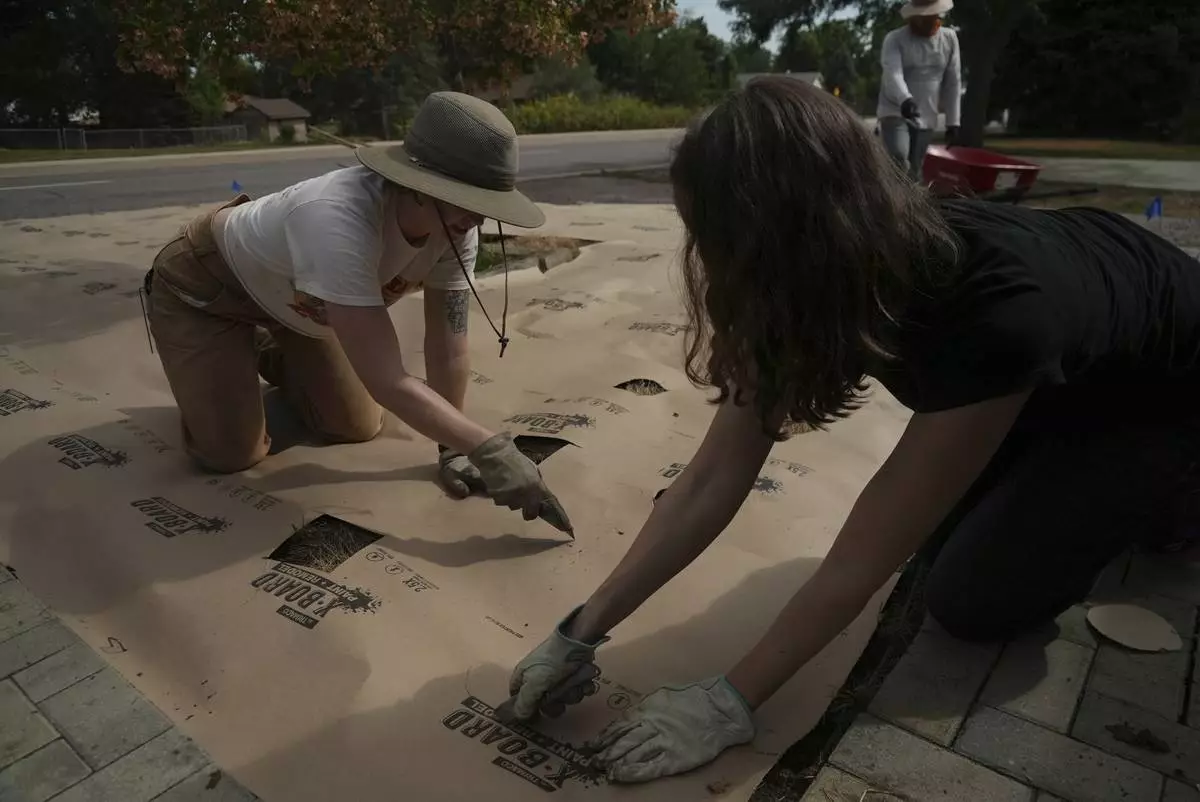
Homeowner Lena Astilli cuts holes in a weed barrier atop her dead grass where native seedlings will be planted Thursday, Aug. 28, 2025, in Littleton, Colo. (AP Photo/Brittany Peterson)
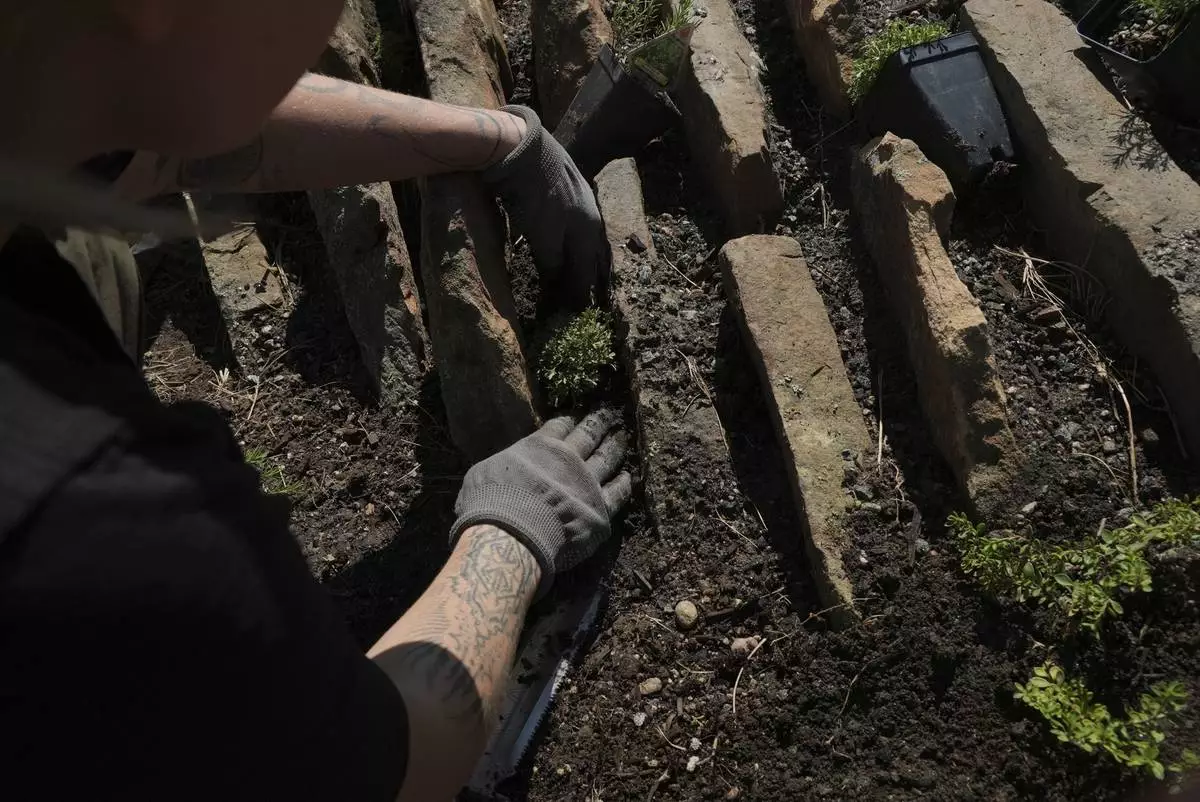
A person plants a native seedling in a crevice garden Thursday, Aug. 28, 2025, in Littleton, Colo. (AP Photo/Brittany Peterson)
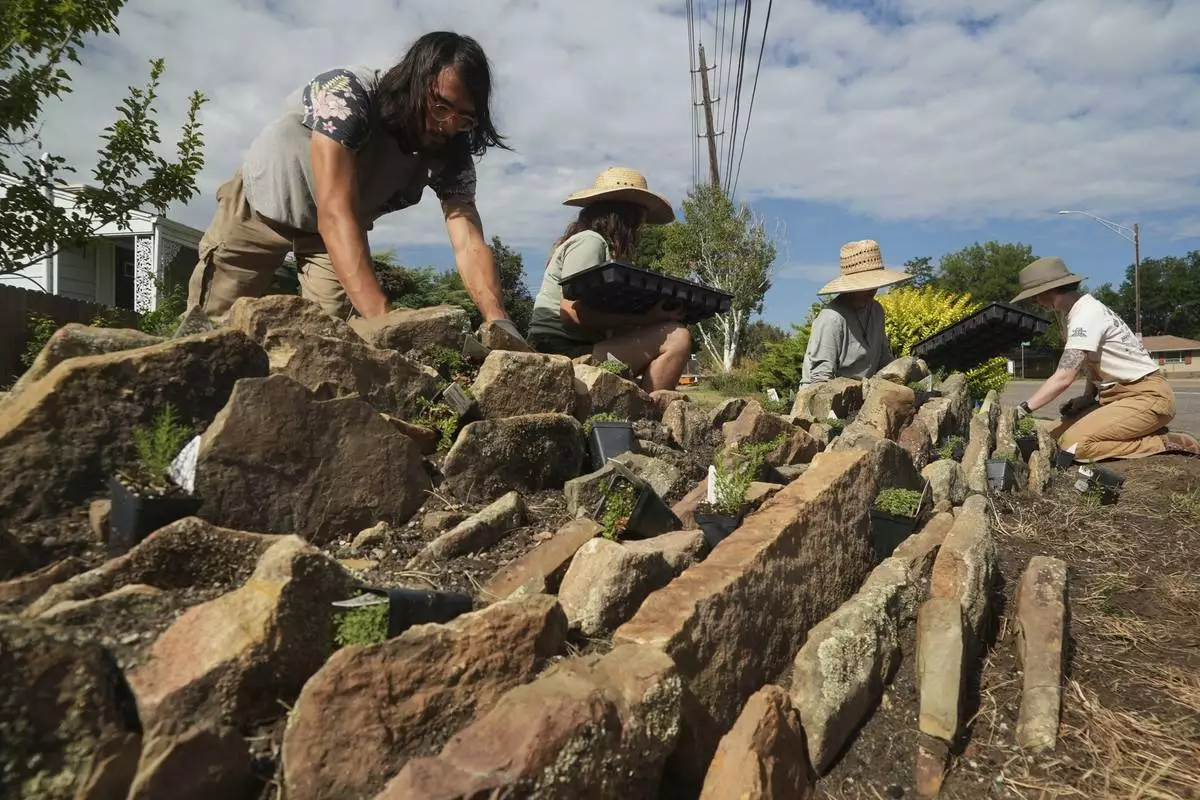
Greg Gorskiy plants a crevice garden Thursday, Aug. 28, 2025, in Littleton, Colo. (AP Photo/Brittany Peterson)
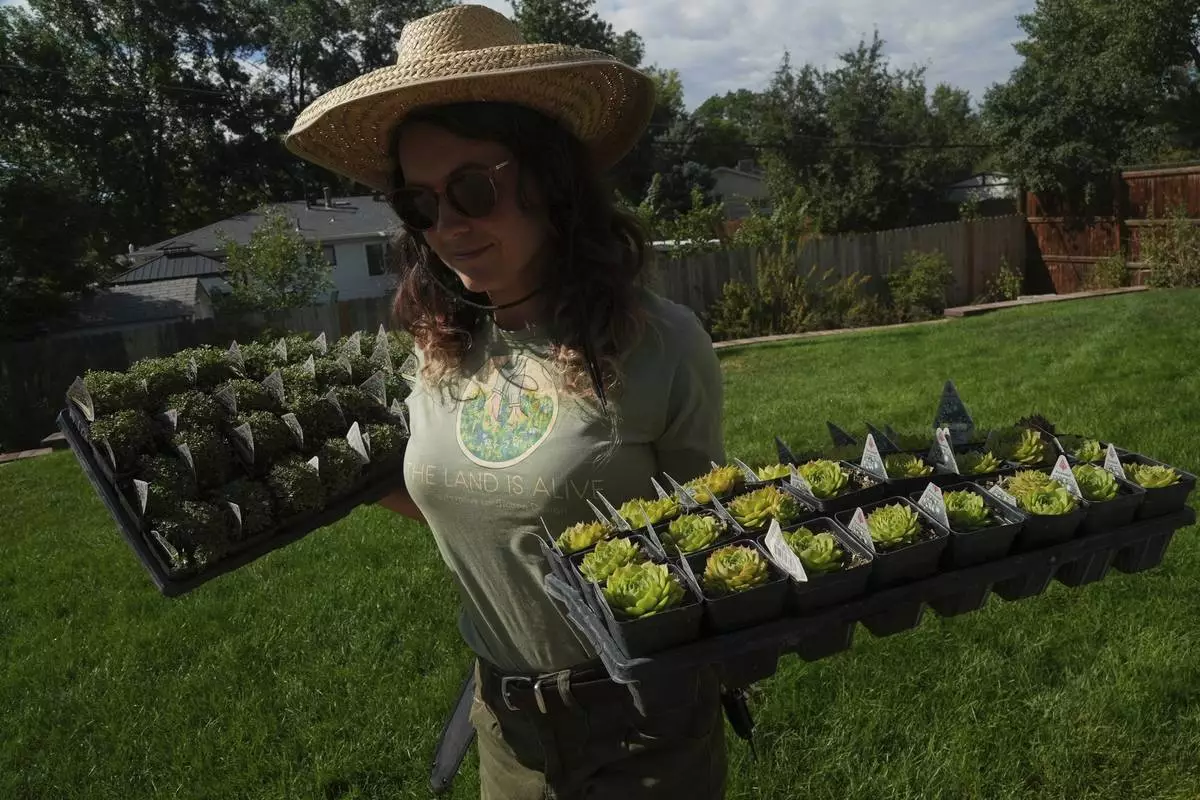
Eryn Murphy carries native plants Thursday, Aug. 28, 2025, in Littleton, Colo. (AP Photo/Brittany Peterson)
MINNEAPOLIS (AP) — President Donald Trump on Thursday threatened to invoke an 1807 law and deploy troops to quell persistent protests against the federal officers sent to Minneapolis to enforce his administration's massive immigration crackdown.
The threat comes a day after a man was shot and wounded by an immigration officer who had been attacked with a shovel and broom handle. That shooting further heightened the fear and anger that has radiated across the city since an Immigration and Customs Enforcement agent fatally shot Renee Good in the head.
Trump has repeatedly threatened to invoke the Insurrection Act, a rarely used federal law, to deploy the U.S. military or federalize the National Guard for domestic law enforcement, over the objections of state governors.
“If the corrupt politicians of Minnesota don’t obey the law and stop the professional agitators and insurrectionists from attacking the Patriots of I.C.E., who are only trying to do their job, I will institute the INSURRECTION ACT, which many Presidents have done before me, and quickly put an end to the travesty that is taking place in that once great State,” Trump said in social media post.
Presidents have invoked the law more than two dozen times, most recently in 1992 by President George H.W. Bush to end unrest in Los Angeles. In that instance, local authorities had asked for the assistance.
Trump has repeatedly toyed with the idea of invoking the Insurrection Act, starting in his first term, but hasn't followed through. In 2020, for example, he threatened to use the act to quell protests after George Floyd was killed by Minneapolis police.
“I’m making a direct appeal to the President: Let’s turn the temperature down. Stop this campaign of retribution. This is not who we are,” Gov. Tim Walz, a Democrat, said on X.
Minnesota Attorney General Keith Ellison said he would challenge any such action in court. He's already suing to try to stop the surge by the Department of Homeland Security, which says officers have arrested more than 2,500 people since Nov. 29 as part of an immigration operation in the Twin Cities called Metro Surge.
The operation grew when ICE sent 2,000 officers and agents to the area early in January. ICE is a DHS agency.
In Minneapolis, smoke filled the streets Wednesday night near the site of the latest shooting as federal officers wearing gas masks and helmets fired tear gas into a small crowd. Protesters responded by throwing rocks and shooting fireworks.
Demonstrations have become common in Minneapolis since Good was fatally shot on Jan. 7. Agents who have yanked people from their cars and homes have been confronted by angry bystanders demanding they leave.
“This is an impossible situation that our city is presently being put in and at the same time we are trying to find a way forward to keep people safe,” Minneapolis Mayor Jacob Frey said.
The American Civil Liberties Union of Minnesota filed a class-action lawsuit on behalf of three people who said they were questioned or detained in recent days. The lawsuit says two are Somali and one is Hispanic; all three are U.S. citizens. The lawsuit seeks an end to what the ACLU describes as a practice of racial profiling and warrantless arrests. The government did not immediately comment.
Similar lawsuits have been filed in Los Angeles and Chicago and despite seeing initial success, have tended to fizzle in the face of appeal. In Chicago, for example, last year a judge ordered a senior U.S. Border Patrol official to brief her nightly following a lawsuit by news outlets and protesters who said agents used too much force during demonstrations. But three days later, an appeals court stopped the updates.
Homeland Security said in a statement that federal law enforcement officers on Wednesday stopped a driver from Venezuela who is in the U.S. illegally. The person drove off then crashed into a parked car before fleeing on foot, DHS said.
Officers caught up, then two other people arrived and the three started attacking the officer, according to DHS.
“Fearing for his life and safety as he was being ambushed by three individuals, the officer fired a defensive shot to defend his life,” DHS said. The confrontation took place about 4.5 miles (7.2 kilometers) from where Good was killed.
Police chief Brian O’Hara said the man who was shot did not have a life-threatening injury. O’Hara's account of what happened largely echoed that of Homeland Security, which later said the other two men were also in the U.S. illegally from Venezuela.
The FBI said several government vehicles were damaged and property inside was stolen when agents responded to the shooting. Photos show broken windows and insults made with paint. A reward of up to $100,000 is being offered for information. The FBI’s Minneapolis office did not immediately reply to messages seeking more details.
St. Paul Public Schools, with more than 30,000 students, said it would begin offering an online learning option for students who do not feel comfortable coming to school. Schools will be closed next week until Thursday to prepare for those accommodations.
Minneapolis Public Schools, which has a similar enrollment, is also offering temporary remote learning. The University of Minnesota will start a new term next week with different options depending on the class.
Madhani reported from Washington, D.C. and Golden reported from Seattle. Associated Press reporters Sophia Tareen in Chicago; Bill Barrow in Atlanta; Rebecca Santana in Washington; and Ed White in Detroit contributed.
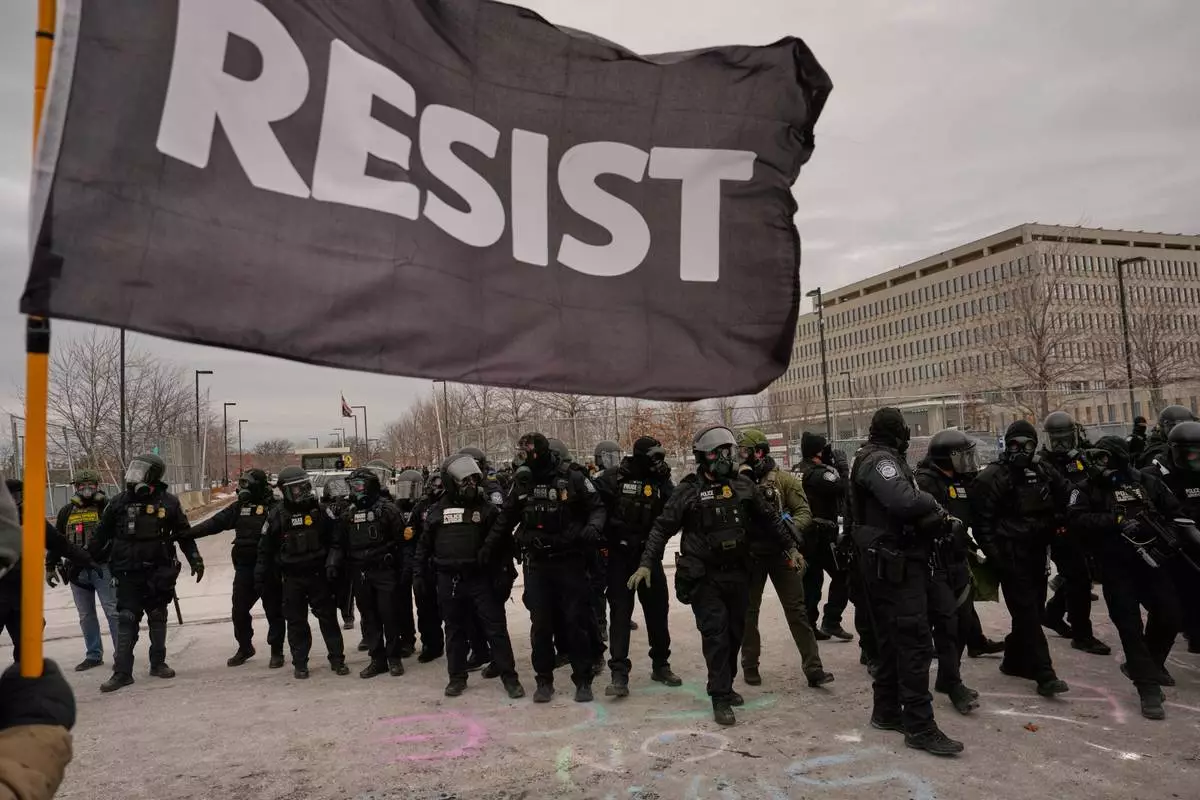
Federal immigration officers confront protesters outside Bishop Henry Whipple Federal Building, Thursday, Jan. 15, 2026, in Minneapolis. (AP Photo/John Locher)
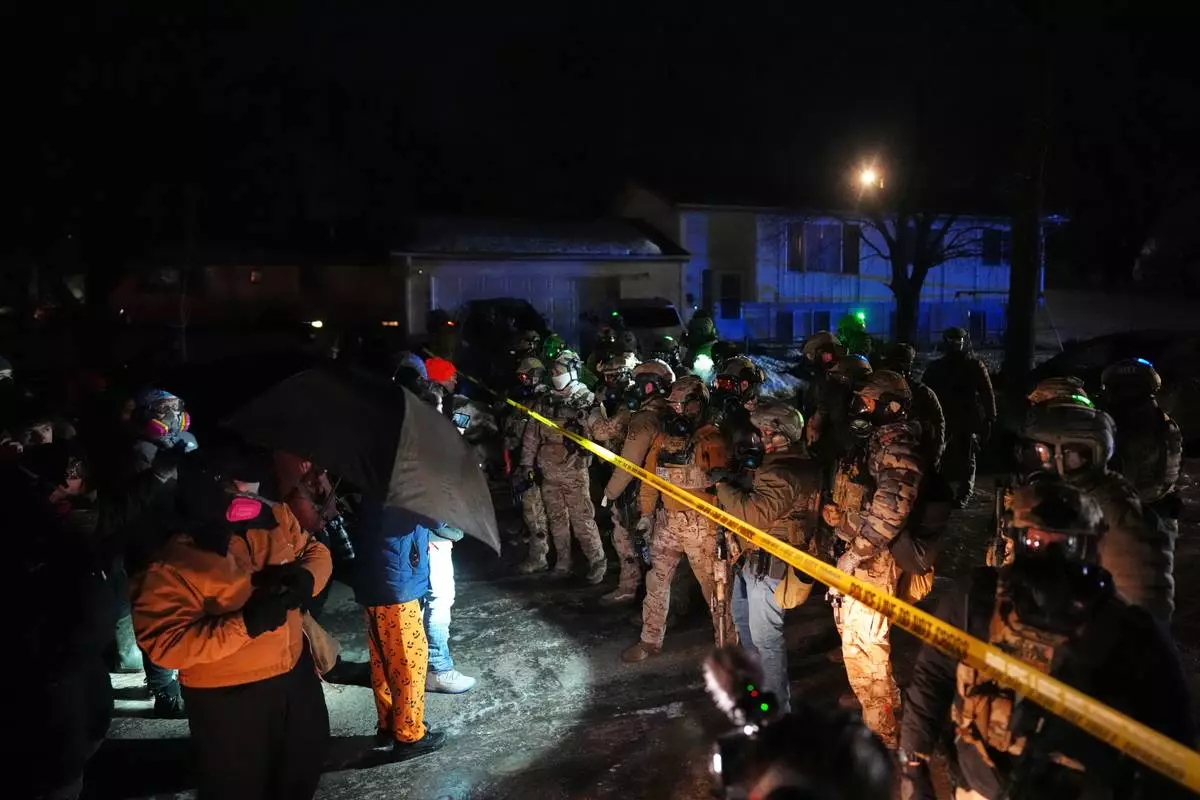
Law enforcement officers at the scene of a reported shooting Wednesday, Jan. 14, 2026, in Minneapolis. (AP Photo/Adam Gray)
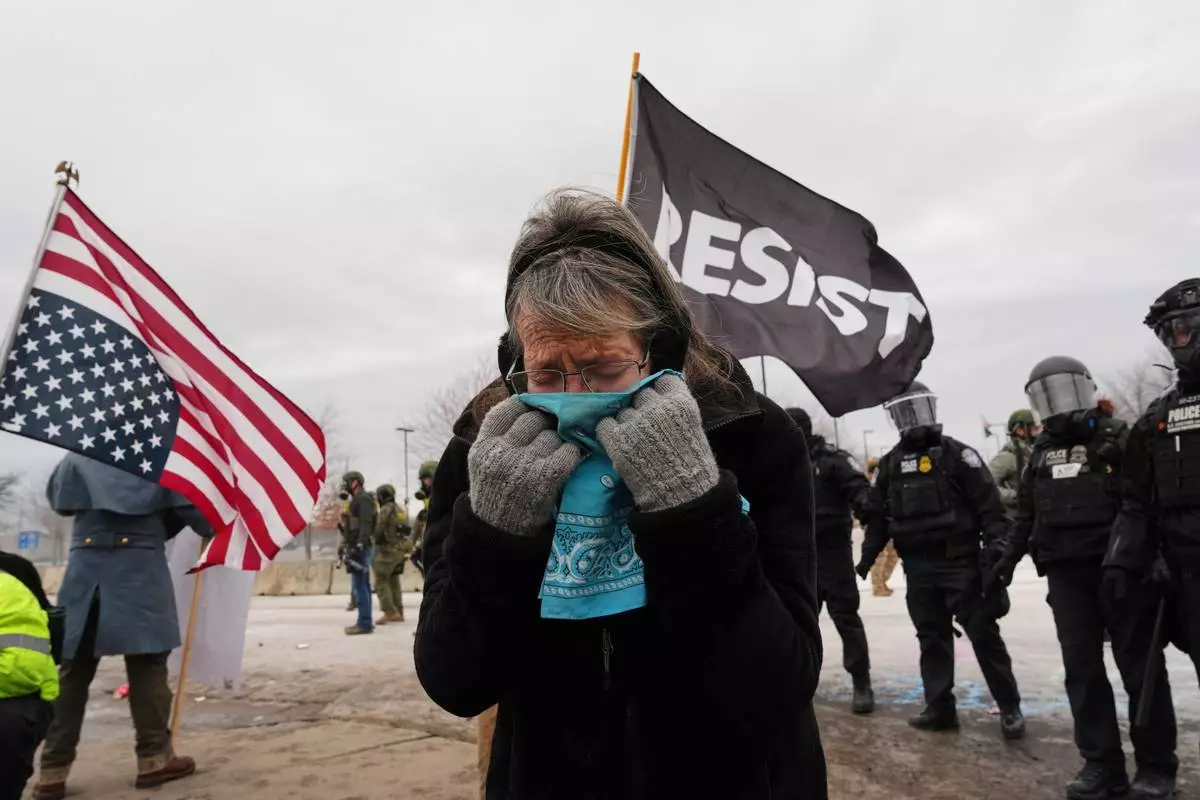
A woman covers her face from tear gas as federal immigration officers confront protesters outside Bishop Henry Whipple Federal Building, Thursday, Jan. 15, 2026, in Minneapolis. (AP Photo/Adam Gray)
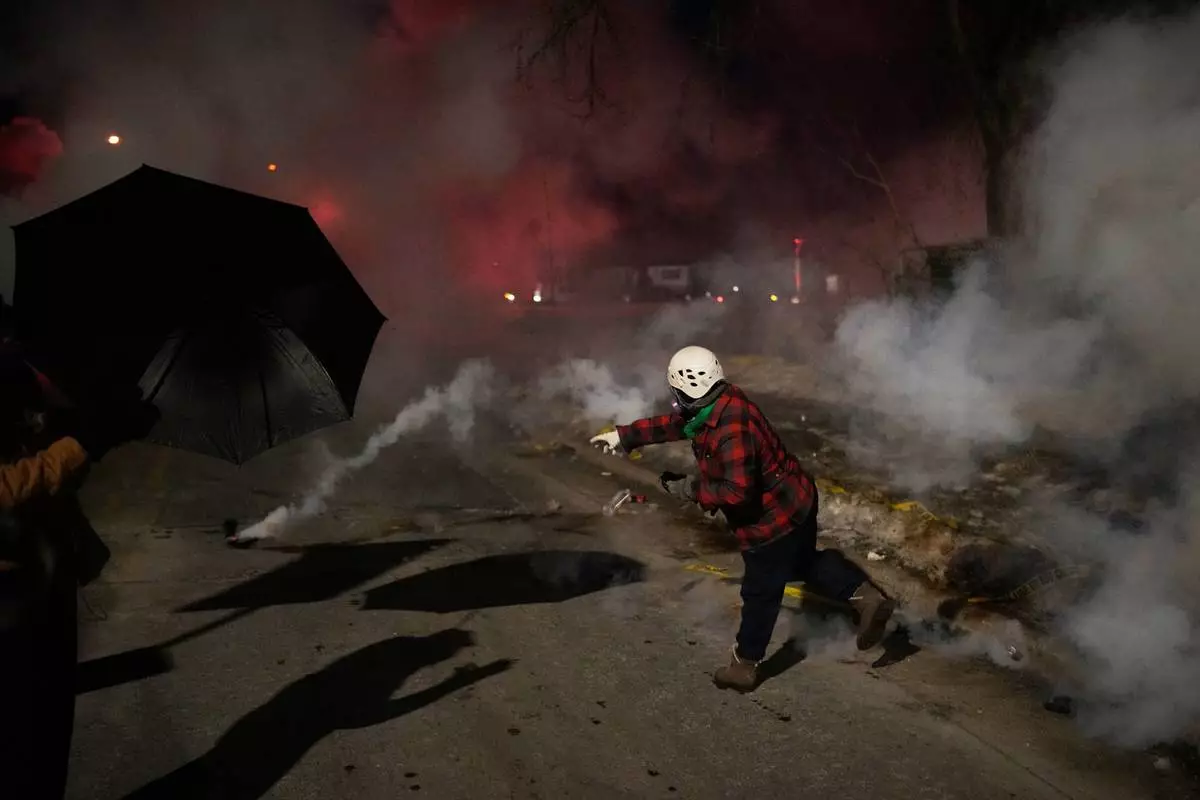
A protester throws back a tear gas canister during a protest after a shooting on Wednesday, Jan. 14, 2026, in Minneapolis. (AP Photo/John Locher)
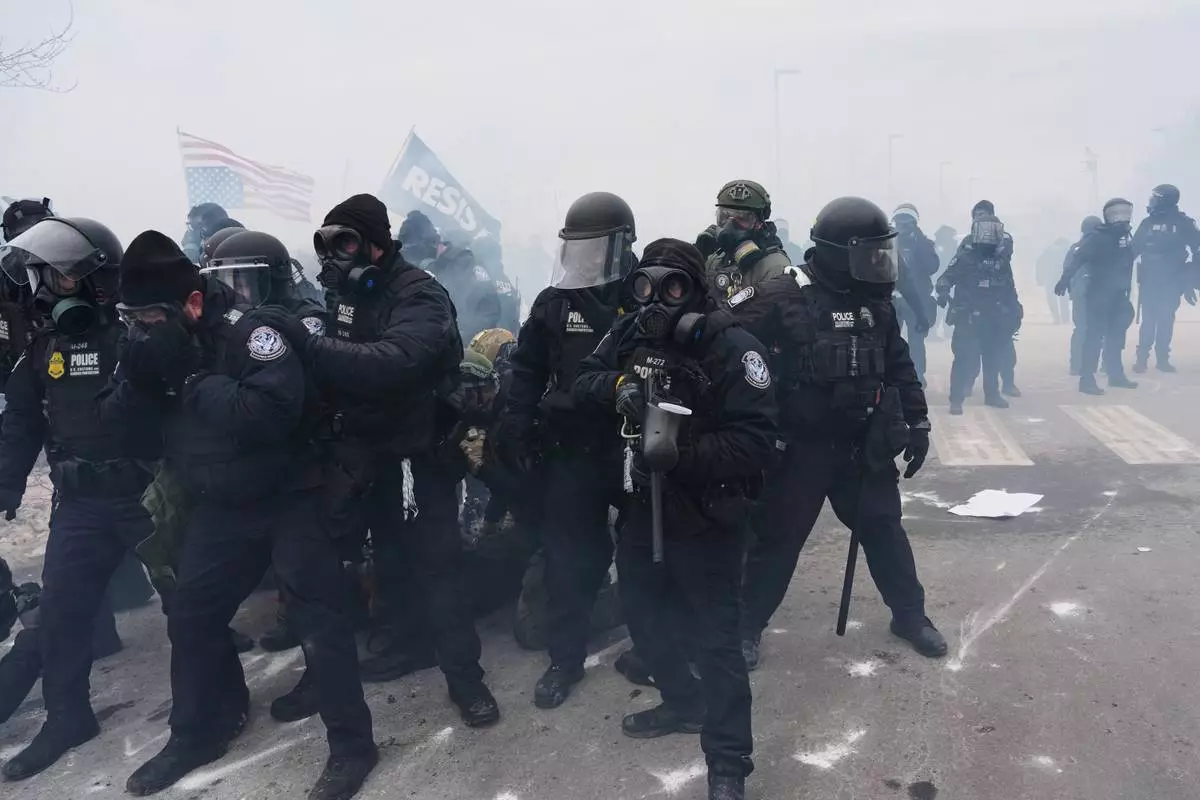
Federal immigration officers confront protesters outside Bishop Henry Whipple Federal Building, Thursday, Jan. 15, 2026, in Minneapolis. (AP Photo/Adam Gray)
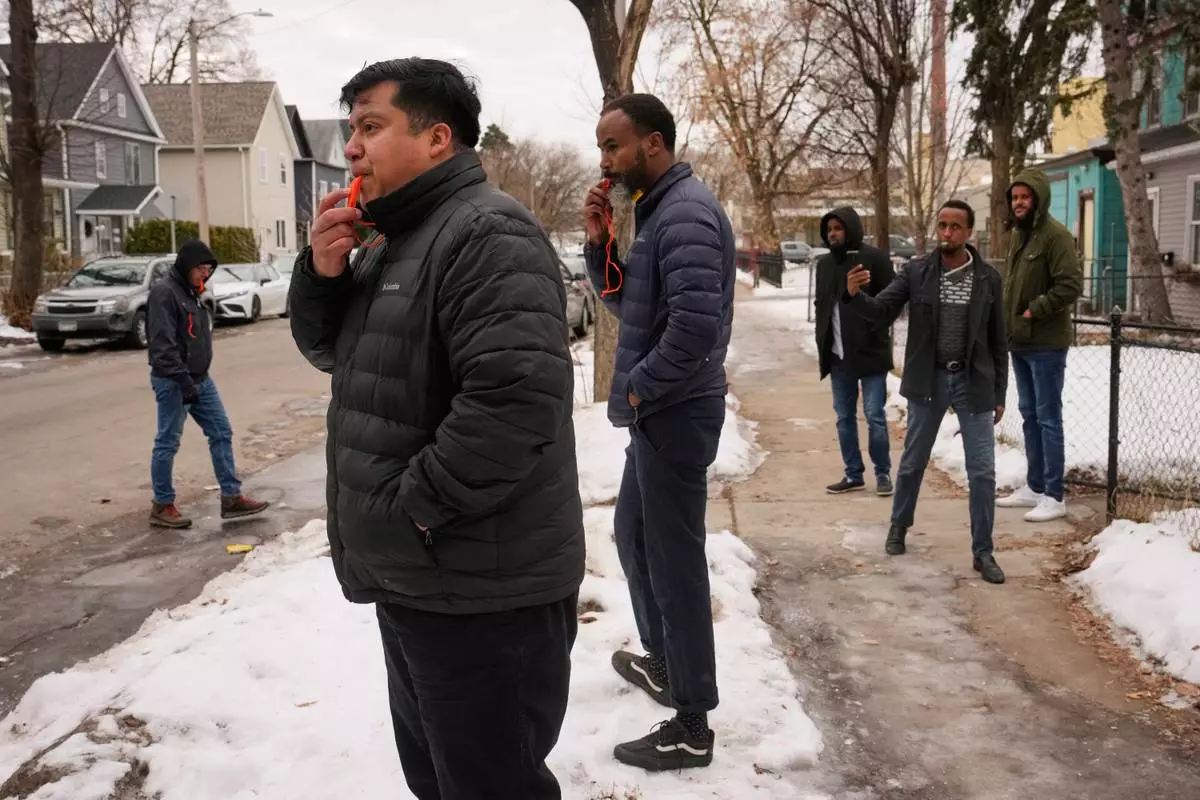
Minneapolis City Council Member Jason Chavez, second from left, blows a whistle with other activists to warn people of federal immigration officers Thursday, Jan. 15, 2026, in Minneapolis. (AP Photo/John Locher)
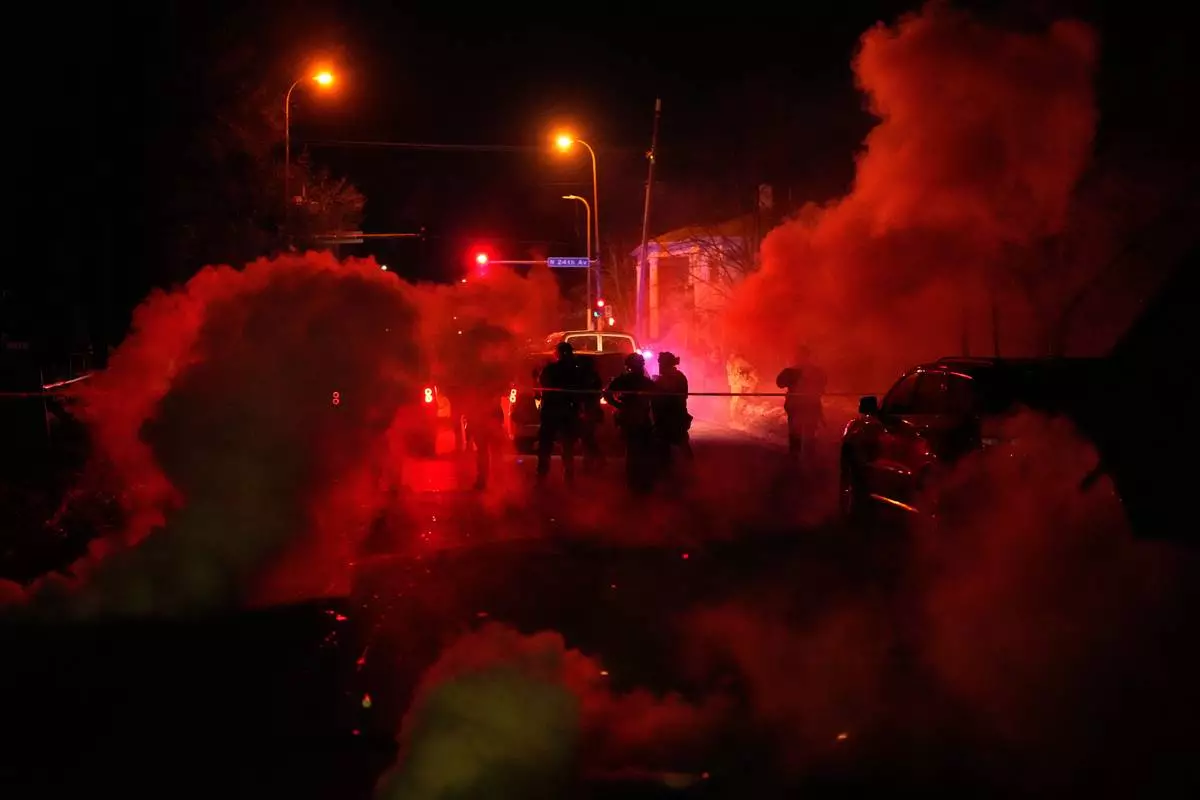
Tear gas surrounds federal law enforcement officers as they leave a scene after a shooting on Wednesday, Jan. 14, 2026, in Minneapolis. (AP Photo/John Locher)
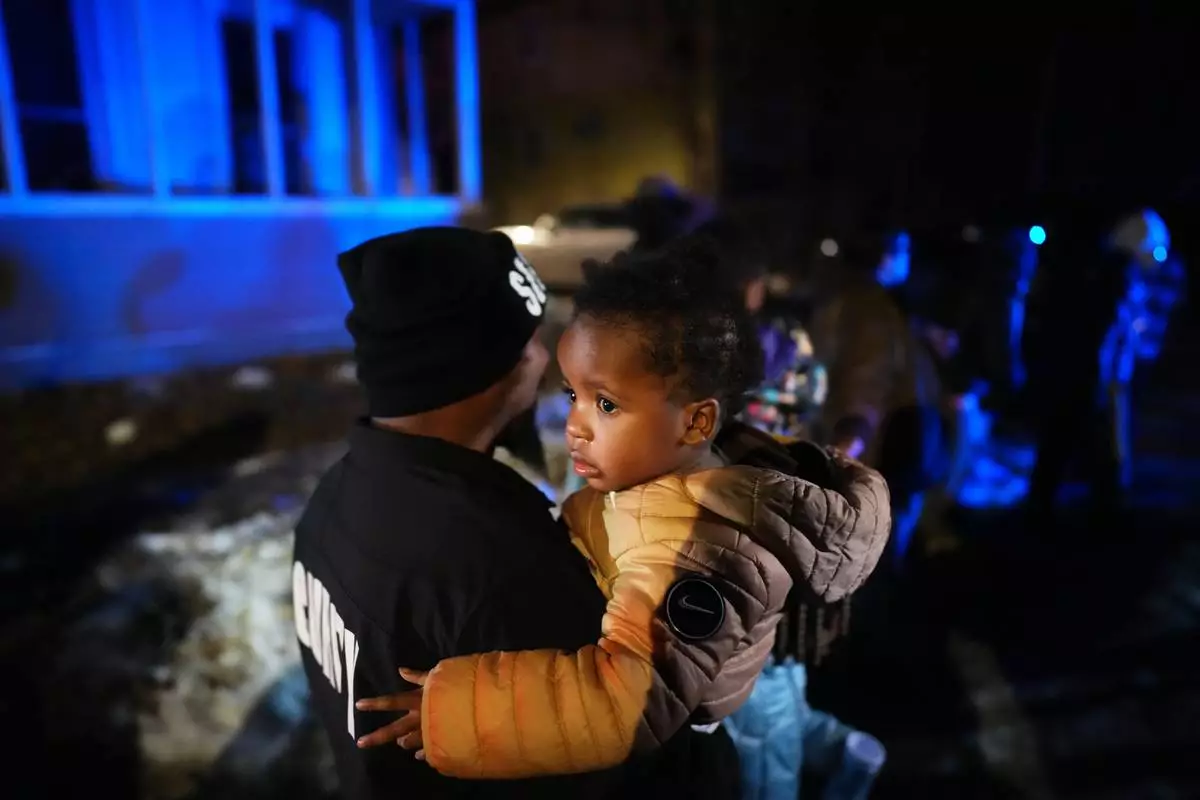
A child and family are escorted away after federal law enforcement deployed tear gas in a neighborhood during protests on Wednesday, Jan. 14, 2026, in Minneapolis. (AP Photo/Adam Gray)
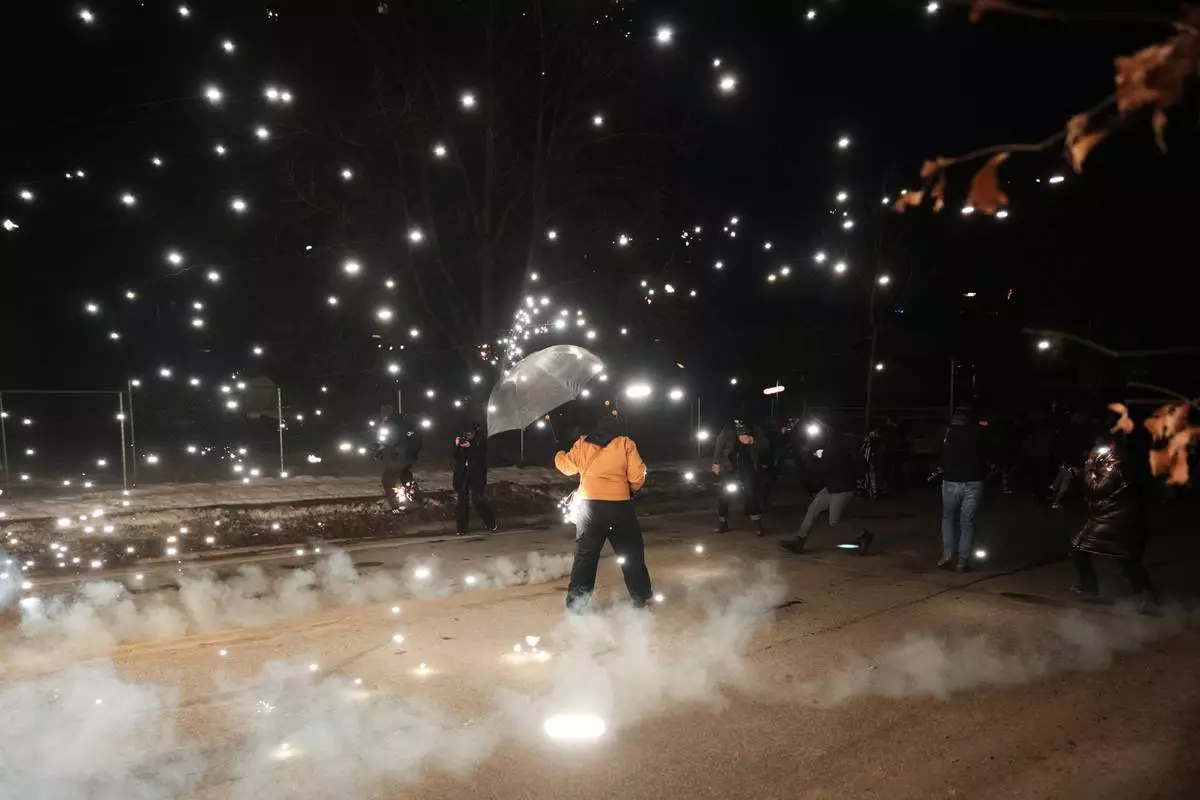
A protester holds an umbrella as sparks fly from a flash bang deployed by law enforcement on Wednesday, Jan. 14, 2026, in Minneapolis. (AP Photo/Adam Gray)
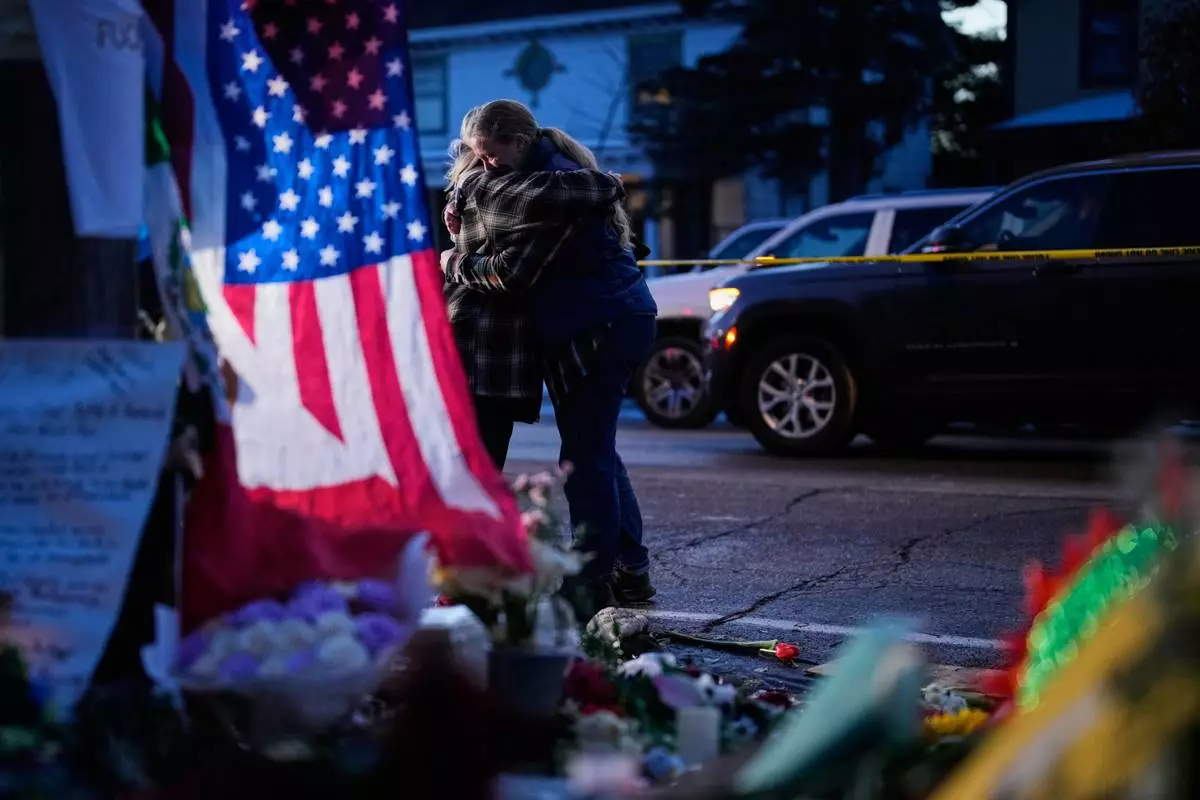
Monica Travis shares an embrace while visiting a makeshift memorial for Renee Good, who was fatally shot by an ICE officer last week, Monday, Jan. 12, 2026, in Minneapolis. (AP Photo/John Locher)
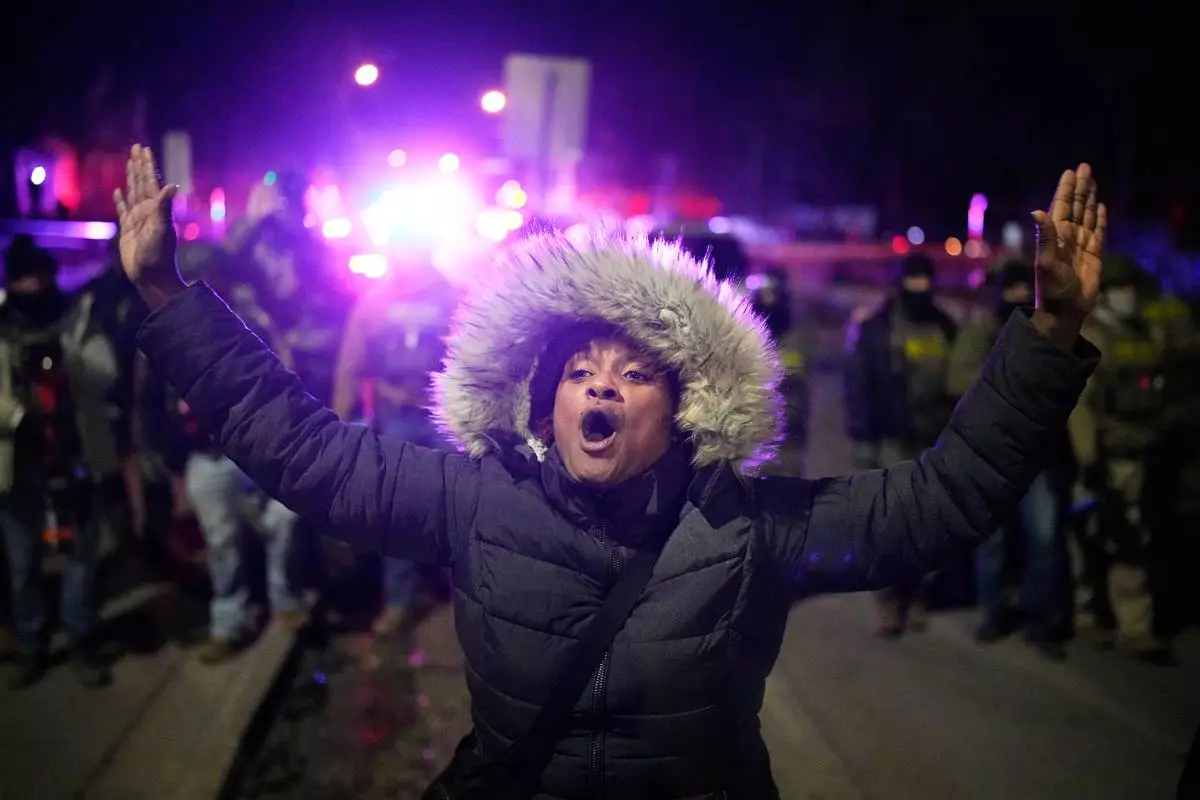
A protester yells in front of law enforcement after a shooting on Wednesday, Jan. 14, 2026, in Minneapolis. (AP Photo/John Locher)
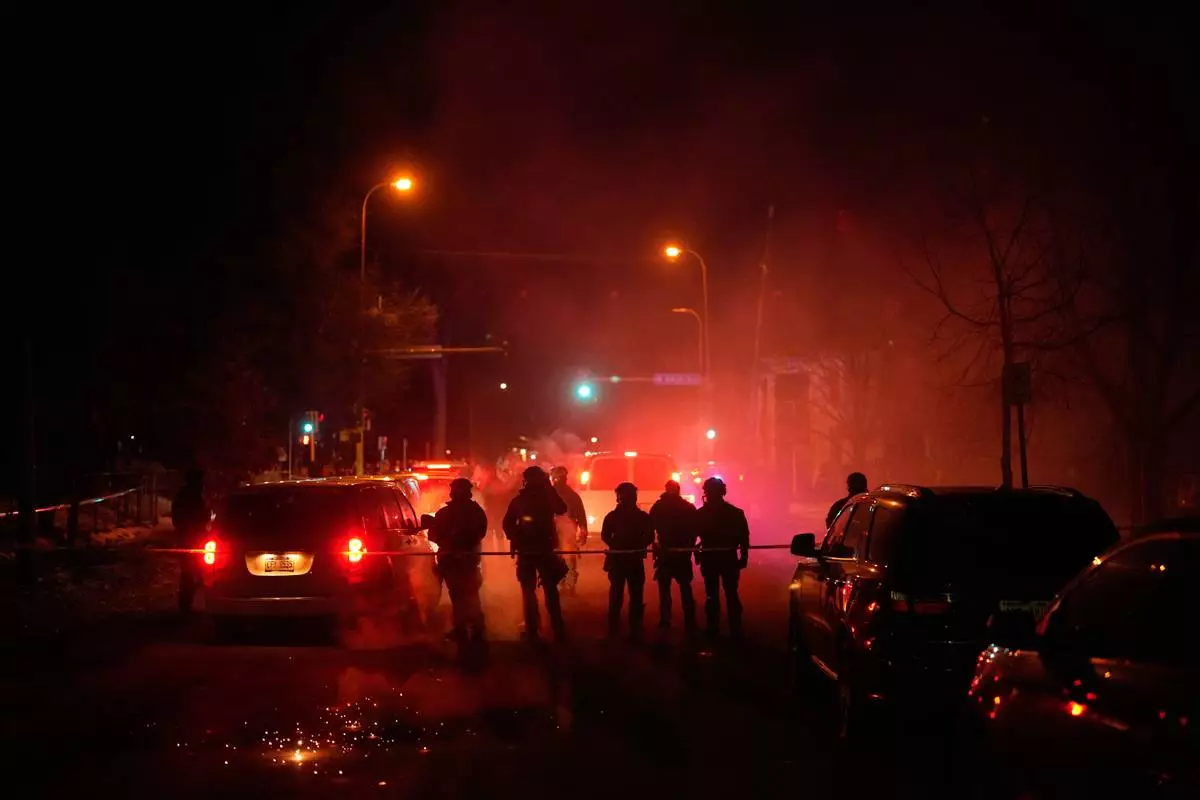
Tear gas surrounds federal law enforcement officers as they leave a scene after a shooting on Wednesday, Jan. 14, 2026, in Minneapolis. (AP Photo/John Locher)
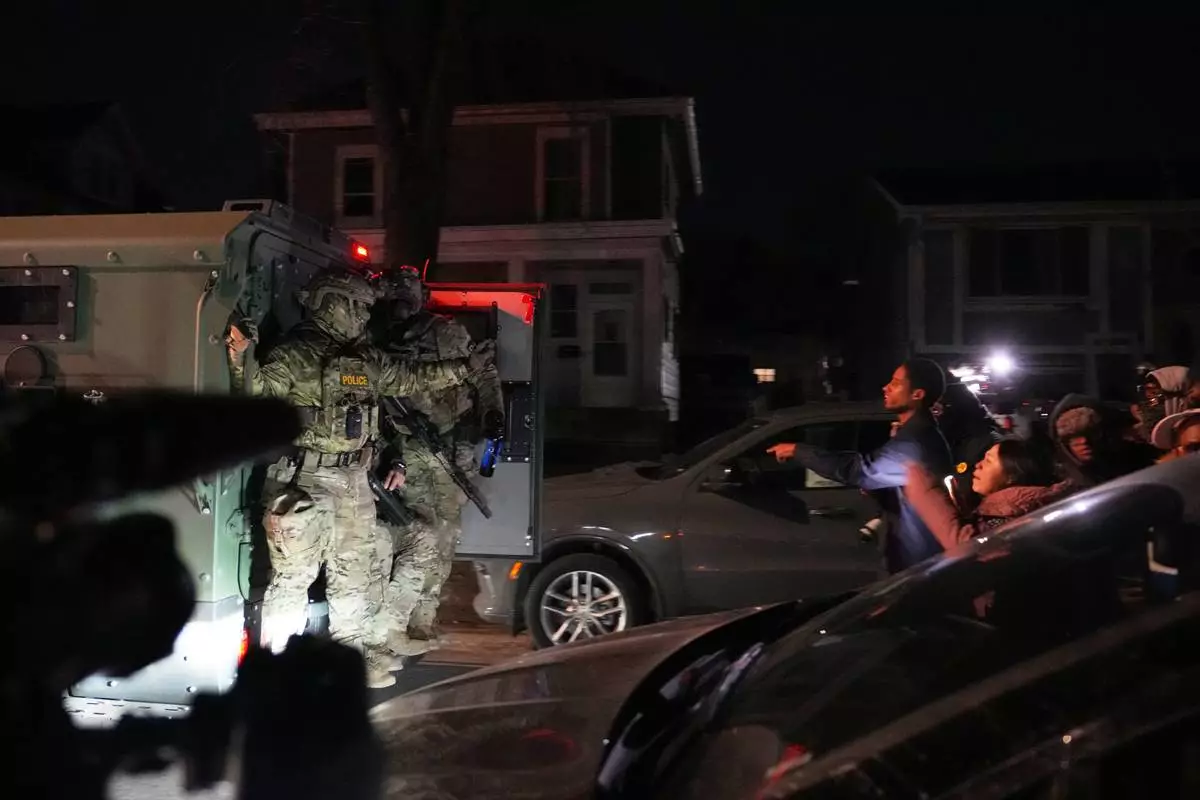
Protesters shout at law enforcement officers after a shooting on Wednesday, Jan. 14, 2026, in Minneapolis. (AP Photo/Abbie Parr)
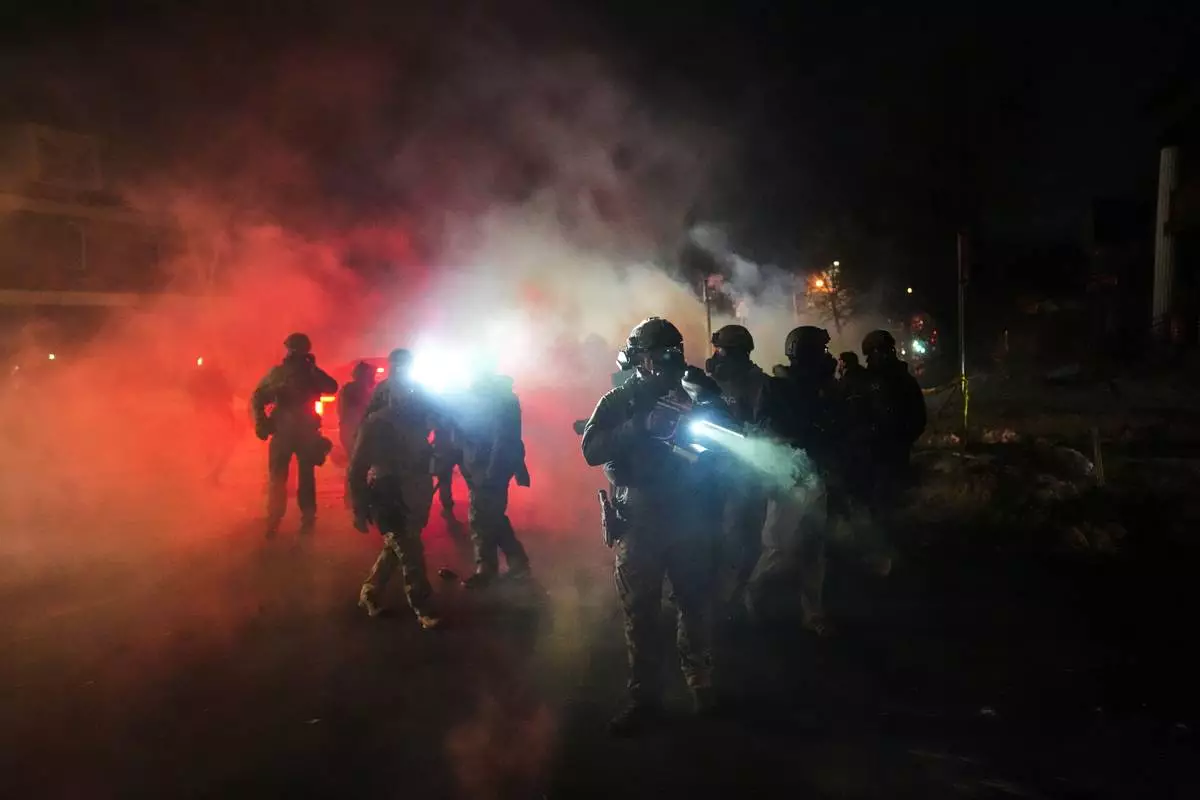
Law enforcement officers stand amid tear gas at the scene of a reported shooting Wednesday, Jan. 14, 2026, in Minneapolis. (AP Photo/Adam Gray)