Starbucks workers in three states took legal action against the coffee giant Wednesday, saying it violated the law when it changed its dress code but refused to reimburse employees who had to buy new clothes.
The employees, who are backed by the union organizing Starbucks' workers, filed class-action lawsuits in state court in Illinois and Colorado. Workers also filed complaints with California’s Labor and Workforce Development Agency. If the agency decides not to seek penalties against Starbucks, the workers intend to file a class-action lawsuit in California, according to the complaints.
Starbucks didn't comment directly on the lawsuits Wednesday, but the company said it simplified its dress code to deliver a more consistent experience to customers and give its employees clearer guidance.
“As part of this change, and to ensure out partners were prepared, partners received two shirts at no cost,” the company said Wednesday. Starbucks refers to its employees as “partners.”
Starbucks’ new dress code went into effect on May 12. It requires all workers in North America to wear a solid black shirt with short or long sleeves under their green aprons. Shirts may or may not have collars, but they must cover the midriff and armpits.
Employees must wear khaki, black or blue denim bottoms without patterns or frayed hems or solid black dresses that are not more than 4 inches above the knee. The dress code also requires workers to wear black, gray, dark blue, brown, tan or white shoes made from a waterproof material. Socks and hosiery must be “subdued,” the company said.
The dress code prohibits employees from having face tattoos or more than one facial piercing. Tongue piercings and “theatrical makeup” are also prohibited.
Starbucks said in April that the new dress code would make employees' green aprons stand out and create a sense of familiarity for customers. It comes as the company is trying to reestablish a warmer, more welcoming experience in its stores.
Before the new dress code went into effect, Starbucks had a relatively lax policy. In 2016, it began allowing employees to wear patterned shirts in a wider variety of colors to give them more opportunities for self-expression.
The old dress code was also loosely enforced, according to the Colorado lawsuit. But under the new dress code, employees who don't comply aren't allowed to start their shifts.
Brooke Allen, a full-time student who also works at a Starbucks in Davis, California, said she was told by a manager in July that the Crocs she was wearing didn't meet the new standards and she would have to wear different shoes if she wanted to work the following day. Allen had to go to three stores to find a compliant pair that cost her $60.09.
Allen has spent an additional $86.95 on clothes for work, including black shirts and jeans.
“I think it’s extremely tone deaf on the company's part to expect their employees to completely redesign their wardrobe without any compensation,” Allen said. “A lot of us are already living paycheck to paycheck.”
Allen said she misses the old dress code, which allowed her to express herself with colorful shirts and three facial piercings.
“It looks sad now that everyone is wearing black,” she said.
The lawsuits and complaints filed Wednesday allege that Starbucks’ dress code violates state laws that require companies to reimburse workers for expenses that primarily benefit the employer. Colorado law also prohibits employers from imposing expenses on workers without their written consent, according to that lawsuit. The plaintiffs seek damages on behalf of all Starbucks workers in those states, whether or not their stores are unionized.
Multiple plaintiffs, like Allen, said they requested reimbursement from Starbucks to conform to the dress code but were denied. Gilbert Cruz, an employee in Aurora, Illinois, requested $10 for the cost of removing a nose piercing.
Worker-led lawsuits in state courts are a shift in tactics in the multi-year effort to unionize Starbucks' stores.
Starbucks Workers United, the labor group that has unionized 640 of Starbucks’ 10,000 company-owned U.S. stores, has filed hundreds of unfair labor practice charges against Starbucks with the National Labor Relations Board. The union filed an charge over the dress code in April but it is not a party in the current lawsuits.
But the board's ability to hear cases has been curtailed under President Donald Trump. Trump fired an NLRB member in the spring, leaving the board without the quorum it needs to decide cases.
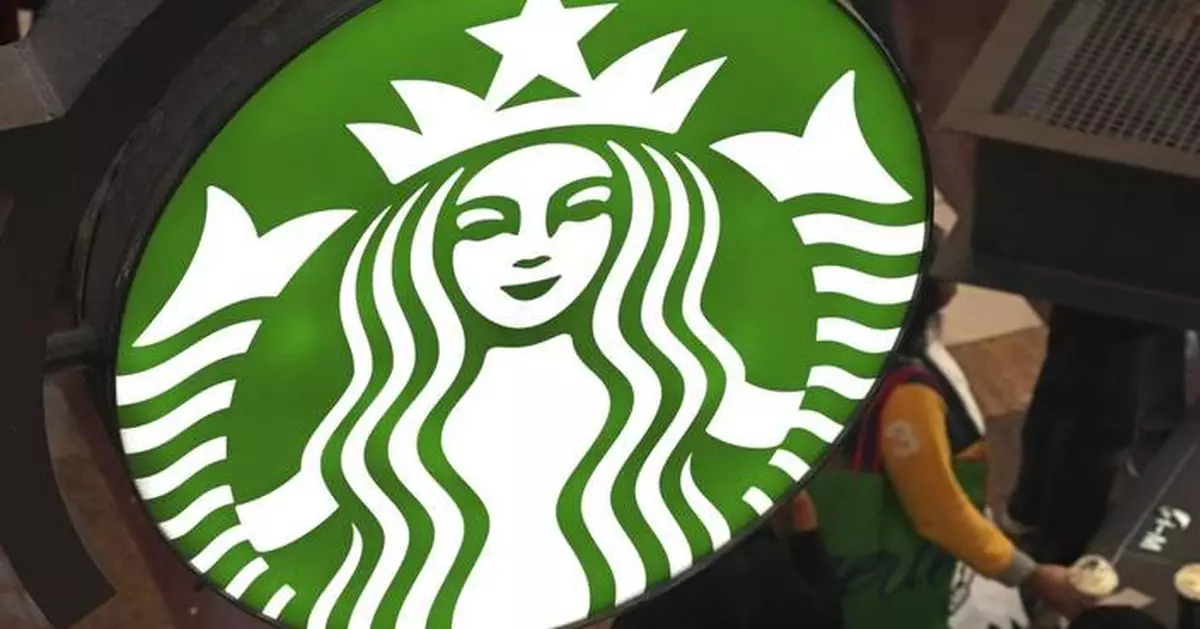
FILE - The Starbucks sign is seen at a Starbucks kiosk in the Walden Galleria in Buffalo, NY., Nov. 29, 2024. (AP Photo/Gene J. Puskar, File)
A federal appeals panel on Thursday reversed a lower court decision that released former Columbia University graduate student Mahmoud Khalil from an immigration jail, bringing the government one step closer to detaining and ultimately deporting the Palestinian activist.
The three-judge panel of the 3rd U.S. Circuit Court of Appeals didn’t decide the key issue in Khalil’s case: whether the Trump administration’s effort to throw Khalil out of the U.S. over his campus activism and criticism of Israel is unconstitutional.
But in its 2-1 decision, the panel ruled a federal judge in New Jersey didn’t have jurisdiction to decide the matter at this time. Federal law requires the case to fully move through the immigration courts first, before Khalil can challenge the decision, they wrote.
“That scheme ensures that petitioners get just one bite at the apple — not zero or two,” the panel wrote. “But it also means that some petitioners, like Khalil, will have to wait to seek relief for allegedly unlawful government conduct.”
The law bars Khalil “from attacking his detention and removal in a habeas petition,” the panel added.
It was not clear whether the government would seek to detain Khalil, a legal permanent resident, again while his legal challenges continue.
Thursday’s decision marked a major win for the Trump administration’s sweeping campaign to detain and deport noncitizens who joined protests against Israel.
In a statement distributed by the American Civil Liberties Union, Khalil said the appeals ruling was “deeply disappointing, but it does not break our resolve.”
He added: “The door may have been opened for potential re-detainment down the line, but it has not closed our commitment to Palestine and to justice and accountability. I will continue to fight, through every legal avenue and with every ounce of determination, until my rights, and the rights of others like me, are fully protected.”
Baher Azmy, one of Khalil's lawyers, said the ruling was “contrary to rulings of other federal courts.” He noted the panel’s finding concerned a “hypertechnical jurisdictional matter,” rather than the legality of the Trump administration’s policy.
“Our legal options are by no means concluded, and we will fight with every available avenue,” he added, saying Khalil would remain free pending the full resolution of all appeals, which could take months or longer.
The ACLU said the Trump administration cannot lawfully re-detain Khalil until the order takes formal effect, which won't happen while he can still immediately appeal.
Khalil's lawyers can request the active judges on the 3rd Circuit hear an appeal, or they can go to the U.S. Supreme Court.
An outspoken leader of the pro-Palestinian movement at Columbia, Khalil was arrested on March 8, 2025. He then spent three months detained in a Louisiana immigration jail, missing the birth of his firstborn.
Federal officials have accused Khalil of leading activities “aligned to Hamas,” though they have not presented evidence to support the claim and have not accused him of criminal conduct. They have also accused Khalil, 30, of failing to disclose information on his green card application.
The government has justified the arrest under a seldom-used statute that allows for the expulsion of noncitizens whose beliefs are deemed to pose a threat to U.S. foreign policy interests.
In June, a federal judge in New Jersey ruled that justification would likely be declared unconstitutional and ordered Khalil released.
President Donald Trump's administration appealed that ruling, arguing the deportation decision should fall to an immigration judge, rather than a federal court.
Khalil has dismissed the allegations as “baseless and ridiculous,” framing his arrest and detention as a “direct consequence of exercising my right to free speech as I advocated for a free Palestine and an end to the genocide in Gaza.”
Judge Arianna Freeman dissented Thursday, writing that her colleagues were holding Khalil to the wrong legal standard. Khalil, she wrote, is raising “now-or-never claims” that can be handled at the district court level. He does not have a final order of removal, which would permit a challenge in an appellate court, she wrote.
Both judges who ruled against Khalil, Thomas Hardiman and Stephanos Bibas, were Republican appointees. President George W. Bush appointed Hardiman to the 3rd Circuit, while Trump appointed Bibas. President Joe Biden, a Democrat, appointed Freeman.
The majority opinion noted Freeman worried the ruling would leave Khalil with no remedy for unconstitutional immigration detention, even if he later can appeal.
“But our legal system routinely forces petitioners — even those with meritorious claims — to wait to raise their arguments, the judges wrote. “To be sure, the immigration judge’s order of removal is not yet final; the Board has not affirmed her ruling and has held the parties’ briefing deadlines in abeyance pending this opinion. But if the Board ultimately affirms, Khalil can get meaningful review.”
The decision comes as an appeals board in the immigration court system weighs a previous order that found Khalil could be deported. His attorneys have argued that the federal order should take precedence.
That judge has suggested Khalil could be deported to Algeria, where he maintains citizenship through a distant relative, or Syria, where he was born in a refugee camp to a Palestinian family.
His attorneys have said he faces mortal danger if forced to return to either country.
Associated Press Writer Larry Neumeister contributed to this story.
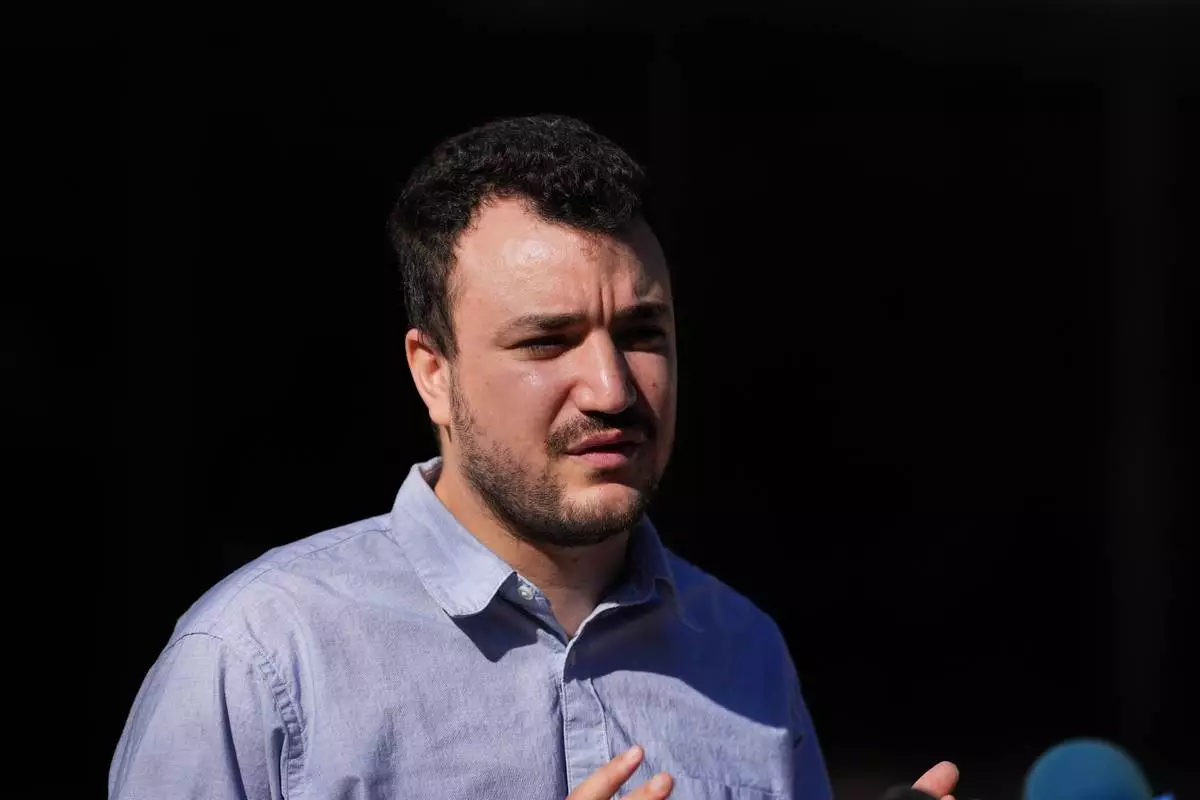
FILE - Palestinian activist Mahmoud Khalil holds a news conference outside Federal Court on Tuesday, Oct. 21, 2025 in Philadelphia (AP Photo/Matt Rourke, File)