LOS ANGELES (AP) — A California judge has dismissed a lawsuit filed by an Indigenous tribe in the Brazilian Amazon against The New York Times and TMZ that claimed the newspaper’s reporting on the tribe’s first exposure to the internet led to its members being widely portrayed as technology-addled and addicted to pornography.
The suit was filed in May by the Marubo Tribe of the Javari Valley, a sovereign community of about 2,000 people in the Amazon rainforest.
Los Angeles County Superior Court Judge Tiana J. Murillo on Tuesday sided with the Times, whose lawyers argued in a hearing Monday that its coverage last year was fair and protected by free speech.
TMZ argued that its coverage, which followed the Times’ initial reporting, addressed ongoing public controversies and matters of public interest.
The suit claimed stories by TMZ and Yahoo amplified and sensationalized the Times’ reporting and smeared the tribe in the process. Yahoo was dismissed as a defendant earlier this month.
Murillo wrote in her ruling that though some may “reasonably perceive” the Times’ and TMZ’s reporting as “insensitive, disparaging or reflecting a lack of respect, the Court need not, and does not, determine which of these characterizations is most apt.”
The judge added that “regardless of tone, TMZ’s segment contributed to existing debate over the effects of internet connectivity on remote Indigenous communities.”
“We are pleased by the comprehensive and careful analysis undertaken by the court in dismissing this frivolous lawsuit," Danielle Rhoades Ha, a spokesperson for the Times, said in a statement Wednesday to The Associated Press. "Our reporter traveled to the Amazon and provided a nuanced account of tension that arose when modern technology came to an isolated community.”
Attorneys for TMZ did not immediately respond to an email request for comment Wednesday.
Plaintiffs in the lawsuit included the tribe, community leader Enoque Marubo and Brazilian journalist and sociologist Flora Dutra, who were both mentioned in the June 2024 story. Both were instrumental in bringing the tribe the internet connection, which they said has had many positive effects including facilitating emergency medicine and the education of children.
N. Micheli Quadros, the attorney who represents the tribe, Marubo and Dutra, wrote to the AP Wednesday that the judge’s decision “highlights the imbalance of our legal system,” which “often shields powerful institutions while leaving vulnerable individuals, such as Indigenous communities without meaningful recourse.”
Quadros said the plaintiffs will decide their next steps in the coming days, whether that is through courts in California or international human rights bodies.
“This case is bigger than one courtroom or one ruling,” Quadros wrote. “It is about accountability, fairness, and the urgent need to protect communities that have historically been silenced or marginalized.”
The lawsuit sought at least $180 million, including both general and punitive damages, from each of the defendants.
The suit argued that the Times’ story by reporter Jack Nicas on how the group was handling the introduction of internet service via Starlink satellites operated by Elon Musk’s SpaceX “portrayed the Marubo people as a community unable to handle basic exposure to the internet, highlighting allegations that their youth had become consumed by pornography.”
The court disagreed with the tribe’s claims that the Times article falsely implied its youth were “addicted to pornography,” noting that the coverage only mentioned unidentified young men had access to porn and did not state that the tribe as a whole was addicted to pornography.
Nicas reported that in less than a year of Starlink access, the tribe was dealing with the same struggles the rest of the world has dealt with for years due to the pervasive effects of the internet. The challenges ranged from “teenagers glued to phones; group chats full of gossip; addictive social networks; online strangers; violent video games; scams; misinformation; and minors watching pornography," Nicas wrote.
He also wrote that a tribal leader said young men were sharing explicit videos in group chats. The piece doesn't mention porn elsewhere, but other outlets amplified that aspect of the story. TMZ posted a story with the headline, “Elon Musk’s Starlink Hookup Leaves A Remote Tribe Addicted To Porn.”
The Times published a follow-up story in response to misperceptions brought on by other outlets in which Nicas wrote: “The Marubo people are not addicted to pornography. There was no hint of this in the forest, and there was no suggestion of it in The New York Times’s article.”
Nicas wrote that he spent a week with the Marubo tribe. The lawsuit claimed that while he was invited for a week, he spent less than 48 hours in the village, “barely enough time to observe, understand, or respectfully engage with the community."
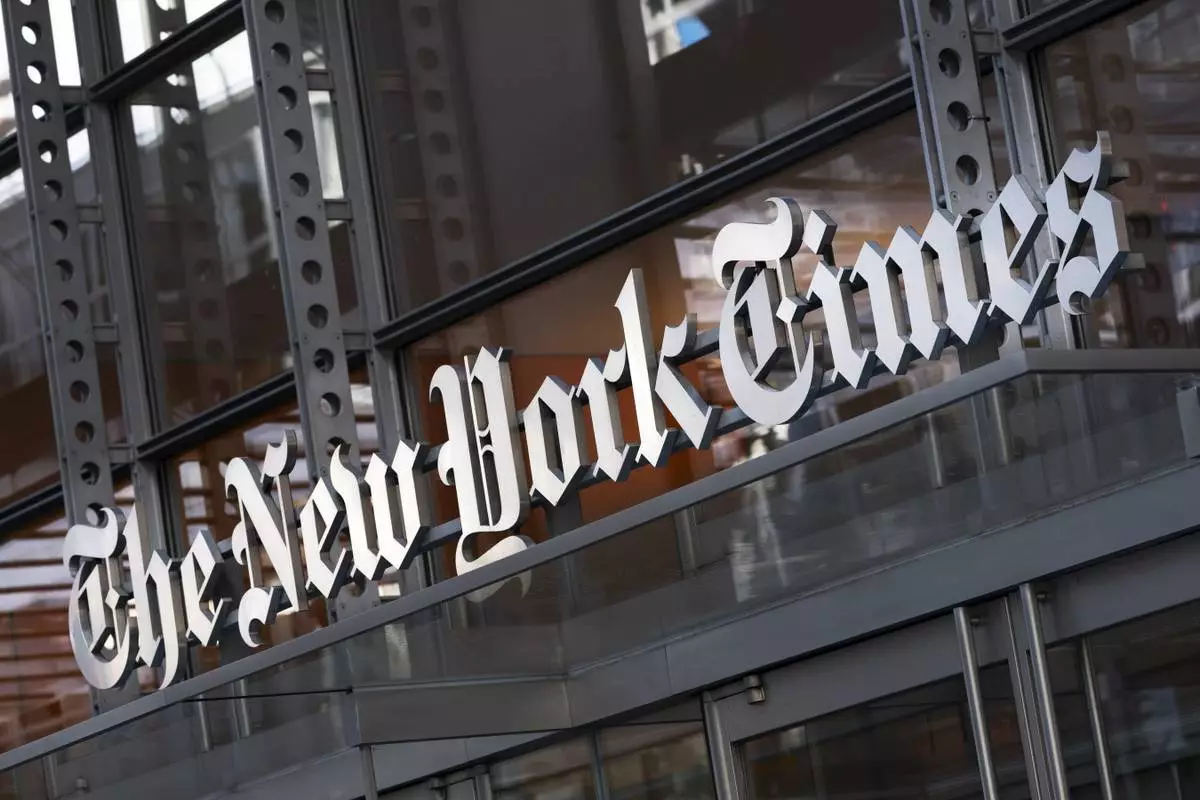
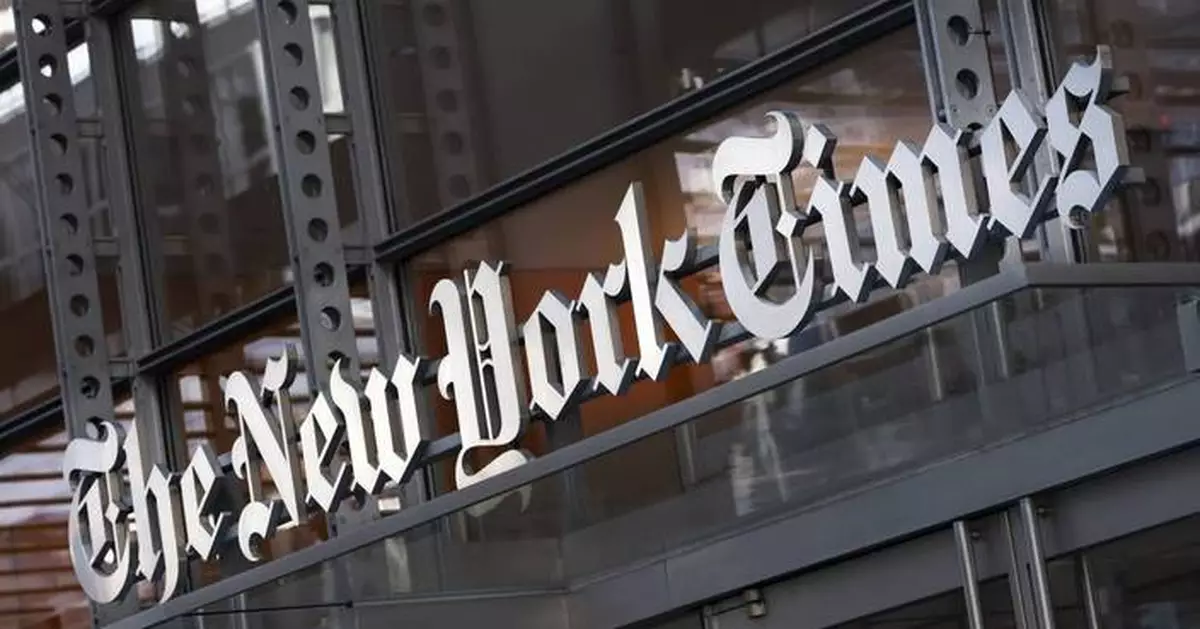
FILE - A sign for The New York Times hangs above the entrance to its building, May 6, 2021, in New York. (AP Photo/Mark Lennihan, File)
WASHINGTON (AP) — The Supreme Court is taking up one of the term’s most consequential cases, President Donald Trump’s executive order on birthright citizenship declaring that children born to parents who are in the United States illegally or temporarily are not American citizens, and he arrived at the court Wednesday to attend the arguments.
The justices will hear Trump’s appeal of a lower-court ruling from New Hampshire that struck down the citizenship restrictions, one of several courts that have blocked them. They have not taken effect anywhere in the country.
A definitive ruling is expected by early summer.
Trump will be the first sitting president to attend oral arguments at the nation’s highest court.
Crowds watched from the sidewalks as Trump’s motorcade drove along Constitution and Independence Avenues, passing the Washington Monument and the National Mall on the way to the court building.
The case frames another test of Trump's assertions of executive power that defy long-standing precedent for a court that has largely ruled in the president's favor — but with some notable exceptions that Trump has responded to with starkly personal criticisms of the justices.
The birthright citizenship order, which Trump signed the first day of his second term, is part of his Republican administration’s broad immigration crackdown.
Birthright citizenship is the first Trump immigration-related policy to reach the court for a final ruling. The justices previously struck down global tariffs Trump had imposed under an emergency powers law that had never been used that way.
Trump reacted furiously to the late February tariffs decision, saying he was ashamed of the justices who ruled against him and calling them unpatriotic.
He issued a preemptive broadside against the court on Sunday on his Truth Social platform. “Birthright Citizenship is not about rich people from China, and the rest of the World, who want their children, and hundreds of thousands more, FOR PAY, to ridiculously become citizens of the United States of America. It is about the BABIES OF SLAVES!,” the president wrote. “Dumb Judges and Justices will not a great Country make!”
Trump's order would upend the long-standing view that the Constitution’s 14th Amendment, ratified in 1868, and federal law since 1940 confer citizenship on everyone born on American soil, with narrow exceptions for the children of foreign diplomats and those born to a foreign occupying force.
The 14th Amendment was intended to ensure that Black people, including former slaves, had citizenship, though the Citizenship Clause is written more broadly. “All persons born or naturalized in the United States, and subject to the jurisdiction thereof, are citizens of the United States and of the State wherein they reside,” it reads.
In a series of decisions, lower courts have struck down the executive order as illegal, or likely so, under the Constitution and federal law. The decisions have invoked the high court's 1898 ruling in Wong Kim Ark, which held that the U.S.-born child of Chinese nationals was a citizen.
The Trump administration argues that the common view of citizenship is wrong, asserting that children of noncitizens are not “subject to the jurisdiction” of the United States and therefore are not entitled to citizenship.
The court should use the case to set straight “long-enduring misconceptions about the Constitution’s meaning,” Solicitor General D. John Sauer wrote.
No court has accepted that argument, and lawyers for pregnant women whose children would be affected by the order said the Supreme Court should not be the first to do so.
“We have the president of the United States trying to radically reinterpret the definition of American citizenship,” said Cecillia Wang, the American Civil Liberties Union legal director who is facing off against Sauer at the Supreme Court.
More than one-quarter of a million babies born in the U.S. each year would be affected by the executive order, according to research by the Migration Policy Institute and Pennsylvania State University’s Population Research Institute.
While Trump has largely focused on illegal immigration in his rhetoric and actions, the birthright restrictions also would apply to people who are legally in the United States, including students and applicants for green cards, or permanent resident status.
Follow the AP’s coverage of the U.S. Supreme Court at https://apnews.com/hub/us-supreme-court.
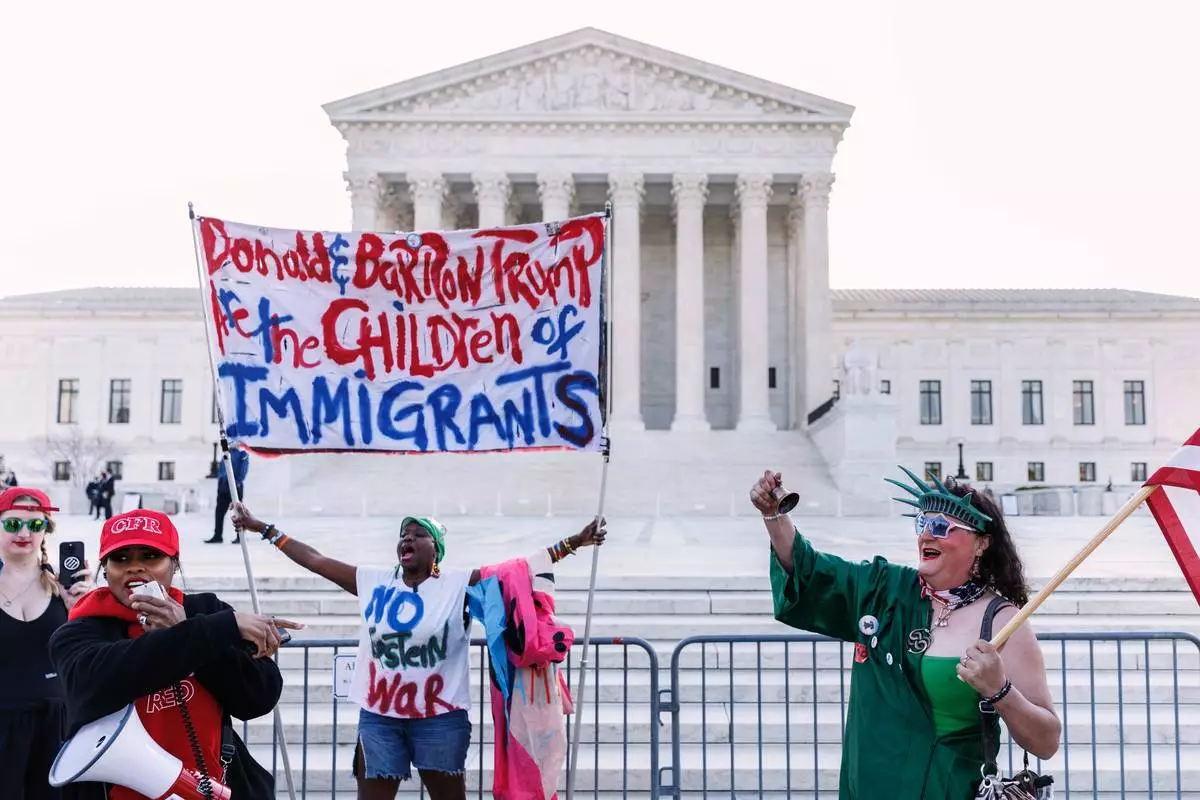
Demonstrators holding opposing views verbally engage ahead of President Donald Trump's arrival at the U.S. Supreme Court, Wednesday, April 1, 2026, in Washington. (AP Photo/Tom Brenner)
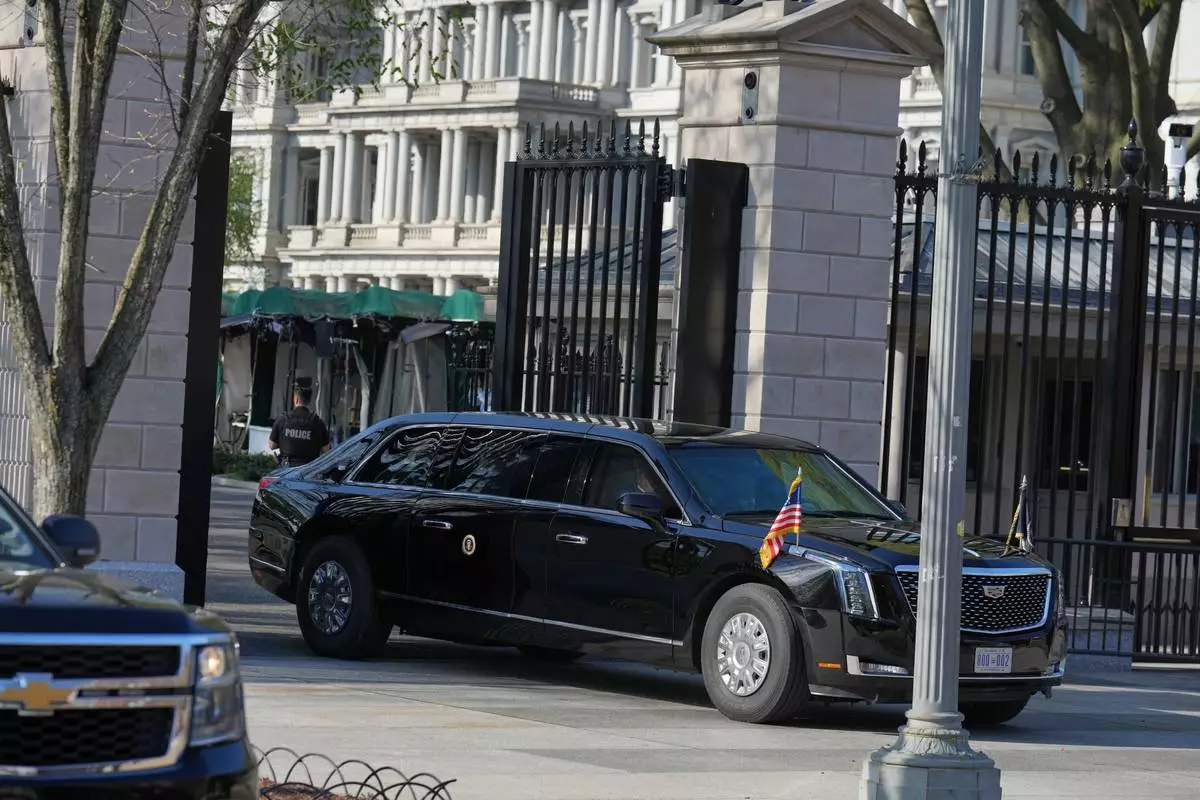
President Donald Trump's limo exits the White House en route to the Supreme Court, Wednesday, April 1, 2026, in Washington. (AP Photo/Mark Schiefelbein)
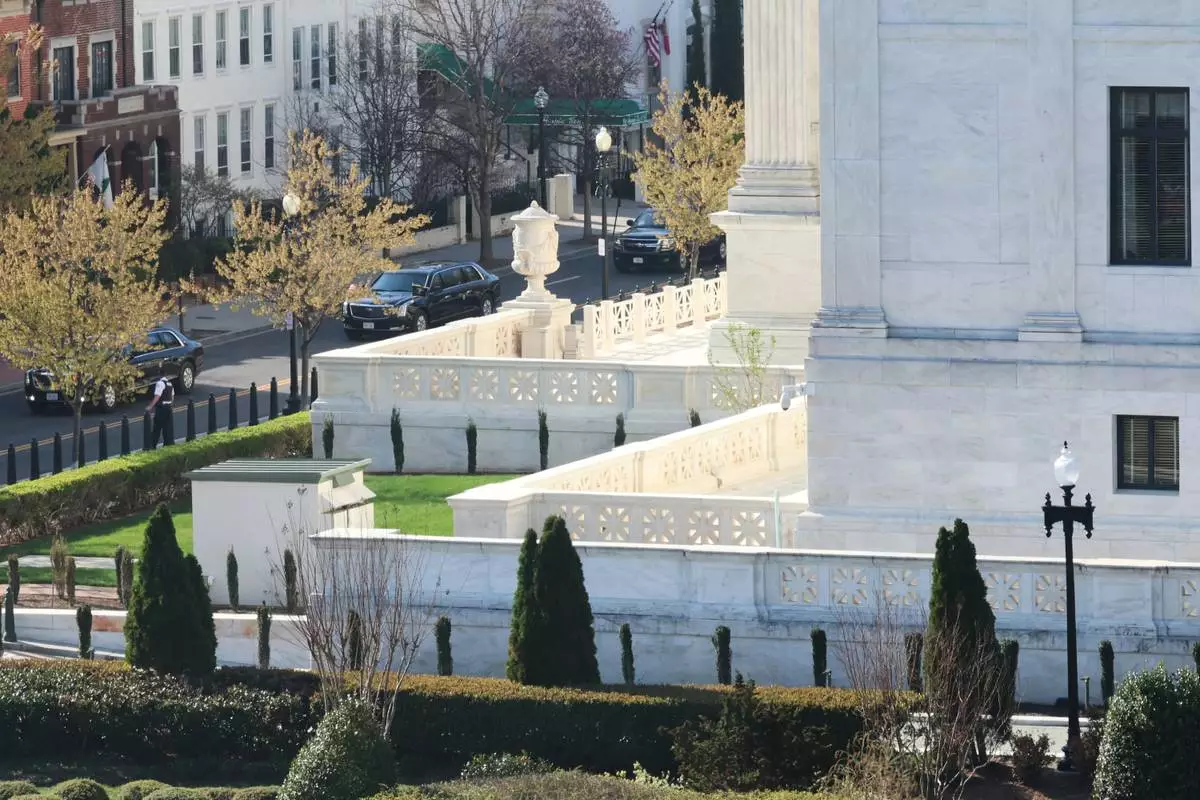
President Donald Trump's motorcade arrives at the U.S. Supreme Court, Wednesday, April 1, 2026, in Washington. (AP Photo/Tom Brenner)

Pro and anti-Trump demonstrators rally outside the U.S. Supreme Court, before justices hear oral arguments on whether President Donald Trump can deny citizenship to children born to parents who are in the United States illegally or temporarily, on Capitol Hill, in Washington, Wednesday, April 1, 2026. (AP Photo/J. Scott Applewhite)
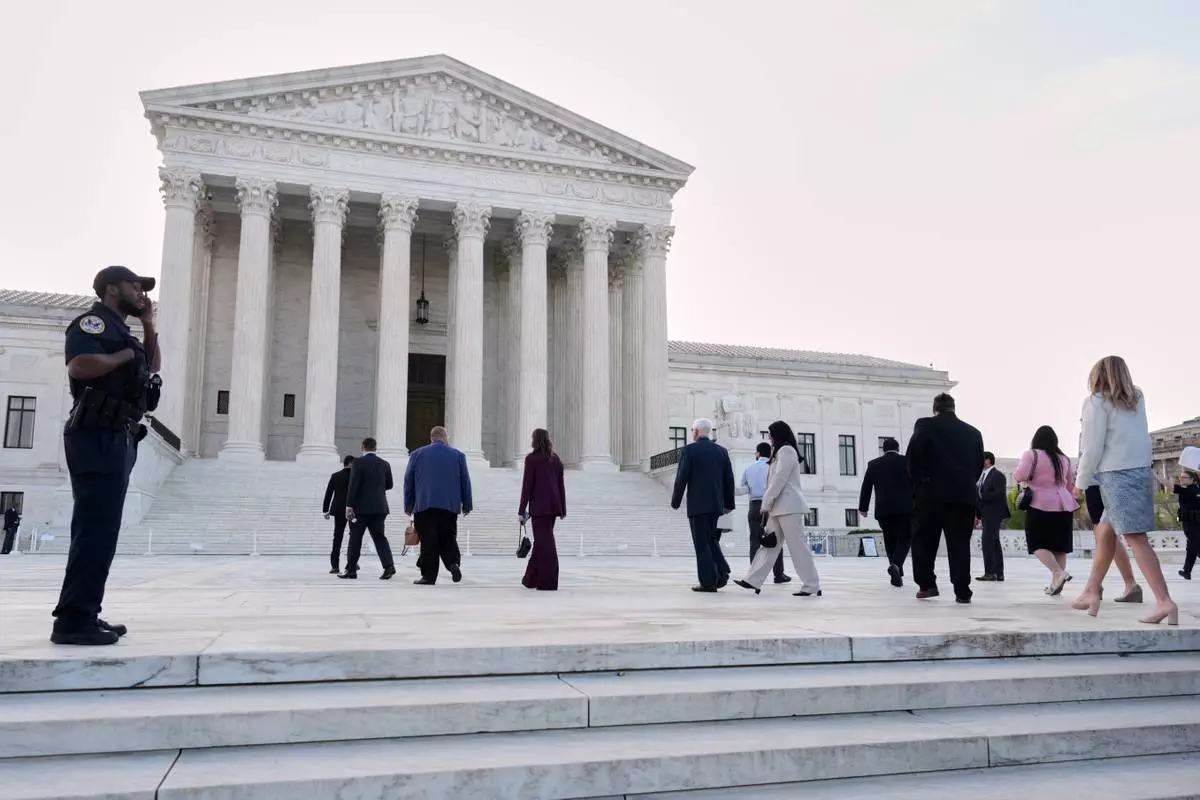
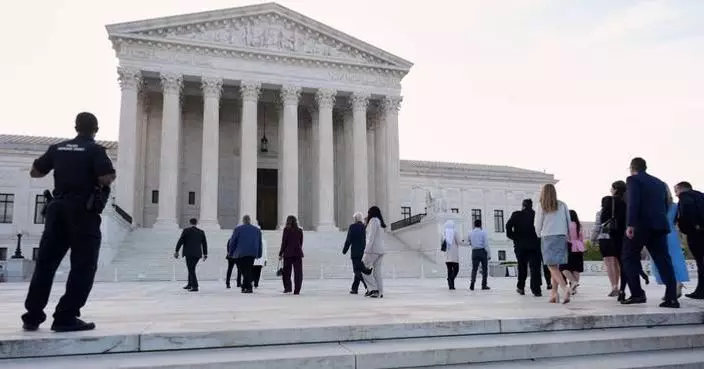
People arrive to walk inside the U.S. Supreme Court, on Capitol Hill in Washington, Wednesday, April 1, 2026. The Supreme Court justices will hear oral arguments today on whether President Donald Trump can deny citizenship to children born to parents who are in the United States illegally or temporarily. (AP Photo/J. Scott Applewhite)
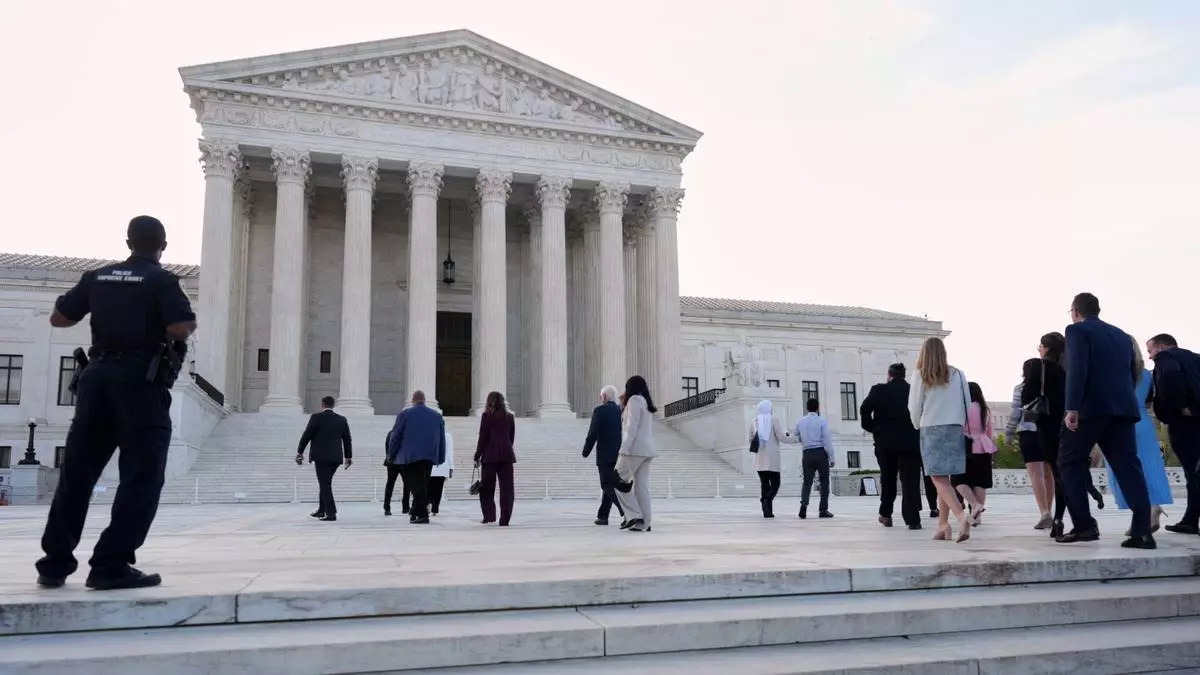
People arrive to walk inside the U.S. Supreme Court, on Capitol Hill in Washington, Wednesday, April 1, 2026. The Supreme Court justices will hear oral arguments today on whether President Donald Trump can deny citizenship to children born to parents who are in the United States illegally or temporarily. (AP Photo/J. Scott Applewhite)
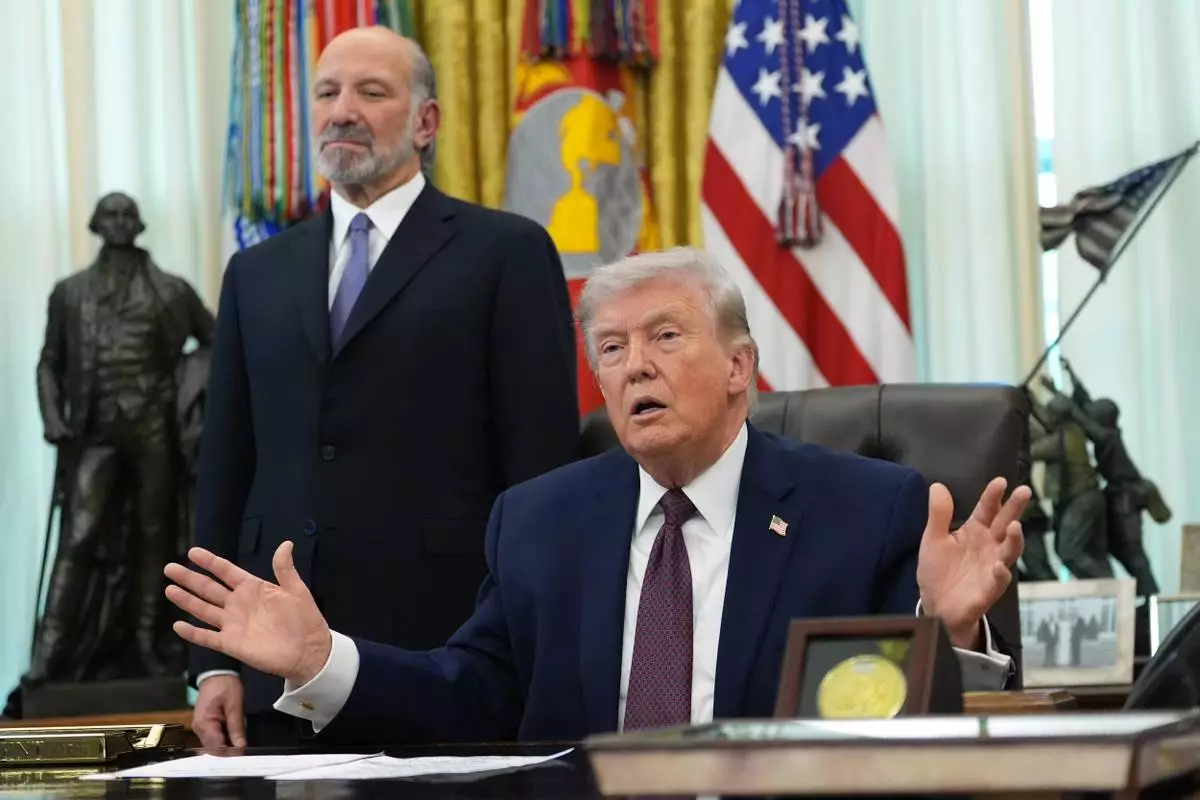
President Donald Trump answers questions from reporters after signing an executive order in the Oval Office of the White House Tuesday, March 31, 2026, in Washington, as Commerce Secretary Howard Lutnick listens. (AP Photo/Alex Brandon)
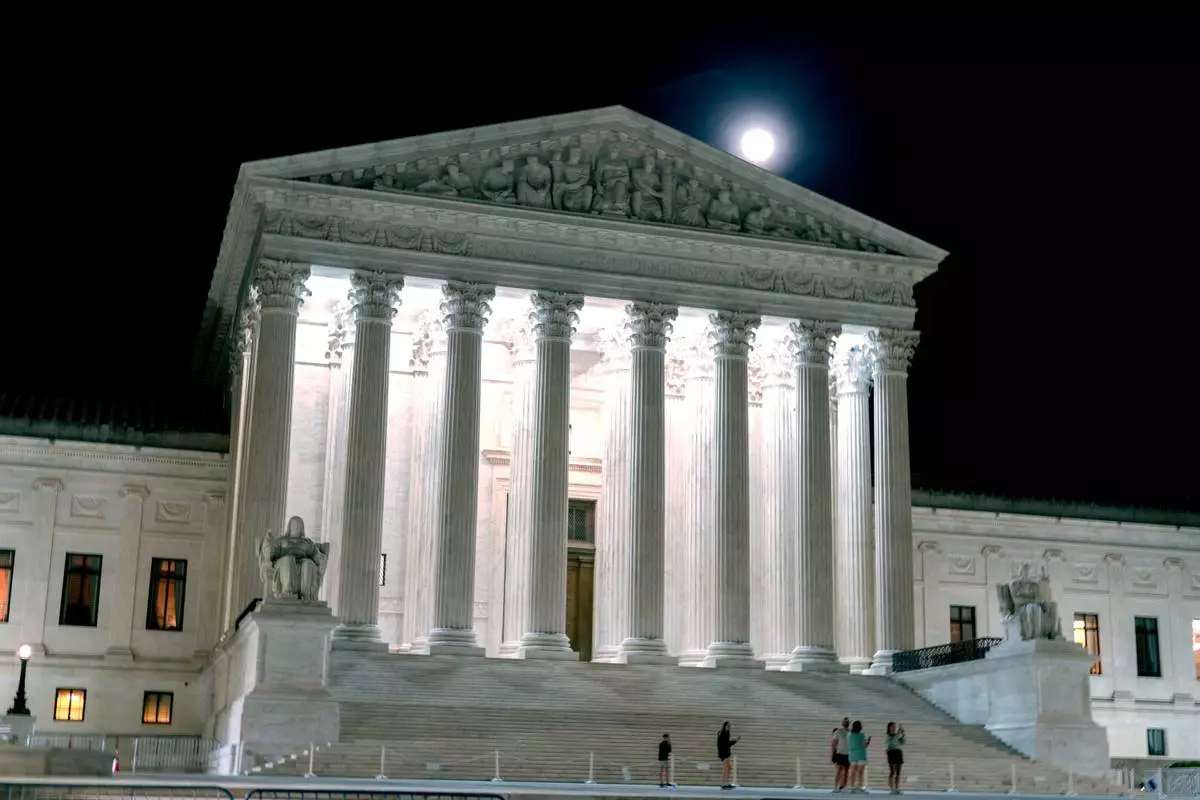
The U.S. Supreme Court is seen as the moon rises Tuesday, March 31, 2026, in Washington. (AP Photo/Jose Luis Magana)