WASHINGTON (AP) — Former Vice President Kamala Harris says she would have picked Pete Buttigieg as her running mate last year but America wasn't ready for the pairing, according to an excerpt of her new book.
Harris writes in an excerpt of “107 Days” published Wednesday in The Atlantic that former President Joe Biden’s transportation secretary was her “first choice," adding that he “would have been an ideal partner — if I were a straight white man."
“But we were already asking a lot of America: to accept a woman, a Black woman, a Black woman married to a Jewish man. Part of me wanted to say, Screw it, let’s just do it. But knowing what was at stake, it was too big of a risk," she writes.
Her thoughts on selecting a running mate come as potential 2028 contenders begin traveling the U.S. in the early days of the second Trump administration.
In the book excerpt, she writes about her love of working with Buttigieg and her friendship with him and his husband, but that the two of them on the Democratic ticket would have been too risky.
“And I think Pete also knew that — to our mutual sadness," she writes.
It wasn't immediately clear at what point she decided against Buttigieg, a former South Bend, Indiana, mayor and former intelligence officer in the Navy Reserves. Buttigieg emerged as a national political figure during his 2020 presidential run in which he finished atop the Iowa caucuses.
The Associated Press didn’t immediately hear back from a spokesperson for Buttigieg.
After Biden dropped out of the presidential race in July 2024 following a disastrous debate performance, Harris was left to head up the Democratic ticket.
She picked Minnesota Gov. Tim Walz as her running mate after his attack line against former President Donald Trump and his running mate, then-Ohio Sen. JD Vance — “These guys are just weird” — spread widely. They ultimately lost.
Harris’ book, whose title is referencing the length of her condensed presidential campaign, is set to be published by Simon & Schuster on Tuesday.
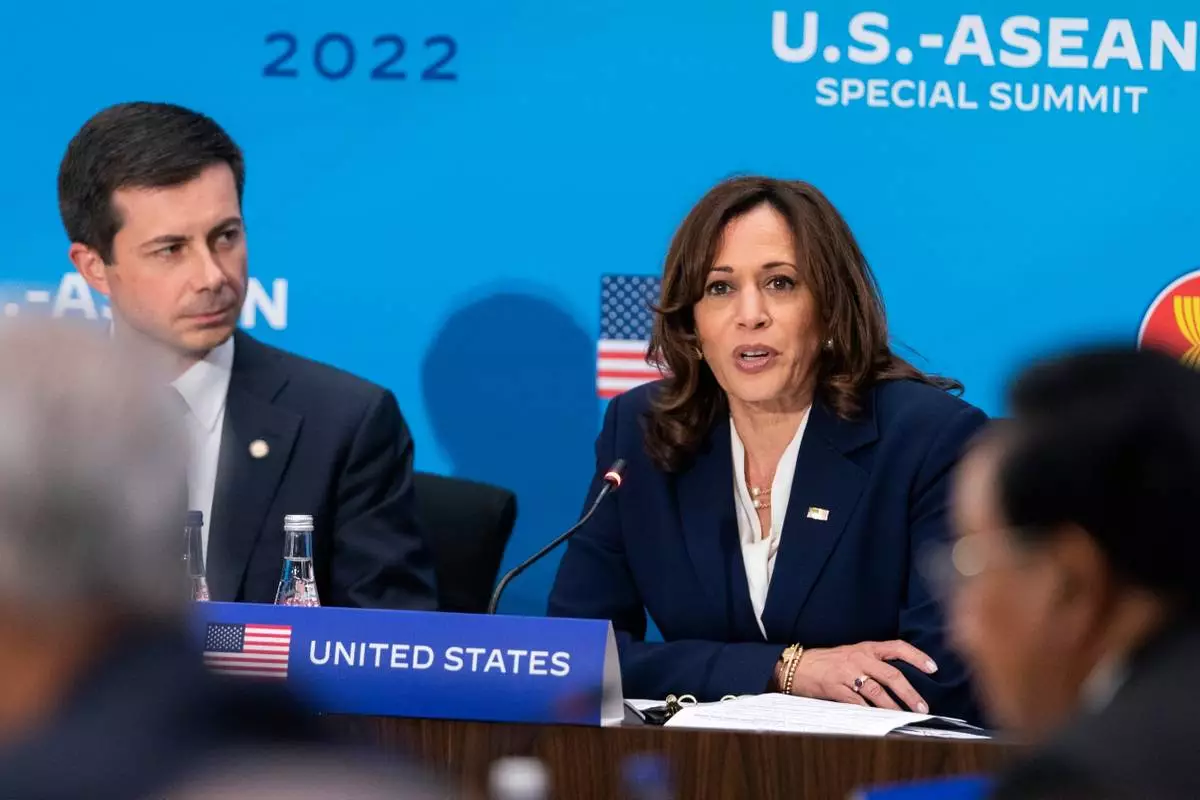
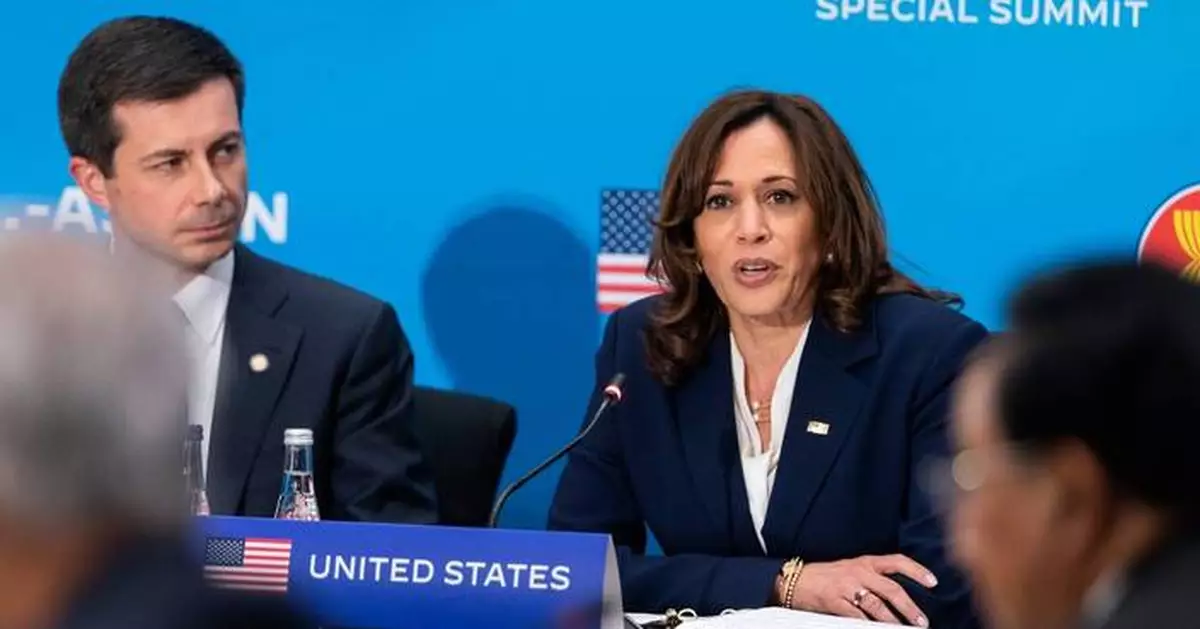
FILE - Vice President Kamala Harris, right, next to Transportation Secretary Pete Buttigieg, speaks during a plenary session of the US-ASEAN Summit, May 13, 2022, at the State Department in Washington. (AP Photo/Jacquelyn Martin, File)
KYIV, Ukraine (AP) — Russia has not spared a single Ukrainian power plant from attack since its all-out invasion, Ukraine’s new energy minister said Friday, as a recent escalation of aerial bombardments left hundreds of thousands of people without heat or light for days during the coldest winter in years.
Denys Shmyhal said Russia conducted 612 attacks on Ukraine’s energy infrastructure objects over last year. That barrage has intensified in recent months as nighttime temperatures plunge to minus 18 degrees C (minus 0.4 F).
“Nobody in the world has ever faced such a challenge,” Shmyhal told lawmakers in a speech at Ukraine’s Parliament, the Verkhovna Rada.
Russia has hammered Ukraine’s power grid, especially in winter, throughout the almost four-year war. It aims to weaken the Ukrainian will to resist in a strategy that Kyiv officials call “weaponizing winter.”
Securing from abroad new missile supplies for air defenses that can counter Russia’s power grid attacks is a difficult and exhausting process, Zelenskyy said, revealing that some of the country’s air defense systems were out of missiles and at Russia’s mercy until a new shipment arrived Friday morning.
Obtaining supplies requires intense diplomatic pressure due to minimum stockpile levels and national laws in allied countries, according to the Ukrainian leader.
“But honestly, what do those rules and laws mean when we are at war and we desperately need these missiles?” Zelenskyy said.
The grim outlook roughly halfway through the winter season coincides with uncertainty about the direction and progress of U.S.-led peace efforts.
Ukraine’s President Volodymyr Zelenskyy said Friday that a Ukrainian delegation is on its way to the United States to try and finalize with Washington documents for a proposed peace settlement that relate to postwar security guarantees and economic recovery.
If American officials approve the proposals, the U.S. and Ukraine could sign the documents next week at the World Economic Forum in Davos, Switzerland, Zelenskyy said at a Kyiv news conference with Czech President Petr Pavel.
U.S. President Donald Trump plans to be in Davos, organizers say.
Russia would still need to be consulted on the proposals.
In Ukraine, the hardship was acute amid extended blackouts.
“This is a critical moment,” Jaime Wah, the deputy head in the Kyiv delegation of the International Federation of Red Cross and Red Crescent Societies, said Friday.
“This is the hardest winter since the escalation of the conflict: punishing cold temperatures and the lack of heating and electricity are affecting millions who are already pushed to the edge by years of violence and economic strain,” he told a briefing in Geneva.
Ukraine's power shortage is so desperate that Shmyhal urged businesses to switch off their illuminated signage and exterior decorations to save electricity.
“If you have spare energy, better give it to people,” the energy minister said. “This is the most important thing today. People will be grateful.”
Ukraine has introduced emergency measures, including temporarily easing curfew restrictions to allow people to go whenever they need to public heating centers set up by the authorities, Shmyhal said. He said hospitals, schools and other critical infrastructure remain the top priority for electricity and heat supplies.
Officials have instructed state energy companies Ukrzaliznytsia, Naftogaz and Ukroboronprom to urgently purchase imported electricity covering at least 50% of their own consumption, according to Shmyhal.
U.K. Deputy Prime Minister David Lammy was in Kyiv on Friday to mark the first anniversary of the “100-year partnership” between Britain and Ukraine. To coincide with the anniversary, Britain announced a further 20 million pounds ($27 million) for repairs to Ukraine’s energy infrastructure.
A grinding war of attrition is continuing along the roughly 1,000-kilometer (600-mile) front line. For all its military might, Russia has managed to occupy less than 20% of Ukraine since 2014.
Follow AP’s coverage of the war in Ukraine at https://apnews.com/hub/russia-ukraine
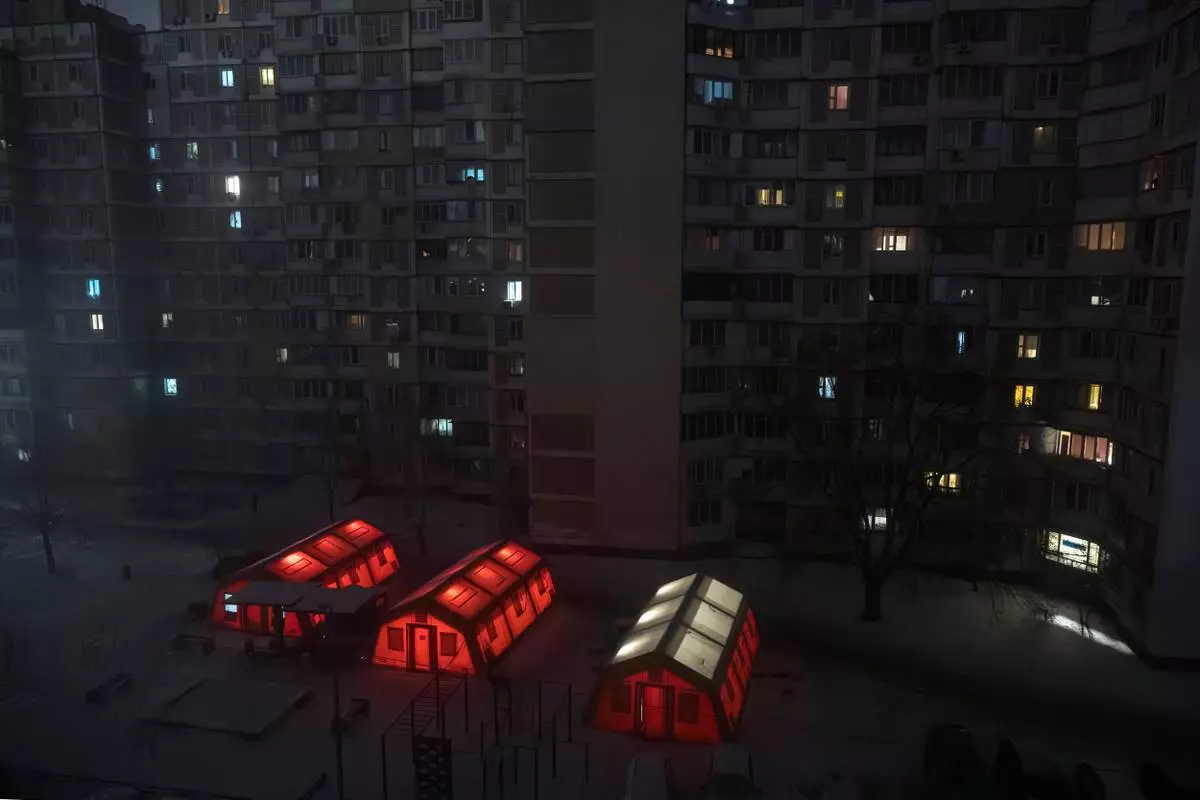
Emergency tents are set up in a residential neighborhood where people can warm up following Russia's regular air attacks against the country's energy objects that leave residents without power, water and heating in the dead of winter, in Kyiv, Ukraine, Thursday, Jan. 15, 2026. (AP Photo/Vladyslav Musiienko)