Skip to Content Facebook Feature Image

In coastal Ghana, female oyster farmers try to save an old practice threatened by climate change

News

In coastal Ghana, female oyster farmers try to save an old practice threatened by climate change
News

News

In coastal Ghana, female oyster farmers try to save an old practice threatened by climate change

2025-09-18 13:51 Last Updated At:14:00

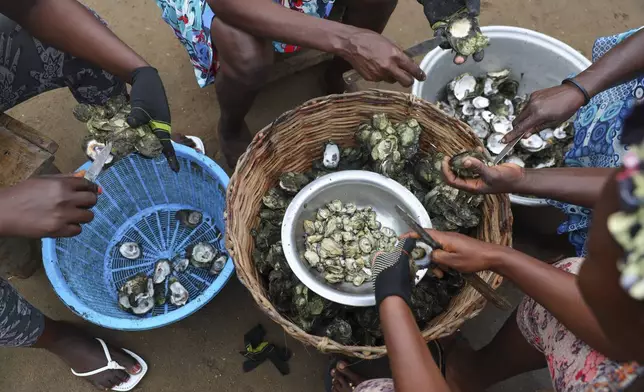
TSOKOMEY, Ghana (AP) — Beatrice Nutekpor weaves through the mangroves in Tsokomey community, just outside of Ghana’s capital of Accra, every day to harvest oysters for sale. It’s a family tradition she’s been doing since she was 15. Now 45, she is struggling to sustain the practice and pass it to her daughter.

In Ghana’s coastal mangroves, oyster farming has been a key source of livelihood dominated for ages by women. Hundreds of women were trained in eco-friendly farming methods for oysters, including mangrove planting and preservation, and selective oyster harvesting, to lessen the impact of climate change.

More Images
Women open freshly cooked oysters in Tsokomey, Ghana, Aug. 6, 2025. (AP Photo/Misper Apawu)
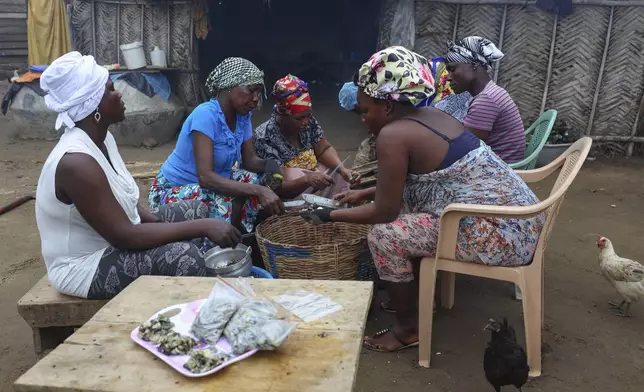
Women open freshly cooked oysters in Tsokomey, Ghana, Aug. 6, 2025. (AP Photo/Misper Apawu)

Women prepare freshly cooked oysters in Tsokomey, Ghana, Aug. 6, 2025. (AP Photo/Misper Apawu)
Women prepare freshly cooked oysters in Tsokomey, Ghana, Aug. 6, 2025. (AP Photo/Misper Apawu)

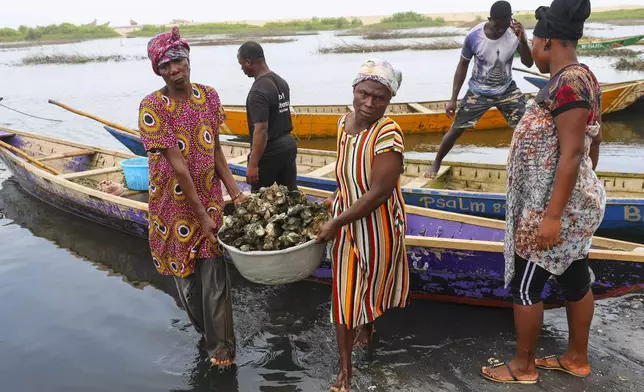
Women offload oysters from a canoe at Tsokomey, Ghana, Aug. 6, 2025. (AP Photo/Misper Apawu)
Women offload oysters from a canoe at Tsokomey, Ghana, Aug. 6, 2025. (AP Photo/Misper Apawu)

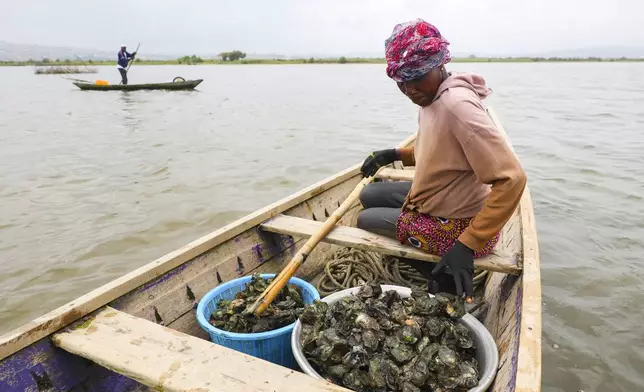
Beatrice Nutekpor sits in a canoe filled with freshly harvested oysters in the Densu estuary at Tsokomey, Ghana, Aug. 6, 2025. (AP Photo/Misper Apawu)
Beatrice Nutekpor sits in a canoe filled with freshly harvested oysters in the Densu estuary at Tsokomey, Ghana, Aug. 6, 2025. (AP Photo/Misper Apawu)

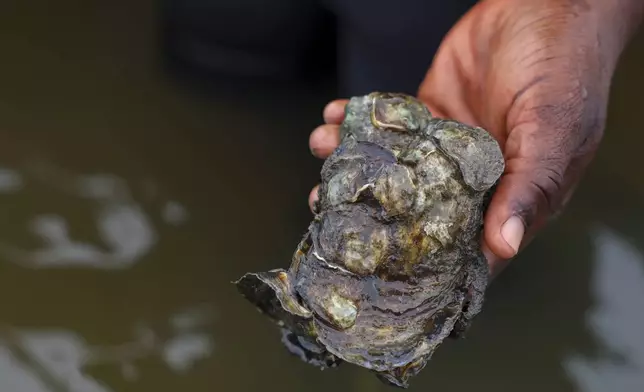
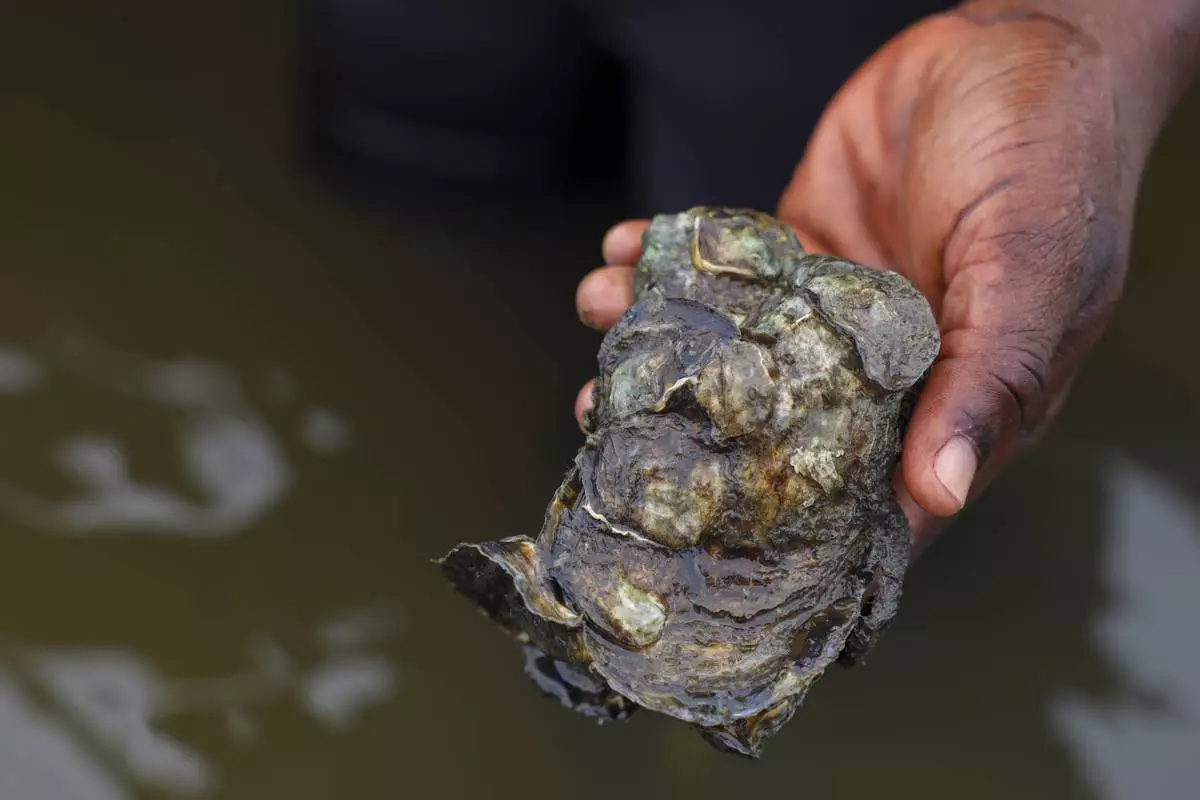
A harvested oyster is displayed in the Densu estuary in Tsokomey, Ghana, Aug. 6, 2025. (AP Photo/Misper Apawu)
A harvested oyster is displayed in the Densu estuary in Tsokomey, Ghana, Aug. 6, 2025. (AP Photo/Misper Apawu)

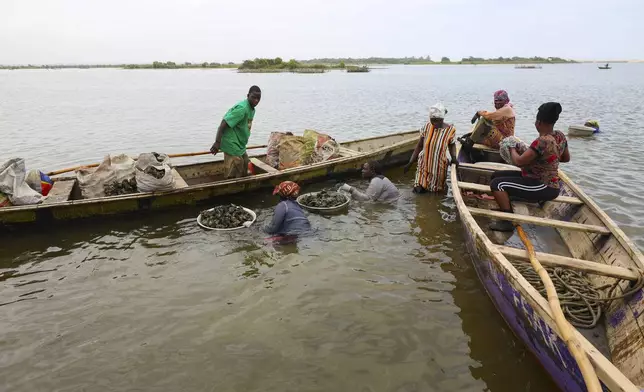
Women harvest oysters in the Densu estuary in Tsokomey, Ghana, Aug. 6, 2025. (AP Photo/Misper Apawu)
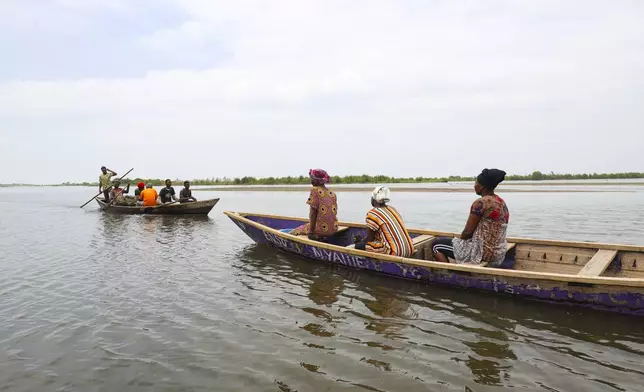
Women harvest oysters in the Densu estuary in Tsokomey, Ghana, Aug. 6, 2025. (AP Photo/Misper Apawu)

Women leave on boats to harvest oysters at Tsokomey, Ghana, Aug. 6, 2025. (AP Photo/Misper Apawu)
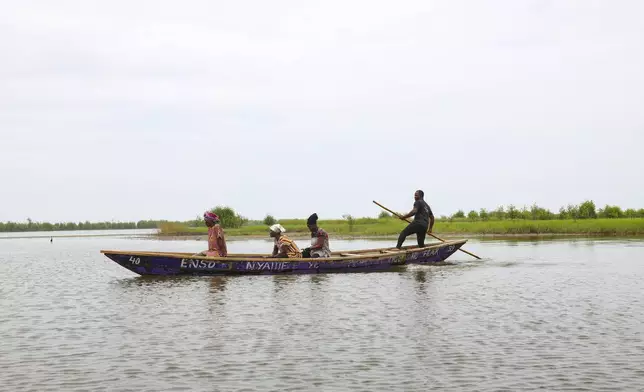
Women leave on boats to harvest oysters at Tsokomey, Ghana, Aug. 6, 2025. (AP Photo/Misper Apawu)

Women head out on a boat to harvest oysters at Tsokomey, Ghana, Aug. 6, 2025. (AP Photo/Misper Apawu)
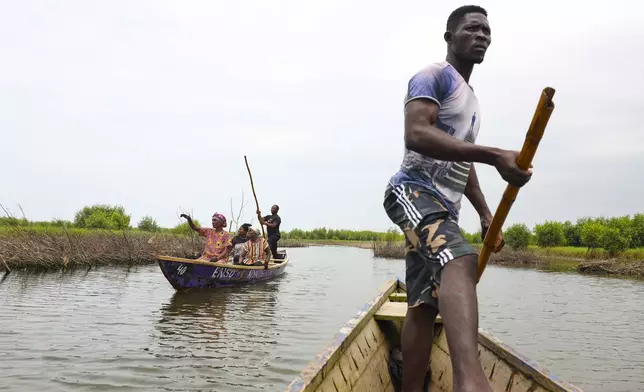
Women head out on a boat to harvest oysters at Tsokomey, Ghana, Aug. 6, 2025. (AP Photo/Misper Apawu)

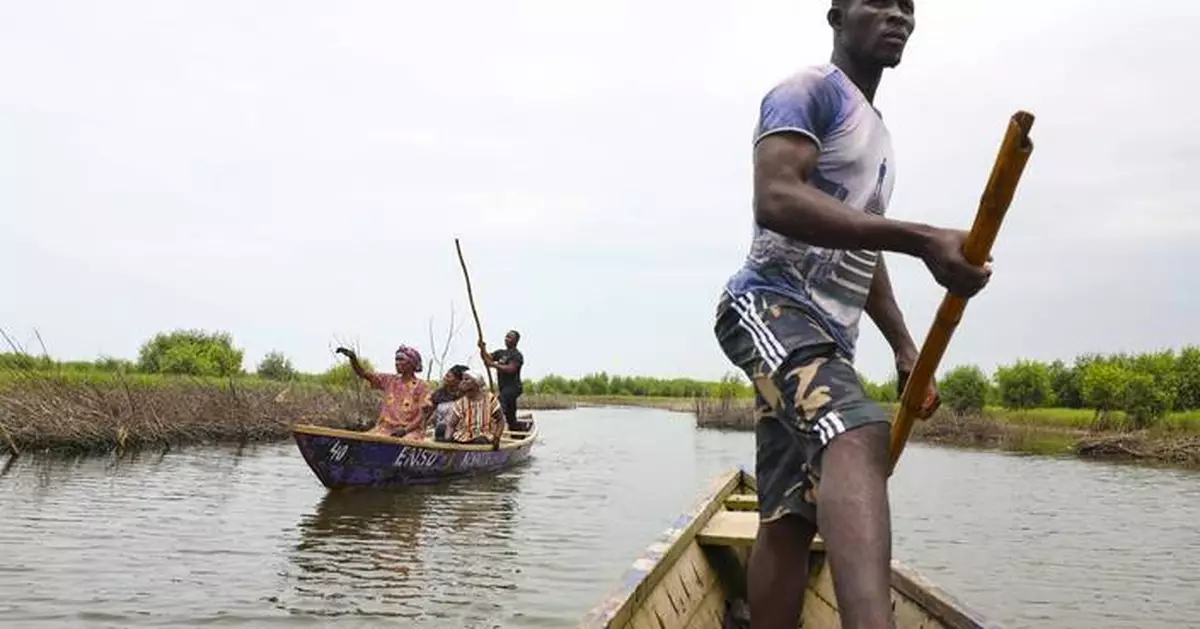
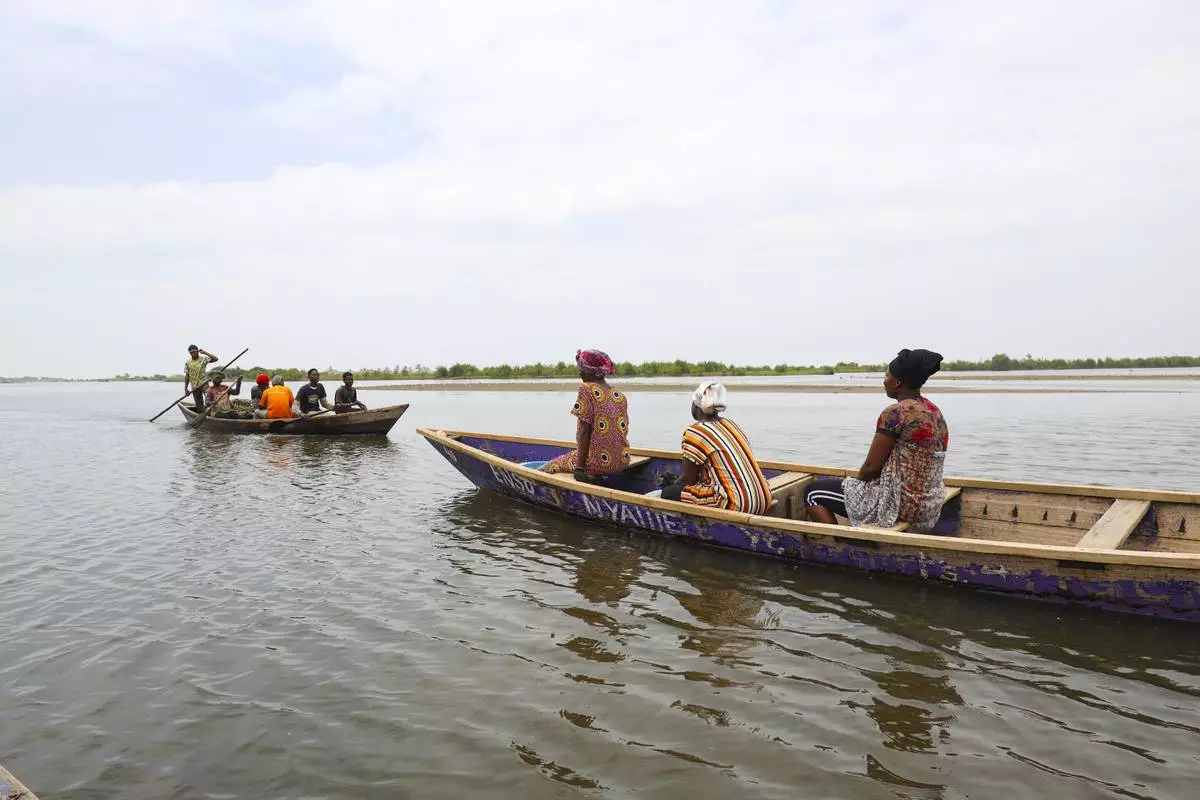
Women ride boats to harvest oysters at Tsokomey, Ghana, Aug. 6, 2025. (AP Photo/Misper Apawu)

Women ride boats to harvest oysters at Tsokomey, Ghana, Aug. 6, 2025. (AP Photo/Misper Apawu)

Mangroves, trees or shrubs that grow along coastlines serve a critical multifunctional purpose in the aquatic ecosystem, ranging from being a home to fish to providing a buffer for coastal erosion from rising sea levels, and protection to land during storms and cyclones.

However, training by the Development Action Association nonprofit has ended after it lost its U.S. aid as a result of U.S. President Donald Trump's decision to cut foreign aid contracts. It left the women to try what they can to keep their generational practice and sustain their families as Ghana emerges from its worst economic crisis in a decades.

Their efforts to protect the mangroves from encroachment and preserve them for a longer period of up to six months are gradually paying off. “The oysters have started attaching themselves to the mangroves we have planted,” Nutekpor says.

Oyster farming involves breeding oysters in a controlled aquatic environment for commercial purposes.

Much like the rest of coastal West African nations, Ghana has lost a significant portion of its mangroves to climate change and development. There is no available data on recent depletion, but over 80% of the original mangroves have been lost since the last century.

Mangroves are also increasingly threatened by climate change as global temperatures and sea levels rise.

A single basin of oysters sells for roughly 47 Ghanaian cedis ($4), and Nutekpor sells just enough to feed her family and put her daughters through school.

As mangroves are depleted by people in search of firewood, development has crept into the coastal areas and authorities release water from overflowing dams, endangering the forests. Nutekpor’s worst nightmare is already manifesting: This year saw less oysters compared to last year, according to Lydia Sasu, the executive director of the Development Action Association.

For farmers like Nutekpor, the loss of mangroves means risking drowning by free diving 30 feet (9 meters) or deeper for hours, in search of oysters that migrate to deeper water in the absence of mangrove roots.

“When you have a situation where the water body, which is already dynamic, becomes more dynamic than before, the oysters cannot grow,” said Francis Nunoo, a professor of fisheries science at the University of Ghana.

Although replanting the mangroves have paid off for the women, it is a back-breaking job that keeps them in the harsh sun for hours.

For the sake of family, it is worth it, they say.

“We keep doing it for the sake of our children and generations to come,” said Bernice Bebli, 39, another oyster farmer. “The water is our livelihood.”

In a group called the Densu Oyster Pickers Association, they have set out guidelines, including punitive measures for those who cut the mangroves outside of the allowed timeline.

According to Bebli, first-time offenders will lose their oysters, while repeated offenders are reported to the police.

“The reliance of the coastal people on these ecosystems is heavy. … The rate of destruction is always higher than the rate of repopulation, so we are going to lose some species and we are going to lose some lives,” said Nunoo.

For Nutekpor, keeping her family's heritage is key.

“Just as my mother taught me this business, I also want to teach my daughter so she can teach her child. Then oyster farming will remain our family business,” Nutekpor said.

——

Adetayo reported from Lagos, Nigeria.

——

For more on Africa and development: https://apnews.com/hub/africa-pulse

The Associated Press receives financial support for global health and development coverage in Africa from the Gates Foundation. The AP is solely responsible for all content. Find AP’s standards for working with philanthropies, a list of supporters and funded coverage areas at AP.org.
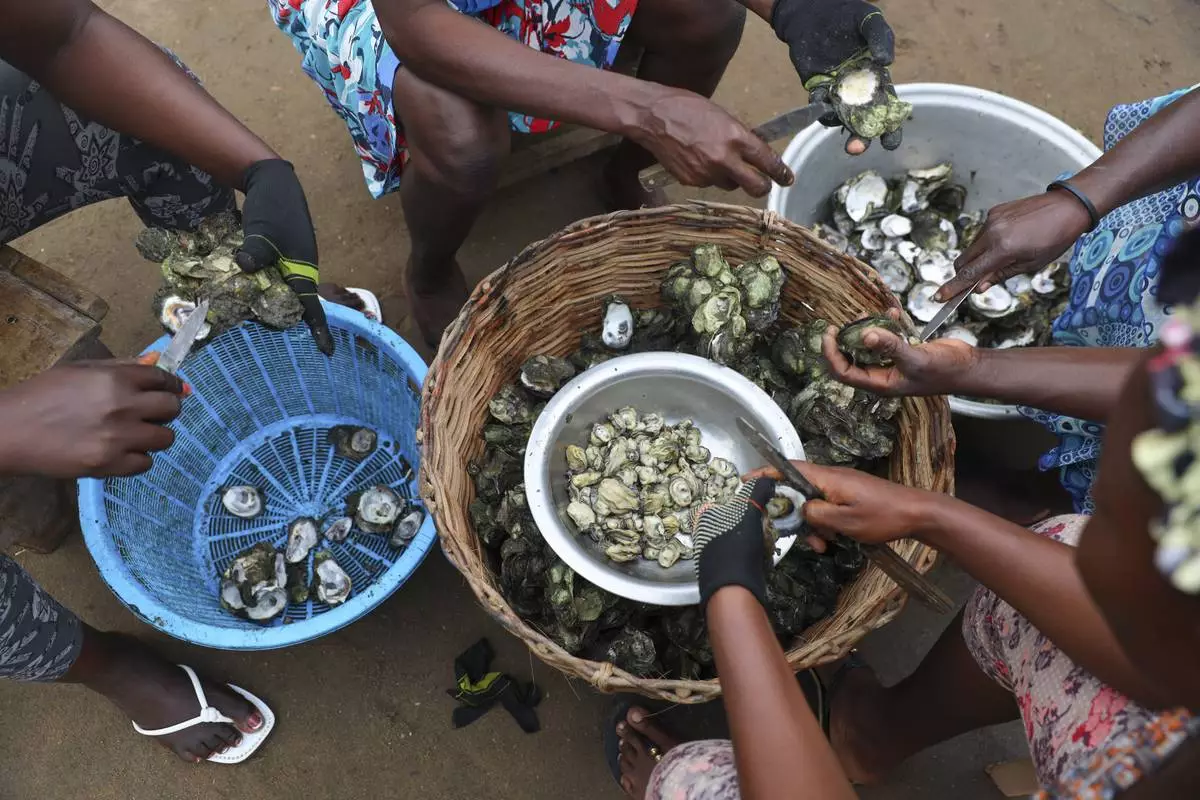
Women open freshly cooked oysters in Tsokomey, Ghana, Aug. 6, 2025. (AP Photo/Misper Apawu)
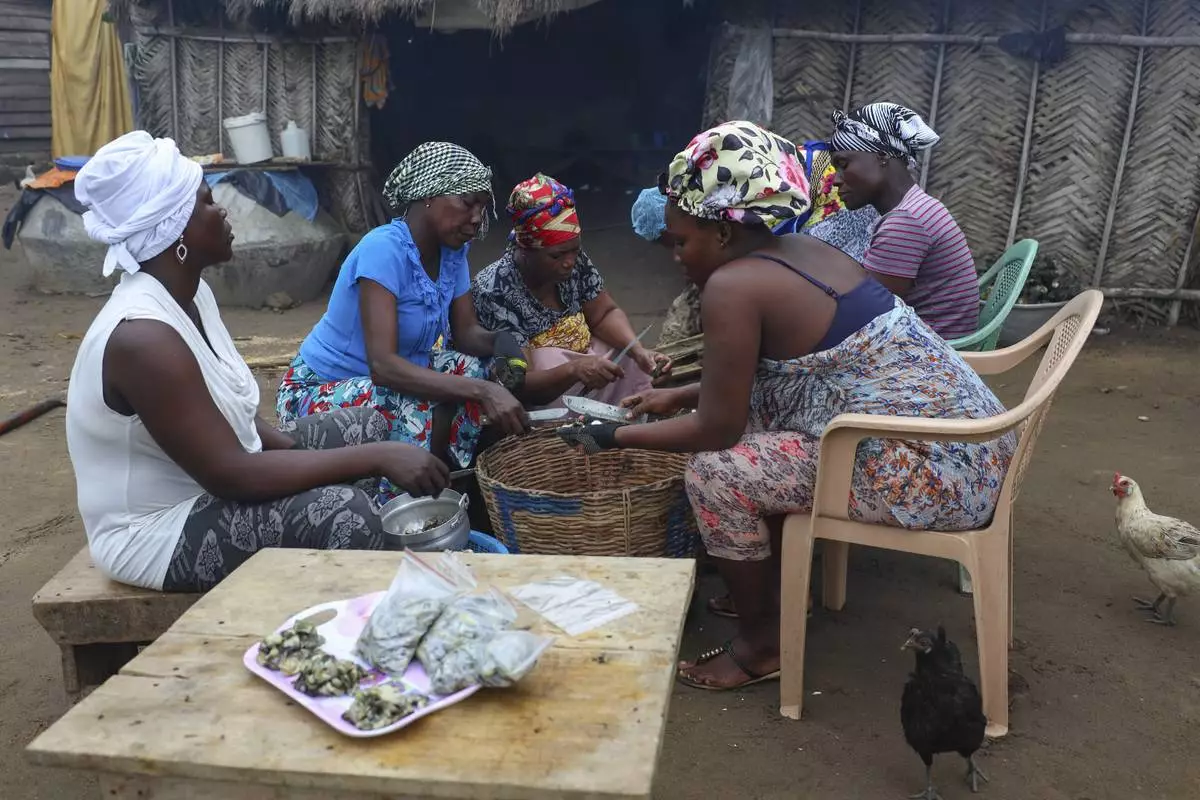
Women open freshly cooked oysters in Tsokomey, Ghana, Aug. 6, 2025. (AP Photo/Misper Apawu)

Women prepare freshly cooked oysters in Tsokomey, Ghana, Aug. 6, 2025. (AP Photo/Misper Apawu)
Women prepare freshly cooked oysters in Tsokomey, Ghana, Aug. 6, 2025. (AP Photo/Misper Apawu)

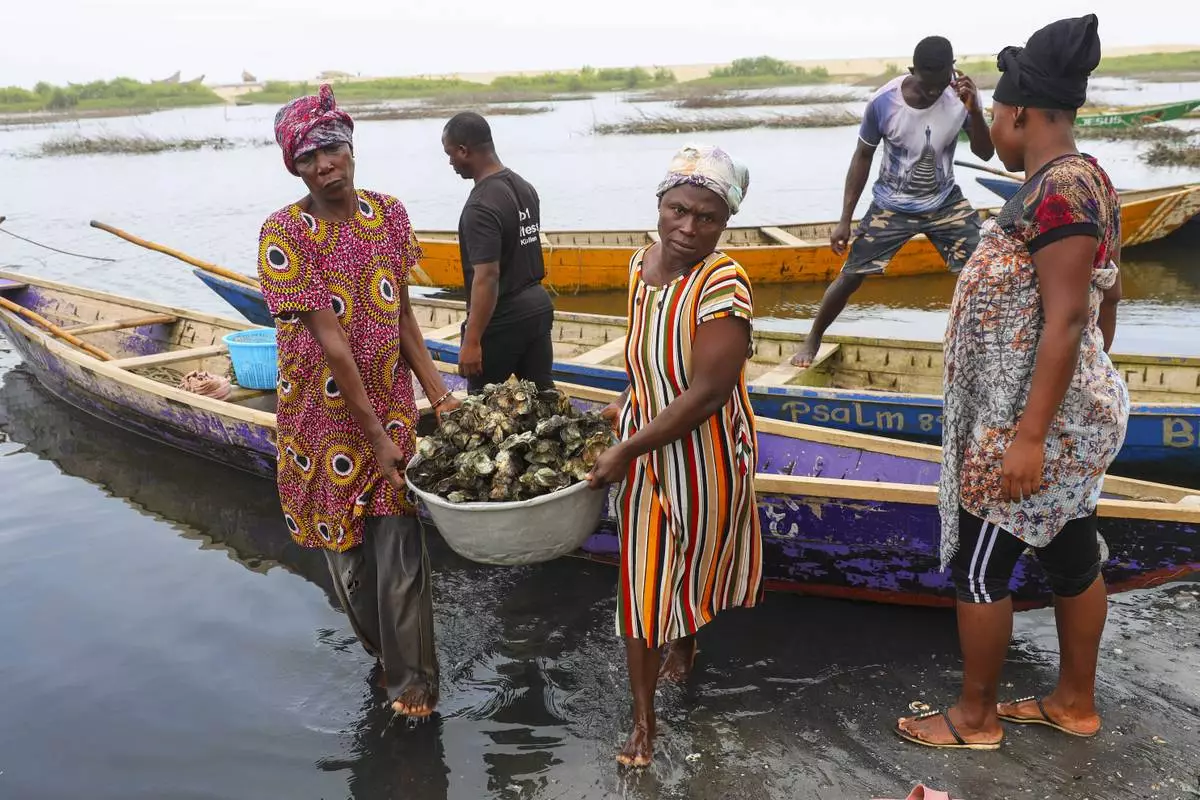
Women offload oysters from a canoe at Tsokomey, Ghana, Aug. 6, 2025. (AP Photo/Misper Apawu)

Women offload oysters from a canoe at Tsokomey, Ghana, Aug. 6, 2025. (AP Photo/Misper Apawu)

Beatrice Nutekpor sits in a canoe filled with freshly harvested oysters in the Densu estuary at Tsokomey, Ghana, Aug. 6, 2025. (AP Photo/Misper Apawu)
Beatrice Nutekpor sits in a canoe filled with freshly harvested oysters in the Densu estuary at Tsokomey, Ghana, Aug. 6, 2025. (AP Photo/Misper Apawu)

A harvested oyster is displayed in the Densu estuary in Tsokomey, Ghana, Aug. 6, 2025. (AP Photo/Misper Apawu)
A harvested oyster is displayed in the Densu estuary in Tsokomey, Ghana, Aug. 6, 2025. (AP Photo/Misper Apawu)

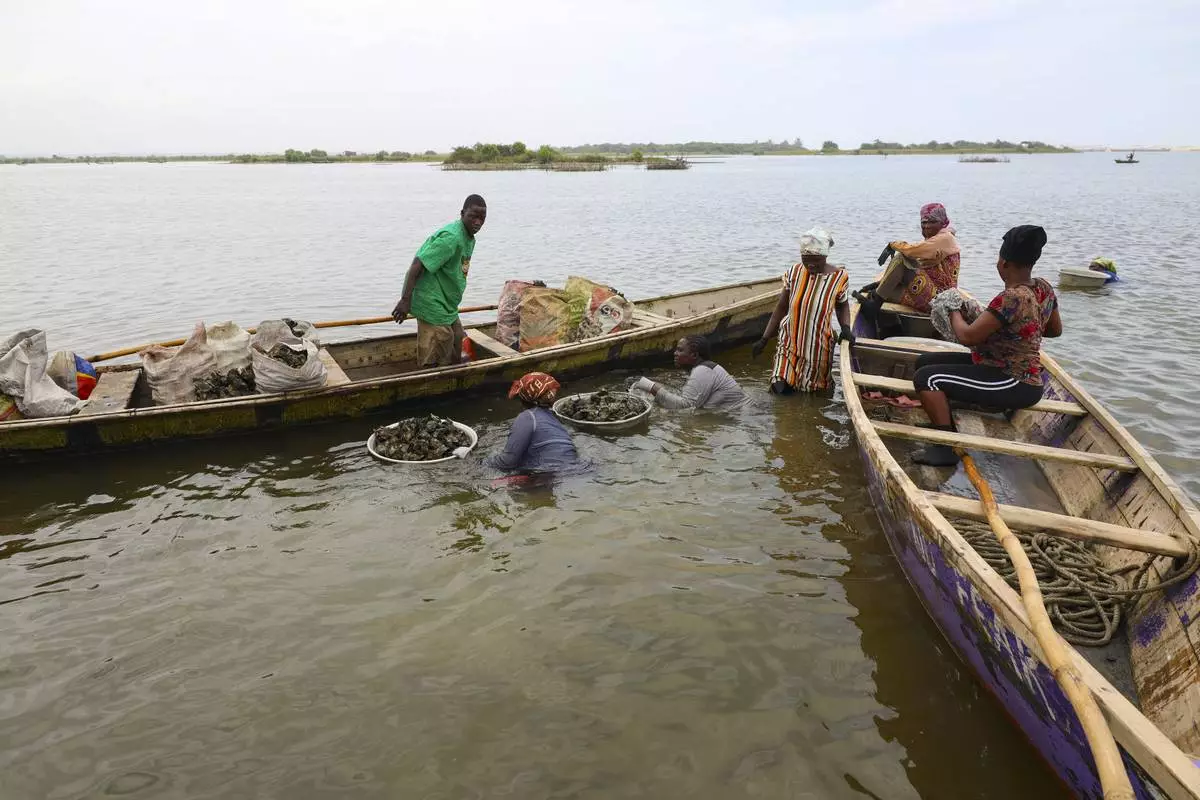
Women harvest oysters in the Densu estuary in Tsokomey, Ghana, Aug. 6, 2025. (AP Photo/Misper Apawu)
Women harvest oysters in the Densu estuary in Tsokomey, Ghana, Aug. 6, 2025. (AP Photo/Misper Apawu)

Women leave on boats to harvest oysters at Tsokomey, Ghana, Aug. 6, 2025. (AP Photo/Misper Apawu)
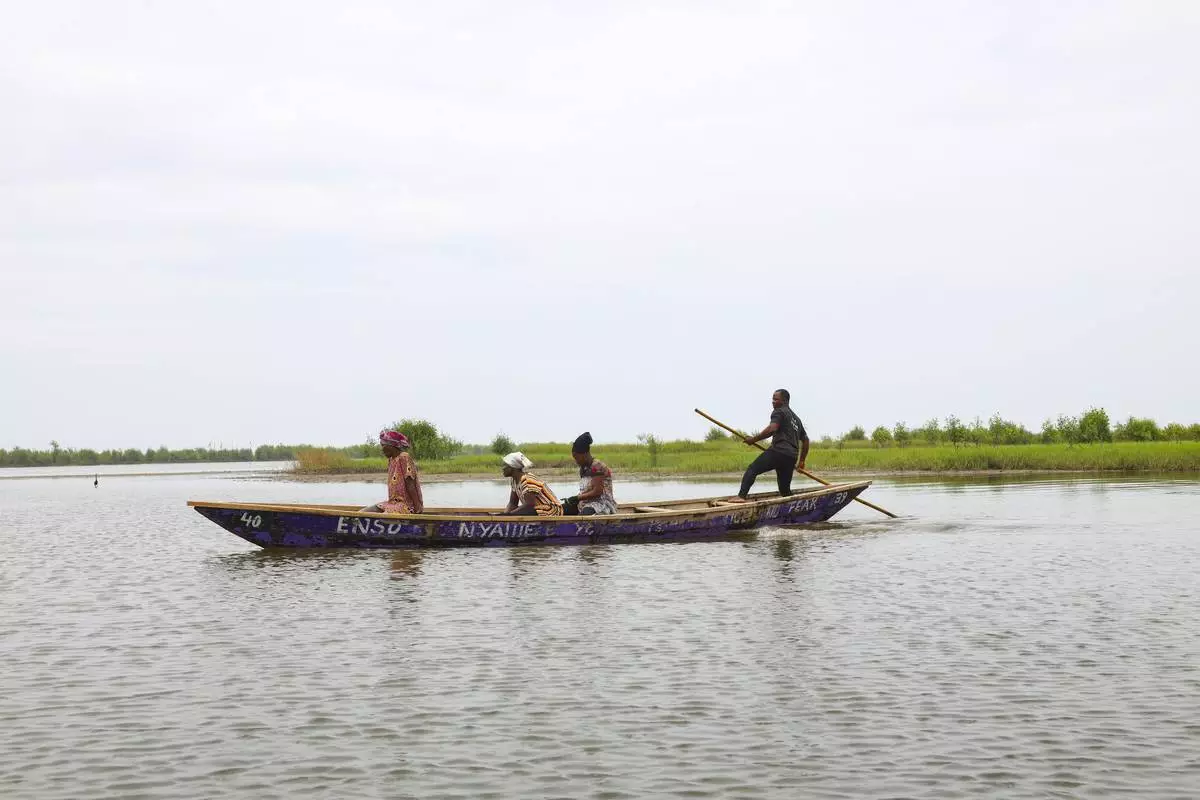
Women leave on boats to harvest oysters at Tsokomey, Ghana, Aug. 6, 2025. (AP Photo/Misper Apawu)

Women head out on a boat to harvest oysters at Tsokomey, Ghana, Aug. 6, 2025. (AP Photo/Misper Apawu)
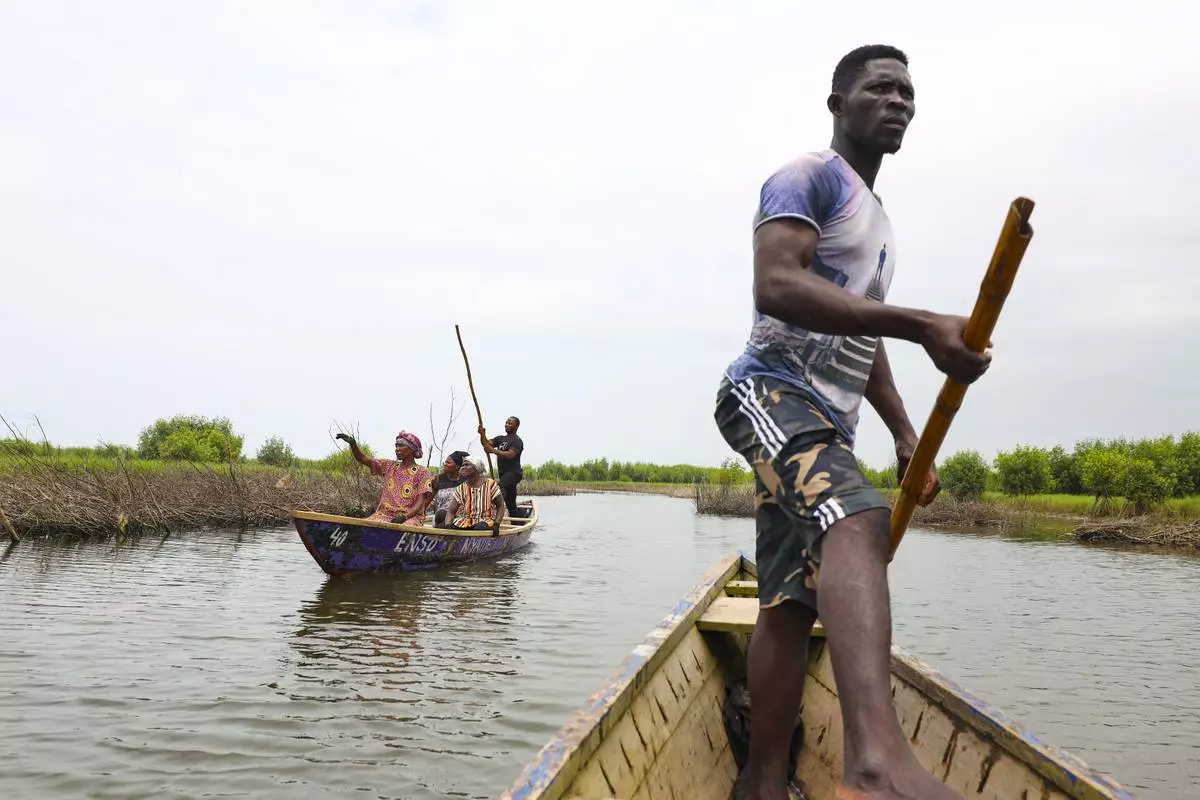
Women head out on a boat to harvest oysters at Tsokomey, Ghana, Aug. 6, 2025. (AP Photo/Misper Apawu)

Women ride boats to harvest oysters at Tsokomey, Ghana, Aug. 6, 2025. (AP Photo/Misper Apawu)

Women ride boats to harvest oysters at Tsokomey, Ghana, Aug. 6, 2025. (AP Photo/Misper Apawu)
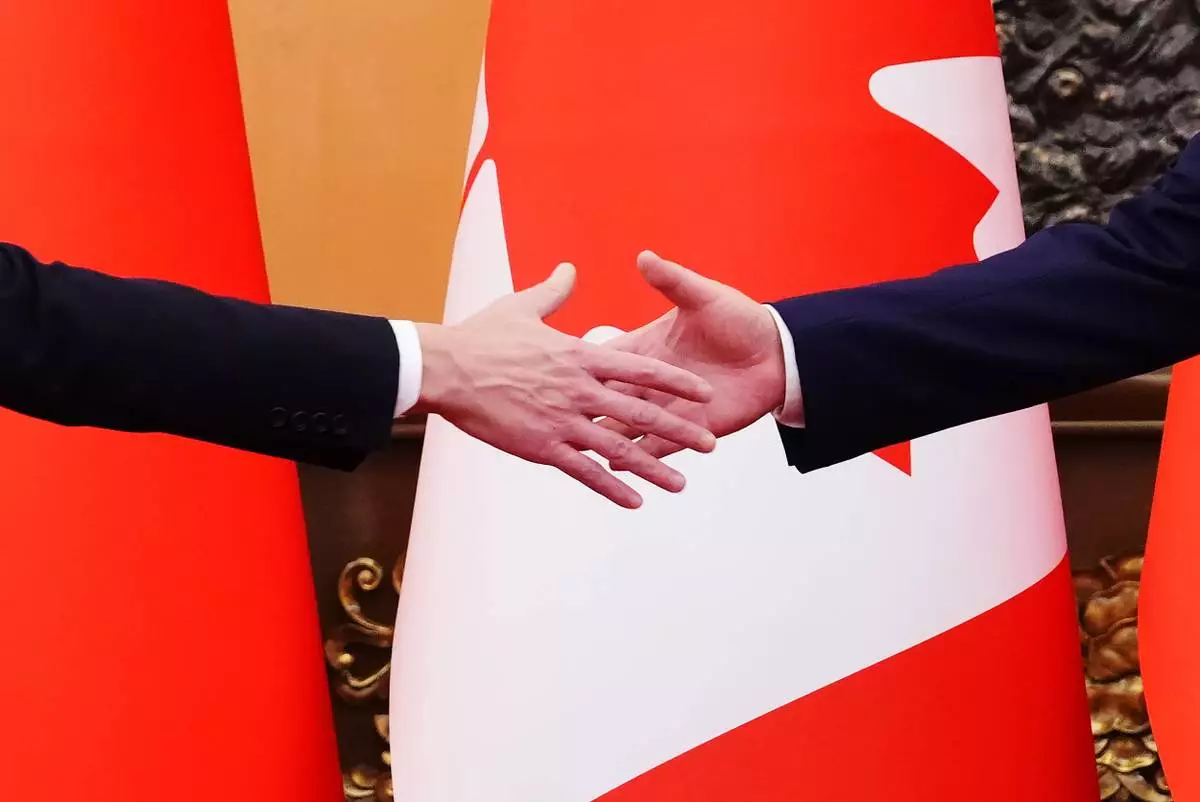
BEIJING (AP) — Breaking with the United States, Canada has agreed to cut its 100% tariff on Chinese electric cars in return for lower tariffs on Canadian farm products, Prime Minister Mark Carney said Friday.

Carney made the announcement after two days of meetings with Chinese leaders. He said there would be an initial cap of 49,000 vehicles on Chinese EV exports to Canada, growing to 70,000 over five years. China will reduce its tariff on canola seeds, a major Canadian export, from about 84% to about 15%, he told reporters.

“It has been a historic and productive two days,” Carney said, speaking outside against the backdrop of a traditional pavilion and a frozen pond at a Beijing park. “We have to understand the differences between Canada and other countries, and focus our efforts to work together where we’re aligned.”

Earlier Friday, he and Chinese leader Xi Jinping pledged to improve relations between their two nations after years of acrimony.

Xi told Carney in a meeting at the Great Hall of the People that he is willing to continue working to improve ties, noting that talks have been underway on restoring and restarting cooperation since the two held an initial meeting in October on the sidelines of a regional economic conference in South Korea.

“It can be said that our meeting last year opened a new chapter in turning China–Canada relations toward improvement,” China's top leader said.

Carney, the first Canadian prime minister to visit China in eight years, said better relations would help improve a global governance system that he described as “under great strain.”

He called for a new relationship “adapted to new global realities” and cooperation in agriculture, energy and finance.

Those new realities reflect in large part the so-called America-first approach of U.S. President Donald Trump. The tariffs he has imposed have hit both the Canadian and Chinese economies. Carney, who has met with several leading Chinese companies in Beijing, said ahead of his trip that his government is focused on building an economy less reliant on the U.S. at what he called “a time of global trade disruption.”

A Canadian business owner in China called Carney's visit game-changing, saying it re-establishes dialogue, respect and a framework between the two nations.

“These three things we didn’t have,” said Jacob Cooke, the CEO of WPIC Marketing + Technologies, which helps exporters navigate the Chinese market. “The parties were not talking for years.”

Canada had followed the U.S. in putting tariffs of 100% on EVs from China and 25% on steel and aluminum under former Prime Minister Justin Trudeau, Carney’s predecessor.

China responded by imposing duties of 100% on Canadian canola oil and meal and 25% on pork and seafood. It added a 75.8% tariff on canola seeds last August. Collectively, the import taxes effectively closed the Chinese market to Canadian canola, an industry group has said. Overall, China's imports from Canada fell 10.4% last year to $41.7 billion, according to Chinese trade data.

China is hoping Trump’s pressure tactics on allies such as Canada will drive them to pursue a foreign policy that is less aligned with the United States. The U.S. president has suggested Canada could become America's 51st state.

Carney departs China on Saturday and visits Qatar on Sunday before attending the annual gathering of the World Economic Forum in Switzerland next week. He will meet business leaders and investors in Qatar to promote trade and investment, his office said.

Associated Press business writer Chan Ho-him in Hong Kong contributed to this report.

Canada's Prime Minister Mark Carney, center, arrives to meet with Chinese President Xi Jinping, at the Great Hall of the People in Beijing, China, Friday, Jan. 16, 2026. (AP Photo/Vincent Thian, Pool)

Canada's Prime Minister Mark Carney, center, arrives to meet with Chinese President Xi Jinping, at the Great Hall of the People in Beijing, China, Friday, Jan. 16, 2026. (AP Photo/Vincent Thian, Pool)

Canada's Prime Minister Mark Carney, left, meets with Chinese President Xi Jinping at the Great Hall of the People in Beijing Friday, Jan. 16, 2026. (Sean Kilpatrick/The Canadian Press via AP)

Canada's Prime Minister Mark Carney, left, meets with Chinese President Xi Jinping at the Great Hall of the People in Beijing Friday, Jan. 16, 2026. (Sean Kilpatrick/The Canadian Press via AP)

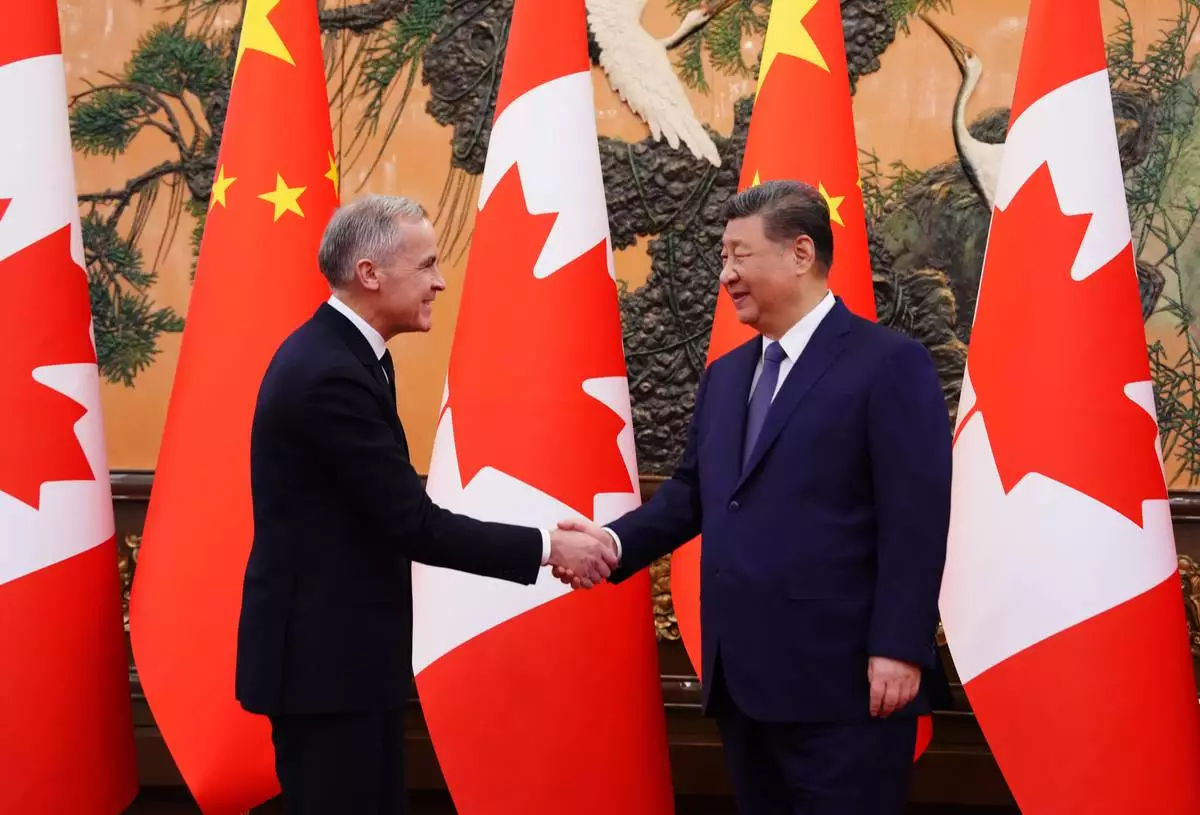
Canada's Prime Minister Mark Carney, left, shakes hands with China's President Xi Jinping at the Great Hall of the People in Beijing Friday, Jan. 16, 2026. (Sean Kilpatrick/The Canadian Press via AP)

Canada's Prime Minister Mark Carney, left, shakes hands with China's President Xi Jinping at the Great Hall of the People in Beijing Friday, Jan. 16, 2026. (Sean Kilpatrick/The Canadian Press via AP)

Recommended Articles