Japanese representatives, after watching a Chinese film about the Nanjing Massacre, urged their government to face up to and reflect on the history of militarist aggression, emphasizing the importance of learning from the past to prevent the recurrence of war.
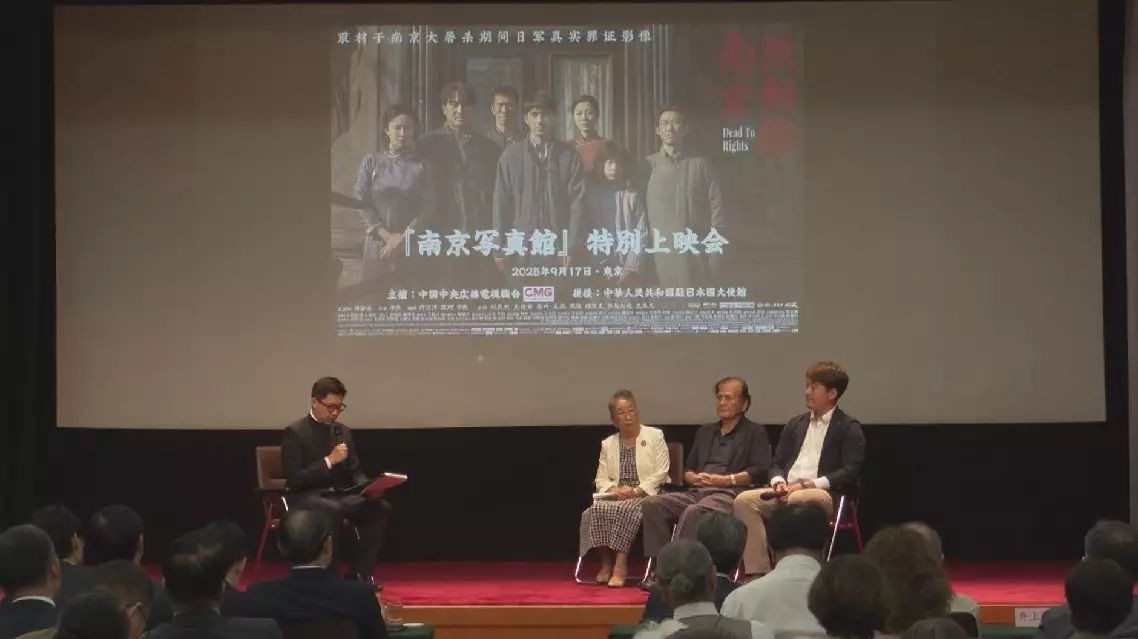
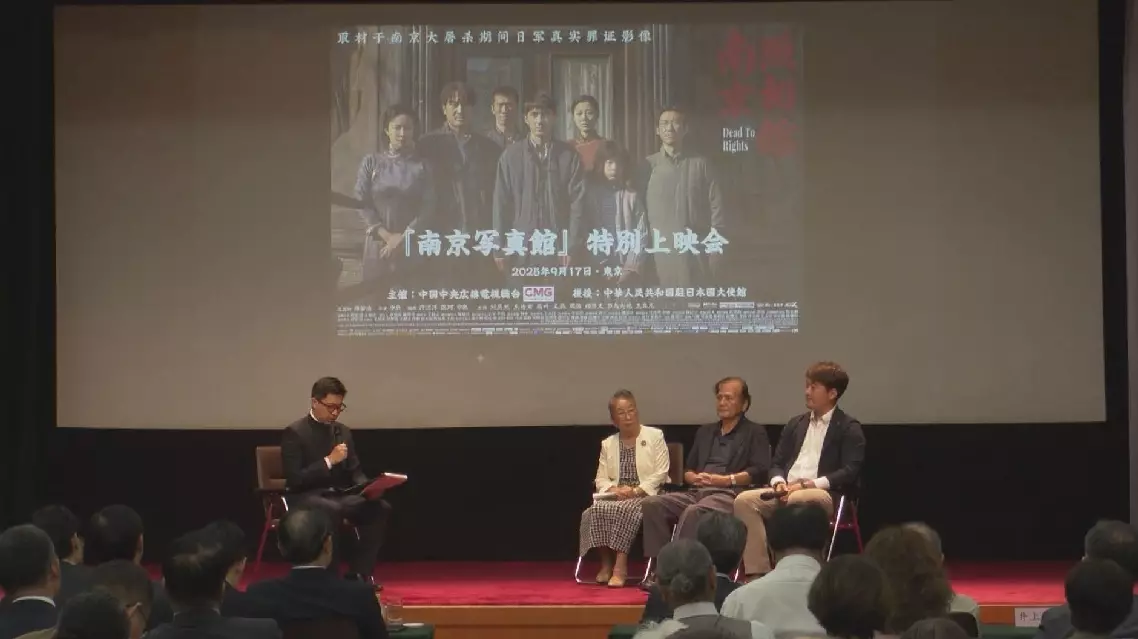
The China Media Group, in collaboration with the Chinese Embassy in Japan, held an event on Wednesday in Tokyo to screen the film "Dead to Rights."
Click to Gallery
Japanese representatives urge gov't reflection on history after watching Nanjing Massacre film
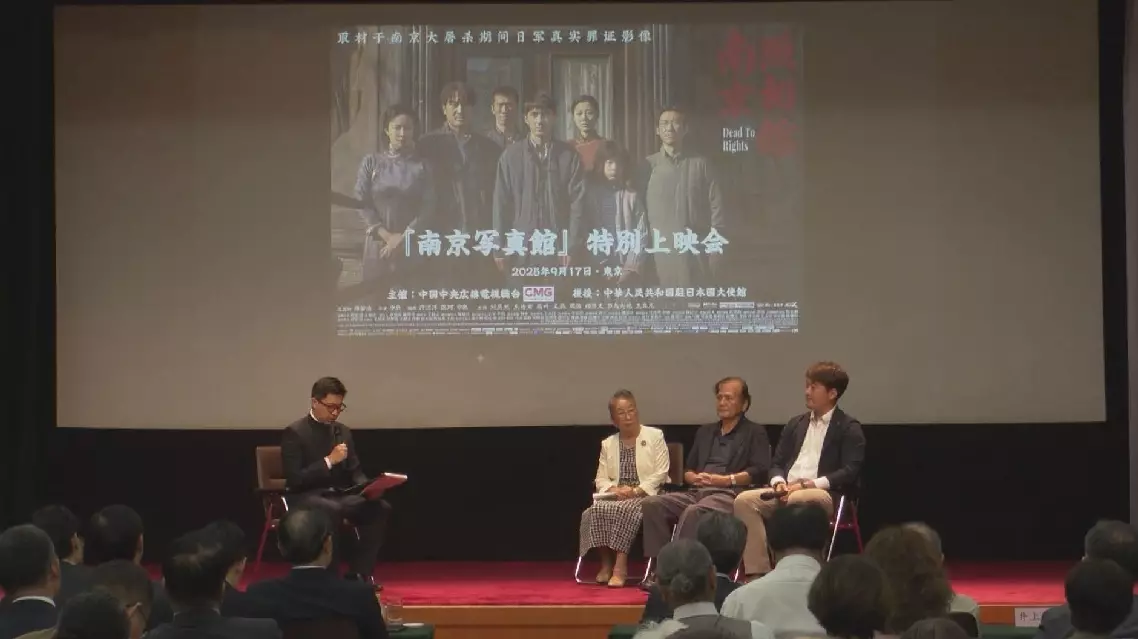
Japanese representatives urge gov't reflection on history after watching Nanjing Massacre film
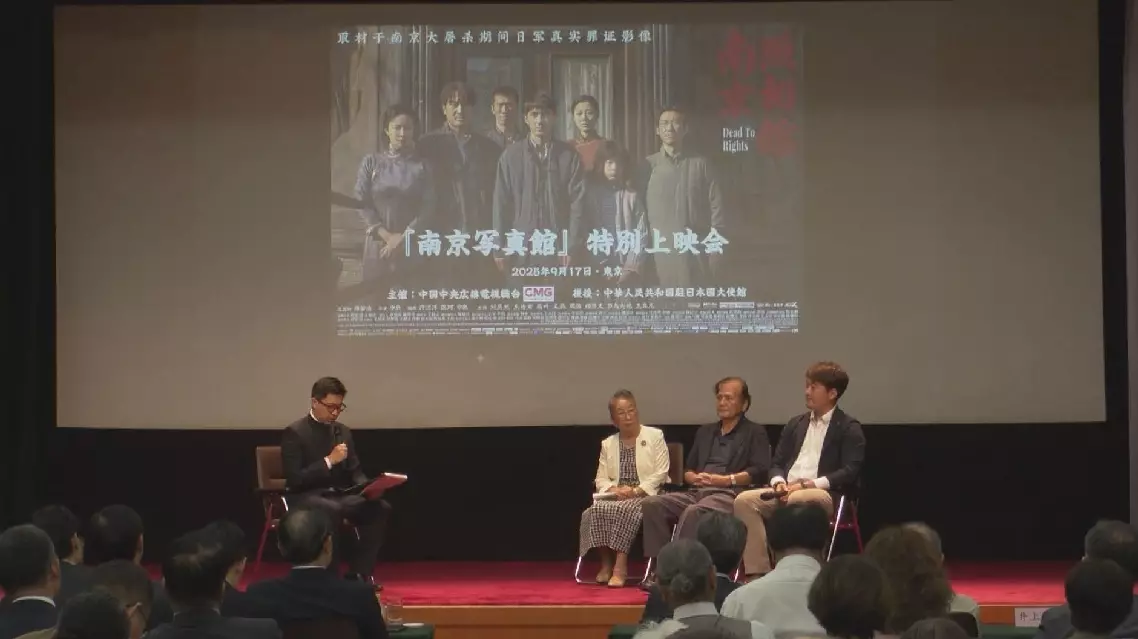
Japanese representatives urge gov't reflection on history after watching Nanjing Massacre film
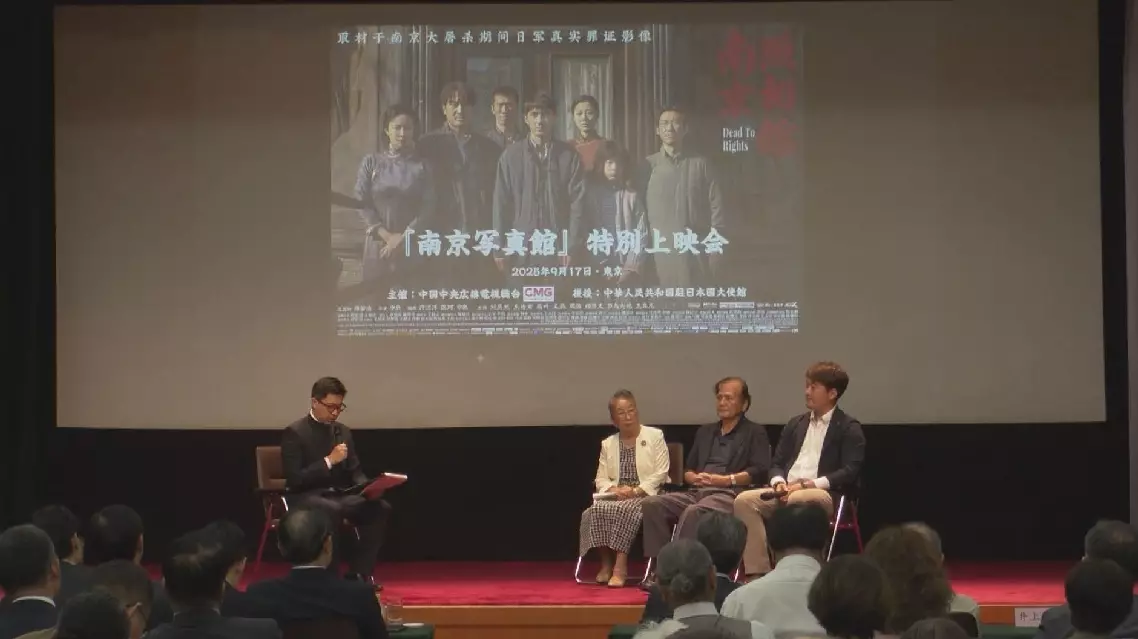
Japanese representatives urge gov't reflection on history after watching Nanjing Massacre film
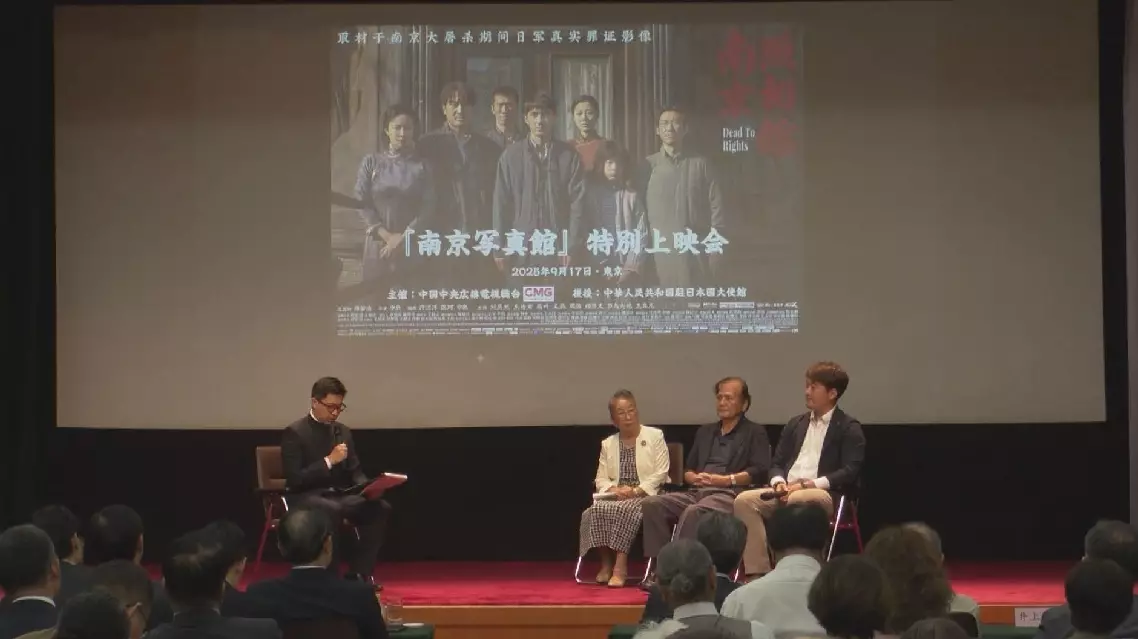
Japanese representatives urge gov't reflection on history after watching Nanjing Massacre film
Japanese representatives urge gov't reflection on history after watching Nanjing Massacre film
"Dead to Rights" centers on a group of Chinese civilians who take refuge in a photography studio during the Japanese aggressors' brutal occupation of Nanjing.
In a desperate attempt to stay alive, they are forced to assist a Japanese military photographer in developing film -- only to discover that the negatives contain damning evidence of atrocities committed by Japanese forces across the city. They secretly keep the negatives and risk their lives to deliver them to the outside world, hoping that the truth would be revealed.
During the event, Chinese Ambassador to Japan Wu Jianghao said the Nanjing Massacre committed by Japanese invaders represents one of the darkest moments in human history.
Noting that history is the best textbook and reality is the best antidote, Wu expressed the willingness to work with people with vision from all sectors in Japan to draw lessons from history, look to the future, and avoid such tragic history to repeat itself.
Some Japanese representatives also shared their thoughts after watching the film.
"I think the Chinese saying of learning from history must be recognized by as many people as possible. There is a significant gap in history education in Japan today. If history education is not properly carried out, and if Japan's leadership strays from the right path, the public may easily follow blindly. I am deeply concerned about this situation," said Tamiko Kanzaki, a former translator for Japan's national broadcaster NHK.
"While Japanese media often discuss atomic bombings of Hiroshima and Nagasaki, as well as the bombing of Tokyo, they completely overlook the atrocities committed by Japan in China and across Asia. Events there are seldom mentioned. I believe it is essential to reexamine this issue through various means, including films like this one, to help Japan rebuild a genuine sense of pacifism," said Makoto Konishi, CEO and editor-in-chief of Social Criticism Co., Ltd.
Japanese representatives urge gov't reflection on history after watching Nanjing Massacre film
Japanese representatives urge gov't reflection on history after watching Nanjing Massacre film
Japanese representatives urge gov't reflection on history after watching Nanjing Massacre film
Japanese representatives urge gov't reflection on history after watching Nanjing Massacre film
Japanese representatives urge gov't reflection on history after watching Nanjing Massacre film
Japanese representatives urge gov't reflection on history after watching Nanjing Massacre film