Cities across China commemorated the 94th anniversary of the September 18 Incident, a sinister "false flag" attack by Japanese militarists in 1931 which ultimately led to the Chinese people's War of Resistance against Japanese Aggression.
In Nanjing City in east China's Jiangsu Province, people gathered at a memorial ceremony in the Memorial Hall of the Victims of the Nanjing Massacre by Japanese Invaders. Participants stood in silence to pay tribute to the war's martyrs and national heroes, before a Peace Bell was struck and flowers were laid in remembrance.
Beijing's Museum of the War of Chinese People's Resistance Against Japanese Aggression on Thursday hosted a concert featuring poetry recitals celebrating the spirit of the War of Resistance. The museum's themed exhibition marking the 80th anniversary of the victory in the Chinese People's War of Resistance against Japanese Aggression and the World Anti-Fascist War, which opened this summer, has now received over 800,000 visitors.
"I am very honored to have participated in the September 3 military parade at the Tian'anmen Rostrum as a volunteer. By volunteering here at the Museum of the War of Resistance, I wish to share my reflections with more people," said Zhou Tianqian, a volunteer at the museum.
In central China's Luohe City, Henan Province, air-raid sirens sounded on the morning of September 18 to mark the anniversary.
Local authorities in Luohe took the opportunity to share national defense education and emergency response training with participants at the commemoration event.
"The sounding of the alarm reminds us never to forget national humiliation. We must learn from history and cherish peace," said Du Shaojie, a local resident.
Commemorative activities were also held on Thursday in Harbin City in northeast China's Heilongjiang Province, on the site of the former premises of Unit 731, a notorious Japanese germ-warfare that operated during World War II.
In Nanchang City in east China's Jiangxi Province, a commemoration was held at the former headquarters of the New Fourth Army, a vital force during the War of Resistance against Japanese invasion.
Schools in Shanxi, Sichuan, and other provinces organized themed events, encouraging students to remember history and draw inspiration from the past.
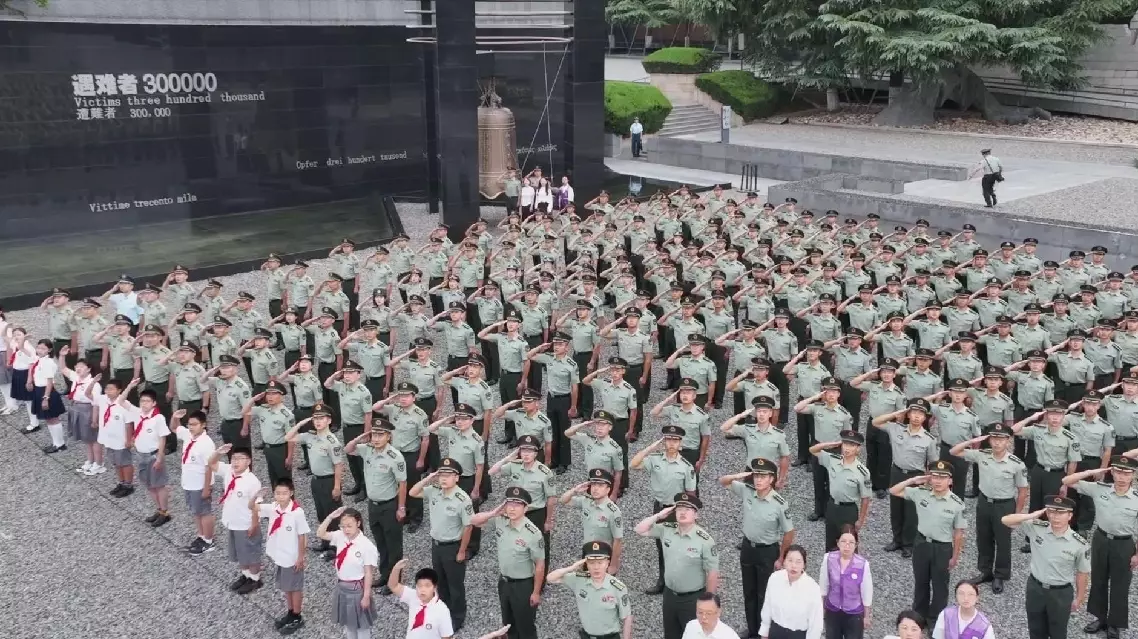
Cities across China commemorate 94th anniversary of Sept 18 Incident
Cambodian business leaders and senior policy advisors have stressed the crucial role that cooperation with China is playing in the nation's development, emphasizing how Chinese investment and infrastructure projects are key to attracting further investment, creating employment, enhancing production networks, and establishing a stable environment for economic growth.
The positive sentiment comes as China's Foreign Minister Wang Yi and Defense Minister Dong Jun arrived in Cambodia on Wednesday to begin a two-day visit to the country.
Last year, China and Cambodia elevated their bilateral relationship to an "all-weather community with a shared future," and China is widely regarded as one of Cambodia's closest partners in Southeast Asia, standing as its largest source of foreign investment.
Cambodia has undergone a rapid and far-reaching transformation over the past 25 years, a change significantly propelled by China's involvement in the construction of vital infrastructure such as bridges, expressways, power facilities, special economic zones, and airports.
Chheang Vannarith, chairman of the Cambodian National Assembly Advisory Council, underscored the importance of these developments.
"This infrastructure is very important to attract domestic and foreign investments. Of course, it creates more jobs, value-added to our production networks, because the problem Cambodia is facing is logistics and transport, how to connect the urban area with the rural, and how to connect all these economic centers in the different provinces together. And China has played an important role in that," he said.
Beyond these major infrastructure projects, China has solidified its position as Cambodia’s leading investor, contributing to nearly three-quarters of all foreign direct investment into the country last year.
Cambodia's sustained high economic growth continues to attract Chinese enterprises, exemplified by the approximately 300-million-U.S.-dollar investment in a local cement plant by the China Energy group.
Jason Xu, president and director of the Cambodia branch of China Energy Construction Group, highlighted how the two sides have enjoyed a long-standing partnership, with this cooperation ensuring a "solid and stable investment environment."
Chinese investments extend across various sectors, including manufacturing, real estate, and an expanding presence in the services industry, such as joint venture e-commerce platforms.
"From our experience, the Cambodian startup companies can benefit from the strong relationship between the two countries. In terms of supply chains, I really benefit from China's size. [If] you want to scale up your business, upgrade your product, your lack of technology, people, investments, China is a good partner," said Theab Sovannareth, chief operating officer of the Smile Shop e-commerce platform.

China cooperation plays important role in Cambodia's development: experts