Skip to Content Facebook Feature Image

‘Children are bound to die’: Corruption, aid cuts and violence fuel a hunger crisis in South Sudan

News

‘Children are bound to die’: Corruption, aid cuts and violence fuel a hunger crisis in South Sudan
News

News

‘Children are bound to die’: Corruption, aid cuts and violence fuel a hunger crisis in South Sudan

2025-09-19 12:04 Last Updated At:12:31

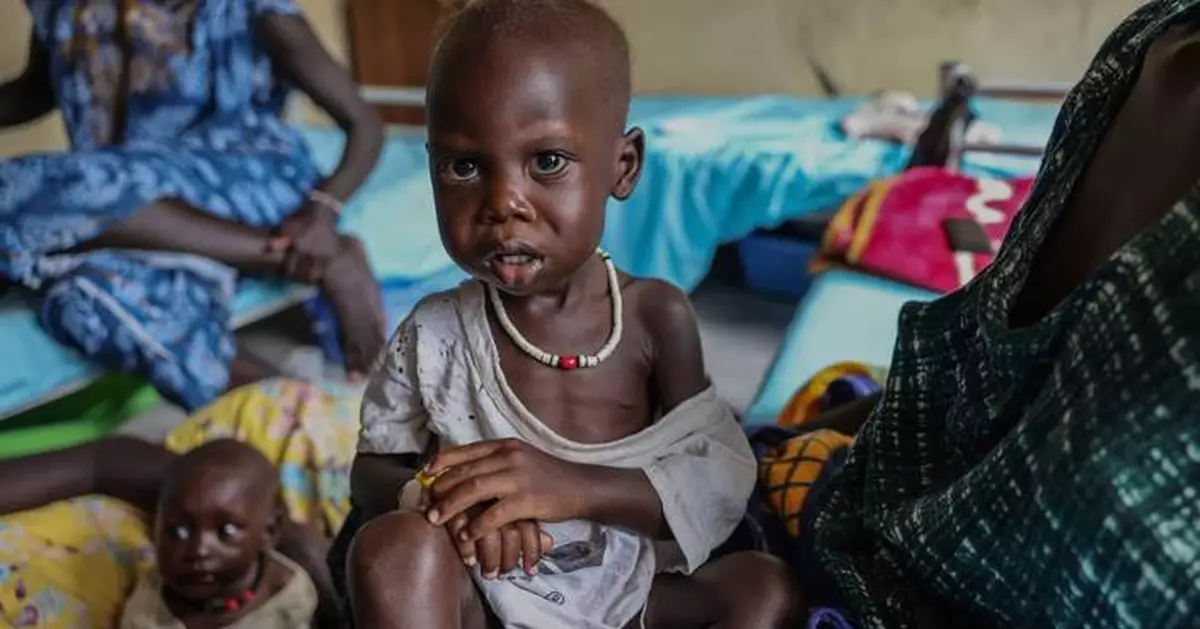
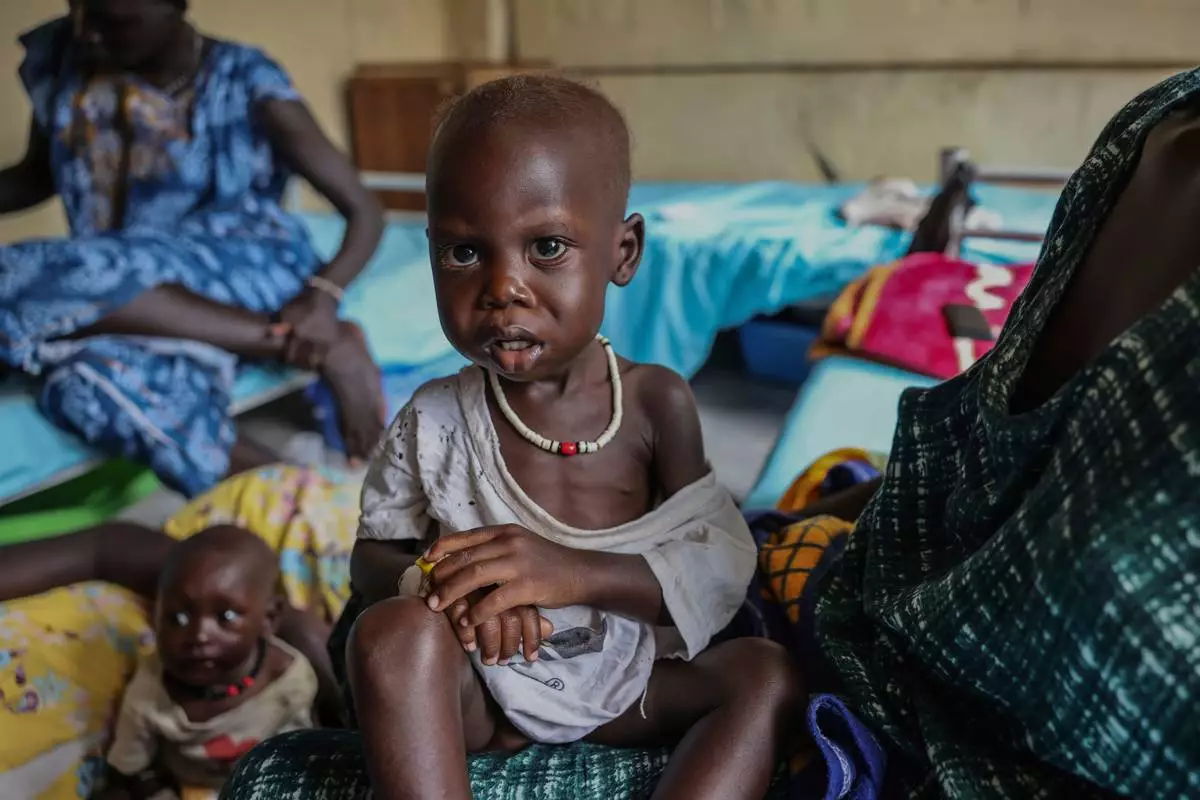
JUBA, South Sudan (AP) — At 14 months, Adut Duor should be walking. Instead, his spine juts through his skin and his legs dangle like sticks from his mother’s lap in a South Sudan hospital. At half the size of a healthy baby his age, he is unable to walk.

Adut’s mother, Ayan, couldn’t breastfeed her fifth child, a struggle shared by the 1.1 million pregnant and lactating women who are malnourished in the east African country.

More Images
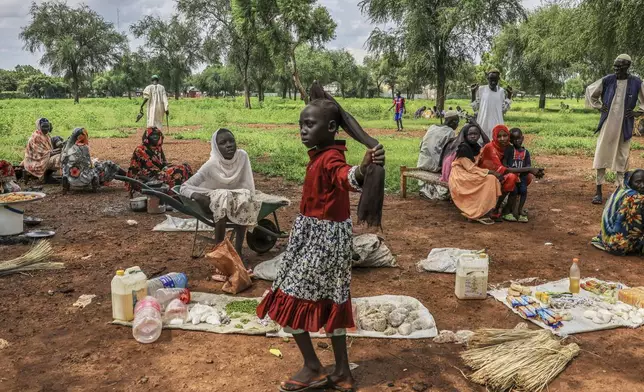
Women sell goods at a small market in the Gendrassa Refugee Camp, Maban, South Sudan, Wednesday, Aug. 20, 2025. (AP Photo/Caitlin Kelly)
Women sell goods at a small market in the Gendrassa Refugee Camp, Maban, South Sudan, Wednesday, Aug. 20, 2025. (AP Photo/Caitlin Kelly)

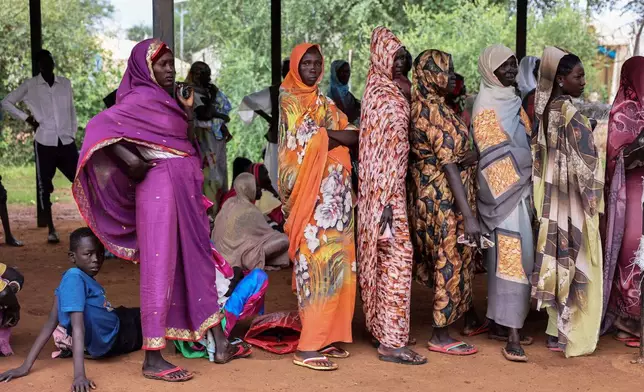
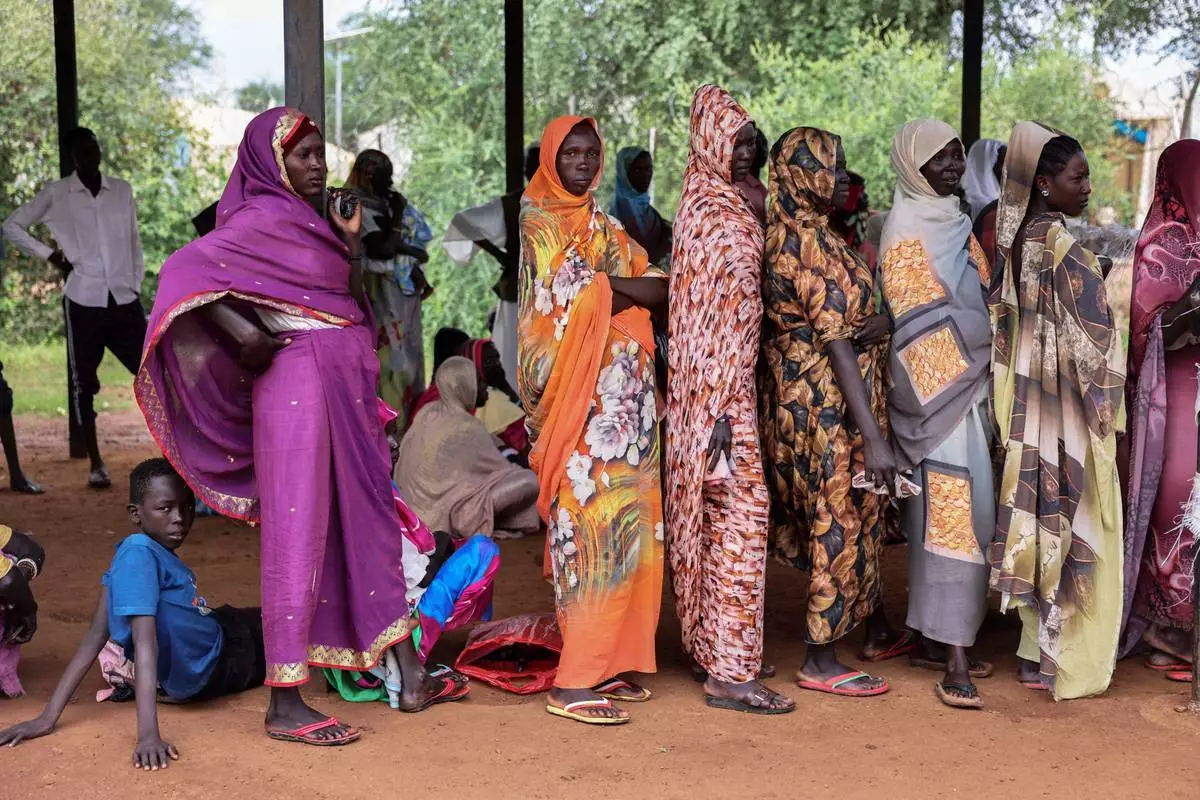
Women wait for cash assistance and dry grain from the U.N. World Food Programme in Gendrassa refugee camp, Maban, South Sudan, Wednesday, Aug. 20, 2025. (AP Photo/Caitlin Kelly)
Women wait for cash assistance and dry grain from the U.N. World Food Programme in Gendrassa refugee camp, Maban, South Sudan, Wednesday, Aug. 20, 2025. (AP Photo/Caitlin Kelly)

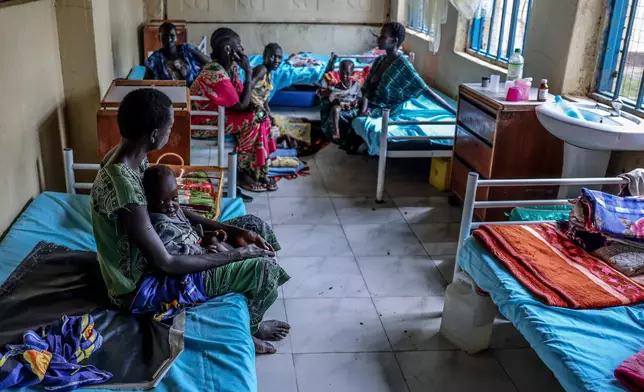
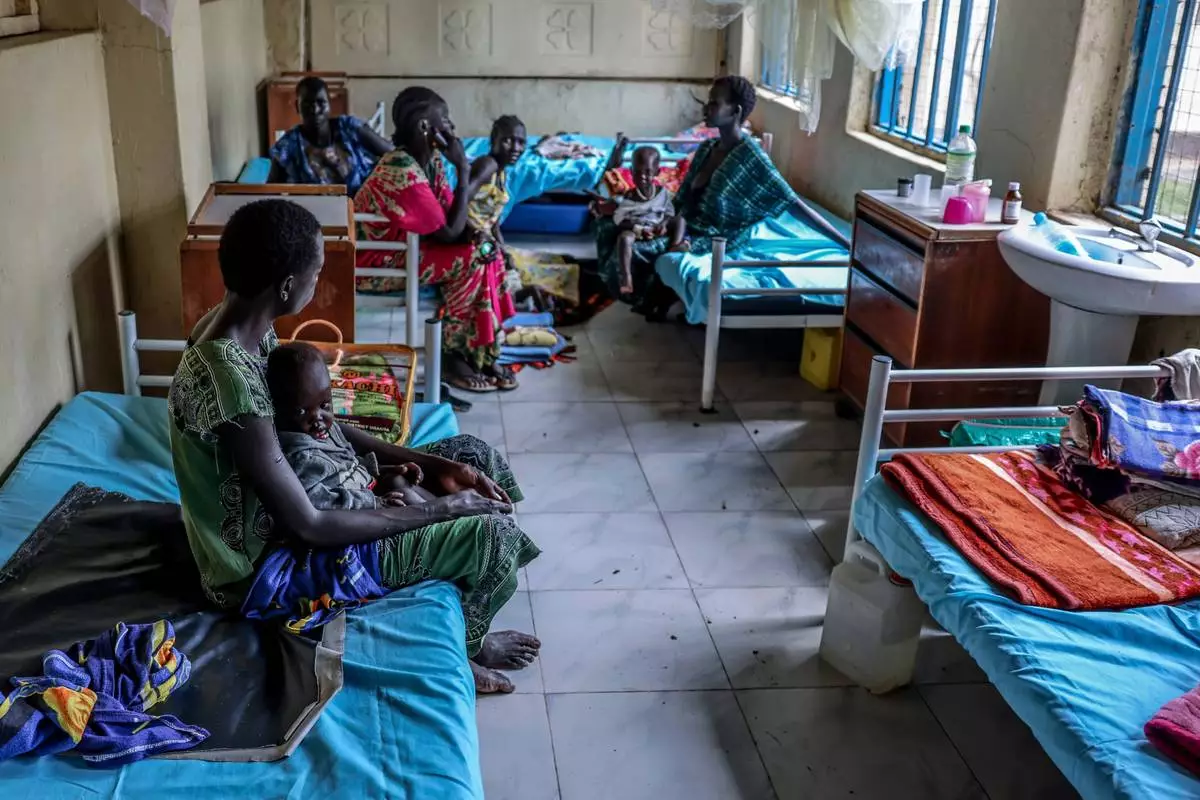
Mothers sit with their children in the malnutrition ward of Bor State Hospital in Bor, South Sudan, Monday, Aug. 18, 2025. (AP Photo/Caitlin Kelly)
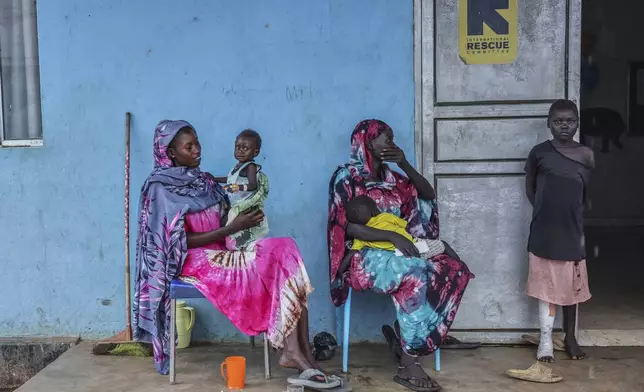
Mothers sit with their children in the malnutrition ward of Bor State Hospital in Bor, South Sudan, Monday, Aug. 18, 2025. (AP Photo/Caitlin Kelly)

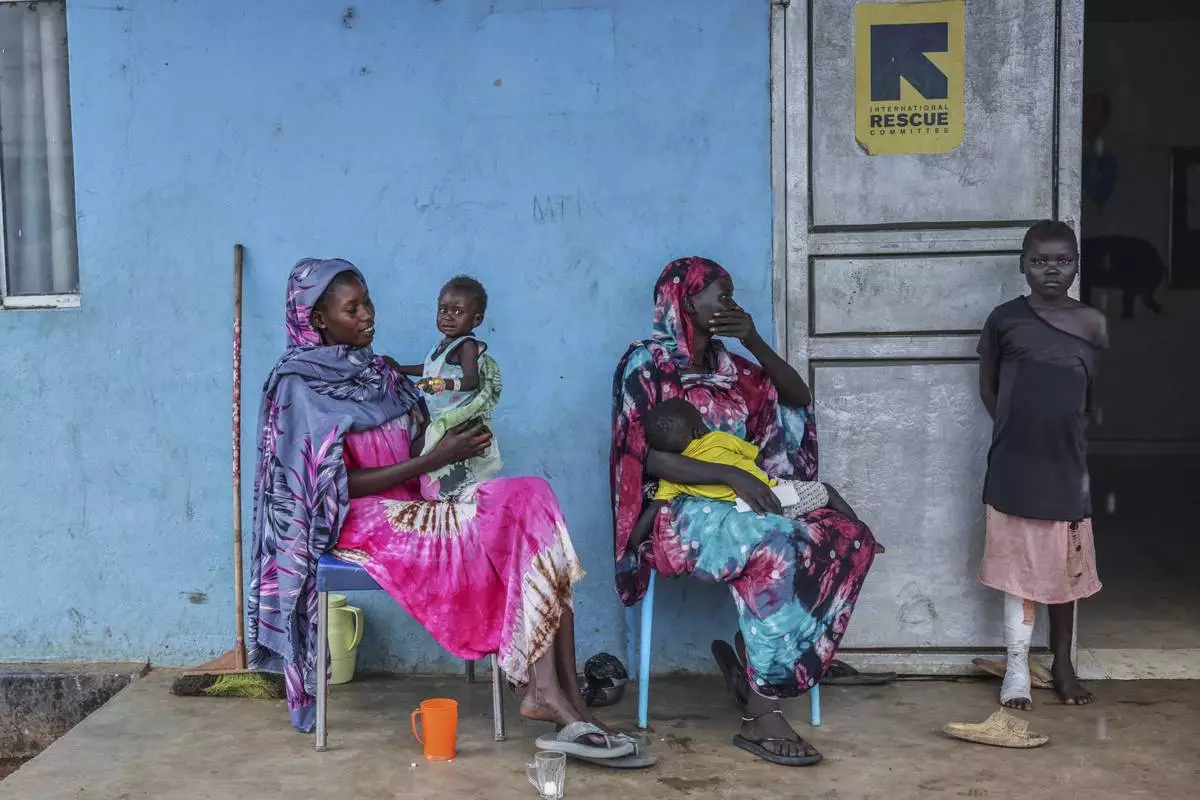
Patients sit outside the malnutrition ward of Bunj Hospital in Maban, South Sudan, Tuesday, Aug. 19, 2025. (AP Photo/Caitlin Kelly)
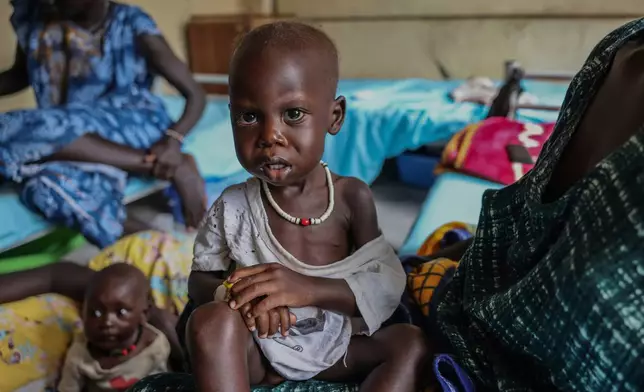
Patients sit outside the malnutrition ward of Bunj Hospital in Maban, South Sudan, Tuesday, Aug. 19, 2025. (AP Photo/Caitlin Kelly)

Adut Duor, 14 months old, sits on his mother's lap in the malnutrition ward of Bunj Hospital in Maban, South Sudan, Monday, Aug. 18, 2025. (AP Photo/Caitlin Kelly)

Adut Duor, 14 months old, sits on his mother's lap in the malnutrition ward of Bunj Hospital in Maban, South Sudan, Monday, Aug. 18, 2025. (AP Photo/Caitlin Kelly)

“If I had a blessed life and money to feed him, he would get better,” Ayan said at a state hospital in Bor, 200 kilometers (124 miles) from the capital, Juba.

A recent U.N.-backed report projects that about 2.3 million children under 5 in South Sudan now require treatment for acute malnutrition, with over 700,000 of those in severe condition. The report attributes the rising numbers to renewed conflict in the northern counties and reduced humanitarian assistance.

Independent since 2011, South Sudan has been crippled by violence and poor governance. United Nations investigators recently accused authorities of looting billions of dollars in public funds, as 9 million of South Sudan’s almost 12 million people rely on humanitarian assistance. Now, funding cuts, renewed violence, climate change and entrenched corruption are converging to deepen the unfolding hunger crisis.

In the basic ward at the hospital in Bor, dozens of mothers cradle frail children. Malnutrition cases have more than doubled this year, a crisis worsened by recent staff cuts. Funding cuts this spring forced Save the Children to lay off 180 aid staff, including 15 nutrition workers who were withdrawn from Bor in May.

Funding cuts have also hit supplies of ready-to-use therapeutic food, RUTF, the peanut paste that has been a lifeline for millions of children around the world. USAID once covered half global production, but Action Against Hunger’s Country Director Clement Papy Nkubizi warns stocks are now running dangerously low.

“Twenty-two percent of children admitted for malnutrition at Juba’s largest children’s hospital have died of hunger,” Nkubizi said. “Triangulating this to the field… there are many children who are bound to die.”

He explains that families now walk for hours to reach support after the organization closed 28 malnutrition centers. UNICEF says more than 800 (66%) of malnutrition sites nationwide report reduced staffing.

Violence in South Sudan’s northern states has compounded the crisis, blocking humanitarian access and driving hundreds of thousands from their farmland.

Although a 2018 peace deal ended the country’s five-year civil war, renewed clashes between the national army and militia groups raise fears of a return to large-scale conflict. In Upper Nile State, where the violence has resurged, malnutrition levels are the highest.

The U.N. said intensified fighting along the white Nile River meant no supplies reached the area for over a month in May, plunging more than 60,000 already malnourished children into deeper hunger.

In June, the South Sudanese government told The Associated Press it turned to U.S. company Fogbow for airdrops to respond to needs in areas hit by violence. Although the company claims to be a humanitarian force, U.N workers question the departure from the established system.

Global humanitarian group Action Against Hunger had to abandon warehouses and operations in Fangak, Jonglei State, after an aerial bombing of a Doctors Without Borders hospital left seven dead in May.

“Our sites in these locations are now also flooded, submerged as we speak,” said Nkubizi.

Around 1.6 million people are at risk of displacement from flooding, as submerged farmland and failed harvests compound hunger in the climate-vulnerable country.

“Malnutrition is not just about food insecurity — cholera outbreaks, malaria and poor sanitation compound the problem,” says Shaun Hughes, the World Food Program’s regional emergency coordinator.

With more than 60% of the population defecating in the open, flooding turns contaminated water into a major health threat.

At Maban County Hospital near the northern border with Sudan, 8-month-old Moussa Adil cries with hunger in his mother’s arms.

Moussa’s nutritionist, Butros Khalil, says there’s no supplementary milk for the frail child that evening. The hospital received its last major consignment in March.

U.S. funding cuts forced international aid groups to reduce support to this hospital. Khalil and dozens of colleagues have not been paid for six months. “Now we are just eating leaves from the bush,” he says, describing how the exorbitant cost of living makes it impossible to feed his 20-person family.

The neighboring war in Sudan has disrupted trade and driven up the cost of basic goods. Combined with soaring inflation, the economic pressure means 92% of South Sudanese live below the poverty line — a 12% increase from last year, according to the African Development Bank.

“People pull their kids out of school, they sell their cattle just to make ends meet, then they become the hungry people,” says Hughes.

Action Against Hunger says it had to halt school feeding after U.S. funding was withdrawn, raising fears of children slipping from moderate to dangerous hunger levels.

In Maban’s camps near the Sudan border, refugees say WFP cash and dry food handouts no longer cover basic needs. With rations halved and over half the area’s population removed from the eligibility list, many face hunger — some even consider returning to war-torn Sudan.

Critics say years of aid dependence have exposed South Sudan. The government allocates just 1.3% of its budget to health — far below the 15% target set by the World Health Organization, according to a recent UNICEF report. Meanwhile, 80% of the health care system is funded by foreign donors.

The U.N. Commission on Human Rights in South Sudan recently said billions of dollars had been lost to corruption, as public officials diverted revenue. The government called the allegations “absurd.”

Committee member Barney Afako said leaders were “breaching international laws which oblige governments to apply maximum available resources to realize the rights to food, health and education.”

The Commission Chairperson, Yasmin Sooka, said the funds siphoned off by elites could have built schools, staffed hospitals and secured food for the South Sudanese people.

“Corruption is killing South Sudanese. It’s not incidental — it’s the engine of South Sudan’s collapse, hollowing out its economy, gutting institutions, fueling conflict, and condemning its people to hunger and preventable death,” she said.

As the international community warns of a worsening crisis, it has already reached the hospital floors of South Sudan and the frail frames of children like Moussa and Adut.

For more on Africa and development: https://apnews.com/hub/africa-pulse

The Associated Press receives financial support for global health and development coverage in Africa from the Gates Foundation. The AP is solely responsible for all content. Find AP’s standards for working with philanthropies, a list of supporters and funded coverage areas at AP.org.
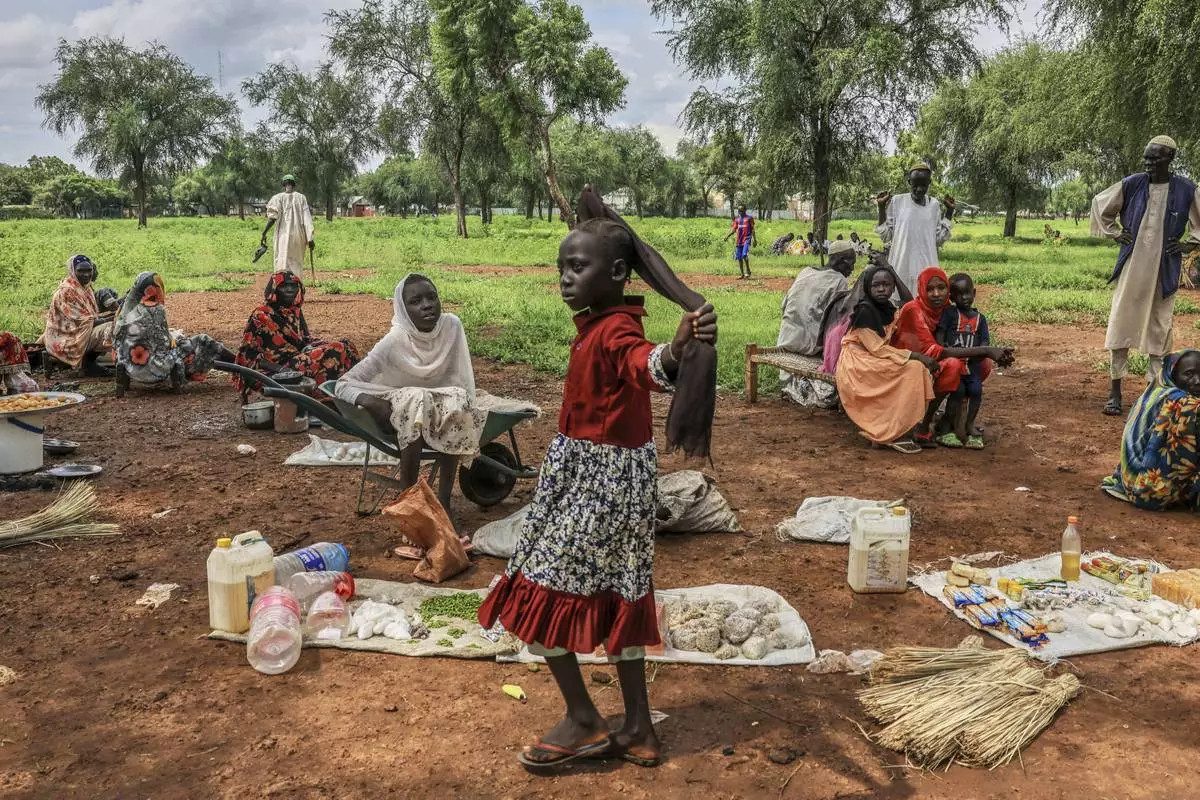
Women sell goods at a small market in the Gendrassa Refugee Camp, Maban, South Sudan, Wednesday, Aug. 20, 2025. (AP Photo/Caitlin Kelly)
Women sell goods at a small market in the Gendrassa Refugee Camp, Maban, South Sudan, Wednesday, Aug. 20, 2025. (AP Photo/Caitlin Kelly)

Women wait for cash assistance and dry grain from the U.N. World Food Programme in Gendrassa refugee camp, Maban, South Sudan, Wednesday, Aug. 20, 2025. (AP Photo/Caitlin Kelly)
Women wait for cash assistance and dry grain from the U.N. World Food Programme in Gendrassa refugee camp, Maban, South Sudan, Wednesday, Aug. 20, 2025. (AP Photo/Caitlin Kelly)

Mothers sit with their children in the malnutrition ward of Bor State Hospital in Bor, South Sudan, Monday, Aug. 18, 2025. (AP Photo/Caitlin Kelly)
Mothers sit with their children in the malnutrition ward of Bor State Hospital in Bor, South Sudan, Monday, Aug. 18, 2025. (AP Photo/Caitlin Kelly)

Patients sit outside the malnutrition ward of Bunj Hospital in Maban, South Sudan, Tuesday, Aug. 19, 2025. (AP Photo/Caitlin Kelly)
Patients sit outside the malnutrition ward of Bunj Hospital in Maban, South Sudan, Tuesday, Aug. 19, 2025. (AP Photo/Caitlin Kelly)

Adut Duor, 14 months old, sits on his mother's lap in the malnutrition ward of Bunj Hospital in Maban, South Sudan, Monday, Aug. 18, 2025. (AP Photo/Caitlin Kelly)


Adut Duor, 14 months old, sits on his mother's lap in the malnutrition ward of Bunj Hospital in Maban, South Sudan, Monday, Aug. 18, 2025. (AP Photo/Caitlin Kelly)

MONROE, Wash. (AP) — A blast of arctic air swept south from Canada and spread into parts of the northern U.S. on Saturday, while residents of the Pacific Northwest braced for possible mudslides and levee failures from floodwaters that are expected to be slow to recede.

The catastrophic flooding forced thousands of people to evacuate, including Eddie Wicks and his wife, who live amid sunflowers and Christmas trees on a Washington state farm next to the Snoqualmie River. As they moved their two donkeys to higher ground and their eight goats to their outdoor kitchen, the water began to rise much quicker than anything they had experienced before.

As the water engulfed their home Thursday afternoon, deputies from the King County Sheriff’s Office marine rescue dive unit were able to rescue them and their dog, taking them on a boat the half-mile (800 meters) across their field, which had been transformed into a lake. The rescue was captured on video.

Another round of rain and wind is in store for the region as early as late Sunday, forecasters said.

“Bottom line at this point in time is we’re not done despite the sunny conditions that we have across western Washington at this point,” said Reid Wolcott, a meteorologist with the National Weather Service in Seattle.

“There is yet more still to come in terms of in terms of wind, in terms of rain, in terms in terms of flooding,” he said. “And Washingtonians need to be prepared for additional impacts, additional flooding, tree damage, power outages, etc.”

High winds expected at the end of the weekend and into the first part of week are a concern because the ground is extremely saturated, putting trees at risk of toppling, he said.

In Burlington, a farming community about an hour north of Seattle, the receding floodwaters allowed residents to assess damage and clean up their homes.

Friends and relatives helped empty Argentina Dominguez's home, filling trailers with soaked furniture, ripping carpet and mopping muddy floors.

“I know it’s materialistic stuff, but they were our stuff. It’s really hard. But we’re gonna try our best to like get through it all,” Dominguez said. “We’re just trying to get everything off the floor so we can start over.”

In Snohomish County, Washington, north of Seattle, emergency officials on Saturday led federal, state and local officials on a tour of the devastation.

“It’s obvious that thousands and thousands of Washingtonians and communities all across our state are in the process of digging out, and that’s going to be a challenging process,” Gov. Bob Ferguson said.

“It’s going to be expensive,” he said. “It’s going to be time consuming, and it’s going to be potentially dangerous at times. So I think we’re seeing here in Monroe is what we’re going to be seeing all across the state, and that’s what’s got our focus right now.”

As the Pacific Northwest begins to recover from the deluge, a separate weather system already brought dangerous wind-chill values — the combination of cold air temperatures and wind — to parts of the Upper Midwest.

Shortly before noon Saturday, it was minus 12 degrees Fahrenheit (minus 24 degrees Celsius) in Grand Forks, North Dakota, where the wind-chill value meant that it felt like minus 33 F (minus 36 C), the National Weather Service said.

For big cities like Minneapolis and Chicago, the coldest temperatures were expected late Saturday night into Sunday morning. In the Minneapolis area, low temperatures were expected to drop to around minus 15 F (minus 26 C), by early Sunday morning. Lows in the Chicago area are projected to be around 1 F(minus 17 C) by early Sunday, the weather service said.

The Arctic air mass was expected to continue pushing south and east over the weekend, expanding into Southern states by Sunday.

The National Weather Service on Saturday issued cold weather advisories that stretched as far south as the Alabama state capital city of Montgomery, where temperatures late Sunday night into Monday morning were expected to plummet to around 22 F (minus 6 C). To the east, lows in Savannah, Georgia, were expected to drop to around 24 F (minus 4 C) during the same time period.

The cold weather freezing much of the country came as residents in the Pacific Northwest endure more misery after several days of flooding. Thousands of people have been forced to evacuate towns in the region as an unusually strong atmospheric river dumped a foot (30 centimeters) or more of rain in parts of western and central Washington over several days and swelled rivers, inundating communities and prompting dramatic rescues from rooftops and vehicles.

Many animals were also evacuated as waters raged over horse pastures, barns and farmland. At the peak of evacuations, roughly 170 horses, 140 chickens and 90 goats saved from the floodwaters were being cared for at a county park north of Seattle, said Kara Underwood, division manager of Snohomish County Parks. Most of those animals were still at the park on Saturday, she said.

The record floodwaters slowly receded, but authorities warned that waters will remain high for days, and that there was still danger from potential levee failures or mudslides. There was also the threat of more rain forecast for Sunday. Officials conducted dozens of water rescues as debris and mudslides closed highways and raging torrents washed out roads and bridges.

Associated Press journalists Manuel Valdes in Burlington, Hallie Golden in Seattle and Jeff Martin in Atlanta contributed.

Floodwaters surround a home after heavy rains led to historic flooding in the region Saturday, Dec. 13, 2025, in Burlington, Wash. (AP Photo/Lindsey Wasson)

Floodwaters surround a home after heavy rains led to historic flooding in the region Saturday, Dec. 13, 2025, in Burlington, Wash. (AP Photo/Lindsey Wasson)

Floodwaters cover a road after heavy rains led to historic flooding in the region Saturday, Dec. 13, 2025, in Burlington, Wash. (AP Photo/Lindsey Wasson)

Floodwaters cover a road after heavy rains led to historic flooding in the region Saturday, Dec. 13, 2025, in Burlington, Wash. (AP Photo/Lindsey Wasson)

Haji Higa, right, and Lydia Heglin, left, walk through floodwaters at their front door after heavy rains led to historic flooding in the region Saturday, Dec. 13, 2025, in Burlington, Wash. (AP Photo/Lindsey Wasson)

Haji Higa, right, and Lydia Heglin, left, walk through floodwaters at their front door after heavy rains led to historic flooding in the region Saturday, Dec. 13, 2025, in Burlington, Wash. (AP Photo/Lindsey Wasson)

Francis Tarango mops inside her daughters' home damaged by floodwaters in Burlington, Wash., Saturday, Dec. 13, 2025. (AP Photo/Manuel Valdes)

Francis Tarango mops inside her daughters' home damaged by floodwaters in Burlington, Wash., Saturday, Dec. 13, 2025. (AP Photo/Manuel Valdes)

"E-man" Trujillo uses a jet-ski to pull his children in a canoe as the family's horses graze on high ground in near their front door after heavy rains led to historic flooding in the region Saturday, Dec. 13, 2025, in Burlington, Wash. (AP Photo/Lindsey Wasson)

"E-man" Trujillo uses a jet-ski to pull his children in a canoe as the family's horses graze on high ground in near their front door after heavy rains led to historic flooding in the region Saturday, Dec. 13, 2025, in Burlington, Wash. (AP Photo/Lindsey Wasson)

"E-man" Trujillo, center, uses a jet-ski to tow a canoe with his children Liam, 6, far left, Julissa, 15, and Benjamin, 5, third from left, as their horses take refuge on the high ground at their front door after heavy rains led to historic flooding in the region Saturday, Dec. 13, 2025, in Burlington, Wash. (AP Photo/Lindsey Wasson)

"E-man" Trujillo, center, uses a jet-ski to tow a canoe with his children Liam, 6, far left, Julissa, 15, and Benjamin, 5, third from left, as their horses take refuge on the high ground at their front door after heavy rains led to historic flooding in the region Saturday, Dec. 13, 2025, in Burlington, Wash. (AP Photo/Lindsey Wasson)

Floodwater surrounds a home in Burlington, Wash., Saturday, Dec. 13, 2025. (AP Photo/Manuel Valdes)

Floodwater surrounds a home in Burlington, Wash., Saturday, Dec. 13, 2025. (AP Photo/Manuel Valdes)

Men remove a wet carpet from a house damaged by floodwaters in Burlington, Washington, Saturday, Dec. 13, 2025. (AP Photo/Manuel Valdes)

Men remove a wet carpet from a house damaged by floodwaters in Burlington, Washington, Saturday, Dec. 13, 2025. (AP Photo/Manuel Valdes)

Vehicles are partially submerged after heavy rains led to historic flooding in the region, in Burlington, Wash., Saturday, Dec. 13, 2025. (AP Photo/Manuel Valdes)

Vehicles are partially submerged after heavy rains led to historic flooding in the region, in Burlington, Wash., Saturday, Dec. 13, 2025. (AP Photo/Manuel Valdes)

Fracis Tarango mops inside her daughters' home damaged by floodwaters in Burlington, Wash., Saturday, Dec. 13, 2025. (AP Photo/Manuel Valdes)

Fracis Tarango mops inside her daughters' home damaged by floodwaters in Burlington, Wash., Saturday, Dec. 13, 2025. (AP Photo/Manuel Valdes)

A man pushes a truck through a neigbhorhood flooded by the Skagit River on Friday, Dec. 12, 2025, in Burlington. (AP Photo/Stephen Brashear)

A man pushes a truck through a neigbhorhood flooded by the Skagit River on Friday, Dec. 12, 2025, in Burlington. (AP Photo/Stephen Brashear)

An aerial view shows homes surrounded by floodwaters in Snohomish, Wash., Thursday, Dec. 11, 2025. (AP Photo/Stephen Brashear)

An aerial view shows homes surrounded by floodwaters in Snohomish, Wash., Thursday, Dec. 11, 2025. (AP Photo/Stephen Brashear)

Emergency crews, including National Guard soldiers, wort in a neighborhood flooded by the Skagit River on Friday, Dec. 12, 2025, in Burlington, Wash. (AP Photo/Stephen Brashear)

Emergency crews, including National Guard soldiers, wort in a neighborhood flooded by the Skagit River on Friday, Dec. 12, 2025, in Burlington, Wash. (AP Photo/Stephen Brashear)

Recommended Articles