MEXICO CITY (AP) — Every Sept. 19, residents of Mexico City ask themselves an unsettling question: “Is the ground shaking?”
On that day 40 years ago, at 7:19 a.m., a 8.1-magnitude earthquake and its aftershocks left the Mexican capital devastated. Official counts put the death toll around 12,000, but the real number remains unknown.
Click to Gallery
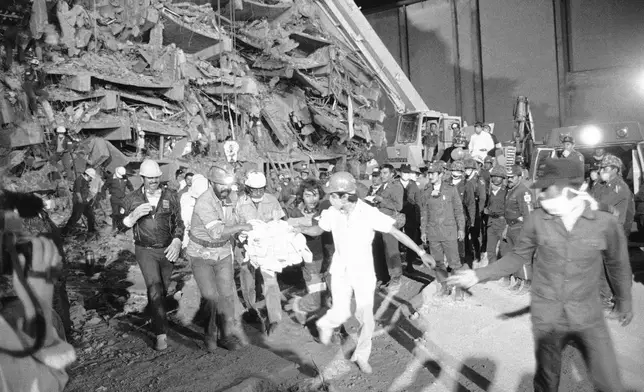
FILE - Emergency workers carry hospital patient Rubalcada Pena after rescuing him from the rubble of Mexico City's Juarez Hospital, which was destroyed by an earthquake, Sept. 26, 1985. (AP Photo/Jack Smith, File)
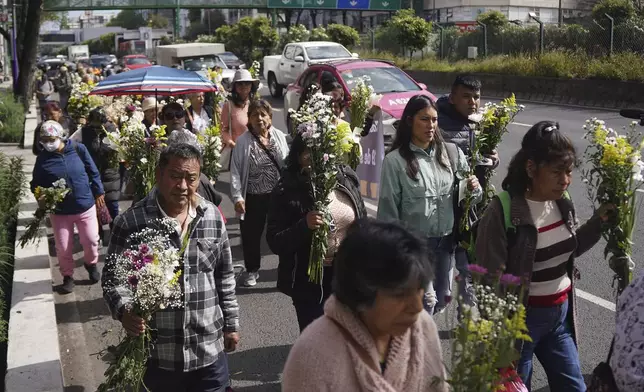
People bring flowers to site where seamstress died inside a textile plant that collapsed in the 1985 earthquake on the 40th anniversary of the quake in the Obrera neighborhood of Mexico City, Friday, Sept. 19, 2025. (AP Photo/Jon Orbach)
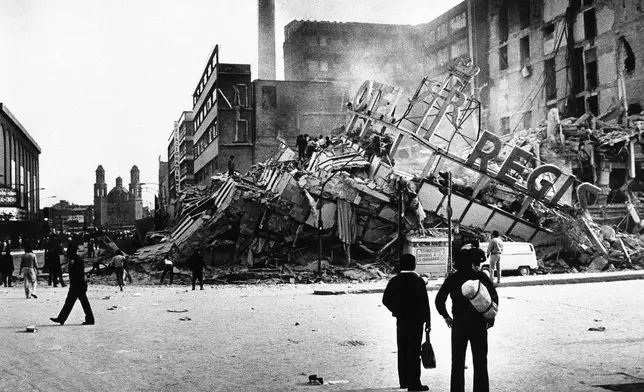
FILE - People inspect the destroyed Hotel Regis after an earthquake hit Mexico City, Sept. 19, 1985. (AP Photo/Paul Conklin, File)
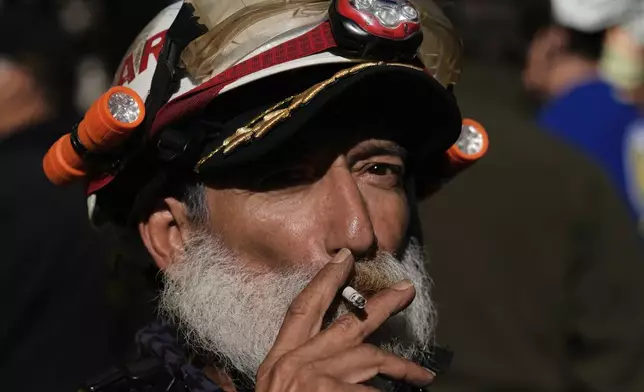
Carlos Cienfuegos, commander of the Topos volunteer rescue workers brigade, attends a ceremony marking the 1985 earthquake's 40th anniversary in Mexico City, Friday, Sept. 19, 2025. (AP Photo/Marco Ugarte)
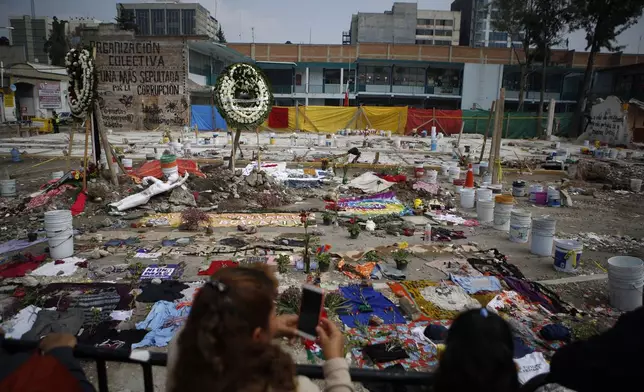
FILE - Clothing, cloth, and flowers are arranged in a memorial that includes the messages in Spanish: "Our lives matter" and "Our bodies are not trash," at the site of a textile factory that collapsed in an earthquake in Mexico City, Sept. 25, 2017. (AP Photo/Rebecca Blackwell, File)
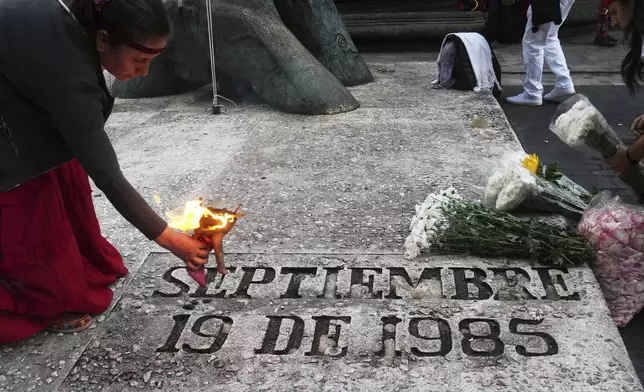
An Indigenous woman uses incense for a blessing at the 1985 earthquake memorial during a ceremony marking the quake's 40th anniversary in Mexico City, Friday, Sept. 19, 2025. (AP Photo/Marco Ugarte)
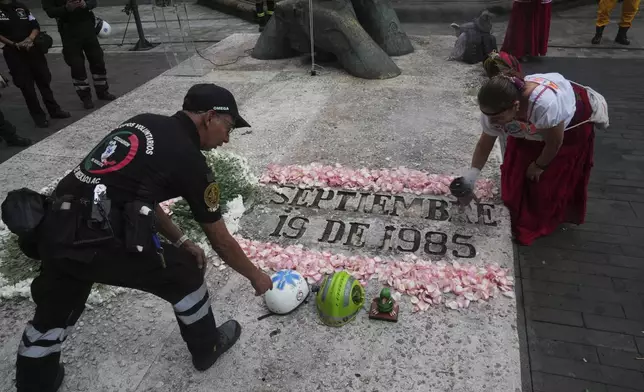
Francisco Camacho, of the Topos volunteer rescue workers brigade, left, and an Indigenous woman, attend a ceremony marking the 1985 earthquake's 40th anniversary in Mexico City, Friday, Sept. 19, 2025. (AP Photo/Marco Ugarte)
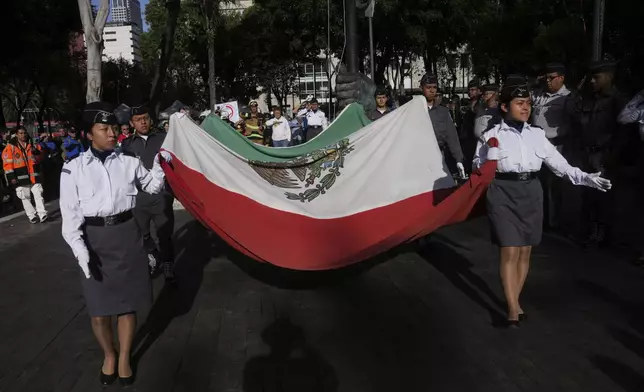
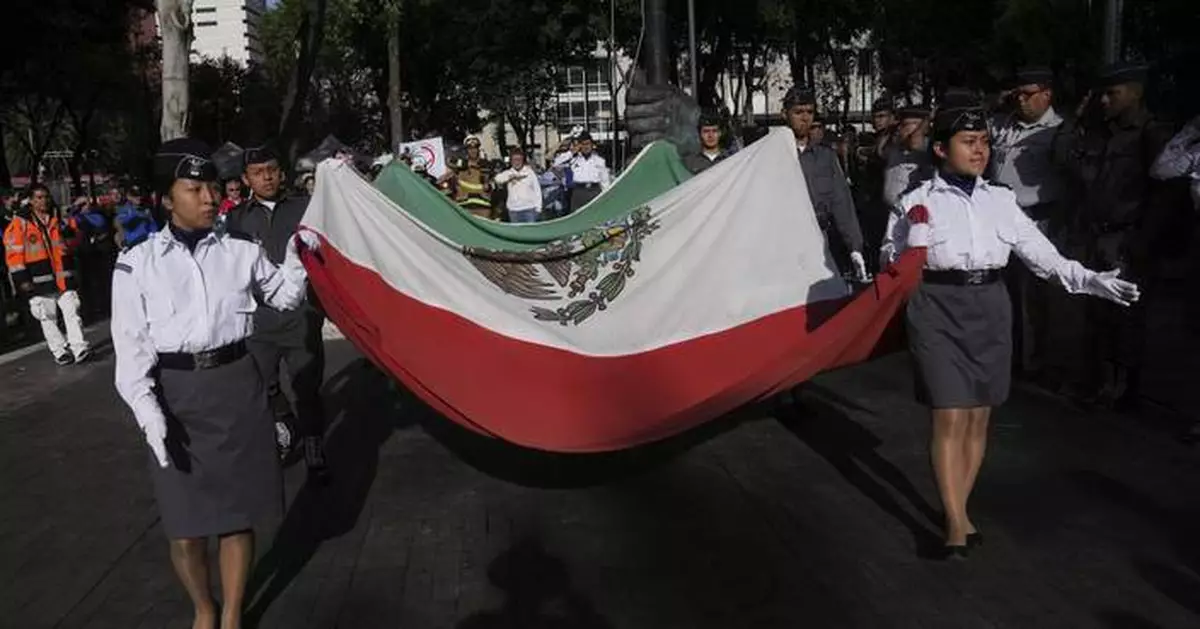
Military school cadets carry a Mexican flag during a ceremony marking the 1985 earthquake's 40th anniversary in Mexico City, Friday, Sept. 19, 2025. (AP Photo/Marco Ugarte)
The earthquake was a watershed moment for the city. A new culture of civil defense evolved, better warning systems developed, building codes changed and, since 2004, there have been annual earthquake drills held on that day.
Then, on that very same day in 2017, things changed again. Barely two hours after the annual drill, a 7.1-magnitude temblor began shaking the ground; its epicenter was so close to the capital that the warning alarms didn’t even sound.
Nearly 400 died this time and word spread in an instant on social media, but the destruction showed some lessons still hadn’t been learned, as many deaths could have been prevented.
Whether the ground shakes or not, Sept. 19 continues to rattle residents of the capital, because for many there are symbols across the city that have not been forgotten.
Here are some of them:
In 1985's predigital world, one image from the earthquake became seared into public memory: the sign of the luxurious Hotel Regis crowning the pile of rubble that the early 20th-century building — a center of political, artistic and social life – was reduced to.
Today, vendors’ stalls cover the area where its grand pillars once stood, a site dubbed Solidarity Plaza in honor of the thousands of average people who came out that day to help.
A red cloud grew before the eyes of the young accounting student, Enrique Linares, now 62. “I didn’t know what it was,” he recalled. People were running down the street, doctors with white lab coats chalked with red dust. Linares looked up at the void where the 12-story tower with a red light on top should have stood. It was then that he began to shake and realized that the hospital had collapsed.
The search for survivors went on for days with soldiers controlling access to the site. After about a week, the effort was rewarded: several recently born infants were rescued alive from the rubble. They were dubbed the “miracle babies,” even inspiring a television series about them.
First came the screams from the seamstresses buried under one of the capital’s collapsed textile plants, recalled Gloria Juandiego, now 65. Soon after, the screams were from people like her outside the rubble, who shouted that others were trapped inside. The soldiers did nothing, she said.
“The bosses got the equipment out, the raw materials, their safe boxes, they prioritized that,” she said. They didn’t let them tear up the salvaged clothing to make tourniquets. Then came the smell and the image of how “the bodies were tossed into trucks, even as more and more women came out to demand authorities rescue their colleagues. In the end, hundreds of seamstresses, normally holed up working 12-hour days without breaks, died.
“Our submission was buried under the rubble,” a popular sign at the time read. It was the start of the Sept. 19 seamstress union to fight for decent working conditions.
And yet, on Sept. 19, 2017, another earthquake trapped textile workers laboring in similar conditions with heavy machinery in a poorly constructed building. The only difference was that this time the victims were immigrants.
“We were digging with sardine cans and our hands,” recalled Francisco Camacho, now 66. In 1985, he was one of the young people looking for survivors of a collapsed apartment building on Tlatelolco Plaza, where today a sun dial marks the time of the earthquake.
A woman organized a chain of volunteers removing buckets full of debris. Children brought water. Camacho recalled the tenor Plácido Domingo, who was also helping, saying the volunteers were making holes and crawling into them “as if they were moles."
And so a volunteer rescue group known as “Los Topos” (The moles) was born. The organization has grown from 20-some amateurs to a diverse force of some 1,200 people today. Now, a powerful symbol of Mexican solidarity, they have traveled to 32 countries to assist at times of catastrophe. They continue training every Sunday for what could happen next.
Camacho, now director of “Los Topos,” said pride in his work is matched by the indelible memory of having to place “many decomposing” bodies in the capital’s baseball stadium in 1985, an experience that left the smell of death “impregnating my nose for months."
Follow AP’s coverage of Latin America and the Caribbean at https://apnews.com/hub/latin-america
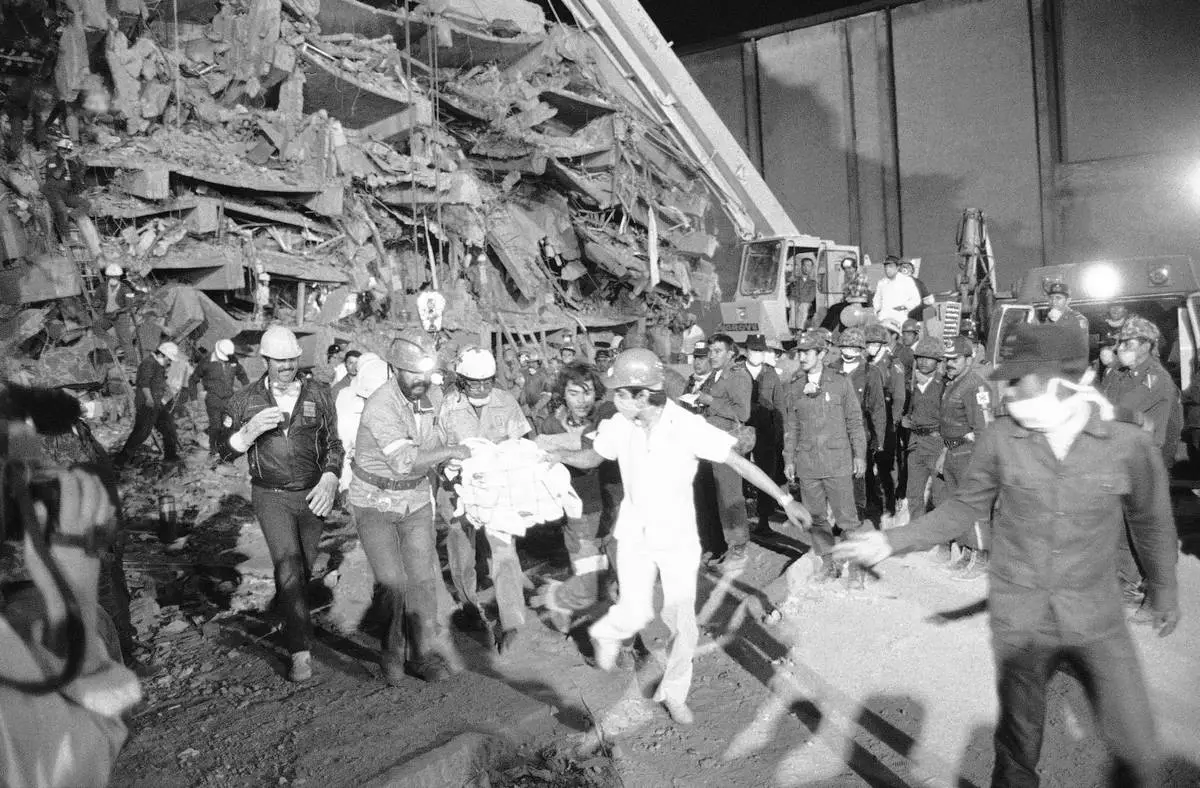
FILE - Emergency workers carry hospital patient Rubalcada Pena after rescuing him from the rubble of Mexico City's Juarez Hospital, which was destroyed by an earthquake, Sept. 26, 1985. (AP Photo/Jack Smith, File)
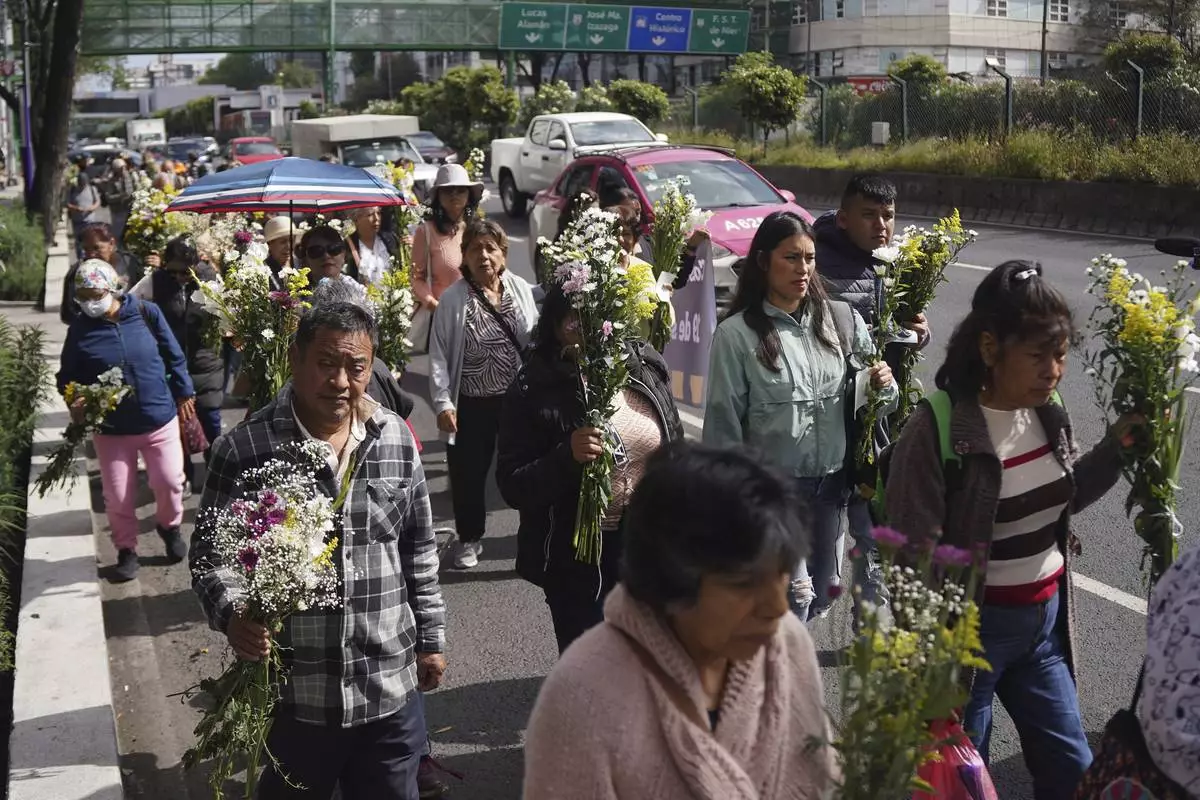
People bring flowers to site where seamstress died inside a textile plant that collapsed in the 1985 earthquake on the 40th anniversary of the quake in the Obrera neighborhood of Mexico City, Friday, Sept. 19, 2025. (AP Photo/Jon Orbach)
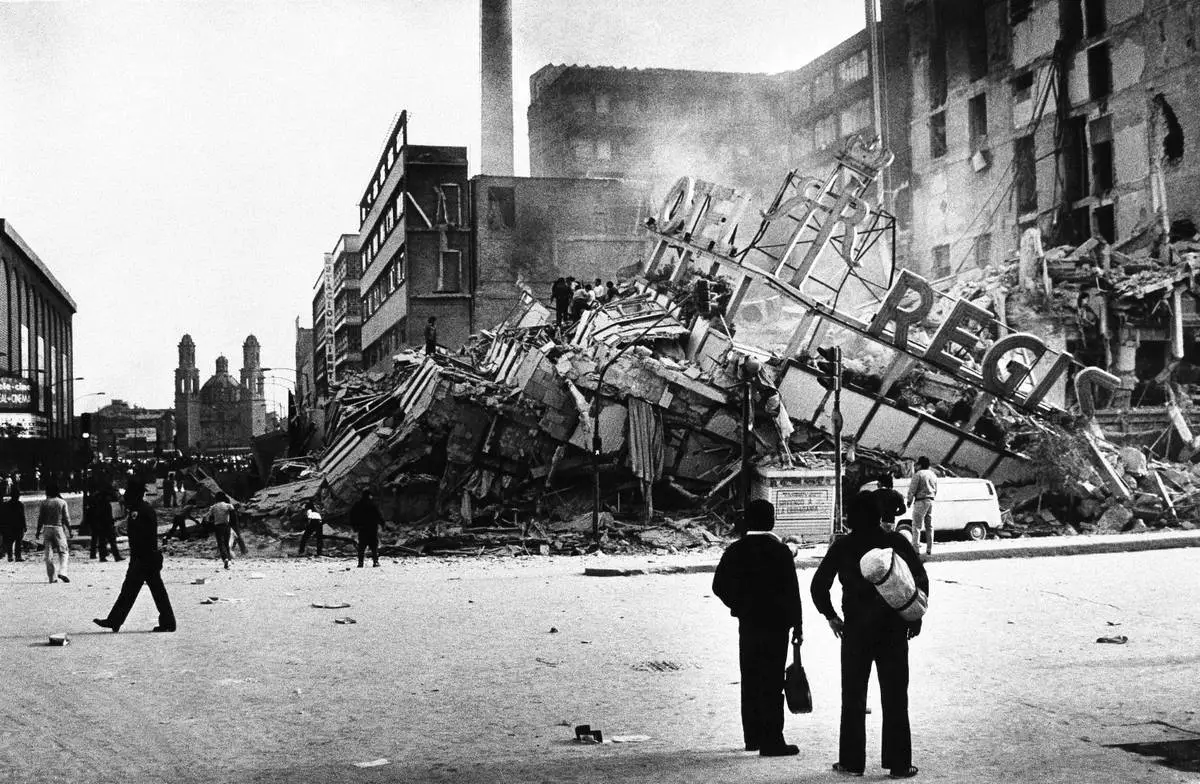
FILE - People inspect the destroyed Hotel Regis after an earthquake hit Mexico City, Sept. 19, 1985. (AP Photo/Paul Conklin, File)
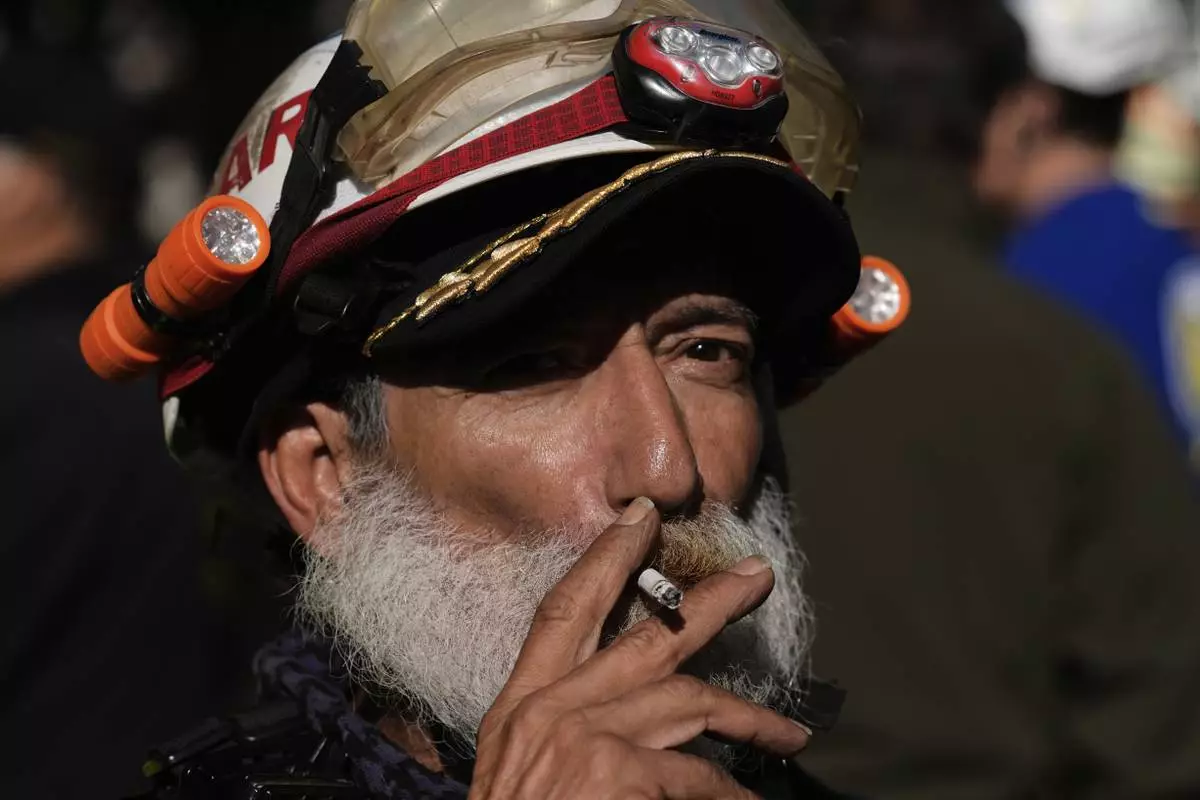
Carlos Cienfuegos, commander of the Topos volunteer rescue workers brigade, attends a ceremony marking the 1985 earthquake's 40th anniversary in Mexico City, Friday, Sept. 19, 2025. (AP Photo/Marco Ugarte)
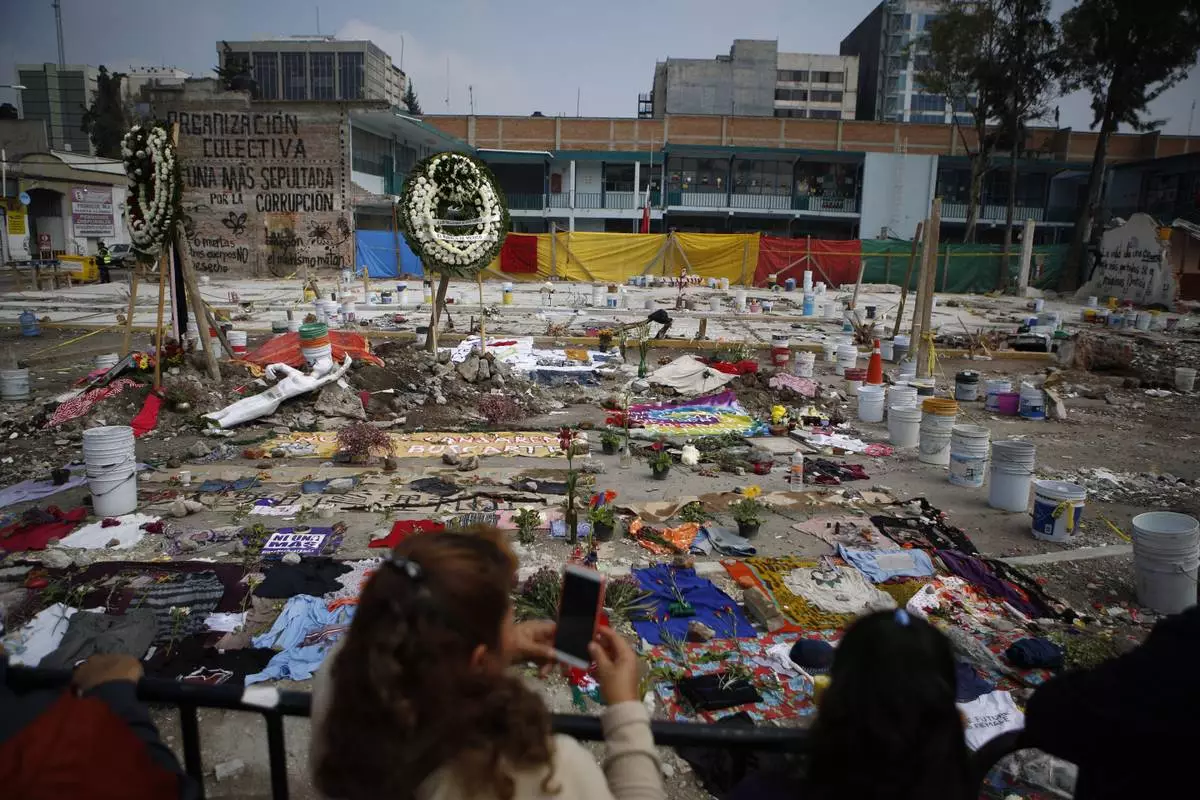
FILE - Clothing, cloth, and flowers are arranged in a memorial that includes the messages in Spanish: "Our lives matter" and "Our bodies are not trash," at the site of a textile factory that collapsed in an earthquake in Mexico City, Sept. 25, 2017. (AP Photo/Rebecca Blackwell, File)
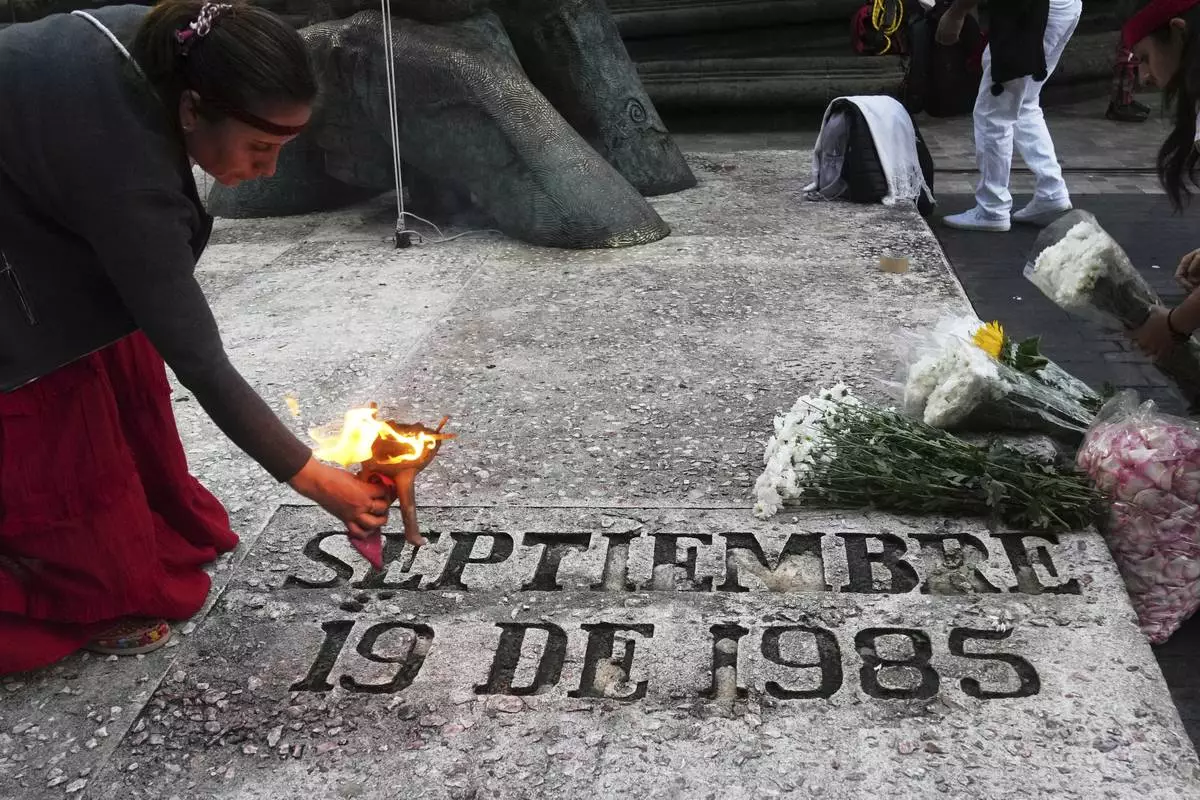
An Indigenous woman uses incense for a blessing at the 1985 earthquake memorial during a ceremony marking the quake's 40th anniversary in Mexico City, Friday, Sept. 19, 2025. (AP Photo/Marco Ugarte)
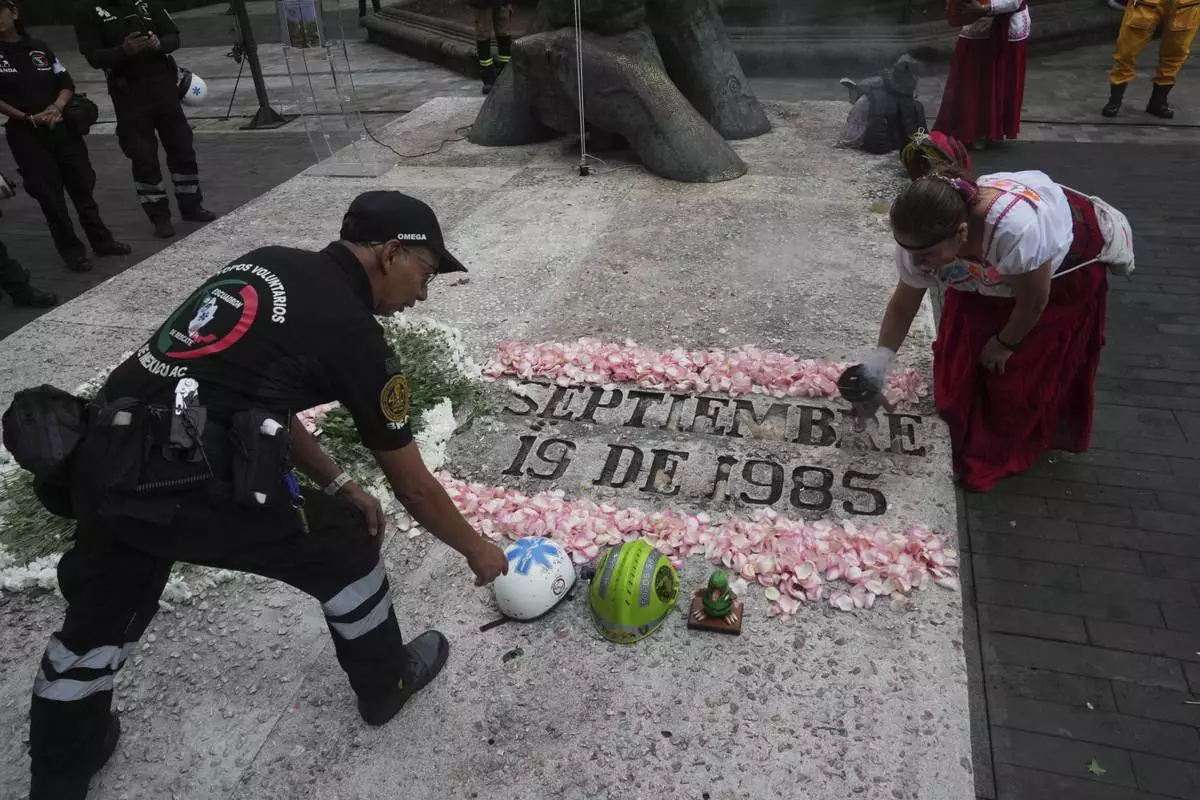
Francisco Camacho, of the Topos volunteer rescue workers brigade, left, and an Indigenous woman, attend a ceremony marking the 1985 earthquake's 40th anniversary in Mexico City, Friday, Sept. 19, 2025. (AP Photo/Marco Ugarte)
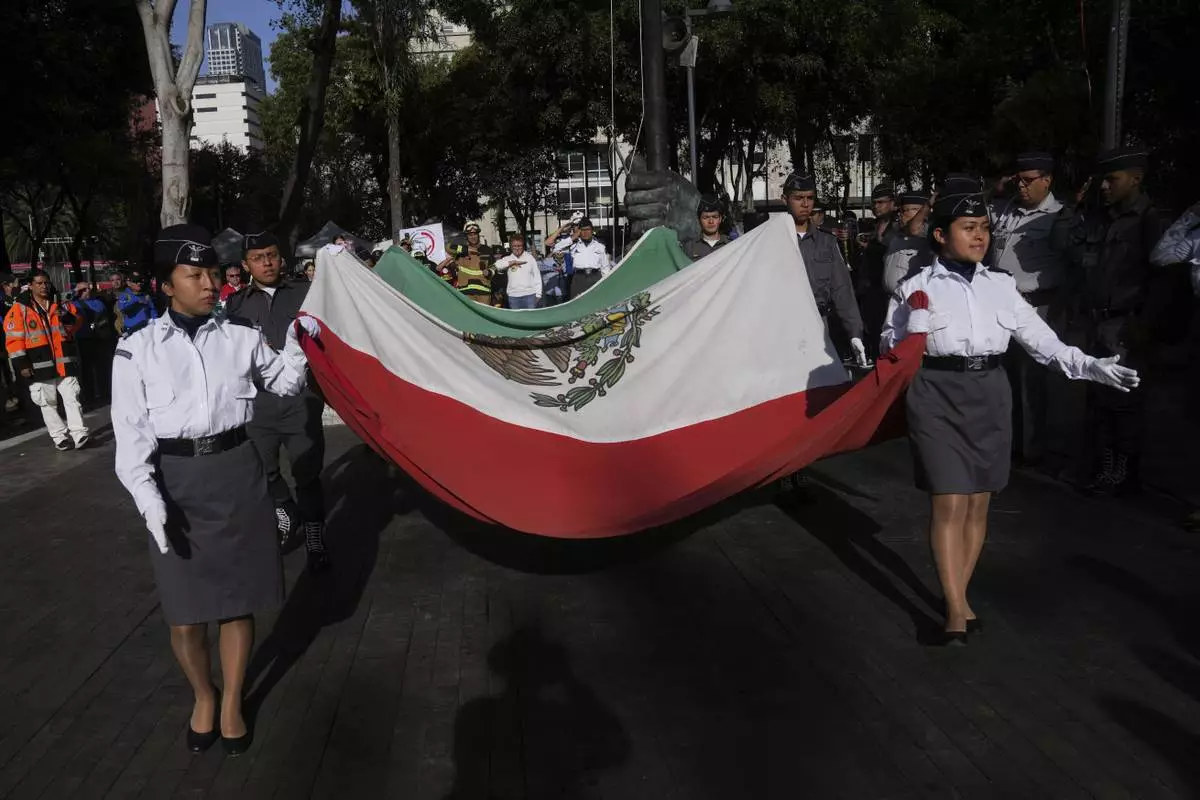
Military school cadets carry a Mexican flag during a ceremony marking the 1985 earthquake's 40th anniversary in Mexico City, Friday, Sept. 19, 2025. (AP Photo/Marco Ugarte)