WASHINGTON (AP) — President Donald Trump on Friday signed a proclamation that will require a $100,000 annual visa fee for highly-skilled foreign workers and rolled out a $1 million “gold card” visa as a pathway to U.S. citizenship for wealthy individuals, moves that face near-certain legal challenges amid widespread criticism he is sidestepping Congress.
If the moves survive legal muster, they will deliver staggering price increases. The visa fee for skilled workers would jump from $215. The fee for investor visas, which are common in many European countries, would climb from $10,000-$20,000 a year.
H-1B visas, which require at least a bachelor's degree, are meant for high-skilled jobs that tech companies find difficult to fill. Critics say the program is a pipeline for overseas workers who are often willing to work for as little as $60,000 annually, well below the $100,000-plus salaries typically paid to U.S. technology workers.
Trump on Friday insisted that the tech industry would not oppose the move. Commerce Secretary Howard Lutnick said “all big companies” are on board.
Representatives for the biggest tech companies, including Amazon, Apple, Google and Meta, did not immediately respond to messages for comment on Friday. Microsoft declined to comment.
Lutnick said the change will likely result in far fewer H-1B visas than the 85,000 annual cap allows because “it’s just not economic anymore.”
“If you’re going to train people, you’re going to train Americans.” Lutnick said on a conference call with reporters. "If you have a very sophisticated engineer and you want to bring them in ... then you can pay $100,000 a year for your H-1B visa.”
Trump also announced he will start selling a “gold card” visa with a path to U.S. citizenship for $1 million after vetting. For companies, it will cost $2 million to sponsor an employee.
The “Trump Platinum Card” will be available for a $5 million and allow foreigners to spend up to 270 days in the U.S. without being subject to U.S. taxes on non-U.S. income. Trump announced a $5 million gold card in February to replace an existing investor visa — this is now the platinum card.
Lutnick said the gold and platinum cards would replace employment-based visas that offer paths to citizenship, including for professors, scientists, artists and athletes.
Critics of H-1Bs visas who say they are used to replace American workers applauded the move. U.S. Tech Workers, an advocacy group, called it “the next best thing” to abolishing the visas altogether.
Doug Rand, a senior official at U.S. Citizenship and Immigration Services during the Biden administration, said the proposed fee increase was “ludicrously lawless.”
“This isn’t real policy — it’s fan service for immigration restrictionists,” Rand said. “Trump gets his headlines, and inflicts a jolt of panic, and doesn’t care whether this survives first contact with the courts.”
Lutnick said the H-1B fees and gold card could be introduced by the president but the platinum card needs congressional approval.
Historically, H-1B visas have been doled out through lottery. This year, Amazon was by far the top recipient of H-1B visas with more than 10,000 awarded, followed by Tata Consultancy, Microsoft, Apple and Google. Geographically, California has the highest number of H-1B workers.
Critics say H-1B spots often go to entry-level jobs, rather than senior positions with unique skill requirements. And while the program isn’t supposed to undercut U.S. wages or displace U.S. workers, critics say companies can pay less by classifying jobs at the lowest skill levels, even if the specific workers hired have more experience.
As a result, many U.S. companies find it cheaper to contract out help desks, programming and other basic tasks to consulting companies such as Wipro, Infosys, HCL Technologies and Tata in India and IBM and Cognizant in the U.S. These consulting companies hire foreign workers, often from India, and contract them out to U.S. employers looking to save money.
First lady Melania Trump, the former Melania Knauss, was granted an H-1B work visa in October 1996 to work as a model. She was born in Slovenia.
In 2024, lottery bids for the visas plunged nearly 40%, which authorities said was due to success against people who were “gaming the system” by submitting multiple, sometimes dubious, applications to unfairly increase chances of being selected.
Major technology companies that use H-1B visas sought changes after massive increases in bids left their employees and prospective hires with slimmer chances of winning the random lottery. Facing what it acknowledged was likely fraud and abuse, USCIS this year said each employee had only one shot at the lottery, whether the person had one job offer or 50.
Critics welcomed the change but said more needs to be done. The AFL-CIO wrote last year that while changes to the lottery “included some steps in the right direction,” it fell short of needed reforms. The labor group wants visas awarded to companies that pay the highest wages instead of by random lottery, a change that Trump sought during his first term in the White House.
Ortutay reported from Oakland, Calif. Associated Press writers Adriana Gomez Licon in Ft. Lauderdale, Fla., and Elliot Spagat in San Diego contributed to this report.
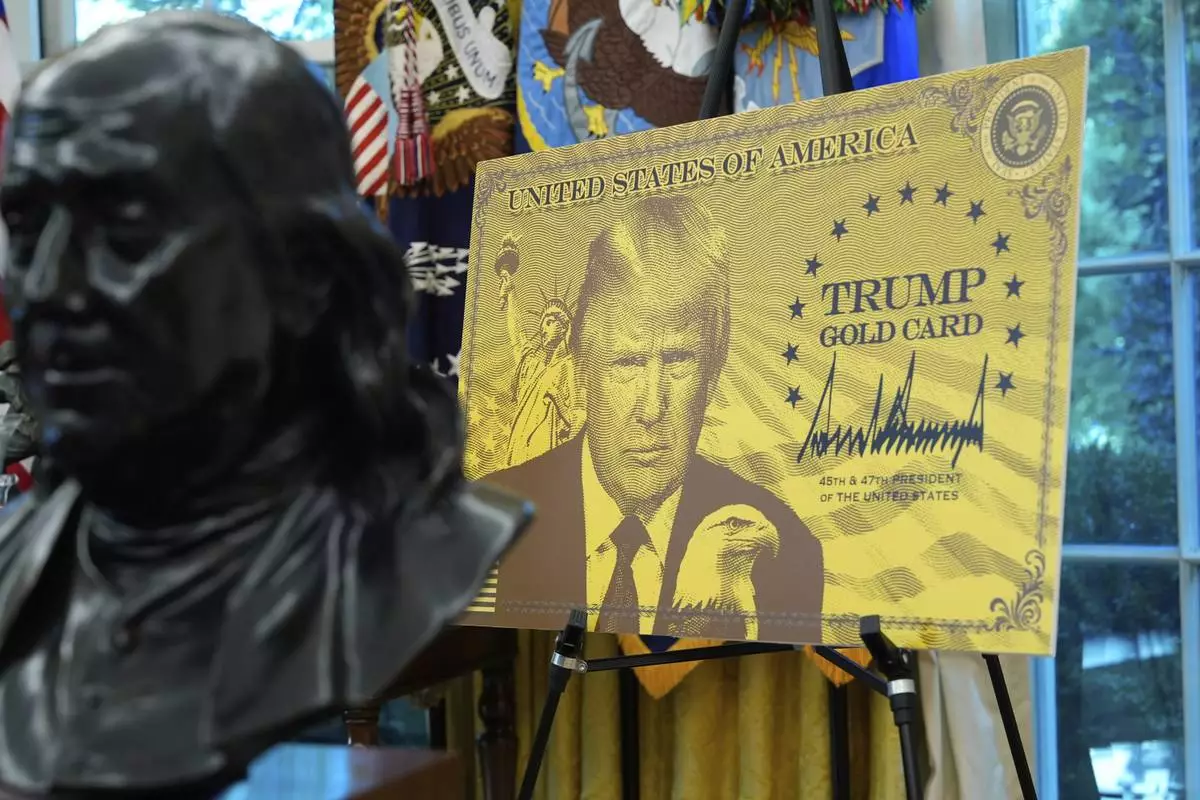
A poster showing the Trump Gold Card is pictured as President Donald Trump speaks in the Oval Office of the White House, Friday, Sept. 19, 2025, in Washington. (AP Photo/Alex Brandon)
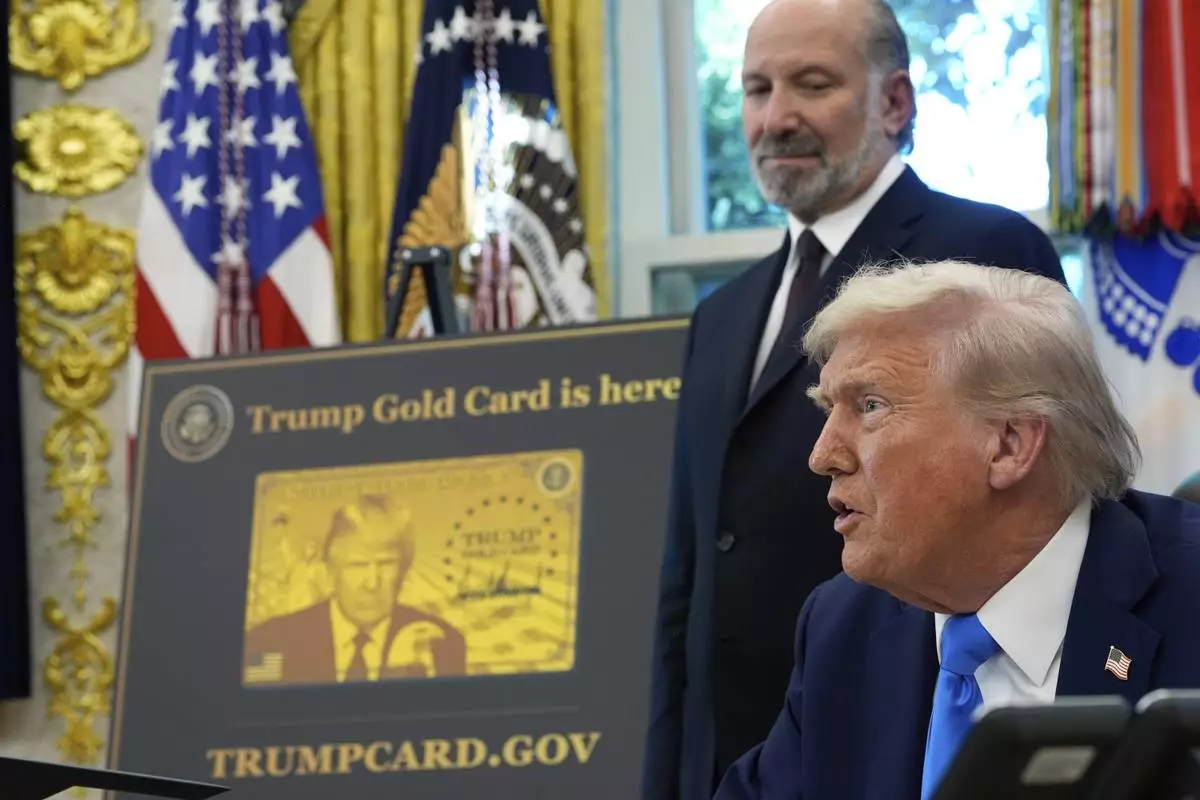
President Donald Trump speaks as Commerce Secretary Howard Lutnick listens in the Oval Office of the White House, Friday, Sept. 19, 2025, in Washington. (AP Photo/Alex Brandon)
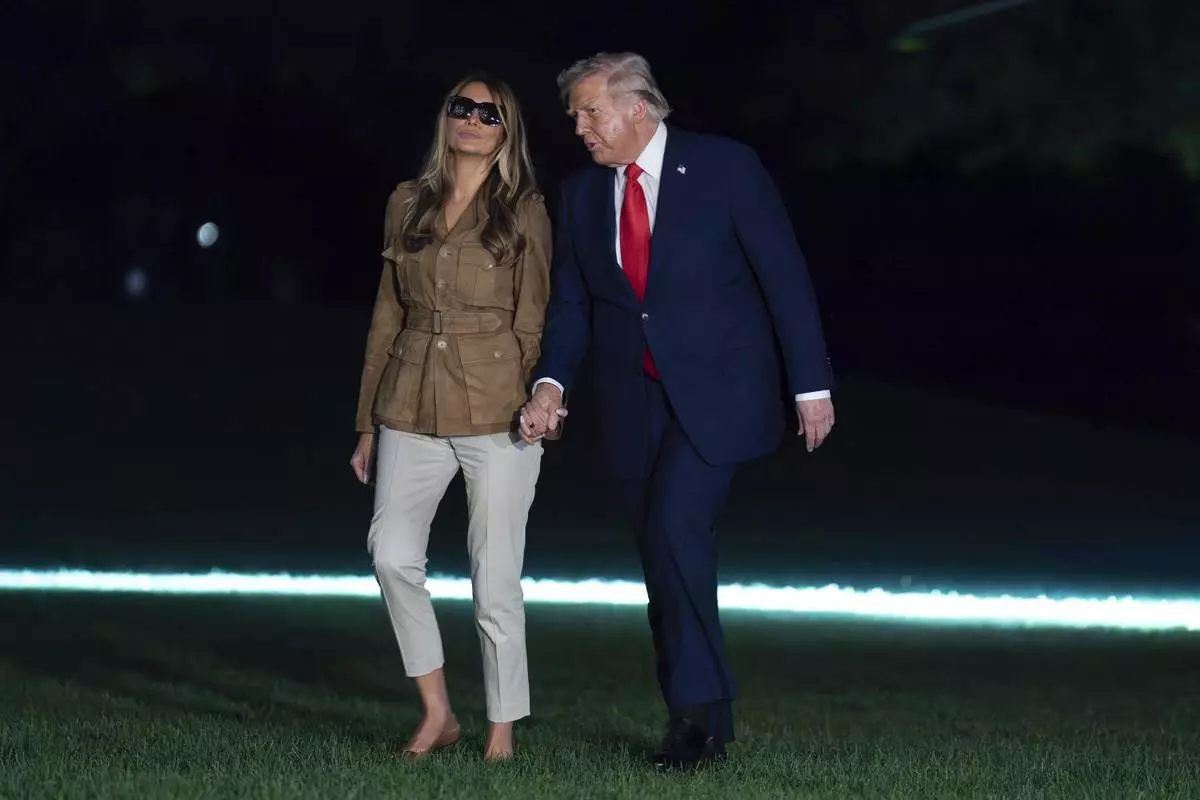
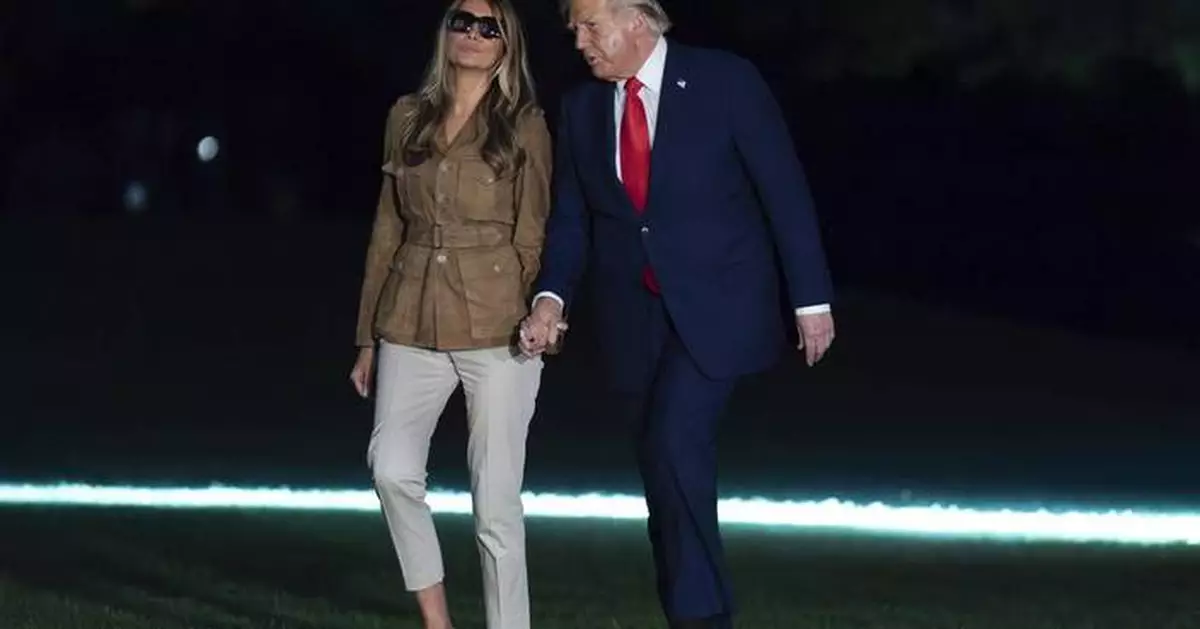
President Donald Trump holds hands with first lady Melania Trump as they walk on the South Lawn upon their arrival to the White House, in Washington, Thursday, Sept. 18, 2025. (AP Photo/Jose Luis Magana)
ATLANTA (AP) — Donald Trump would not be the first president to invoke the Insurrection Act, as he has threatened, so that he can send U.S. military forces to Minnesota.
But he'd be the only commander in chief to use the 19th-century law to send troops to quell protests that started because of federal officers the president already has sent to the area — one of whom shot and killed a U.S. citizen.
The law, which allows presidents to use the military domestically, has been invoked on more than two dozen occasions — but rarely since the 20th Century's Civil Rights Movement.
Federal forces typically are called to quell widespread violence that has broken out on the local level — before Washington's involvement and when local authorities ask for help. When presidents acted without local requests, it was usually to enforce the rights of individuals who were being threatened or not protected by state and local governments. A third scenario is an outright insurrection — like the Confederacy during the Civil War.
Experts in constitutional and military law say none of that clearly applies in Minneapolis.
“This would be a flagrant abuse of the Insurrection Act in a way that we've never seen,” said Joseph Nunn, an attorney at the Brennan Center for Justice's Liberty and National Security Program. “None of the criteria have been met.”
William Banks, a Syracuse University professor emeritus who has written extensively on the domestic use of the military, said the situation is “a historical outlier” because the violence Trump wants to end “is being created by the federal civilian officers” he sent there.
But he also cautioned Minnesota officials would have “a tough argument to win” in court, because the judiciary is hesitant to challenge “because the courts are typically going to defer to the president” on his military decisions.
Here is a look at the law, how it's been used and comparisons to Minneapolis.
George Washington signed the first version in 1792, authorizing him to mobilize state militias — National Guard forerunners — when “laws of the United States shall be opposed, or the execution thereof obstructed.”
He and John Adams used it to quash citizen uprisings against taxes, including liquor levies and property taxes that were deemed essential to the young republic's survival.
Congress expanded the law in 1807, restating presidential authority to counter “insurrection or obstruction” of laws. Nunn said the early statutes recognized a fundamental “Anglo-American tradition against military intervention in civilian affairs” except “as a tool of last resort.”
The president argues Minnesota officials and citizens are impeding U.S. law by protesting his agenda and the presence of U.S. Immigration and Customs Enforcement officers and Customs and Border Protection officers. Yet early statutes also defined circumstances for the law as unrest “too powerful to be suppressed by the ordinary course” of law enforcement.
There are between 2,000 and 3,000 federal authorities in the Minneapolis-St. Paul metro area, compared to Minneapolis, which has fewer than 600 police officers. Protesters' and bystanders' video, meanwhile, has shown violence initiated by federal officers, with the interactions growing more frequent since Renee Good was shot three times and killed.
“ICE has the legal authority to enforce federal immigration laws,” Nunn said. “But what they're doing is a sort of lawless, violent behavior” that goes beyond their legal function and “foments the situation” Trump wants to suppress.
“They can't intentionally create a crisis, then turn around to do a crackdown,” he said, adding that the Constitutional requirement for a president to “faithfully execute the laws” means Trump must wield his power, on immigration and the Insurrection Act, “in good faith.”
Courts have blocked some of Trump's efforts to deploy the National Guard, but he'd argue with the Insurrection Act that he does not need a state's permission to send troops.
That traces to President Abraham Lincoln, who held in 1861 that Southern states could not legitimately secede. So, he convinced Congress to give him express power to deploy U.S. troops, without asking, into Confederate states he contended were still in the Union. Quite literally, Lincoln used the act as a legal basis to fight the Civil War.
Nunn said situations beyond such a clear insurrection as the Confederacy still require a local request or another trigger that Congress added after the Civil War: protecting individual rights. Ulysses S. Grant used that provision to send troops to counter the Ku Klux Klan and other white supremacists who ignored the 14th and 15th amendments and civil rights statutes.
During post-war industrialization, violence erupted around strikes and expanding immigration — and governors sought help.
President Rutherford B. Hayes granted state requests during the Great Railroad Strike of 1877 after striking workers, state forces and local police clashed, leading to dozens of deaths. Grover Cleveland granted a Washington state governor's request — at that time it was a U.S. territory — to help protect Chinese citizens who were being attacked by white rioters. President Woodrow Wilson sent troops to Colorado in 1914 amid a coal strike after workers were killed.
Federal troops helped diffuse each situation.
Banks stressed that the law then and now presumes that federal resources are needed only when state and local authorities are overwhelmed — and Minnesota leaders say their cities would be stable and safe if Trump's feds left.
As Grant had done, mid-20th century presidents used the act to counter white supremacists.
Franklin Roosevelt dispatched 6,000 troops to Detroit — more than double the U.S. forces in Minneapolis — after race riots that started with whites attacking Black residents. State officials asked for FDR's aid after riots escalated, in part, Nunn said, because white local law enforcement joined in violence against Black residents. Federal troops calmed the city after dozens of deaths, including 17 Black residents killed by local police.
Once the Civil Rights Movement began, presidents sent authorities to Southern states without requests or permission, because local authorities defied U.S. civil rights law and fomented violence themselves.
Dwight Eisenhower enforced integration at Central High School in Little Rock, Arkansas; John F. Kennedy sent troops to the University of Mississippi after riots over James Meredith's admission and then pre-emptively to ensure no violence upon George Wallace's “Stand in the Schoolhouse Door” to protest the University of Alabama's integration.
“There could have been significant loss of life from the rioters” in Mississippi, Nunn said.
Lyndon Johnson protected the 1965 Voting Rights March from Selma to Montgomery after Wallace's troopers attacked marchers' on their first peaceful attempt.
Johnson also sent troops to multiple U.S. cities in 1967 and 1968 after clashes between residents and police escalated. The same thing happened in Los Angeles in 1992, the last time the Insurrection Act was invoked.
Riots erupted after a jury failed to convict four white police officers of excessive use of force despite video showing them beating a Rodney King, a Black man. California Gov. Pete Wilson asked President George H.W. Bush for support.
Bush authorized about 4,000 troops — but after he had publicly expressed displeasure over the trial verdict. He promised to “restore order” yet directed the Justice Department to open a civil rights investigation, and two of the L.A. officers were later convicted in federal court.
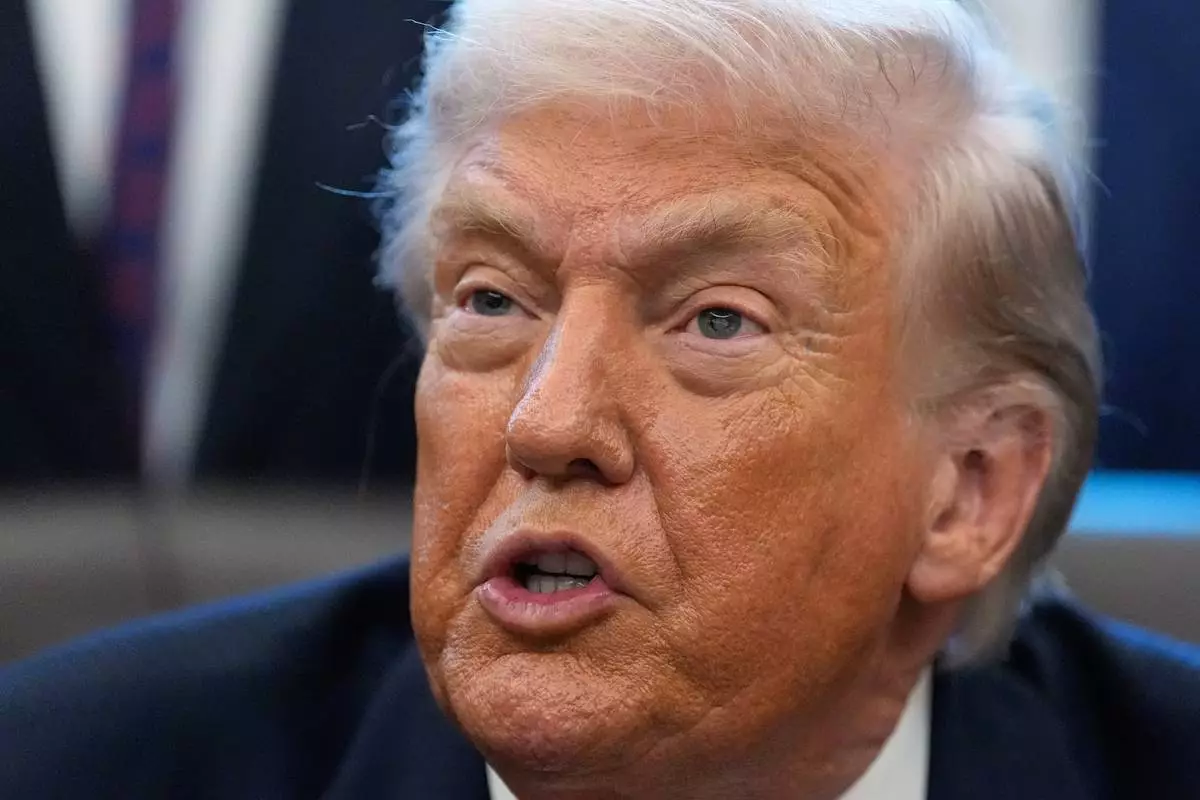
President Donald Trump answers questions after signing a bill that returns whole milk to school cafeterias across the country, in the Oval Office of the White House, Wednesday, Jan. 14, 2026, in Washington. (AP Photo/Alex Brandon)