"Evil Unbound," a Chinese-produced film depicting the atrocities committed by the notorious Japanese germ warfare Unit 731 during World War II premiered in China's Hong Kong and Macao Special Administrative Regions on Thursday.
Unit 731, a top-secret biological and chemical warfare research base in Harbin, the capital of northeast China's Heilongjiang Province, served as the nerve center for Japanese biological warfare in China and Southeast Asia during WWII.
Historical records indicate that between 1940 and 1945, Unit 731 conducted human experiments on at least 3,000 people, and more than 300,000 people in China were killed by Japan's biological weapons.
The film shows how Unit 731, under the pretext of "water supply and epidemic prevention," detained civilians for experiments such as frostbite tests, gas exposure, and biological weapons trials aimed at gaining an advantage to slow Japan's defeat.
"This film shows the crimes Unit 731 committed in northeast China. What they did crossed the bottom line of all humanity. It was a crime against humanity. So I think the English title carries a sense of anger, it's about reflecting on the history and remembering it," said Ding Hoi David, general manager of Sil-Metropole Organization, the film's producer.
The release has drawn wide public attention in Hong Kong. According to estimates from the independent ticketing platform Hong Kong Movie, the film earned about 187,916 Hong Kong dollars on its opening day, attracting 2,762 viewers across 193 screenings and ranking as the city's top-grossing film. After the screening, many moviegoers said the film taught them to draw lessons from history and reminded them of the importance of cherishing peace.
"Watching this makes me feel even more strongly that we must treasure peace. Peace is so important for us. I hope everyone values the peace and freedom we have today, and that there will be no more wars," said Irene Wan, a Hong Kong actress.
"The film uses such beautiful images to show the most evil and inhumane acts. Every scene was heartbreaking, really heavy. It stays with you after watching," said a moviegoer in Hong Kong.
"We hope that the youth of Macao will better remember history and cherish peace, especially by establishing a correct view of history, so that they may more profoundly understand that it's important to build a strong country and achieve national rejuvenation," said Kong Chi Meng, director of Macao's Education and Youth Development Bureau.
The release of the film coincided with the 94th anniversary of the September 18 Incident in 1931, which marked the start of the Chinese People's War of Resistance against Japanese Aggression. This year also marks the 80th anniversary of the victory in China's War of Resistance Against Japanese Aggression and the World Anti-Fascist War.
"Evil Unbound" also opened in theaters in Australia, New Zealand, the United States, Canada, South Korea, and other regions on Thursday.
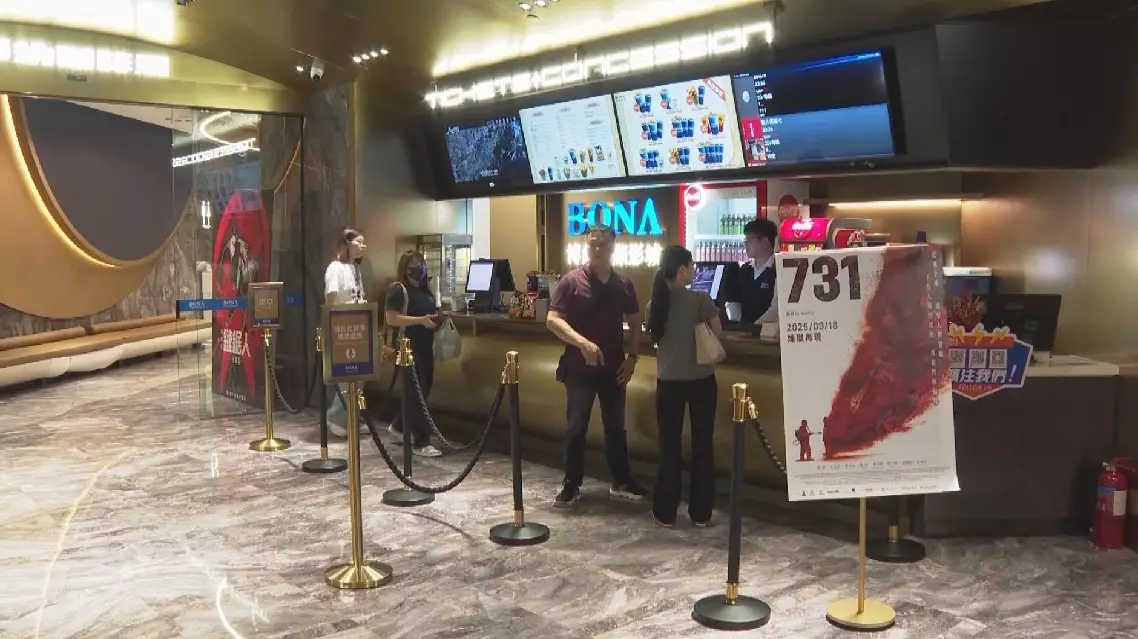
Film about Japan's notorious Unit 731 premieres in Hong Kong, Macao