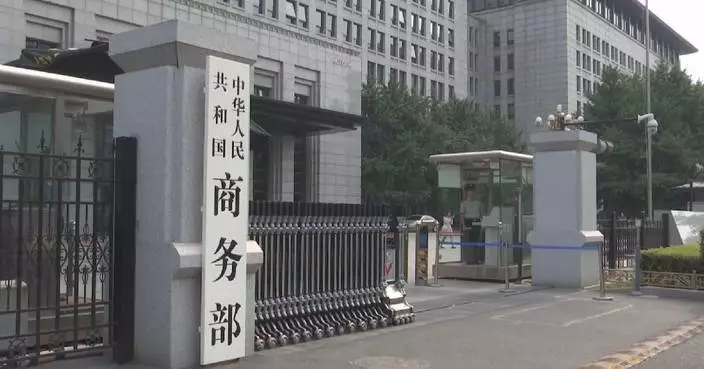
Northwest China's Xinjiang Uygur Autonomous Region has achieved historic breakthroughs in its economic development, said an official from the region on Friday.
Chen Weijun, executive vice chairman of the regional government, briefed a press conference in Beijing, releasing a white paper on the governance of Xinjiang.
Multiple economic indicators in Xinjiang are among the fastest-rising nationwide, said Chen.
"In terms of total volume, multiple economic indicators have achieved historic breakthroughs. For example, Xinjiang's gross domestic product (GDP) surpassed the two trillion yuan (about 281.4 billion U.S. dollars) mark for the first time last year. The total import and export volume of Xinjiang also hit a record high of 434 billion yuan in 2024. From 2022 to 2024, Xinjiang's total import and export volume exceeded the 100 billion yuan mark for three consecutive years," said Chen.
"Last year, Xinjiang's GDP grew by 6.1 percent year on year. Its fixed-asset investment rose by 6.9 percent year on year, value-added industrial output of enterprises above the designated size grew by eight percent, and general public budget revenue rose by 10.5 percent," said Chen.
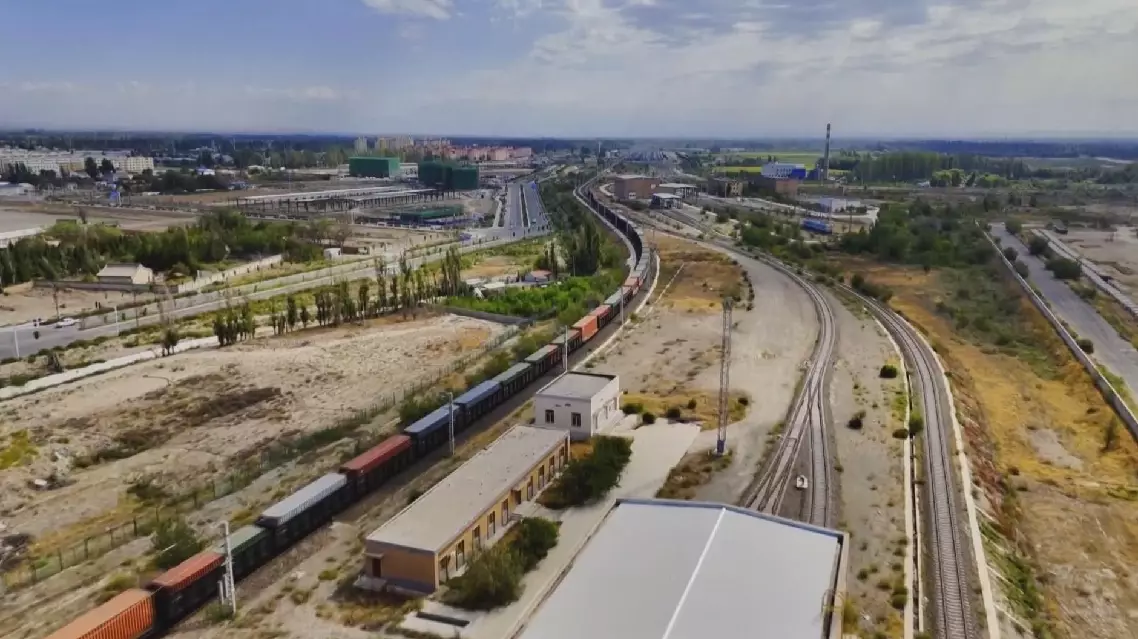
Leveraging its geographical advantage, Xinjiang has been actively promoting the building of a golden channel across the Eurasian continent and a gateway for opening up to the west.
"We are making every effort to accelerate the construction of the Eurasian Golden Corridor. To date, we have established 119 bilateral international road transport routes and 10 multilateral international road freight routes. In 2024, a total of 16,400 freight trains traveled through Xinjiang on the China-Europe Railway Express, maintaining an annual volume of over 10,000 trains for five consecutive years. The increasingly robust transportation network, which includes road, rail, and air routes that span mountains and rivers, is creating stronger connections that link Xinjiang to global markets," Chen added.
This year marks the 70th anniversary of the establishment of the Xinjiang Uygur Autonomous Region. Located in northwest China, the region is home to more than 26 million people from dozens of ethnic groups.
Xinjiang achieves historic breakthroughs in economic development: official
Xinjiang achieves historic breakthroughs in economic development: official
Xinjiang achieves historic breakthroughs in economic development: official
Emergency measures are being put in place to help urban areas across China cope with sweltering daytime temperatures as a severe heatwave grips multiple regions of the country, with local community rest stations being set up to shield residents and provide much-needed respite to outdoor workers amid the scorching weather.
Large swathes of the country are baking as the summer heat takes hold. According to the Central Meteorological Observatory of China, eight of the top ten hottest areas nationwide on Wednesday were in northwest China's Xinjiang Uygur Autonomous Region, where Turpan and Toksun both recorded temperatures above 44.5 degrees Celsius.
The intense heat is unlikely to let up anytime soon, as Hami Meteorological Station has issued a red alert and is forecasting that temperatures in Hami City will exceed 40 degrees Celsius from Wednesday to Sunday.
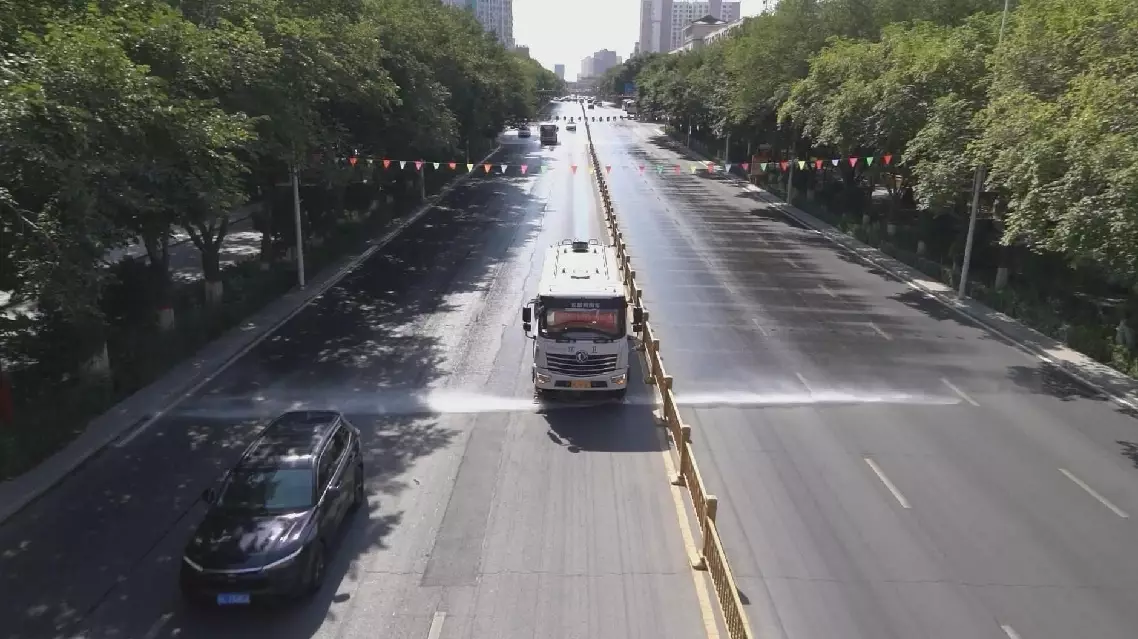
In an effort to combat the heatwave, the local sanitation department has deployed multiple sprinkler and spray trucks to cover major roads in downtown Hami to help with dust suppression and road surface cooling, while upping the frequency of operations.
Persistent high temperatures have also affected many areas in the southwestern Sichuan Province, with some weather stations recording maximum highs exceeding 42 degrees Celsius and weather alerts being issued in numerous cities.
In Guang'an City, the mercury had already soared to 38 degrees Celsius by 10:00 Wednesday morning, pointing to a long, hot day ahead.
However, the county has opened nearly 350 'rest stations' to help local people escape the heat. These air-conditioned cooling points, equipped with fans, drinking water, emergency medicines, and seating, provide much-needed rest areas for outdoor workers such as delivery drivers and couriers, as well as to the elderly and other passersby.
"This round of high temperatures is characterized by its long duration, high temperatures, and the oppressive, muggy conditions, impacting outdoor workers and the elderly the most," said Yu Jilin, Secretary of the Party Leadership Group at the Wusheng County Federation of Trade Unions.
In the neighboring Chongqing Municipality, a red alert for high temperatures was issued on the same day.
At the exit of a busy highway in Wuxi County, heat waves shimmered on the road surface amid heavy traffic. Police officers on duty were busy checking vehicles under the scorching sun, focusing on any potential safety hazards in passenger and freight vehicles, while enduring the sizzling weather themselves.
"The main issue is the high temperature -- surface temperatures can reach over 50 degrees Celsius. Whenever we are on duty, the exhaust from passing fuel-powered vehicles feels scorching hot against our bodies," said Lin Xianyong, an auxiliary police officer.
Air-conditioned "rest stations" set up to provide respite as scorching heatwave grips China