Zhao Linshan, director of "Evil Unbound," a Chinese-produced film depicting the atrocities committed by the notorious Japanese germ warfare Unit 731 during World War II, explained the creative choices behind the film, revealing how historical records substantiated his portrayal of the atrocities committed by the Japanese aggressors.
Unit 731, a top-secret biological and chemical warfare research base in Harbin, the capital of northeast China's Heilongjiang Province, served as the nerve center for Japanese biological warfare in China and Southeast Asia during WWII.
Historical records indicate that from 1940 to 1945, Unit 731 used at least 3,000 people in human experiments, and more than 300,000 people in China were killed by Japan's biological weapons.
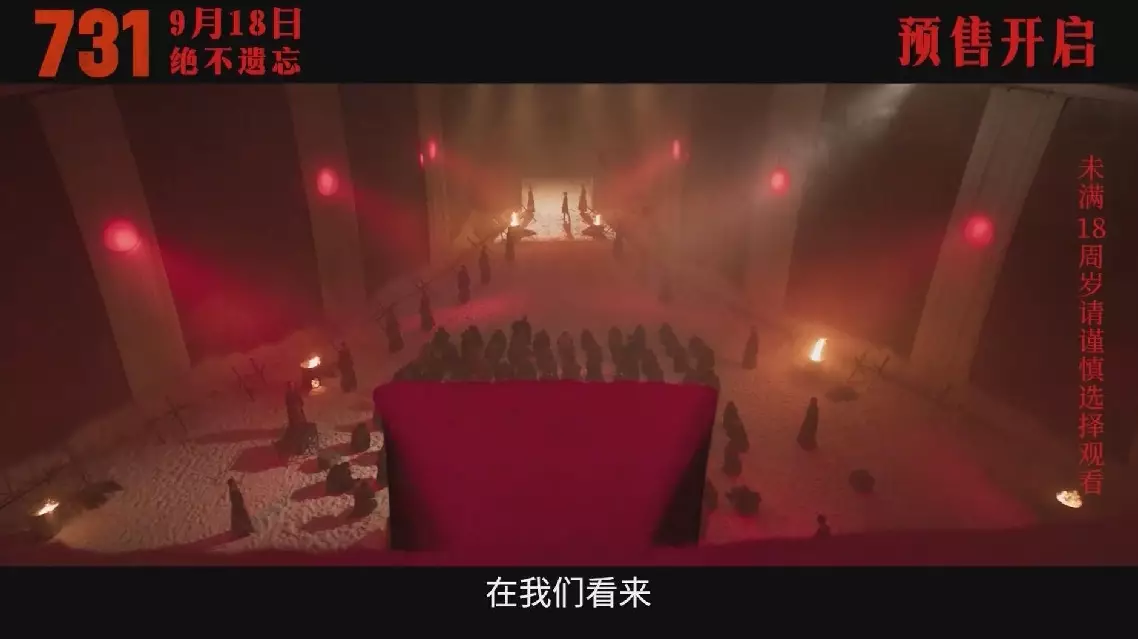
Through vivid storytelling and historical fidelity, the film underscores the brutality of human experiments carried out under the guise of war.
One striking line in the film - "you are free" - initially seems to convey liberation, yet it conceals the cruel scheme of Unit 731.
"Food was precious, and freedom came at the price of health. This line from the film was inspired by historical evidence we uncovered in the documents," said Zhao, noting that the line reflects how the so-called freedom was twisted into a tool of human experiments.
Audiences also raised questions about why the prison environment and food depicted in the film appeared relatively well-kept.
Zhao addressed these concerns by pointing to the darker truth behind such appearances.
"For instance, the prisoners had rice, flour, braised pork, and were given an apple and egg each day. It looked like preferential treatment, but in reality, it was to maintain a certain physical standard. These people were not ordinary prisoners - they were to become living subjects for experiments. Some may also question why the so-called prison appeared clean, with tiled walls, tatami mats, and even flush toilets which are rare in those days. Because this was not simply a prison. It was a laboratory, a holding place for experimental subjects, and therefore it demanded higher standards," he said.
Meanwhile, Zhao emphasized the importance of memory and hope, ending on a line from the film that connects the darkness of history with the light of peace.
"At the end of the film, I used one of the most classic lines from the Exhibition Hall of Evidence of Crimes Committed by Unit 731 of the Japanese Imperial Army - 'Keep walking. There is light at the exit, there is the warmth of human life, and there is peace and prosperity for the nation.' Though the story is suffocating and heavy, when we open the doors of the cinema, we are still in a world of happiness," said the director.
Chinese film on Japan's germ warfare reflects historical truths with details