China on Saturday launched the construction of a new large astronomical observation project, a 15-meter submillimeter telescope, in Delingha City of the country's northwestern province of Qinghai.
Situated on the Qinghai-Xizang Plateau, this project aims to enhance the country's capabilities in exploring the cold, hidden universe by establishing a high-precision facility that addresses a notable gap in its existing astronomical infrastructure.
To be operated by the Nanjing-based Purple Mountain Observatory under the Chinese Academy of Sciences, the telescope, with a diameter of 15 meters, will be equipped with advanced instruments for astronomical observation.
For a long time, China has been relatively weak in submillimeter-wave astronomical observation and lacks independently built and routinely operational observation facilities in this field. The construction of this submillimeter telescope will fill this gap and support China's cutting-edge research in astronomy, according to scientists.
"Traditional optical telescopes can hardly penetrate interstellar dust, whereas submillimeter wave observations can not only reveal the laws of galaxy formation and evolution, but also trace the origin clues of life-related molecules. These are crucial for studying the formation of stars and planets in the universe," said Liu Daizhong, researcher with the Purple Mountain Observatory.
The project is scheduled to be completed in 2027.
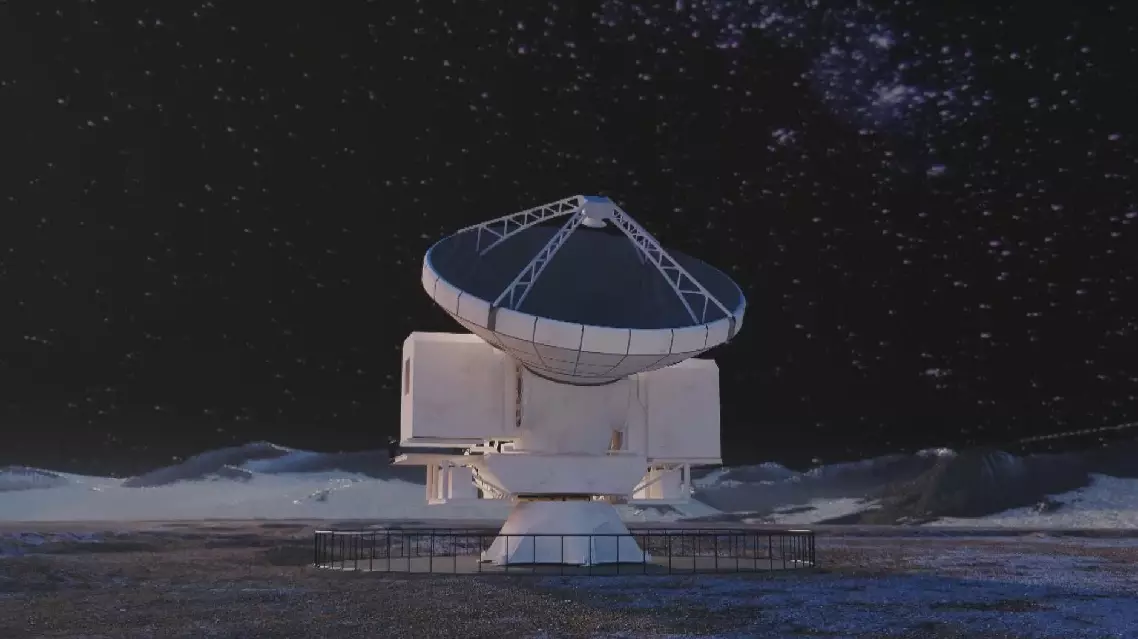
China commences construction of high-precision telescope project on Qinghai-Xizang Plateau