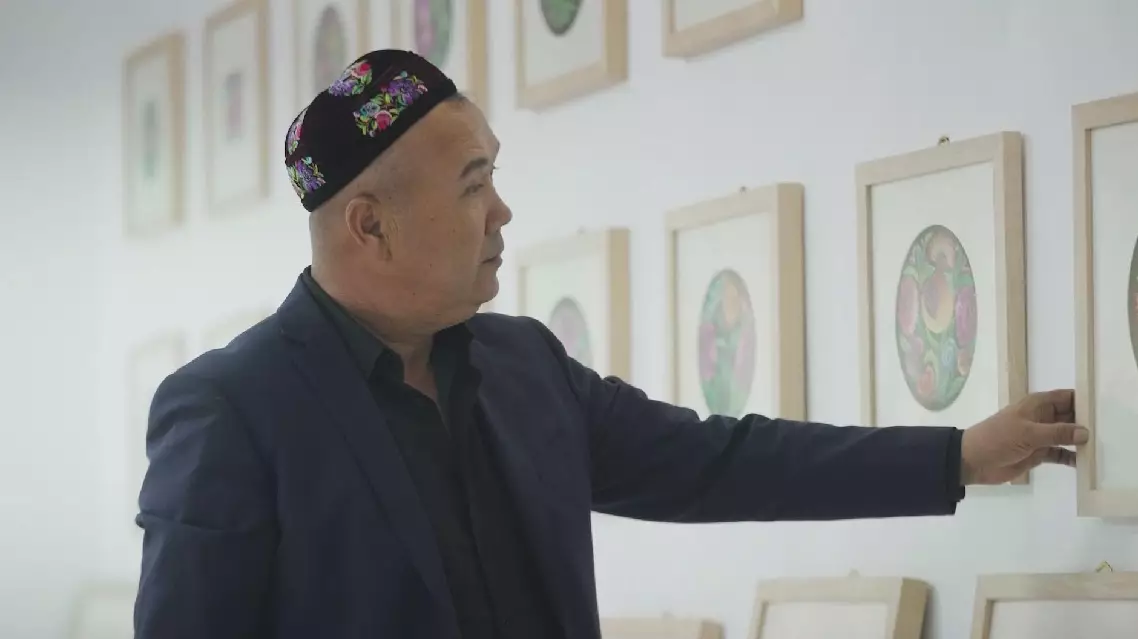
A Uygur embroidery artisan, Kadir Rahman, has used his craft to help more than 100 villagers increase income in Hami City, northwest China's Xinjiang Uygur Autonomous Region.
Kadir Rahman is an inheritor of the National Intangible Cultural Heritage of Hami Uygur Embroidery.
Inspired by the rich and layered colors of the poplar trees in the Gobi Desert, he weaves the beauty of nature into his works, creating pieces brimming with regional features.
"Hami is surrounded by the vast Gobi Desert, but the poplar trees have thrived for thousands of years here. What I love most is stitching portraits of time with needle and thread," said Rahman.
"Every time I think of these embroidered pieces perhaps now resting on a desk in a distant city, telling the story of our homeland, I feel a deep sense of pride," he continued.
He was captivated by embroidery from a young age.
"Now, thanks to embroidery, I find myself traveling more and more. Communities and schools invite me to give talks. It fills my heart with joy," he said.
Many female embroiderers in the village have learned from him.
"Every month, I send out new orders and distribute tasks to the female embroiderers in our village. We started with just five or six people, and now we've grown to more than 100. They don't have to leave home. While taking care of their children and elders, they can earn extra income through embroidery. Seeing their smiles when they receive their pay fills my heart with a profound sense of accomplishment," said Rahman.
"Embroidery has changed my life and transformed the fate of our entire village. I hope that in the future, more people will join us, using their hands to create their own bright future," he said.
Xinjiang embroidery artisan helps villagers increase income