From dawn until sunset, a Uygur family would bake more than 10,000 pieces of the golden traditional naan (flatbread) with crisp flavors, and the family has upheld this craftsmanship for generations in Kuqa City, northwest China's Xinjiang Uygur Autonomous Region, as a flavorful testament to Xinjiang's rich culinary heritage.
Leading this family business is 65-year-old baker Rixit Imit, who learned his naan-baking skills from his father 41 years ago. The family upholds the time-honored tradition of creating various flavors of naan.
"The craft has been passed down for generations to my father, who was also a naan maker. He once told me, 'Once you've mastered this craft, you'll live a good life.' So I began learning the craft from him," said Imit.
In Kuqa City, naan is an indispensable staple in every household. Among its many varieties, Kuqa Jumbo Naan stands out for its impressive large size, thin crust, and long shelf life.
According to Imit, what makes Kuqa Jumbo Naan special is that it is both thinner and bigger than most, and it stays fresh for a long time. It is wonderfully fragrant, and when dipped in tea, it softens in the mouth for a delightful taste.
Toppings such as chopped onions, white sesame seeds, black sesame seeds, cumin, fennel seeds, and safflower lend the local bakery a distinctive flavor.
All three of Rixit's children have learned the craft, and their products have drawn eager customers far beyond Xinjiang. Orders now come from across China, with some supermarkets stocking their flatbread, and regular shipments are sent to cities such as Beijing and Shanghai.
"We bake 800 to 1,000 pieces of naan every day. Our ancestors have relied on naan as a staple food for generations, and Kuqa naan is renowned both at home and abroad. We serve both loyal and new customers, and more and more people are enjoying our naans these days. We deliver nationwide, and some supermarkets even stock our naans. Customers all find them delicious and come specifically for them. There are also those who purchase naans from us to resell. They usually order 70 to 100 pieces at a time. We also ship to cities like Beijing and Shanghai—packing it carefully and sending it by courier," said Imit.
For Imit, the future of traditional naan-making craftsmanship lies in the next generation.
"This is our family's ancestral craft, passed down from generation to generation. The craft would be an enduring legacy, and mastering it will lead to a better life. I've learned this craft, my kids have learned it too, and maybe one day, my grandchildren will carry it on. One day, my children will proudly say, 'This is our family's ancestral craft.' I hope they don't just keep it alive but take it even further, improving it and making it better than ever," he said.
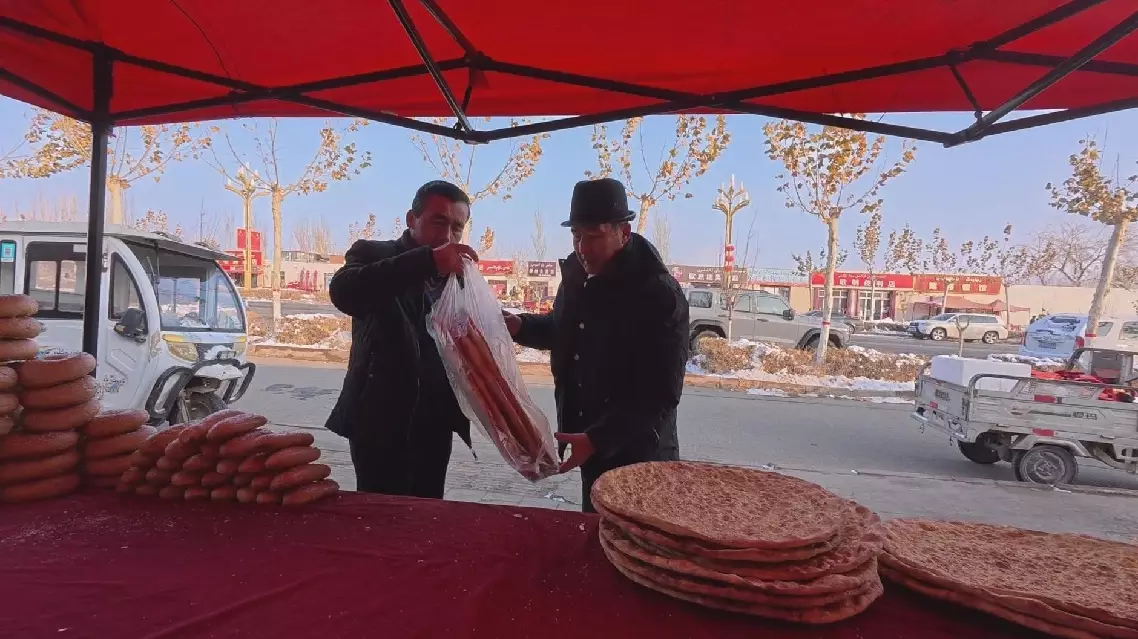
Uygur baker keeps traditional Xinjiang naan heritage alive for generations