Nestled along China's rugged western frontier, the Taxkorgan Tajik Autonomous County in northwest China's Xinjiang Uygur Autonomous Region is home to one of the nation's smallest yet most culturally distinctive ethnic groups -- the Tajiks.
Here, ancient traditions harmonize with modern development, offering a vivid portrait of how ethnic diversity is not only preserved but celebrated in Xinjiang today.
"Xinjiang has been a region inhabited by multiple ethnic groups since ancient times. China has governed Xinjiang since the Han Dynasty (202 BC-AD 220). Given its vast territory, ethnic groups in Xinjiang have long been blending and integrating," said Mahemuti Abuduwaili, director of the Xinjiang Academy of Social Sciences.
More than 40,000 people of the Tajik ethnic minority reside in this windswept county, which shares borders with Afghanistan, Pakistan, and Tajikistan. In recent years, people's living standards have significantly improved here, while their unique culture and way of life remain strong.
"Traditional Tajik houses always have a skylight. Our ancestors were pretty wise. They used the spot where the sunlight hit the brick bed to tell the time, and then prepare for daily life, like knowing when it was time to cook," said Alima Rejamat, a local resident.
For families like Tashik and his wife Bikak, life remains rooted in pastoral tradition, yet illuminated by new possibilities.
"We herd sheep and yaks, as did my father and grandfather," said Tashik.
The family now makes about 8,000 U.S. dollars a year -- about 75 percent from livestock sales and the rest from government subsidies.
Tashik's son attends a county school, where he is learning Mandarin -- a skill that unlocks opportunities for higher education and other careers far beyond the grasslands of his ancestors.
What's more notable is that similar stories are unfolding simultaneously among families of many ethnic groups across Xinjiang -- each weaving age-old traditions into the fabric of a steadily improving modern life.
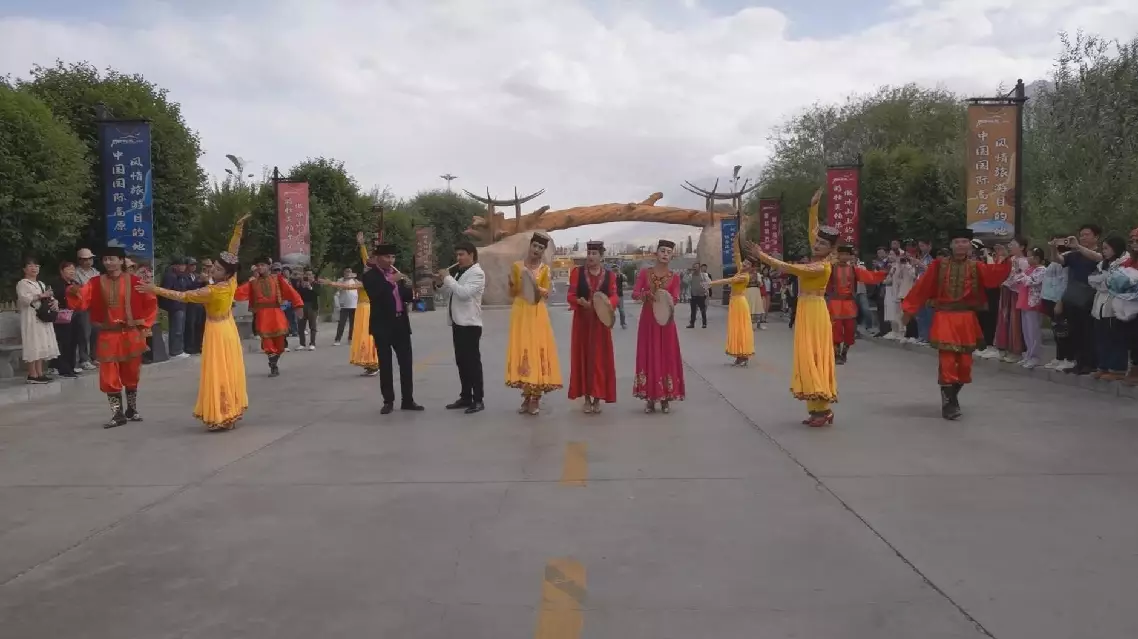
Life improves on Xinjiang's western edge as ethnic traditions endure