Over the past seven decades, Xinjiang Uygur Autonomous Region in northwest China has undergone profound economic and social transformation, driven by an unwavering commitment to modernization.
Spanning 1.66 million square kilometers, roughly one-sixth of China's total land area, Xinjiang became home to a permanent resident population of about 26.23 million as of the end of 2024.
Once known primarily for its vast natural resources, the region is now emerging as a dynamic economic powerhouse, posting a GDP exceeding 2 trillion yuan (about 281 billion U.S. dollars) in 2024, up from just 1.23 billion yuan in 1955 when the autonomous region was established.
Notably, from 2012 to 2024, Xinjiang's GDP grew at an annual rate of 7 percent at constant prices -- significantly outpacing the national average.
This growth has translated into tangible improvements in people's living standards. By 2020, 3.06 million residents had shaken off poverty in Xinjiang. In 2024, per capita disposable income in the region reached 42,820 yuan for urban residents and 19,427 yuan for rural residents annually.
Seizing the opportunity presented by its abundant natural resources, including oil, gas, and coal, Xinjiang continues to solidify its advantages in traditional industries.
Meanwhile, the region is accelerating its pivot toward green development. Solar, wind, and green hydrogen projects are being deployed at scale, positioning Xinjiang as a national leader in renewable energy production and transmission.
Green and low-carbon development is no longer a slogan but a driving force. "Xinjiang speed" has become synonymous with high-quality, sustainable growth.
As China's gateway to the West and a critical hub of the Belt and Road Initiative, Xinjiang's openness defines its modern identity. In 2024, the region's total foreign trade value hit 435.11 billion yuan, up 21.8 percent year on year, outpacing the national growth rate by 16.8 percentage points.
The well-being of its residents is always the top priority for the regional government. Substantial investments continue to pour into education, while medical services are being systematically expanded to rural and remote communities. Robust job creation initiatives and targeted vocational training programs ensure that growth is inclusive and equitable.
The benefits of development are not abstract -- they are visible and tangible across Xinjiang.
Ethnic unity is the lifeline of all ethnic groups in China, and Xinjiang is no exception. All ethnic groups in the region are inseparable members of the great family of the Chinese nation. Fostering a stronger sense of community for the Chinese nation lays the foundation for long-term development in Xinjiang.
Paired-assistance programs from other Chinese provinces and cities have been expanded and refined, bringing not only investment and infrastructure, but also expertise, education, and medical support.
As the autonomous region marks its 70th founding anniversary, its path forward is clear: fully and faithfully implement the Communist Party of China's (CPC) governance strategy for Xinjiang in the new era, leverage its strategic position in the national landscape, and accelerate its integration into China's broader modernization journey.
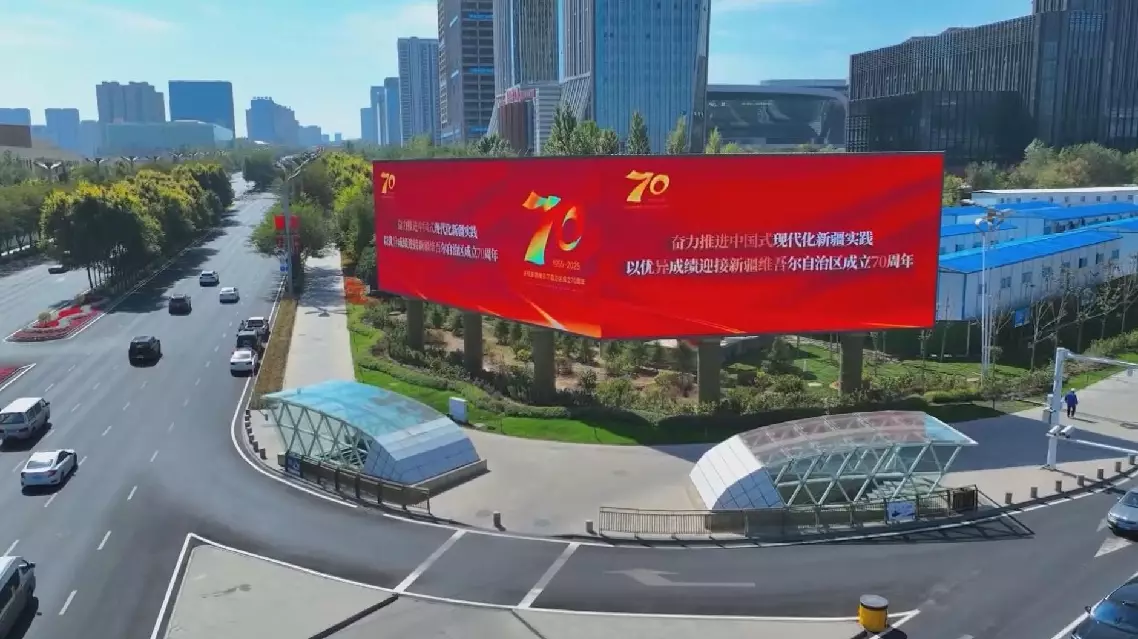
Xinjiang advances modernization with unwavering determination