Skip to Content Facebook Feature Image

Veterans who lack citizenship fear being swept up in Trump's deportations

News

Veterans who lack citizenship fear being swept up in Trump's deportations
News

News

Veterans who lack citizenship fear being swept up in Trump's deportations

2025-09-24 23:04 Last Updated At:23:10

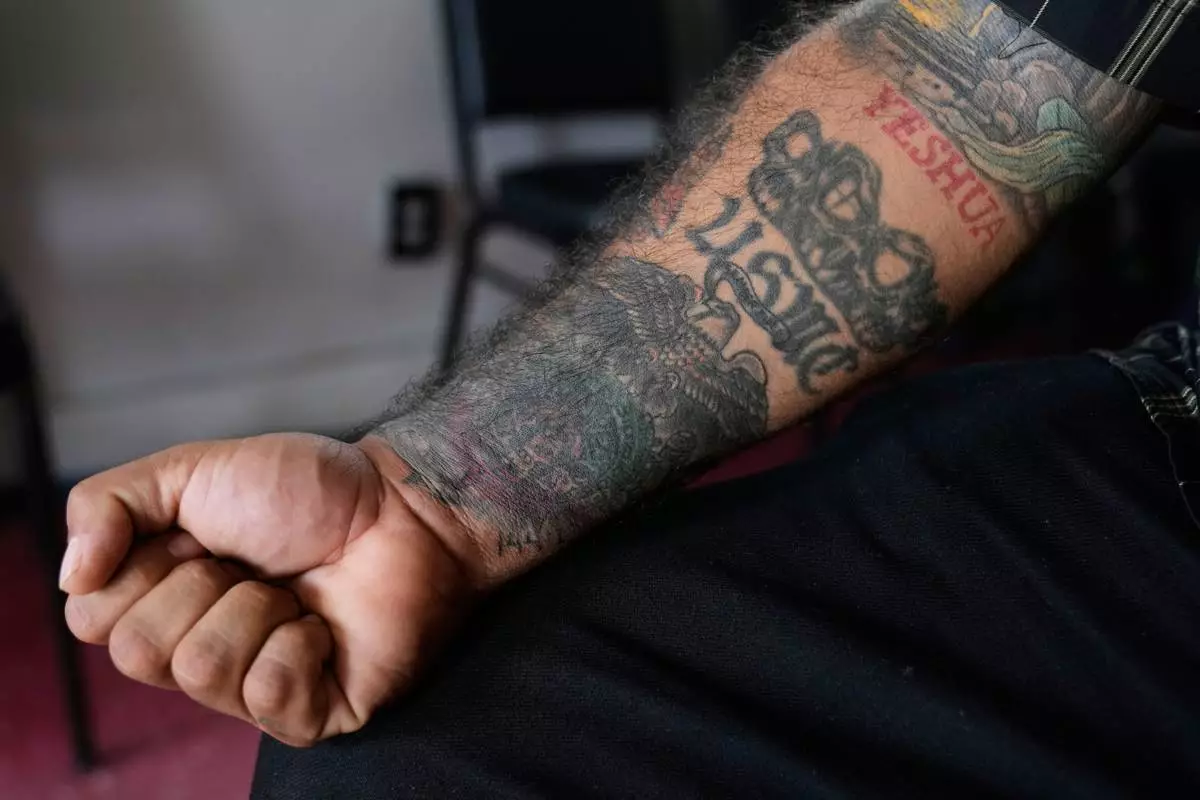
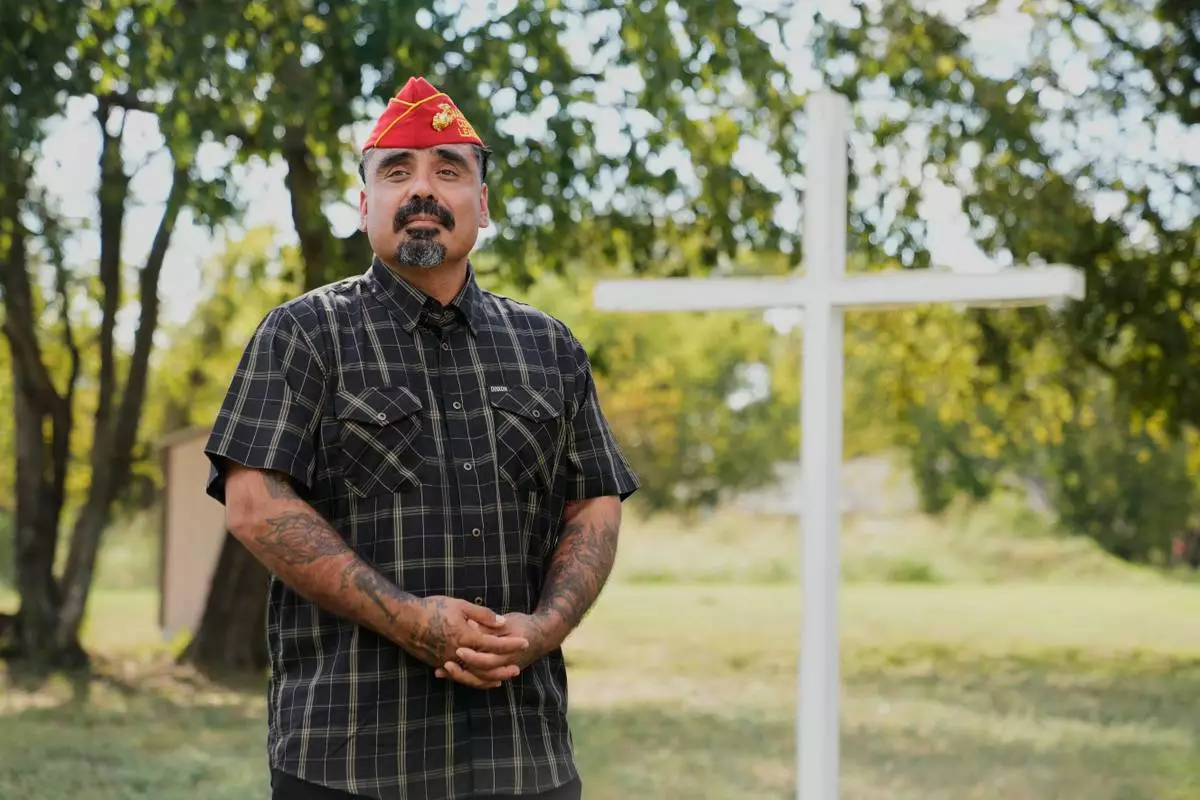
WASHINGTON (AP) — After serving with the Marine Corps in Iraq, Julio Torres has the American flag and Marine insignia tattooed on his arms to show his pride in serving a country he calls home.

After post-traumatic stress syndrome, drug addiction and a criminal charge following his deployment, the 44-year-old has found new purpose as a pastor preaching a message of freedom to those facing similar issues.

But these days, his community in East Texas feels more like jail than the land of the free.

Torres, who was born in Mexico and migrated legally to the United States at age 5, is afraid to venture far from home as President Donald Trump works to carry out his mass deportation agenda. Torres has a green card residency permit and a record of service in the U.S. military, but he was detained by immigration authorities last year under the Biden administration. He fears that U.S. Customs and Immigration Enforcement raids under Trump could only mean more trouble.

“Do I want to leave this nation? No. I want to serve it. I want to continue to serve my community,” Torres told The Associated Press. “It breaks my heart that I fought for this nation to raise my children in this nation, and now I have to pull my children out of this nation if I get deported. Then what did I fight for?”

There are well more than 100,000 military veterans living in the U.S. who do not have citizenship, according to estimates in recent years by the Congressional Research Service. Despite military recruiters frequently describing service as a fast-track to citizenship for troops and their family members, the Republican administration’s immigration agenda is putting them at renewed risk of deportation.

Democrats in Congress have raised alarm about instances of military veterans either forced from the country or whose family members were detained by ICE. A bipartisan bill introduced Wednesday by Rep. Mark Takano, D-Calif., would require the Department of Homeland Security to identify whether immigrants are U.S. military veterans and provide them with an opportunity to apply for lawful immigration status.

“It’s very important for Americans to understand the contributions of noncitizens to our national security,” Takano told the AP. “They’re often posed as threats to our personal safety, but this is a story about how they play an essential role — tremendous numbers of our current military forces are noncitizens.”

The legislation, backed Rep. Maria Elvira Salazar, R-Fla., and the GOP delegate for American Samoa, Aumua Amata Coleman Radewagen, would also make it easier for military members to apply for citizenship.

“Fighting for America is one of the greatest, most noble acts a person can do, and it breaks my heart that noncitizen veterans might be deported despite their service,” Salazar said in a statement.

Torres remembers the anger when he was taken to an immigration detention center in Texas last year after being stopped by Customs and Border Protection agents at Dallas-Fort Worth International Airport. He was trying to reenter the country after visiting relatives in Mexico. The criminal charges from 10 years ago for drug possession violated the terms of his permanent residency.

“I was angry that I served a nation that now did not want me. I was angry that I served a nation that broke me, and after they broke me, they wanted to just throw me away,” he said, then added, “I’m still angry that I don’t have the liberty to go to the store with my kids because I’m afraid of ICE stopping me and arresting me.”

Torres was unsure why he was released after five days in detention. ICE had a policy at the time of considering U.S. military service when deciding whether to take immigration enforcement action. The administration has issued new policy memos to do away with that kind of discretion.

Fear of being deported has worsened his PTSD symptoms. He has night terrors. He cries when out of earshot of his wife and children, then tries to convince them he is doing OK. He fears that if deported to Mexico, he would be under threat from cartels because he is a veteran and minister.

Other veterans who have been deported say that those kinds of threats are real. David Bariu was deported to Kenya in 2008 after he had served in the Army and Air Force Reserve. An Army recruiter had enlisted Bariu while he was in the U.S. on a student visa — an offense for which the recruiter was court-martialed.

Bariu said he struggled with depression while detained for one year before he was deported to Kenya, where he struggled to find work. Living in an area where the al-Shabab militant group was active, Bariu did not want to tell anyone he had served in the American military.

“I didn't want to risk putting my life into danger,” he said, adding, that "the U.S. government is deporting veterans to hostile environments.”

He eventually was able to apply for U.S. citizenship under a program set up under the Biden administration for deported veterans. Bariu moved back to the U.S. and today helps run Black Deported Veterans of America.

Immigrants with lawful permanent residency have long been able to gain U.S. citizenship through military service. Completing that process can be difficult, especially when service members are moving between military bases or are stationed overseas.

Takano's bill would allow them to apply for citizenship during their basic training and establish a review process for immigration removal proceedings. Other Democrats are proposing ways to quickly extend green cards to the family members of service members.

Trump, in his first term, took steps to make it tougher to gain citizenship. He added mandatory waiting times for service members to apply for citizenship and closed U.S. immigration offices overseas and at several military bases. A federal judge ruled that his administration could not enact the mandatory waiting times, but Trump's second-term team has tried once again to appeal.

Homeland Security has also stood by its actions when veterans have been forced to leave the country, saying it is enforcing the law.

Salazar said she was supporting the new bill out of concern that the administration is not making a distinction between “those who came to commit crimes and destabilize our country, and those who came here to work and build.”

“The vast majority of these veterans are in that second category, and they have put their lives on the line to defend this country. Congress is the branch that can lead the way on making these key policy distinctions,” she added.

Republican leaders have so far shown no willingness to challenge Trump's immigration policies. Still, Torres is hoping that the push to have Congress take up the issue can avoid the contentious politics of immigration and be cast as a veterans issue, where there is sometimes bipartisan agreement.

“This is about a veteran,” he said. He then added: “I love my nation. And yes, even though this nation at this moment in time does not consider me part of this nation, I consider this to be my nation. I consider this my homeland.”
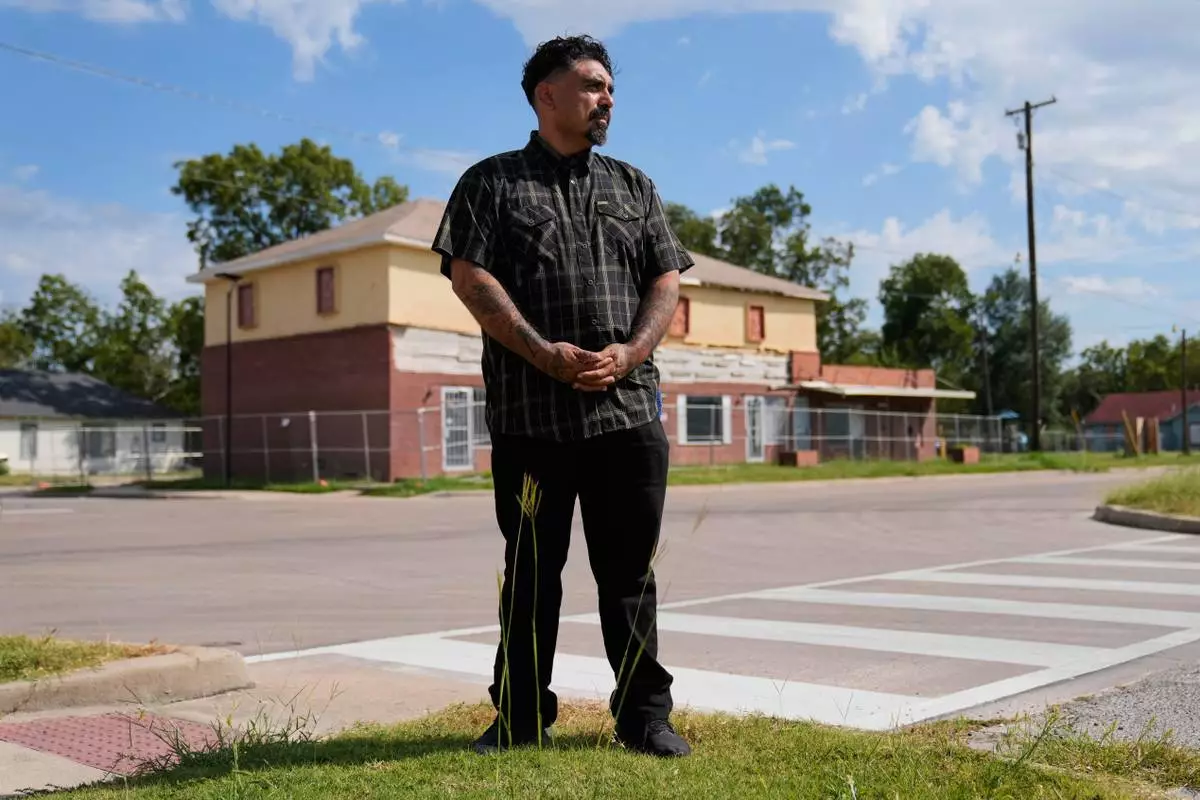
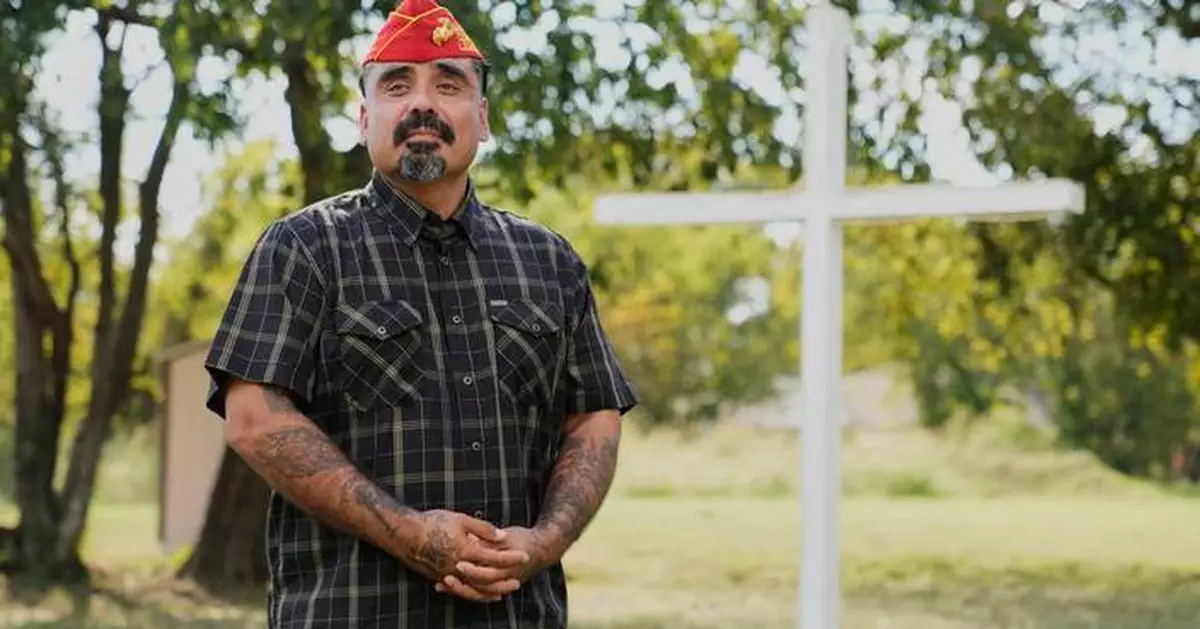
Julio Torres poses for a photo Monday, Sept. 22, 2025, in Terrell, Texas, near Serenity Corner, a church he founded nearly a decade ago. (AP Photo/Tony Gutierrez)
Julio Torres poses for a photo Monday, Sept. 22, 2025, in Terrell, Texas, near Serenity Corner, a church he founded nearly a decade ago. (AP Photo/Tony Gutierrez)

Julio Torres shows his USMC tattoo as he poses for a photo inside Serenity Corner, a church he founded nearly a decade ago, Monday, Sept. 22, 2025, in Terrell, Texas. (AP Photo/Tony Gutierrez)
Julio Torres shows his USMC tattoo as he poses for a photo inside Serenity Corner, a church he founded nearly a decade ago, Monday, Sept. 22, 2025, in Terrell, Texas. (AP Photo/Tony Gutierrez)

Julio Torres poses for a photo by a cross in an open field, Monday, Sept. 22, 2025, in Terrell, Texas. (AP Photo/Tony Gutierrez)
Julio Torres poses for a photo by a cross in an open field, Monday, Sept. 22, 2025, in Terrell, Texas. (AP Photo/Tony Gutierrez)
NUUK, Greenland (AP) — Troops from several European countries, including France, Germany, the UK, Norway and Sweden, are arriving in Greenland in a show of support for Denmark as talks between representatives of Denmark, Greenland and the U.S. on Wednesday highlighted “fundamental disagreement” between the Trump administration and European allies on the future of the Arctic island.

Denmark announced it would increase its military presence in Greenland on Wednesday and several European partners started sending symbolic numbers of troops on that day, just as the Danish and Greenlandic foreign ministers were preparing to meet with White House representatives in Washington.

The troop movements were intended to portray unity among Europeans and send a signal to U.S. President Donald Trump that an American takeover of Greenland is not necessary as NATO together can safeguard the security of the Arctic region amid rising Russian and Chinese interest.

“The first French military elements are already en route” and “others will follow,” French President Emmanuel Macron announced Wednesday, as French authorities said about 15 soldiers from the mountain infantry unit were already in Nuuk for a military exercise.

Germany will deploy a reconnaissance team of 13 personnel to Greenland on Thursday, its Defense Ministry said.

On Thursday, Danish Defense Minister Troels Lund Poulsen said the intention was “to establish a more permanent military presence with a larger Danish contribution,” according to Danish broadcaster DR. He said soldiers from several NATO countries will be in Greenland on a rotation system.

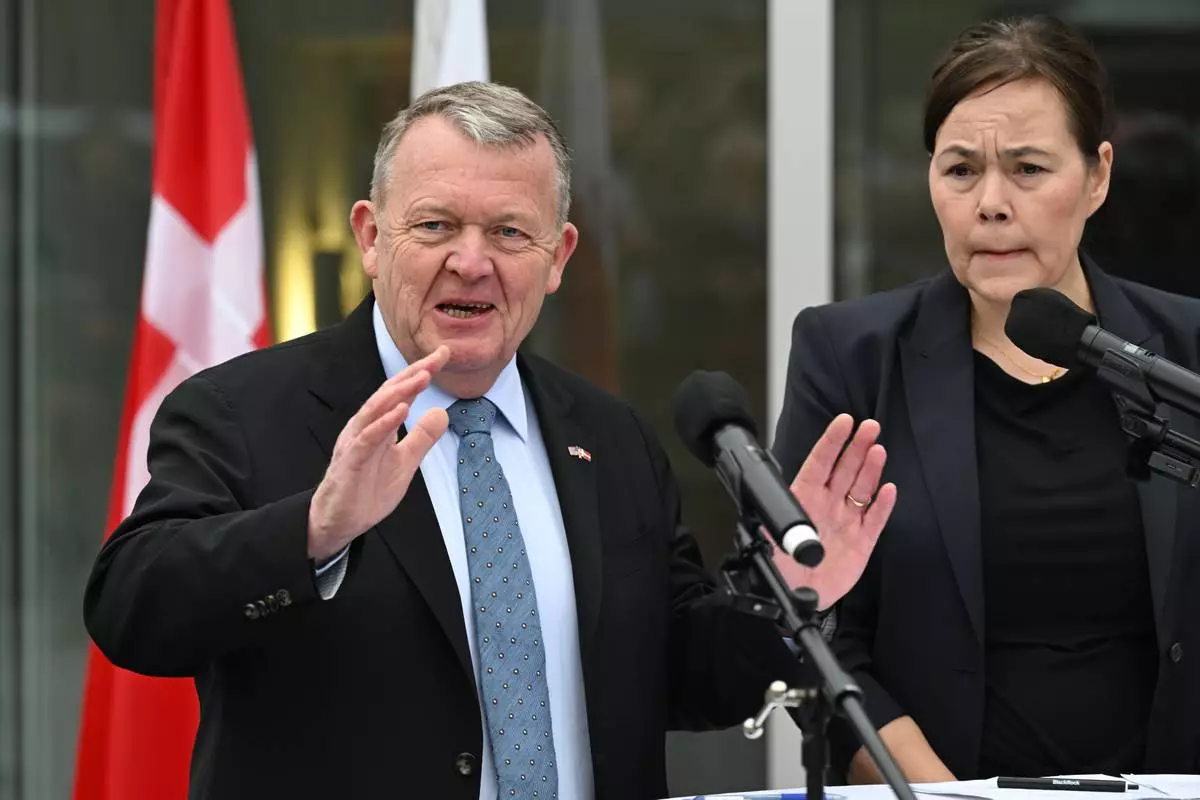
Danish Foreign Minister Lars Løkke Rasmussen, flanked by his Greenlandic counterpart Vivian Motzfeldt, said Wednesday that a “fundamental disagreement” over Greenland remains with Trump after they held highly anticipated talks at the White House with Vice President JD Vance and Secretary of State Marco Rubio.

Rasmussen added that it remains “clear that the president has this wish of conquering over Greenland” but that dialogue with the U.S. would continue at a high level over the following weeks.

Inhabitants of Greenland and Denmark reacted with anxiety but also some relief that negotiations with the U.S. would go on and European support was becoming visible.

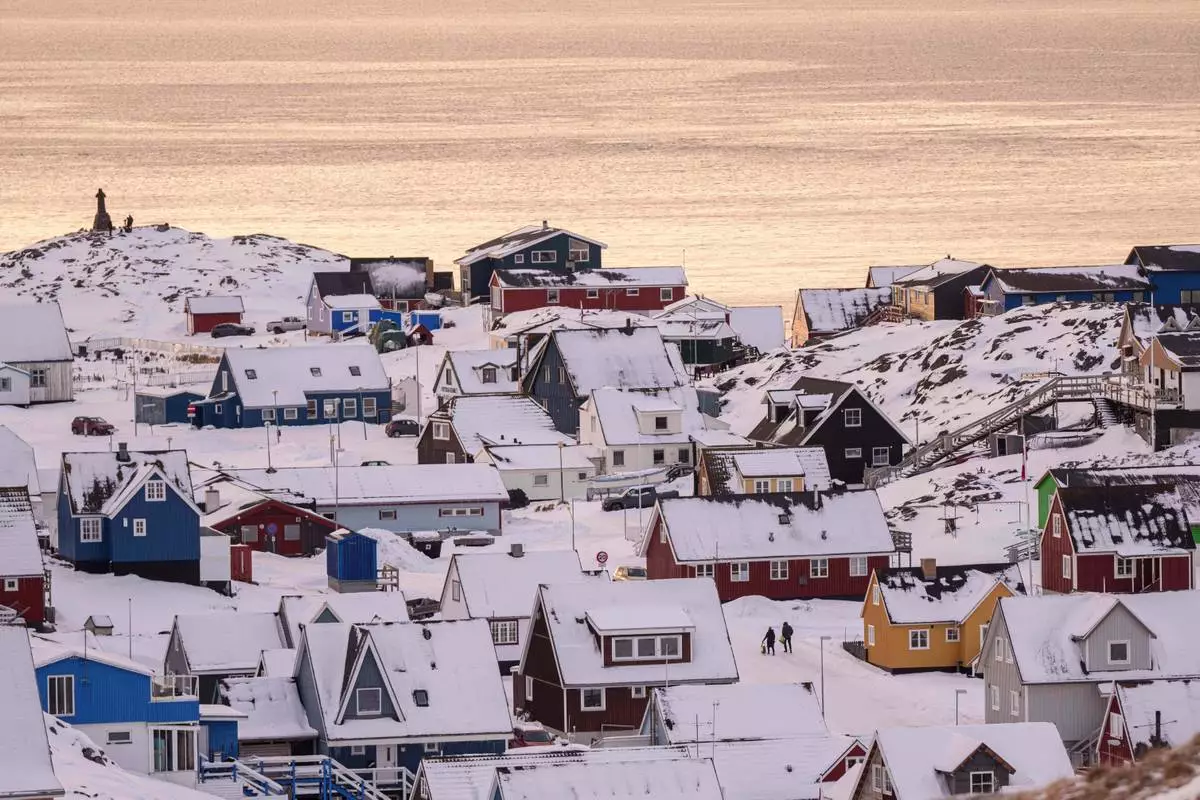
In Greenland’s capital, Nuuk, local residents told The Associated Press they were glad the first meeting between Greenlandic, Danish and American officials had taken place but suggested it left more questions than answers.

Several people said they viewed Denmark’s decision to send more troops, and promises of support from other NATO allies, as protection against possible U.S. military action. But European military officials have not suggested the goal is to deter a U.S. move against the island.

Maya Martinsen, 21, agreed and said it was “comforting to know that the Nordic countries are sending reinforcements” because Greenland is a part of Denmark and NATO.

The dispute, she said, is not about “national security” but rather about “the oils and minerals that we have that are untouched.”

On Wednesday, Poulsen had announced a stepped-up military presence in the Arctic “in close cooperation with our allies,” calling it a necessity in a security environment in which “no one can predict what will happen tomorrow.”

“This means that from today and in the coming time there will be an increased military presence in and around Greenland of aircraft, ships and soldiers, including from other NATO allies,” Poulsen said.

Asked whether the European troop movements were coordinated with NATO or what role the U.S.-led military alliance might play in the exercises, NATO referred all questions to the Danish authorities. However, NATO is currently studying ways to bolster security in the Arctic.

Rasmussen, the Danish foreign minister, announced the creation of a working group with the Americans to discuss ways to work through differences.

“The group, in our view, should focus on how to address the American security concerns, while at the same time respecting the red lines of the Kingdom of Denmark,” he said.

Commenting on the outcome of the Washington meeting on Thursday, Poulsen said the working group was “better than no working group” and “a step in the right direction.” He added nevertheless that the dialogue with the U.S. did not mean “the danger has passed.”

“We are really happy that action is being taken to make sure that this discussion is not just ended with that meeting alone,” Greenlandic MP Aki-Matilda Høegh-Dam said on Thursday during a news conference in Copenhagen.

She said Greenlandic people understood they were a “pivotal point” in a broader transformation of the international rules-based order and that they felt responsible not just for themselves but also for the whole world to get it right.

Høegh-Dam said the military operations should not happen “right next to our schools and right next to our kindergartens.”

Line McGee, a 38-year-old from Copenhagen, told AP that she was glad to see some diplomatic progress. “I don’t think the threat has gone away,” she said. “But I feel slightly better than I did yesterday.”

Speaking to FOX News Channel’s Special Report on Wednesday after the White House talks, Rasmussen rejected both a military takeover and the potential purchase of the island by the U.S. Asked whether he thinks the U.S. will invade, he replied: “No, at least I do not hope so, because, I mean, that would be the end of NATO.”

Rasmussen said Greenlanders were unlikely to vote for U.S. rule even if financial incentives were offered, “because I think there’s no way that U.S. will pay for a Scandinavian welfare system in Greenland, honestly speaking.”

“You haven’t introduced a Scandinavian welfare system in your own country,” he added.

Trump, in his Oval Office meeting with reporters, said: “We’ll see how it all works out. I think something will work out.”

Niemann reported from Copenhagen, Denmark, and Ciobanu from Warsaw, Poland.

Denmark's Foreign Minister Lars Løkke Rasmussen and Greenland's Foreign Minister Vivian Motzfeldt speak at a news conference at the Embassy of Denmark, Wednesday, Jan. 14, 2026, in Washington. (AP Photo/John McDonnell)

Denmark's Foreign Minister Lars Løkke Rasmussen and Greenland's Foreign Minister Vivian Motzfeldt speak at a news conference at the Embassy of Denmark, Wednesday, Jan. 14, 2026, in Washington. (AP Photo/John McDonnell)

People walk on a street in Nuuk, Greenland, Wednesday, Jan. 14, 2026. (AP Photo/Evgeniy Maloletka)

People walk on a street in Nuuk, Greenland, Wednesday, Jan. 14, 2026. (AP Photo/Evgeniy Maloletka)

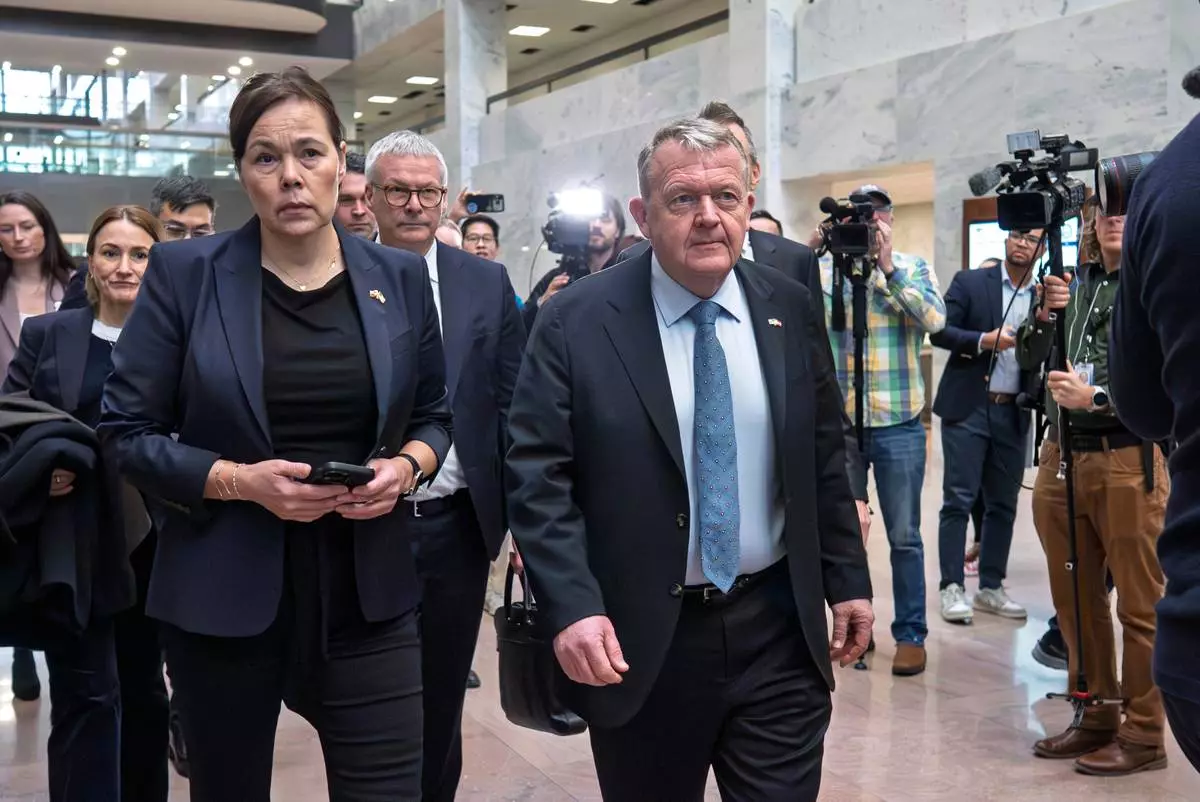
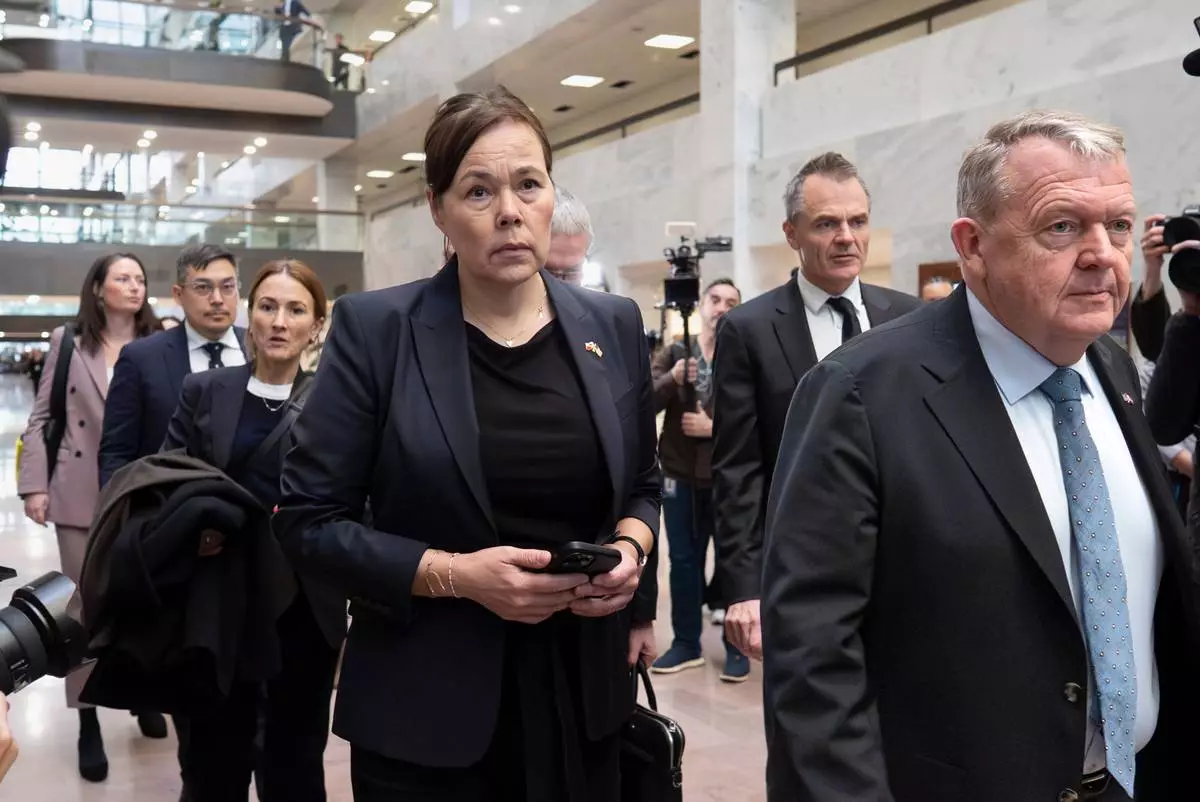
From center to right, Greenland Foreign Minister Vivian Motzfeldt, Denmark's Ambassador Jesper Møller Sørensen, rear, and Danish Foreign Minister Lars Løkke Rasmussen, right, arrive on Capitol Hill to meet with senators from the Arctic Caucus, in Washington, Wednesday, Jan. 14, 2026. (AP Photo/J. Scott Applewhite)

From center to right, Greenland Foreign Minister Vivian Motzfeldt, Denmark's Ambassador Jesper Møller Sørensen, rear, and Danish Foreign Minister Lars Løkke Rasmussen, right, arrive on Capitol Hill to meet with senators from the Arctic Caucus, in Washington, Wednesday, Jan. 14, 2026. (AP Photo/J. Scott Applewhite)

An Airbus A400M transport aircraft of the German Air Force taxis over the grounds at Wunstorf Air Base in the Hanover region, Germany, Thursday, Jan. 15, 2026 as troops from NATO countries, including France and Germany, are arriving in Greenland to boost security. (Moritz Frankenberg/dpa via AP)

An Airbus A400M transport aircraft of the German Air Force taxis over the grounds at Wunstorf Air Base in the Hanover region, Germany, Thursday, Jan. 15, 2026 as troops from NATO countries, including France and Germany, are arriving in Greenland to boost security. (Moritz Frankenberg/dpa via AP)

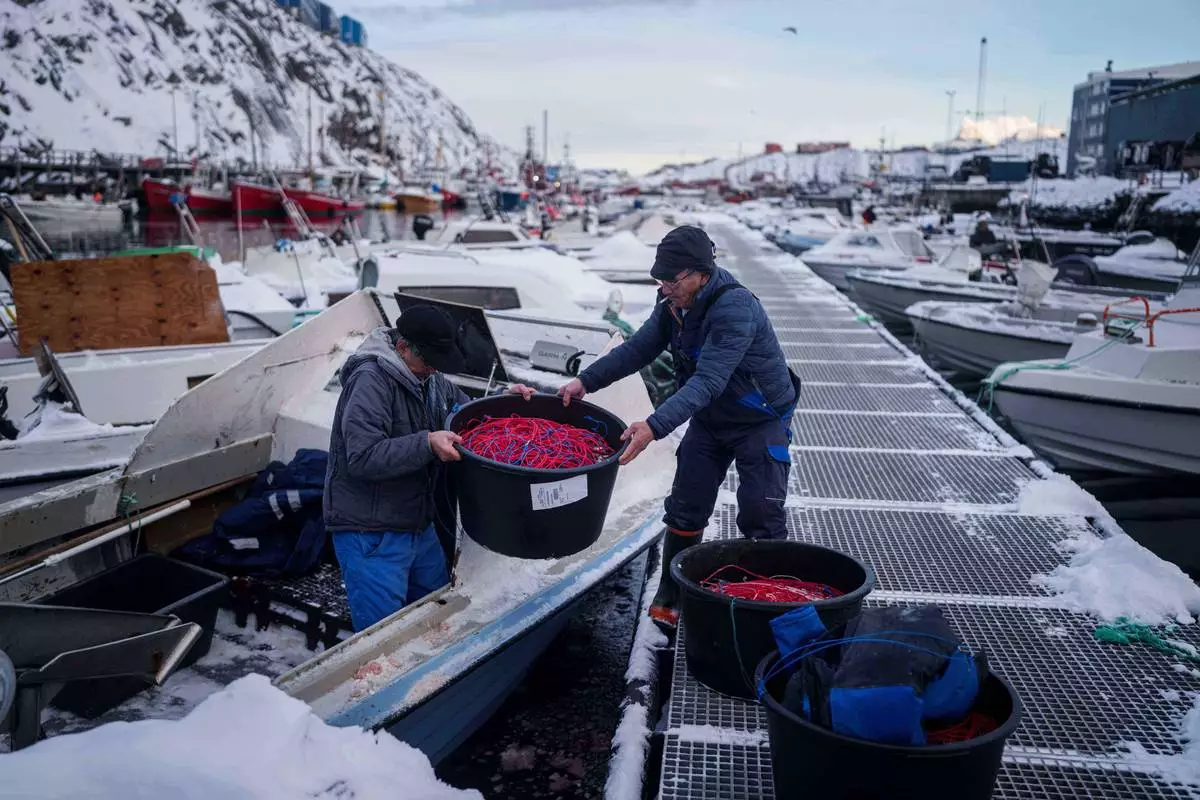
Fishermen load fishing lines into a boat in the harbor of Nuuk, Greenland, Wednesday, Jan. 14, 2026. (AP Photo/Evgeniy Maloletka)

Fishermen load fishing lines into a boat in the harbor of Nuuk, Greenland, Wednesday, Jan. 14, 2026. (AP Photo/Evgeniy Maloletka)

Greenland Foreign Minister Vivian Motzfeldt, left, and Danish Foreign Minister Lars Løkke Rasmussen, arrive on Capitol Hill to meet with members of the Senate Arctic Caucus, in Washington, Wednesday, Jan. 14, 2026. (AP Photo/J. Scott Applewhite)

Greenland Foreign Minister Vivian Motzfeldt, left, and Danish Foreign Minister Lars Løkke Rasmussen, arrive on Capitol Hill to meet with members of the Senate Arctic Caucus, in Washington, Wednesday, Jan. 14, 2026. (AP Photo/J. Scott Applewhite)

Recommended Articles