South China's Guangdong Province, especially the western coastal area, has seen violent winds and torrential rainfall since Tuesday as super typhoon Ragasa approaches, with intensified waves resulting from the combined effects of storm surges and astronomical tides.
According to the National Meteorological Center on Wednesday, the super typhoon, this year's 18th, is expected to make landfall at the intensity of typhoon or strong typhoon along the coastal areas between the cities of Yangjiang and Zhanjiang of Guangdong Province during Wednesday evening to nighttime.
After crossing the Leizhou Peninsula, it will enter the Beibu Gulf and then move in a west-southwest direction toward northern Vietnam, gradually weakening in intensity.
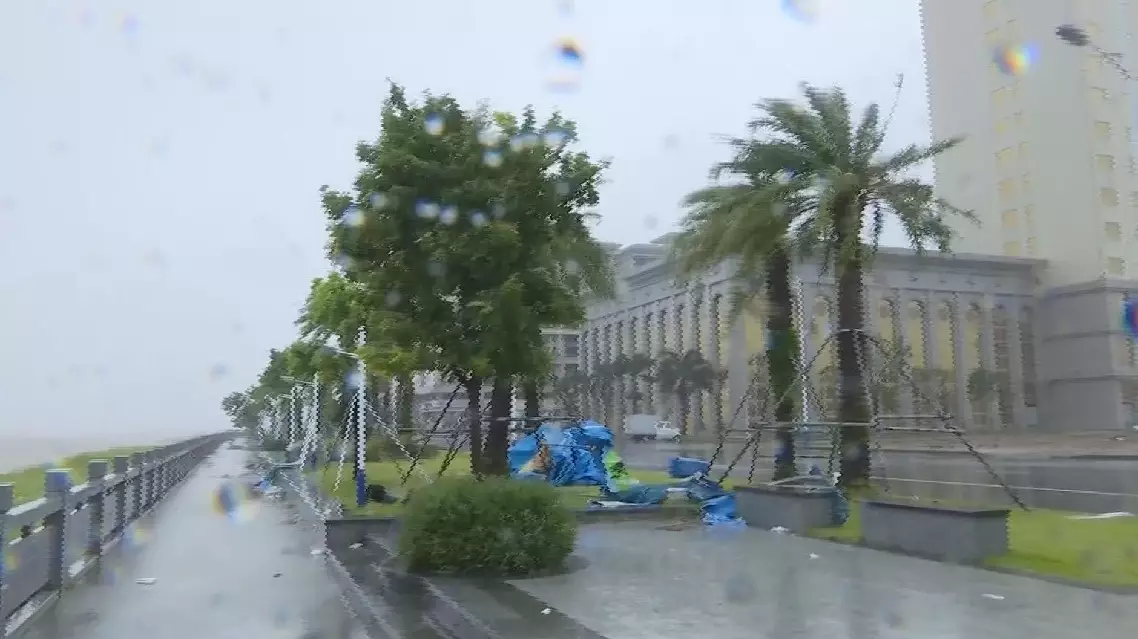
The urban area of Zhuhai City saw intense wind and rain on Wednesday morning, with trees swaying violently in the wind.
As this typhoon approaches during an astronomical tide, the combined effects of storm surges and astronomical tide have resulted in massive waves. Experts predict that waves in the eastern waters of Guangdong could reach heights of 6 to 12 meters.
The typhoon's forceful approach prompted Zhuhai to activate multiple emergency response measures. The city's flood control, drought relief, and typhoon prevention headquarters activated a Level I emergency response for flood prevention at 10:00 on Tuesday, while its meteorological department also issued a red alert for a typhoon at 14:00 on the same day.
China has a four-tier weather warning system, with red representing the most severe warning, followed by orange, yellow and blue. The national emergency response system also has four tiers, with Level I being the highest.
Additionally, local authorities have also evacuated residents from coastal high-rise communities, as well as those from older residential areas. A total of more than 60,000 residents have been evacuated across the city by Wednesday morning, with 279 shelters being set up, where local authorities have prepared sufficient supplies for the residents.
In order to avoid unnecessary losses for travelers, local authorities have temporarily suspended outbound services at the Hong Kong-Zhuhai-Macao Bridge road port on Wednesday afternoon.
Strong winds and heavy rainfall have also occurred along the coast of Taishan City on Wednesday morning. Local authorities activated a Level I emergency response to typhoon prevention, with a red alert for typhoon in effect.
The combined effect of storm surge and astronomical tide has caused a significant rise in water levels at an inner bay dock in the city's Guanghai Town. The wind has created noticeable ripples on the water's surface, and in the distance, there is a dramatic scene of rolling waves near the breakwater.
In addition to the rough sea, the strong winds and heavy rain on land have caused trees to topple, despite the efforts of relevant authorities to reinforce them. Items such as rainproof cloth and trans bins have been wrapped onto the roads, while the accumulated water on the road surface has also been blown into ripples by the crosswind.
All shops and public facilities in Guanghai Town have been temporarily closed. The local government organized police officers and firefighters to evacuate over 1,000 residents during the night.
Strong wind, torrential rain hit Guangdong as Typhoon Ragasa approaches