Skip to Content Facebook Feature Image

Ukraine’s president says the world is in `the most destructive arms race in human history’

News

Ukraine’s president says the world is in `the most destructive arms race in  human history’
News

News

Ukraine’s president says the world is in `the most destructive arms race in human history’

2025-09-25 00:56 Last Updated At:01:00

UNITED NATIONS (AP) — Ukrainian President Volodymyr Zelenskyy told global leaders Wednesday that the world is in “the most destructive arms race in human history” and urged the international community to act against Russia now, asserting that Vladimir Putin wants to expand his war in Europe.

In a bleak view of today’s world, he told the annual high-level meeting of the U.N. General Assembly that weak international institutions including the United Nations haven’t been able to stop wars in Ukraine, Gaza, Sudan and elsewhere, and international law can’t help nations survive.

More Images
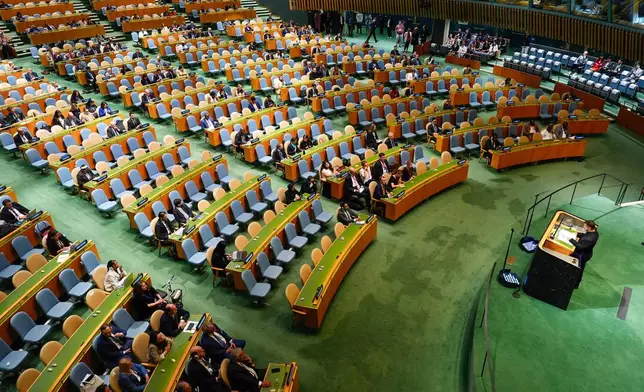
Ukraine President Volodymyr Zelenskyy speaks during the 80th session of the United Nations General Assembly, Wednesday, Sept. 24, 2025, at U.N. headquarters. (AP Photo/Yuki Iwamura)
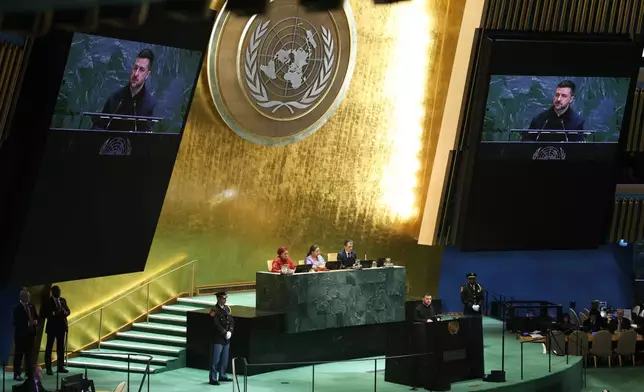
Ukraine President Volodymyr Zelenskyy speaks during the 80th session of the United Nations General Assembly, Wednesday, Sept. 24, 2025, at U.N. headquarters. (AP Photo/Yuki Iwamura)

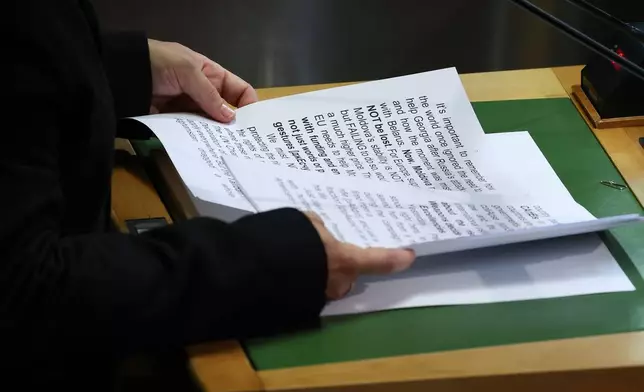
Ukraine President Volodymyr Zelenskyy speaks during the 80th session of the United Nations General Assembly, Wednesday, Sept. 24, 2025, at U.N. headquarters. (AP Photo/Heather Khalifa)
Ukraine President Volodymyr Zelenskyy speaks during the 80th session of the United Nations General Assembly, Wednesday, Sept. 24, 2025, at U.N. headquarters. (AP Photo/Heather Khalifa)

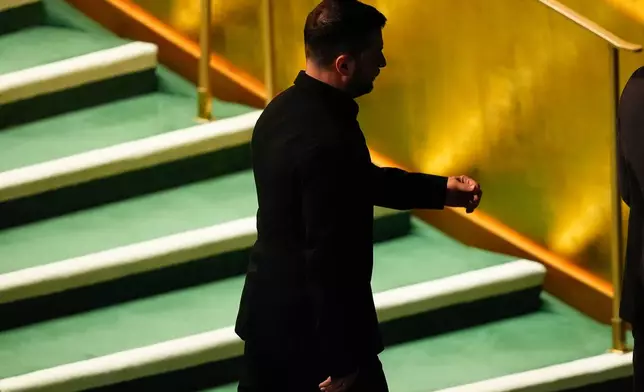
Ukrainę President Volodymyr Zelenskyy leaves after speaking at the 80th session of the United Nations General Assembly, Wednesday, Sept. 24, 2025, at U.N. headquarters. (AP Photo/Yuki Iwamura)
Ukrainę President Volodymyr Zelenskyy leaves after speaking at the 80th session of the United Nations General Assembly, Wednesday, Sept. 24, 2025, at U.N. headquarters. (AP Photo/Yuki Iwamura)

Ukrainę President Volodymyr Zelenskyy speaks during the 80th session of the United Nations General Assembly, Wednesday, Sept. 24, 2025, at U.N. headquarters. (AP Photo/Heather Khalifa)
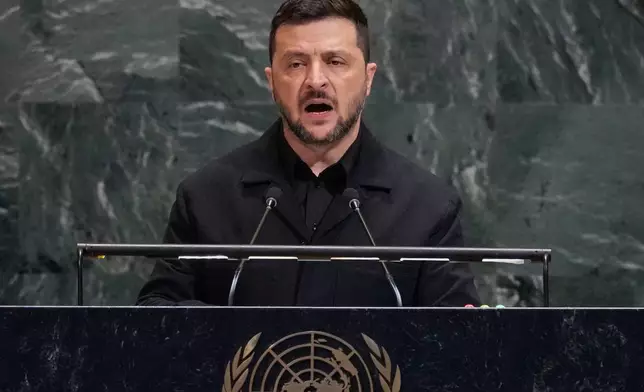
Ukrainę President Volodymyr Zelenskyy speaks during the 80th session of the United Nations General Assembly, Wednesday, Sept. 24, 2025, at U.N. headquarters. (AP Photo/Heather Khalifa)

Ukraine President Volodymyr Zelenskyy addresses the 80th session of the United Nations General Assembly, Wednesday, Sept. 24, 2025. (AP Photo/Richard Drew)

Ukraine President Volodymyr Zelenskyy addresses the 80th session of the United Nations General Assembly, Wednesday, Sept. 24, 2025. (AP Photo/Richard Drew)

“Weapons decide who survives,” the Ukrainian leader said. “There are no security guarantees except friends and weapons.”

Zelenskyy spoke from the podium of the vast assembly chamber a day after he met with President Donald Trump, who expressed support for Ukraine’s efforts and criticized Russia. Trump said Tuesday that he believed Ukraine could win back all territory lost to Russia, a dramatic shift from the U.S. leader’s repeated calls for Kyiv to make concessions to end the war sparked by President Vladimir Putin's February 2022 invasion of its smaller neighbor.

Zelenskyy did not comment on the surprise U.S. pivot, saying only that he had “a good meeting” with Trump and with many other “strong leaders."

"Together, we can change a lot,” he said, expressing appreciation for support from the United States. and Europe and urging all U.N. member nations to condemn Russia while it “keeps dragging this war on.”

If Putin isn't stopped now, the Ukrainian president warned the assembly that he will keep driving the war forward, “wider and deeper.”

“Ukraine is only the first, and now Russian drones are already flying across Europe, and Russian operations are already spreading across countries,” he said.

Zelenskyy said neighboring Moldova is defending itself again from Russian interference and should not be allowed to move toward dependency on Russia as Georgia and Belarus are. “Europe cannot afford to lose Moldova, too,” he said, stressing that the country needs funding and energy support, not just “political gestures.”

Since Russia invaded Ukraine, Zelenskyy said, weapons and especially drones “are evolving faster than our ability to defend ourselves.”

While drones previously were used by major countries, he said, “Now, there are tens of thousands of people who know how to professionally kill using drones.”

Recently, European airports had to shut down because of drones, Zelenskyy said, and last week North Korea announced the test of “a tactical drone” which means even countries with limited resources can build dangerous weapons.

“We are now living through the most destructive arms race in human history, because this time it includes artificial intelligence,” he said. “Companies are already working on drones that can shoot down other drones, and it’s only a matter of time -- not much -- before drones are fighting drones, attacking critical infrastructure and attacking people all by themselves – fully autonomous and no human involved except the few who control AI system."

Zelenskyy echoed U.N. Secretary-General Antonio Guterres in calling for global rules on how AI can be used in weapons, stressing that “this is just as urgent as preventing the spread of nuclear weapons.”

Stopping Putin now is cheaper than trying to protect every port and airport and every ship from drone attacks, and having to build underground schools and health centers as Ukraine has been forced to do to protect its citizens, he said. “Stopping Russia now is cheaper than wondering who will be the first to create a simple drone carrying a nuclear warhead.”

“So we must use everything we have together to force the aggressor to stop, and only then do we have a real chance that this arms race will not end in catastrophe for all of us,” the Ukrainian leader said.

The Ukrainian leader said his country doesn’t have “big fat missiles dictators love to show off in parades” but it is producing drones that can fly 2,000 to 3,000 kilometers which have been used against Russia.

Zelenskyy said Ukraine is building a new security architecture, and more than 30 countries are part of its coalition, and “we have decided to open up for arms exports – and these are powerful systems tested in a real war when every international institution failed.”
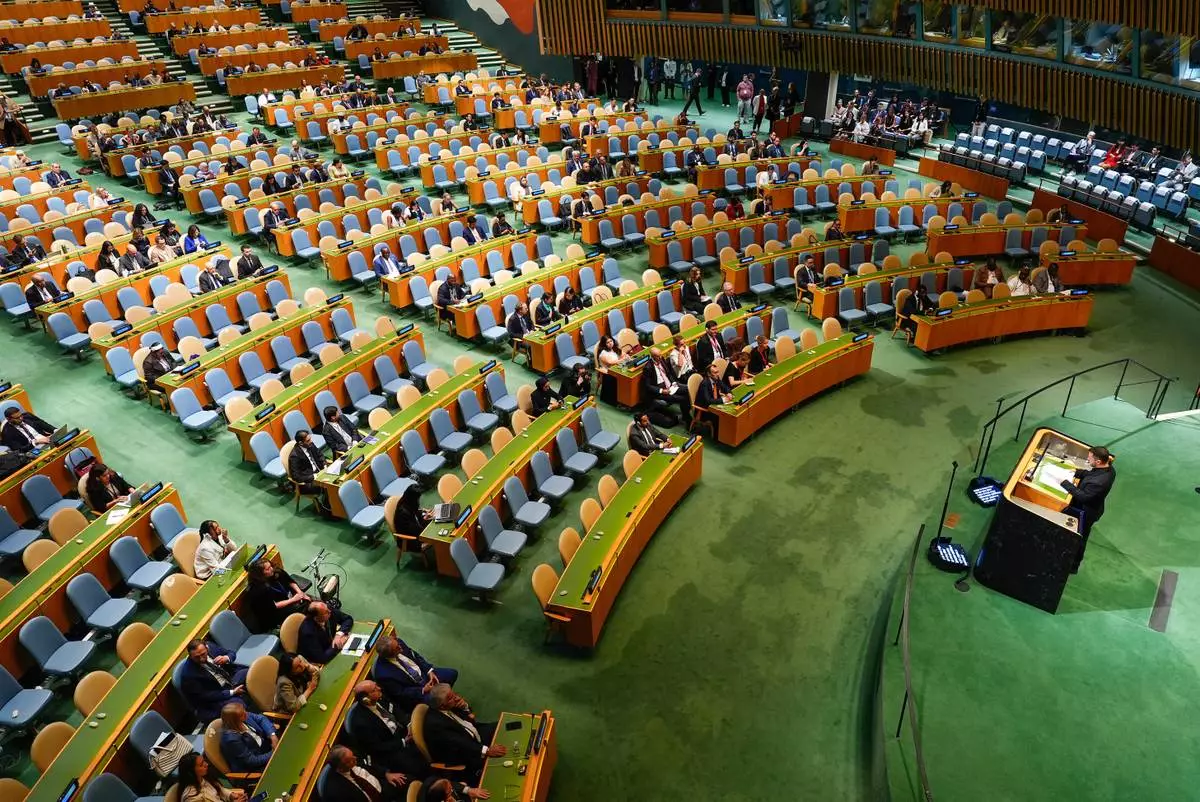
Ukraine President Volodymyr Zelenskyy speaks during the 80th session of the United Nations General Assembly, Wednesday, Sept. 24, 2025, at U.N. headquarters. (AP Photo/Yuki Iwamura)
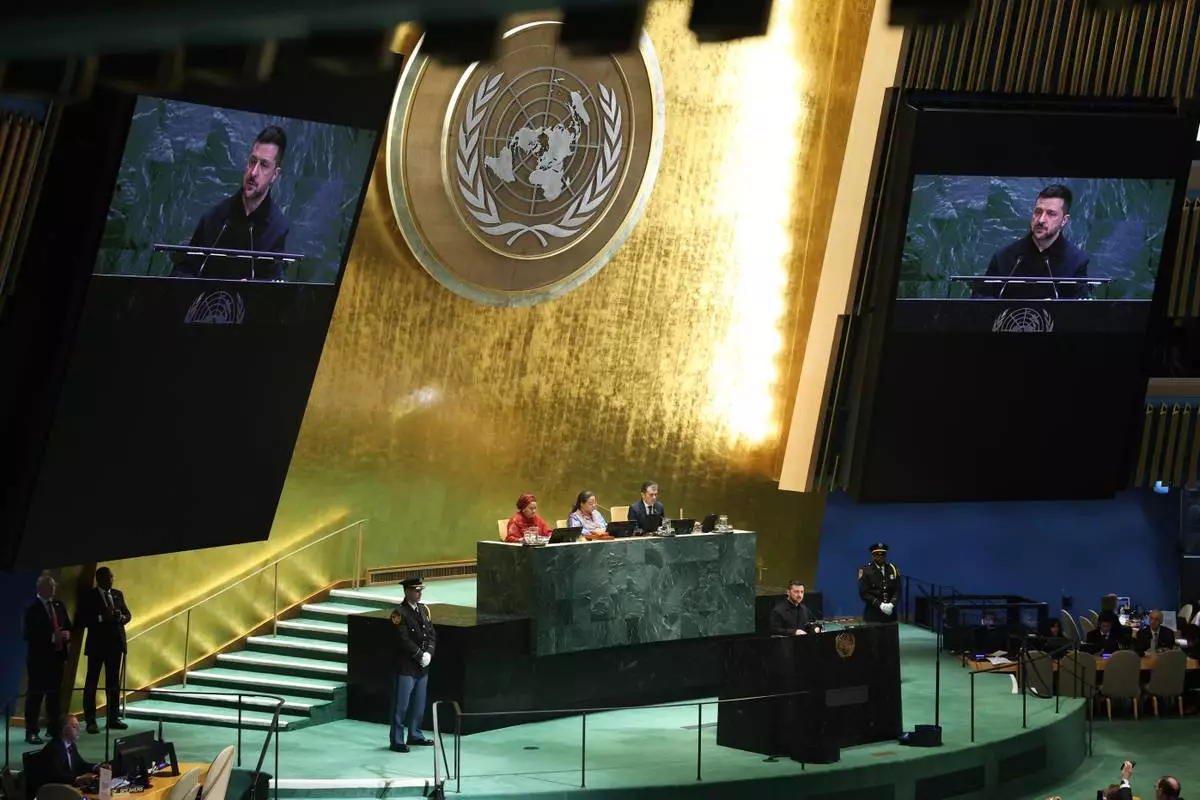
Ukraine President Volodymyr Zelenskyy speaks during the 80th session of the United Nations General Assembly, Wednesday, Sept. 24, 2025, at U.N. headquarters. (AP Photo/Yuki Iwamura)

Ukraine President Volodymyr Zelenskyy speaks during the 80th session of the United Nations General Assembly, Wednesday, Sept. 24, 2025, at U.N. headquarters. (AP Photo/Heather Khalifa)
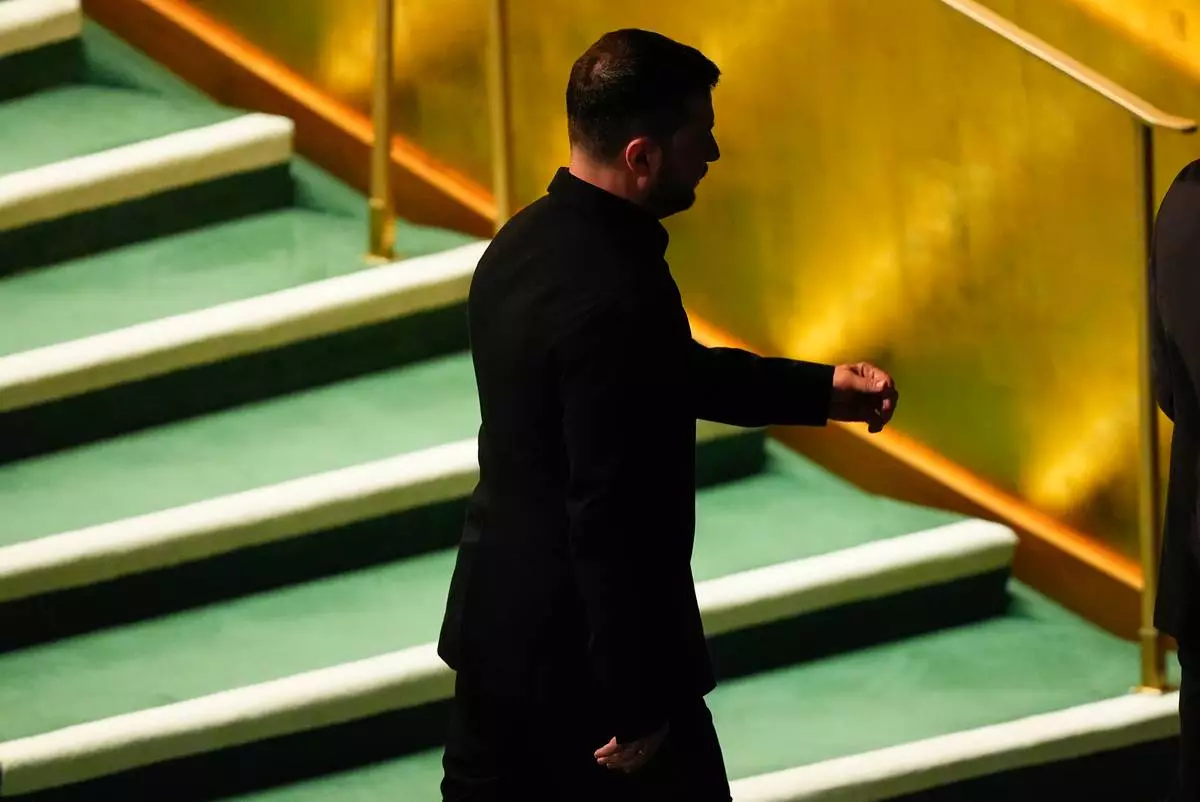
Ukraine President Volodymyr Zelenskyy speaks during the 80th session of the United Nations General Assembly, Wednesday, Sept. 24, 2025, at U.N. headquarters. (AP Photo/Heather Khalifa)

Ukrainę President Volodymyr Zelenskyy leaves after speaking at the 80th session of the United Nations General Assembly, Wednesday, Sept. 24, 2025, at U.N. headquarters. (AP Photo/Yuki Iwamura)
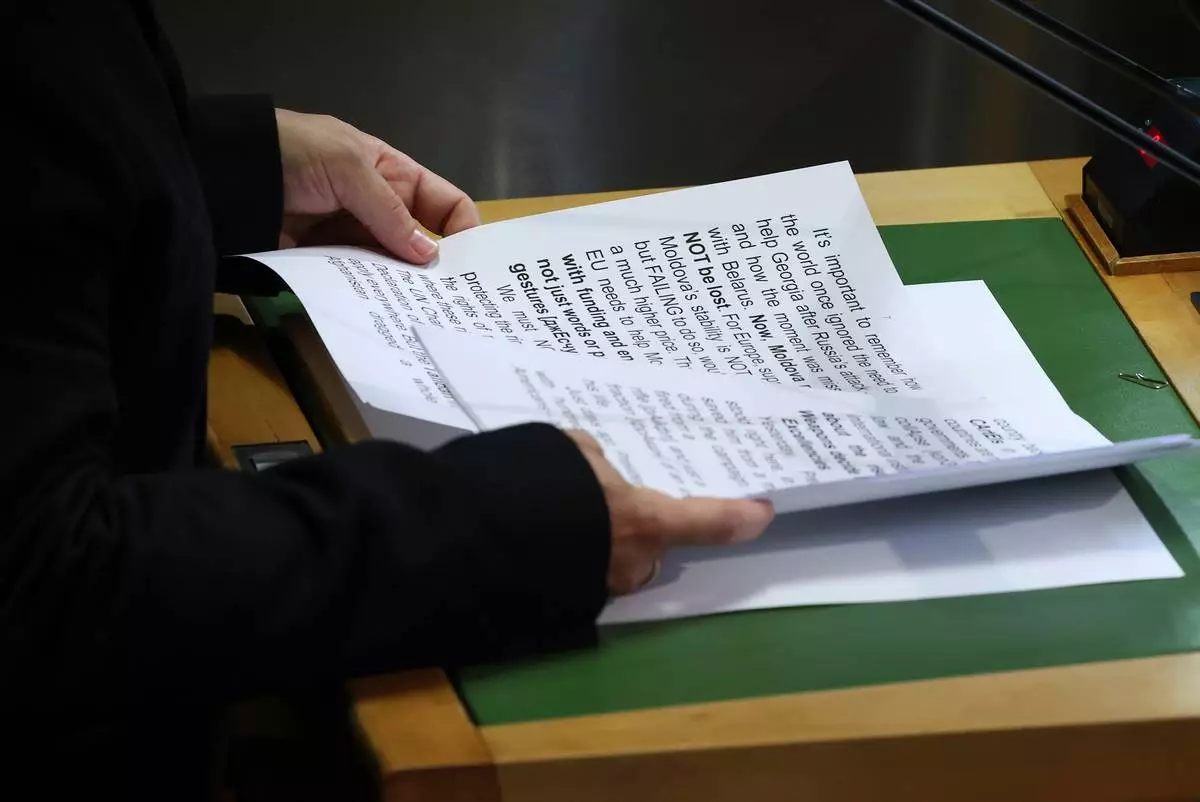
Ukrainę President Volodymyr Zelenskyy leaves after speaking at the 80th session of the United Nations General Assembly, Wednesday, Sept. 24, 2025, at U.N. headquarters. (AP Photo/Yuki Iwamura)

Ukrainę President Volodymyr Zelenskyy speaks during the 80th session of the United Nations General Assembly, Wednesday, Sept. 24, 2025, at U.N. headquarters. (AP Photo/Heather Khalifa)
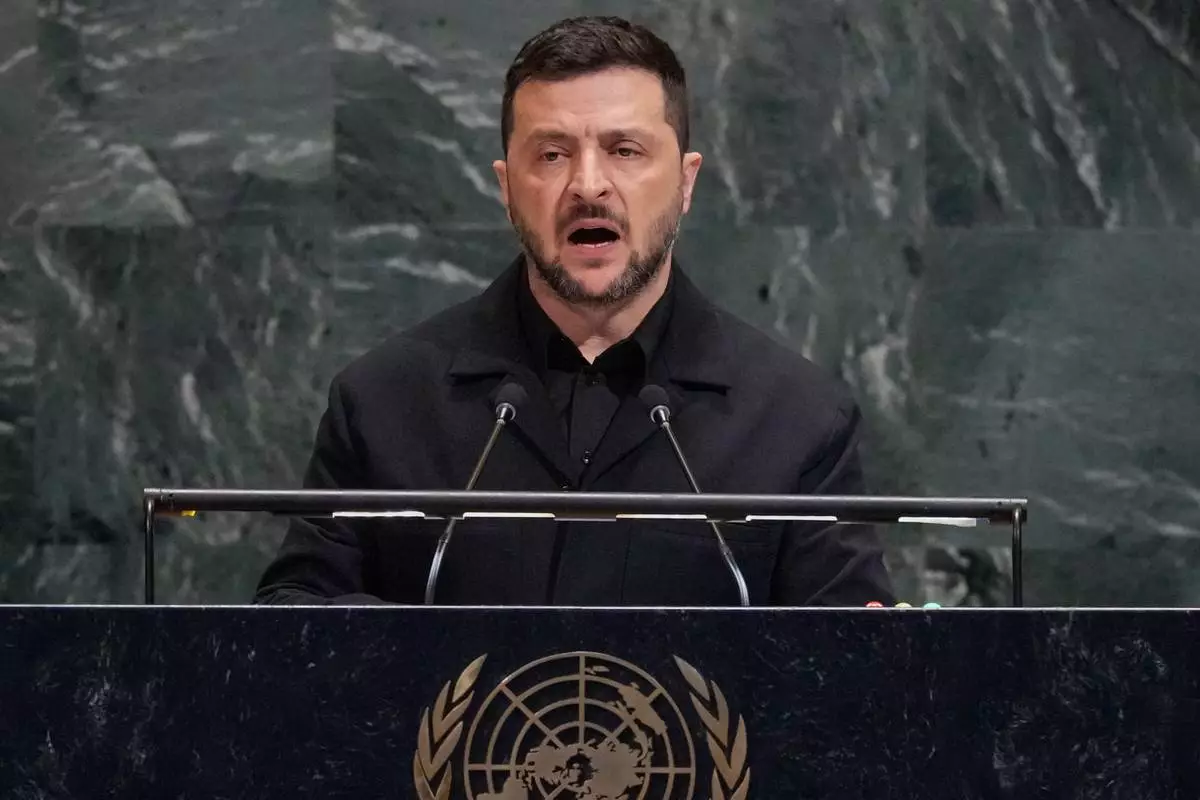
Ukrainę President Volodymyr Zelenskyy speaks during the 80th session of the United Nations General Assembly, Wednesday, Sept. 24, 2025, at U.N. headquarters. (AP Photo/Heather Khalifa)

Ukraine President Volodymyr Zelenskyy addresses the 80th session of the United Nations General Assembly, Wednesday, Sept. 24, 2025. (AP Photo/Richard Drew)
Ukraine President Volodymyr Zelenskyy addresses the 80th session of the United Nations General Assembly, Wednesday, Sept. 24, 2025. (AP Photo/Richard Drew)

WASHINGTON (AP) — President Donald Trump’s second term has been eventful. You wouldn’t know it from his approval numbers.

An AP-NORC poll from January found that about 4 in 10 U.S. adults approve of Trump’s performance as president. That’s virtually unchanged from March 2025, shortly after he took office for the second time.

The new poll from The Associated Press-NORC Center for Public Affairs Research does show subtle signs of vulnerability for the Republican president. Trump hasn’t convinced Americans that the economy is in good shape, and many question whether he has the right priorities when he’s increasingly focused on foreign intervention. His approval rating on immigration, one of his signature issues, has also slipped since he took office.

Here’s how Americans’ views of Trump have — and haven’t — changed over the past year, according to AP-NORC polling.

Call it a gift or a curse — for all his unpredictability, Trump's approval numbers just don't change very much.

This was largely the case during his first term in office, too. Early in his first term, 42% of Americans approved of how he was handling the presidency. There were some ups and downs over the ensuing years, but he left office with almost the same approval.

That level of consistency on presidential approval numbers could be the new normal for U.S. politics — or it could be unique to Trump. Gallup polling since the 1950s shows that presidential approval ratings have grown less variable over time. But President Joe Biden had a slightly different experience. Biden, a Democrat, entered the White House with higher approval numbers than Trump has ever received, but those fell rapidly during his first two years in office, then stayed low for the remainder of his term.

Most Americans have held a critical view of Trump throughout his time in office, and Americans are twice as likely to say he's focused on the wrong priorities than the right ones. About half of U.S. adults say he’s mostly focusing on the wrong priorities one year into his second term, and approximately 2 in 10 say he’s mostly focused on the right priorities. Another 2 in 10, roughly, say it’s been about an even mix, and 14% say they don't have an opinion.

The economy has haunted Trump in his first year back in the White House, despite his insistence that “the Trump economic boom has officially begun.”

Just 37% of U.S. adults approve of how Trump is handling the economy. That’s up slightly from 31% in December — which marked a low point for Trump — but Trump started out with low approval on this issue, which doesn’t give him a lot of room for error.

The economy is a new problem for Trump. His approval rating on this issue in his first term fluctuated, but it was typically higher. Close to half of Americans approved of Trump’s economic approach for much of his first White House stint, and he’s struggled to adjust to this as a weak point. Americans care a lot more about costs than they did in Trump’s first term, and, like Biden, he’s persistently asserted that the U.S. economy is not a problem while the vast majority describe it as “poor.”

About 6 in 10 U.S. adults say Trump has done more to hurt the cost of living in his second term, while only about 2 in 10 say he’s done more to help. About one-quarter say he hasn't made an impact.

When Trump entered office, immigration was among his strongest issues. It’s since faded, a troubling sign for Trump, who campaigned on both economic prosperity and crackdowns to illegal immigration.

Just 38% of U.S. adults approve of how Trump is handling immigration, down from 49% in March. The poll was conducted Jan. 8-11, shortly after the death of Renee Good, who was shot and killed by a U.S. Immigration and Customs Enforcement officer in Minneapolis.

But there are signs that Americans still give Trump some leeway on immigration issues. About half of U.S. adults say Trump has “gone too far” when it comes to deporting immigrants living in the country illegally, which is unchanged since April, despite an immigration crackdown that spread to cities across the U.S. in the second half of the year.

Nearly half of Americans, 45%, say Trump has helped immigration and border security “a lot” or “a little” in his second term. This is an area where Democrats are more willing to give Trump some credit. About 2 in 10 Democrats say Trump has helped on this issue, higher than the share of Democrats who say he's helped on costs or job creation.

Trump has focused his attention more on foreign policy in his second term, and polling shows most Americans disapprove of his approach.

But much like Trump's overall approval, views of his handling of foreign policy have changed little in his second term, despite wide-ranging actions including his push to control Greenland and the recent military capture of Venezuelan President Nicolás Maduro.

About 6 in 10 Americans disapprove of how Trump is handling the issue of foreign policy, and most Americans, 56%, say Trump has “gone too far” in using the U.S. military to intervene in other countries.

Trump’s continued focus on global issues could be a liability given its sharp contrast with the “America First” platform he ran on and Americans’ growing concern with costs at home. But it could also be hard to shift views on the issue — even if Trump takes more dramatic action in the coming months.

The AP-NORC poll of 1,203 adults was conducted Jan. 8-11 using a sample drawn from NORC’s probability-based AmeriSpeak Panel, which is designed to be representative of the U.S. population. The margin of sampling error for adults overall is plus or minus 3.9 percentage points.

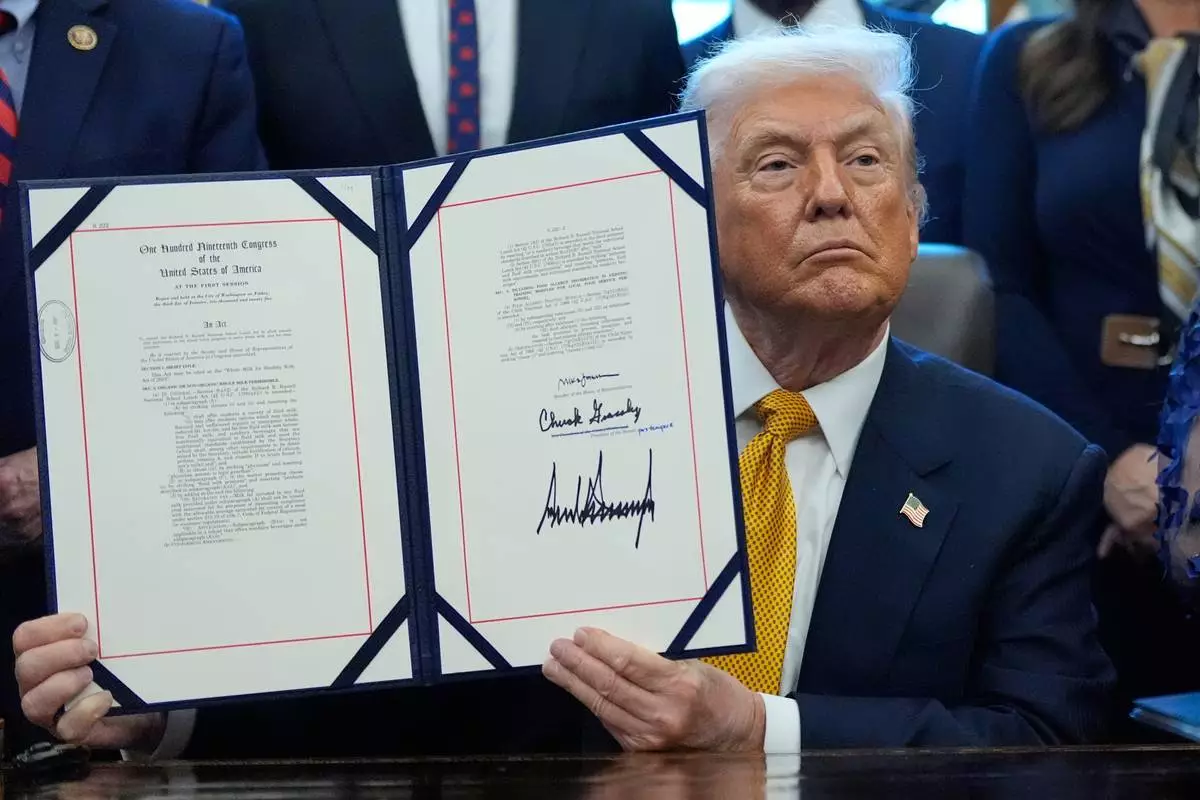
President Donald Trump holds a bill that returns whole milk to school cafeterias across the country, in the Oval Office of the White House, Wednesday, Jan. 14, 2026, in Washington. (AP Photo/Alex Brandon)

President Donald Trump holds a bill that returns whole milk to school cafeterias across the country, in the Oval Office of the White House, Wednesday, Jan. 14, 2026, in Washington. (AP Photo/Alex Brandon)

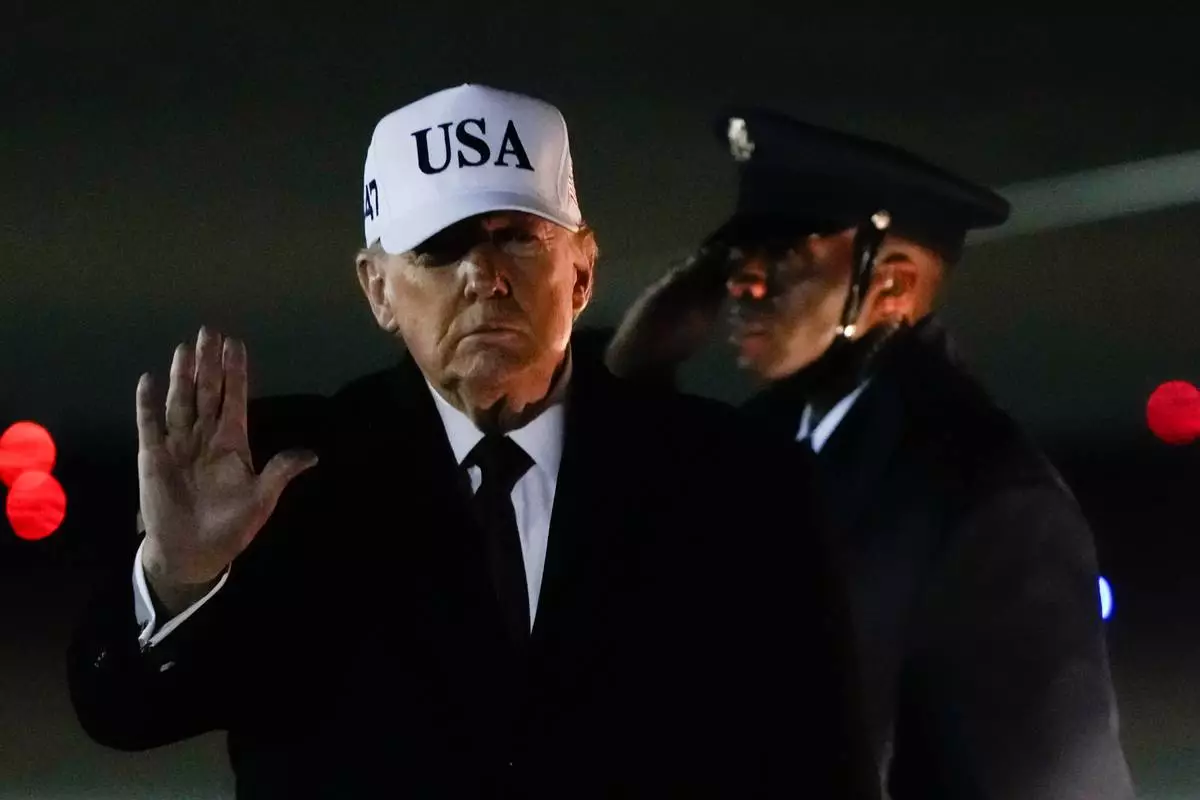
FILE - President Donald Trump waves after arriving on Air Force One from Florida, Jan. 11, 2026, at Joint Base Andrews, Md. (AP Photo/Julia Demaree Nikhinson, File)

FILE - President Donald Trump waves after arriving on Air Force One from Florida, Jan. 11, 2026, at Joint Base Andrews, Md. (AP Photo/Julia Demaree Nikhinson, File)

Recommended Articles