Skip to Content Facebook Feature Image

China's southern regions respond as super typhoon Ragasa makes landfall

China

China

China

China's southern regions respond as super typhoon Ragasa makes landfall

2025-09-25 01:13 Last Updated At:02:27

Authorities across southern China have been enacting emergency response measures as Typhoon Ragasa made landfall along the coast of south China's Guangdong Province on Wednesday afternoon, with the powerful storm bringing ferocious winds and torrential rain.

Ragasa, the 18th typhoon of the year and by far the strongest, first entered the South China Sea late Monday and has been moving along the southern edge of Guangdong at a speed of about 20 kilometers per hour.

The Guangdong provincial emergency management department had acted in advance of Ragasa's arrival, with over one million people being evacuated as a precaution. Various control measures have been imposed in coastal waters by local authorities, with all port operations suspended. Over 80,000 fishing boats have been secured in ports, while more than 12,200 offshore workers are taking shelter onshore across the province.

The central government has also urgently allocated supplies to support Guangdong in response to the typhoon.

Meanwhile, local authorities in other affected areas have also taken relevant measures.

In the southern island province of Hainan, high-speed rail services have been suspended, with flights also adjusted, and over 1,000 yachts being berthed.

The Guangxi Zhuang Autonomous Region evacuated tourists from its Weizhou Island and also closed coastal routes ahead of the incoming bad weather.

The typhoon also forced classes to be suspended in the Hong Kong Special Administrative Region (HKSAR) while local transport also ground to a halt, while the Macao SAR experienced severe flooding in low-lying areas with a number of residents relocated.

China's Central Meteorological Observatory has forecast that the intensity of winds and rainfall around the Guangdong coast will weaken on Thursday, with the heavy rain shifting to the west and likely hitting the neighboring Guangxi region.

The public have been advised to take precautions, avoid unnecessary trips, and be alert for the risks posed by potential flooding in urban centers, as well as possible mountain torrents and landslides in various other parts of southern and eastern China, including in the Yunnan, Guizhou, Jiangsu, Fujian, and Zhejiang provinces, where heavy rain is expected.
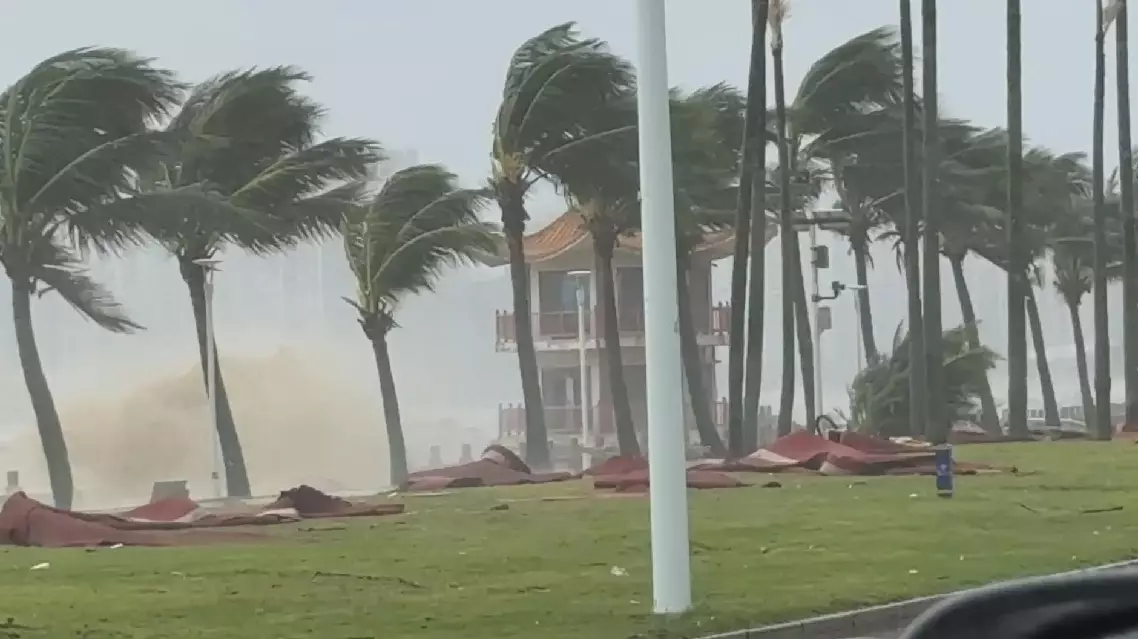
China's southern regions respond as super typhoon Ragasa makes landfall


China's southern regions respond as super typhoon Ragasa makes landfall

Winter travel bookings in China have gained a boost this year after several regions announced an additional "snow holiday" for students and many workers in the hopes of further fueling the season's tourism boom and encouraging residents to take up winter sports.

The snow holiday is taking place in cities including Urumqi and Altay in Xinjiang Uygur Autonomous Region, as well as across Jilin Province and other regions, offering residents another break during the winter season on top of the usual winter vacation that Chinese students enjoy.

As a result, flight bookings have seen a substantial increase. Data from online travel booking platforms indicate notable spikes in ticket reservations from both Urumqi and Altay from Nov 29 to Dec 7.

Flight bookings departing from Urumqi increased by 45 percent compared to the period from Nov 15 to 23, while bookings departing from Altay increased by 48 percent.

"During the snow holiday, total ticket bookings for scenic spots in Xinjiang increased by 16 percent compared to the previous period, with the most popular attractions including Sayram Lake, Hemu Scenic Area, and Kanas Scenic Area. Meanwhile, Jilin Province implemented a free skiing policy for university students. Inner Mongolia and Xinjiang are also gradually increasing their discounts. Driven by these policies, tourism in many cities in northeast China and Xinjiang has continued to rise this year, and winter tourism destinations have become more diverse," said Shi Ke, a researcher at the big data research institute of Qunar.com, a leading Chinese travel booking platform.

In addition to ski resorts, glacier and snow mountain scenic spots have also become trending destinations for winter tourism. Ticket bookings for famous attractions have doubled year on year.

Hotel reservations at popular ice and snow tourism destinations are also booming. From November this year to the end of January of 2026, hotel bookings in Bortala Mongolian Autonomous Prefecture of Xinjiang surged by over 80 percent year on year, while cities like Dandong in Liaoning, Liaoyuan in Jilin, and Yichun in Heilongjiang have also seen significant increases, with growth rates reaching 30 percent year on year.

New 'snow holiday' in northern Chinese regions boosts winter travel

New 'snow holiday' in northern Chinese regions boosts winter travel

Recommended Articles