TALLAHASSEE, Fla. (AP) — Florida’s board of education signed off Wednedsay on a major expansion of charter schools in the state, clearing the way for the privately run schools to “co-locate” inside traditional public schools.
It’s the latest push by Florida officials to expand school choice in a state that has long been a national model for conservative education policy. The move comes as some public schools are closing their doors as they grapple with declining enrollments, aging facilities and post-pandemic student struggles.
The new regulations approved by the state board build on a bill signed into law by Republican Gov. Ron DeSantis this year to allow operators to open more “schools of hope,” charter schools that are meant to serve students from persistently low-performing schools.
“We have operators that want to come in and give the best education to those who are in schools that haven’t been getting the greatest education,” Republican state Rep. Jenna Persons-Mulicka said while defending her bill on the House floor earlier this year.
“Let’s give them the opportunity,” she added.
Lawmakers created the schools of hope program in 2017 to encourage more publicly funded, privately run schools to open in areas where traditional public schools had been failing for years, giving students and families in those neighborhoods a way to bail out of a struggling school.
This year's law loosens restrictions on where schools of hope can operate, allowing them to set up operations within the walls of a public school — even a high-performing one — if the campus has underused or vacant facilities.
The board's new regulations require public school districts to provide the same facilities-related services to the charter schools as they do their own campuses, including custodial work, maintenance, school safety, food service, nursing and student transportation — “without limitation.”
School districts must allow schools of hope to use “all or part of an educational facility at no cost”, including classrooms and administrative offices, the rules read.
“All common indoor and outdoor space at a facility such as cafeterias, gymnasiums, recreation areas, parking lots, storage spaces and auditoriums, without limitation, must be shared proportionately based on total full-time equivalent student enrollment,” the rules continue.
Public school advocates urged the board to vote down the proposal at Wednesday's meeting. One such advocate, India Miller, argued that schools of hope are designed to be “parasitic” to public schools.
“To me, it would be like asking Home Depot to give Lowe’s space in their store and pay all of their infrastructure costs. It just does not make sense to me,” Miller said.
Board members, who are appointed by DeSantis, defended the new rules and dismissed concerns that the charter expansion could pull critical funding away from traditional public schools.
“Schools of hope wouldn’t be necessary if our public school system had done its job along the way,” said board Vice Chair Esther Byrd.
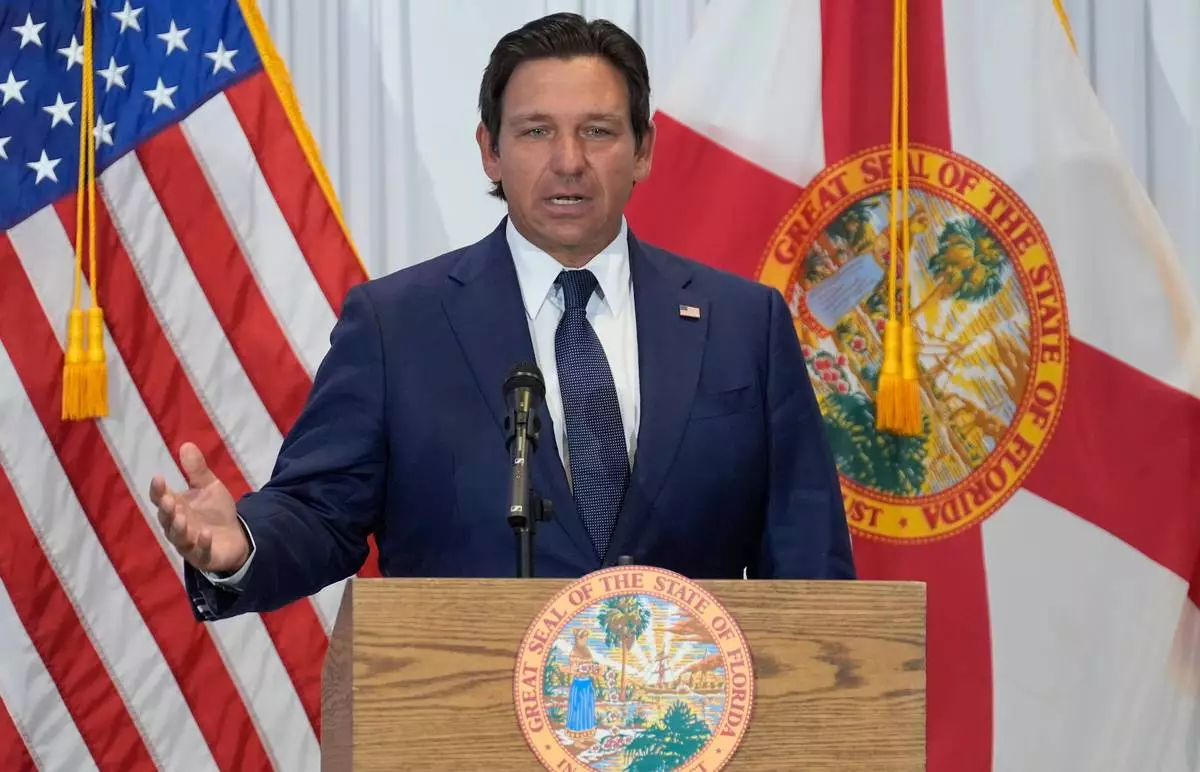
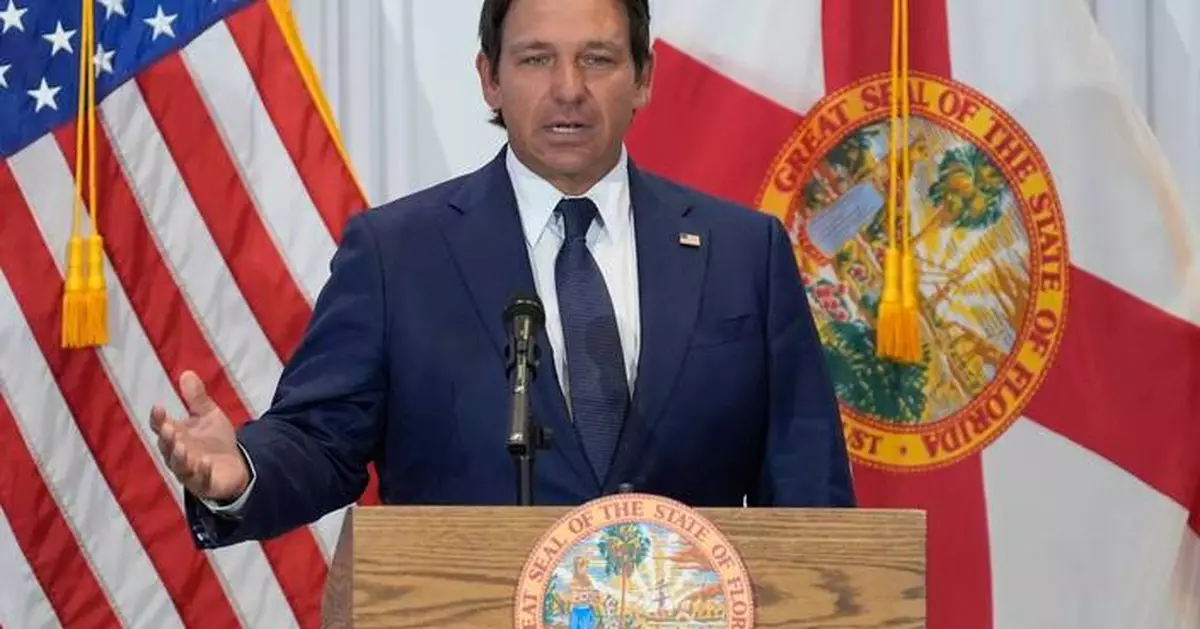
FILE - Florida Gov. Ron DeSantis speaks during a news conference Aug. 12, 2025, in Tampa, Fla. (AP Photo/Chris O'Meara, File)
NUUK, Greenland (AP) — Troops from several European countries, including France, Germany, the UK, Norway and Sweden, are arriving in Greenland in a show of support for Denmark as talks between representatives of Denmark, Greenland and the U.S. on Wednesday highlighted “fundamental disagreement” between the Trump administration and European allies on the future of the Arctic island.
Denmark announced it would increase its military presence in Greenland on Wednesday and several European partners started sending symbolic numbers of troops on that day, just as the Danish and Greenlandic foreign ministers were preparing to meet with White House representatives in Washington.
The troop movements were intended to portray unity among Europeans and send a signal to U.S. President Donald Trump that an American takeover of Greenland is not necessary as NATO together can safeguard the security of the Arctic region amid rising Russian and Chinese interest.
“The first French military elements are already en route” and “others will follow,” French President Emmanuel Macron announced Wednesday, as French authorities said about 15 soldiers from the mountain infantry unit were already in Nuuk for a military exercise.
Germany will deploy a reconnaissance team of 13 personnel to Greenland on Thursday, its Defense Ministry said.
On Thursday, Danish Defense Minister Troels Lund Poulsen said the intention was “to establish a more permanent military presence with a larger Danish contribution,” according to Danish broadcaster DR. He said soldiers from several NATO countries will be in Greenland on a rotation system.
Danish Foreign Minister Lars Løkke Rasmussen, flanked by his Greenlandic counterpart Vivian Motzfeldt, said Wednesday that a “fundamental disagreement” over Greenland remains with Trump after they held highly anticipated talks at the White House with Vice President JD Vance and Secretary of State Marco Rubio.
Rasmussen added that it remains “clear that the president has this wish of conquering over Greenland” but that dialogue with the U.S. would continue at a high level over the following weeks.
Inhabitants of Greenland and Denmark reacted with anxiety but also some relief that negotiations with the U.S. would go on and European support was becoming visible.
In Greenland’s capital, Nuuk, local residents told The Associated Press they were glad the first meeting between Greenlandic, Danish and American officials had taken place but suggested it left more questions than answers.
Several people said they viewed Denmark’s decision to send more troops, and promises of support from other NATO allies, as protection against possible U.S. military action. But European military officials have not suggested the goal is to deter a U.S. move against the island.
Maya Martinsen, 21, agreed and said it was “comforting to know that the Nordic countries are sending reinforcements” because Greenland is a part of Denmark and NATO.
The dispute, she said, is not about “national security” but rather about “the oils and minerals that we have that are untouched.”
On Wednesday, Poulsen had announced a stepped-up military presence in the Arctic “in close cooperation with our allies,” calling it a necessity in a security environment in which “no one can predict what will happen tomorrow.”
“This means that from today and in the coming time there will be an increased military presence in and around Greenland of aircraft, ships and soldiers, including from other NATO allies,” Poulsen said.
Asked whether the European troop movements were coordinated with NATO or what role the U.S.-led military alliance might play in the exercises, NATO referred all questions to the Danish authorities. However, NATO is currently studying ways to bolster security in the Arctic.
Rasmussen, the Danish foreign minister, announced the creation of a working group with the Americans to discuss ways to work through differences.
“The group, in our view, should focus on how to address the American security concerns, while at the same time respecting the red lines of the Kingdom of Denmark,” he said.
Commenting on the outcome of the Washington meeting on Thursday, Poulsen said the working group was “better than no working group” and “a step in the right direction.” He added nevertheless that the dialogue with the U.S. did not mean “the danger has passed.”
“We are really happy that action is being taken to make sure that this discussion is not just ended with that meeting alone,” Greenlandic MP Aki-Matilda Høegh-Dam said on Thursday during a news conference in Copenhagen.
She said Greenlandic people understood they were a “pivotal point” in a broader transformation of the international rules-based order and that they felt responsible not just for themselves but also for the whole world to get it right.
Høegh-Dam said the military operations should not happen “right next to our schools and right next to our kindergartens.”
Line McGee, a 38-year-old from Copenhagen, told AP that she was glad to see some diplomatic progress. “I don’t think the threat has gone away,” she said. “But I feel slightly better than I did yesterday.”
Speaking to FOX News Channel’s Special Report on Wednesday after the White House talks, Rasmussen rejected both a military takeover and the potential purchase of the island by the U.S. Asked whether he thinks the U.S. will invade, he replied: “No, at least I do not hope so, because, I mean, that would be the end of NATO.”
Rasmussen said Greenlanders were unlikely to vote for U.S. rule even if financial incentives were offered, “because I think there’s no way that U.S. will pay for a Scandinavian welfare system in Greenland, honestly speaking.”
“You haven’t introduced a Scandinavian welfare system in your own country,” he added.
Trump, in his Oval Office meeting with reporters, said: “We’ll see how it all works out. I think something will work out.”
Niemann reported from Copenhagen, Denmark, and Ciobanu from Warsaw, Poland.
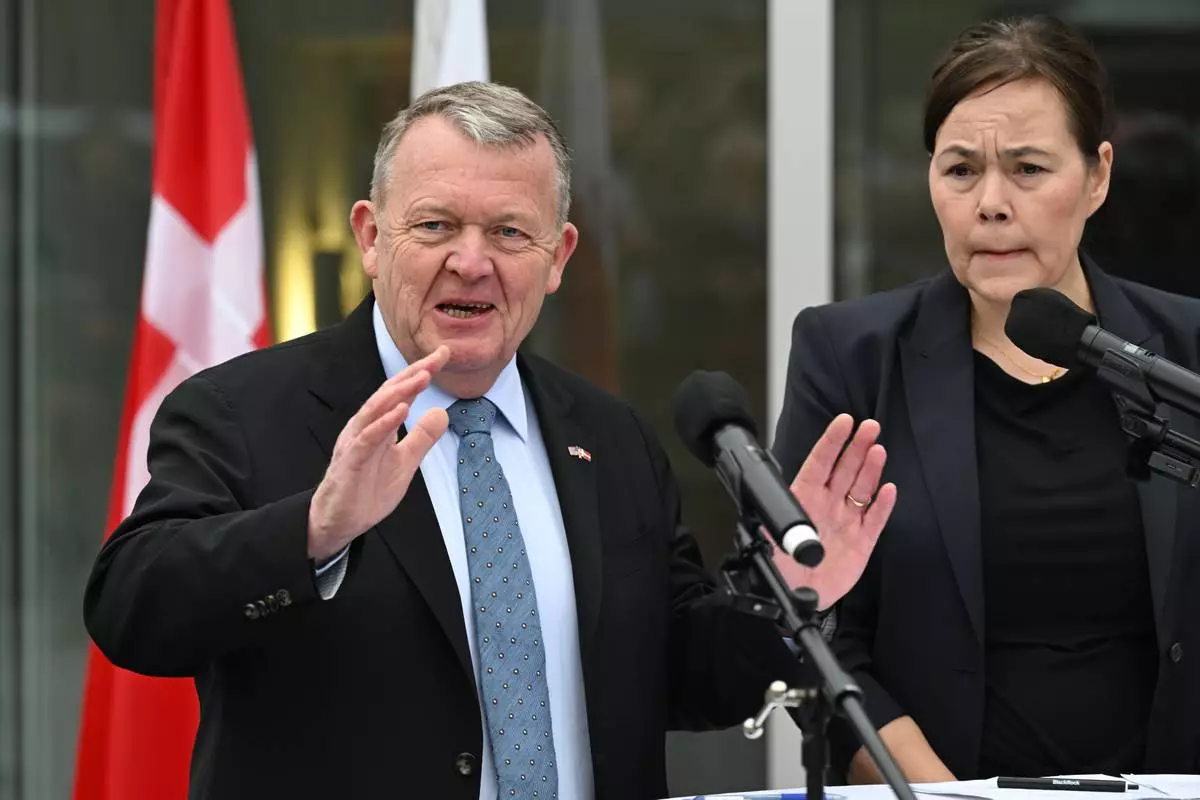
Denmark's Foreign Minister Lars Løkke Rasmussen and Greenland's Foreign Minister Vivian Motzfeldt speak at a news conference at the Embassy of Denmark, Wednesday, Jan. 14, 2026, in Washington. (AP Photo/John McDonnell)
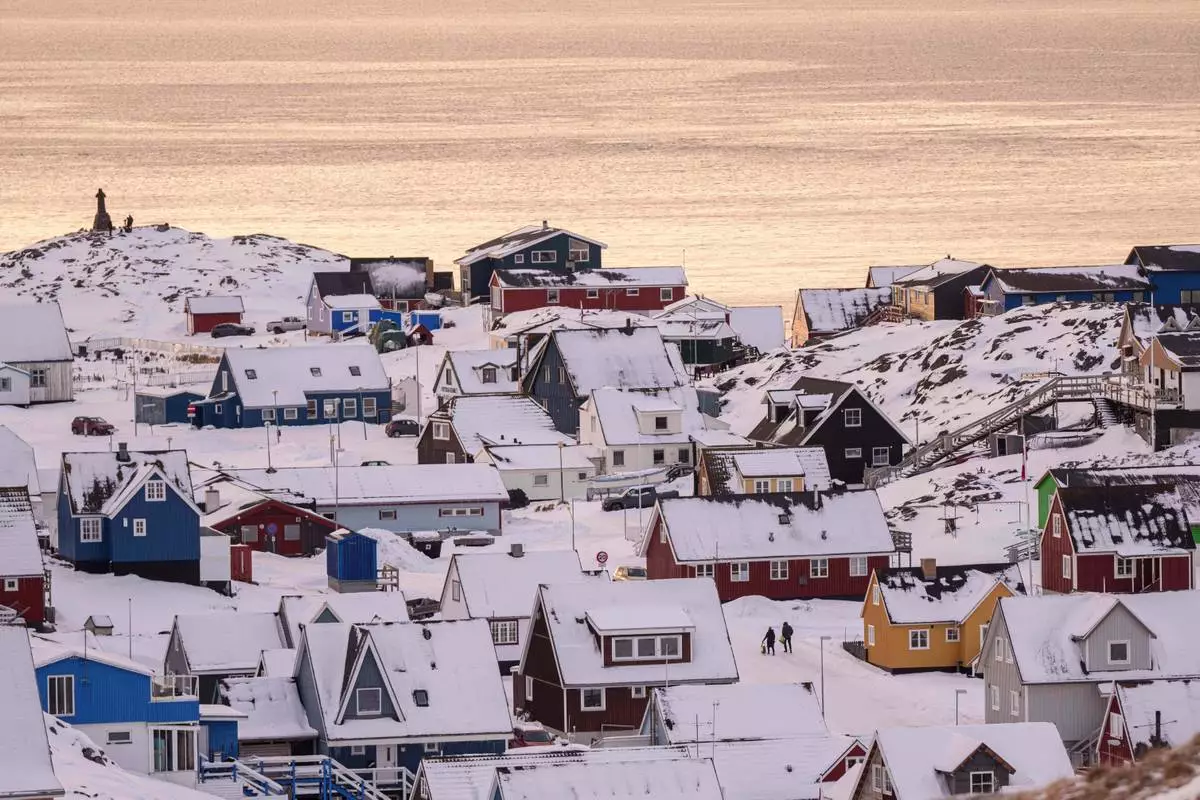
People walk on a street in Nuuk, Greenland, Wednesday, Jan. 14, 2026. (AP Photo/Evgeniy Maloletka)
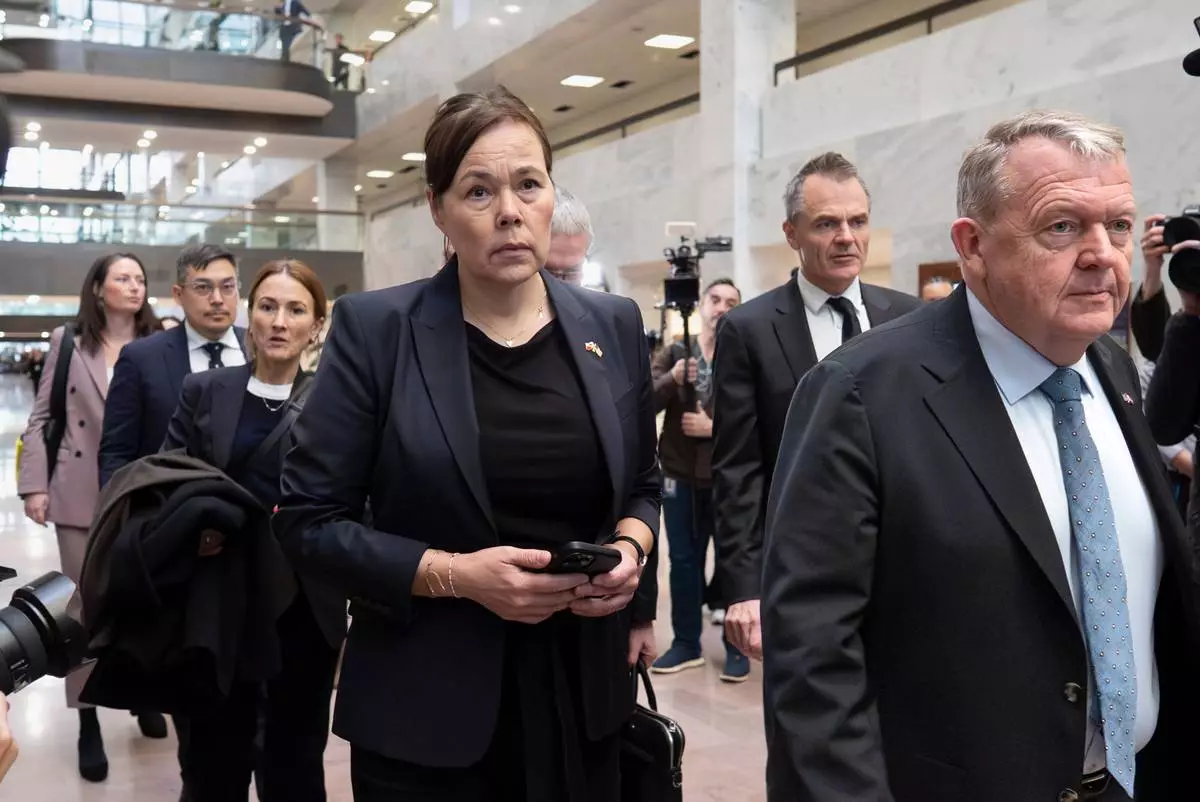
From center to right, Greenland Foreign Minister Vivian Motzfeldt, Denmark's Ambassador Jesper Møller Sørensen, rear, and Danish Foreign Minister Lars Løkke Rasmussen, right, arrive on Capitol Hill to meet with senators from the Arctic Caucus, in Washington, Wednesday, Jan. 14, 2026. (AP Photo/J. Scott Applewhite)

An Airbus A400M transport aircraft of the German Air Force taxis over the grounds at Wunstorf Air Base in the Hanover region, Germany, Thursday, Jan. 15, 2026 as troops from NATO countries, including France and Germany, are arriving in Greenland to boost security. (Moritz Frankenberg/dpa via AP)
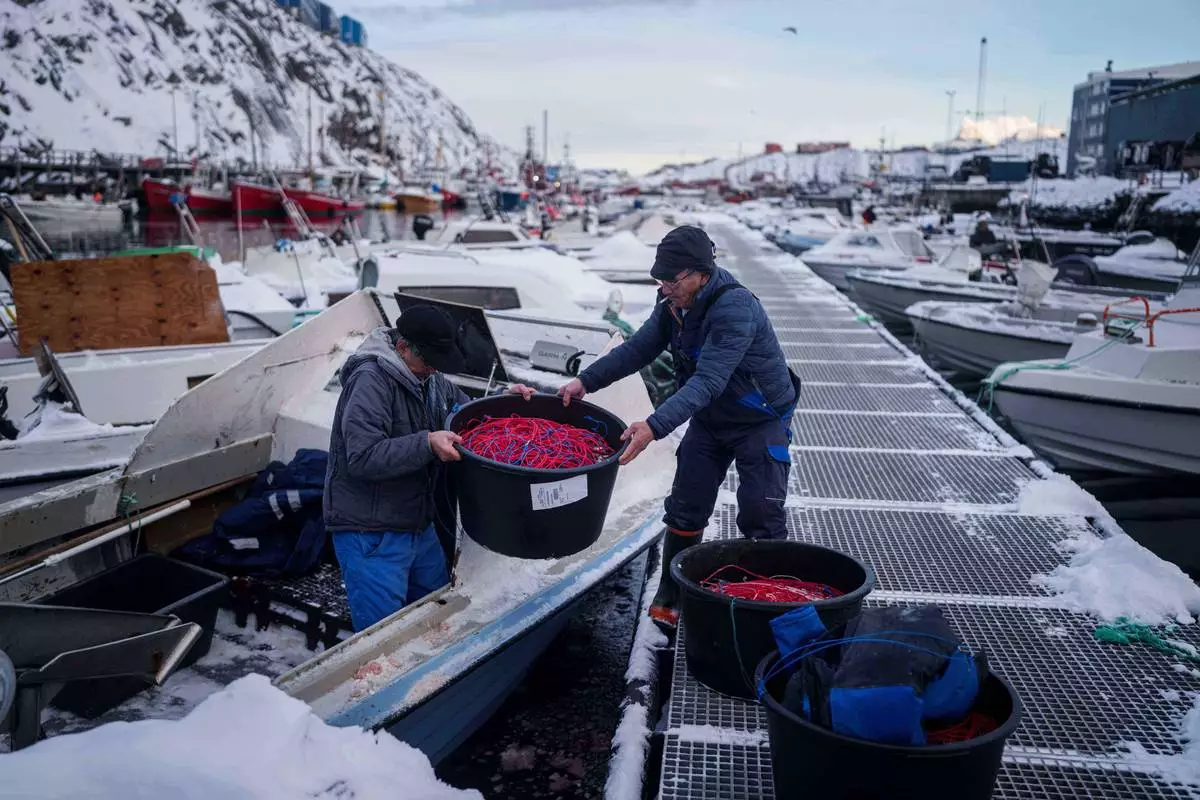
Fishermen load fishing lines into a boat in the harbor of Nuuk, Greenland, Wednesday, Jan. 14, 2026. (AP Photo/Evgeniy Maloletka)
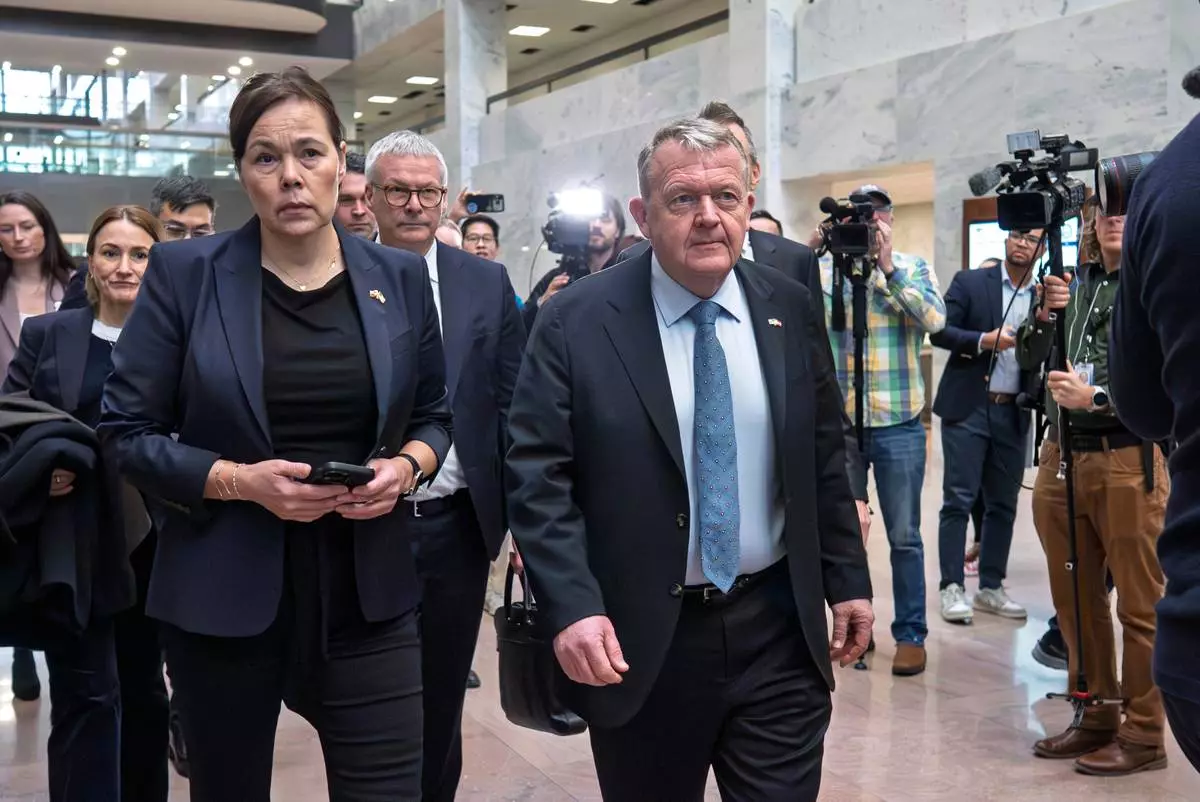
Greenland Foreign Minister Vivian Motzfeldt, left, and Danish Foreign Minister Lars Løkke Rasmussen, arrive on Capitol Hill to meet with members of the Senate Arctic Caucus, in Washington, Wednesday, Jan. 14, 2026. (AP Photo/J. Scott Applewhite)