UNITED NATIONS (AP) — Behind the scenes at the annual gathering of world leaders at the United Nations, key countries and regional organizations have been coordinating efforts to try to end the horrific war in Sudan, which has created the most devastating humanitarian and displacement crisis in the world.
Alan Boswell, the International Crisis Group's project director for the Horn of Africa, said this year’s high-level General Assembly meeting, which ends Monday, could be “make-or-break” for stopping the conflict.
“For the first time since the war broke out more than two years ago, Sudan’s most influential outside powers agreed this month on a roadmap to end the war,” he said in a statement. “Now comes the huge task of trying to convince Sudan’s warring parties to stop fighting.”
Sudan plunged into conflict in mid-April 2023, when long-simmering tensions between its rival military and paramilitary commanders broke out in the capital, Khartoum, and spread to western Darfur and much of the rest of the country.
At least 40,000 people have been killed, nearly 13 million displaced and many pushed to the brink of famine with over 24 million acutely food insecure, U.N. agencies say.
In a key development after a summer of discussions, the United States, Saudi Arabia, Egypt and the United Arab Emirates issued a joint statement on Sept. 12 calling for a humanitarian truce for an initial three months to deliver desperately needed aid throughout Sudan followed by a permanent ceasefire.
Then, the four countries said, “an inclusive and transparent transition process should be launched and concluded within nine months to meet the aspirations of the Sudanese people towards smoothly establishing an independent, civilian-led government with broad-based legitimacy and accountability.”
The group, calling themselves the Quad, met Wednesday on the sidelines of the assembly to discuss implementation of their roadmap.
Another meeting also focused on de-escalating the war was convened Wednesday by the African Union, the European Union and the foreign ministers of Germany, France and the United Kingdom. Representatives of the Quad, a dozen other countries, the Arab League, the United Nations and the east Africa regional group IGAD also attended.
A statement issued by the AU, EU, France, Germany, UK, Denmark, Norway and Canada after the meeting urged the warring government and paramilitary Rapid Support Forces to resume direct negotiations to achieve a permanent ceasefire.
It welcomed the Sept. 12 statement by the Quad, and expressed support for efforts by the AU and the EU “to coordinate international and bilateral efforts to pressure all Sudanese parties towards a ceasefire, humanitarian action and political dialogue.”
The statement strongly condemned the military involvement of unnamed foreign countries and “non-state actors” and urged them to stop fueling the conflict.
U.N. Secretary-General Antonio Guterres, in his “State of the World” speech at the opening of the global gathering Tuesday, made a similar appeal to all parties, including unnamed countries in the vast assembly chamber: "End the external support that is fueling this bloodshed. Push to protect civilians.”
“In Sudan, civilians are being slaughtered, starved, and silenced,” Guterres said. “Women and girls face unspeakable violence.”
The deputy prosecutor of the International Criminal Court said in July that the tribunal believes war crimes and crimes against humanity are taking place in Darfur, where the RSF controls all regional capitals except el-Fasher in North Darfur.
The RSF and their allies announced in late June they had formed a parallel government in areas the group controls. The U.N. Security Council rejected the plan, warning that a rival government threatens the country’s territorial integrity and risks further exacerbating the ongoing civil war.
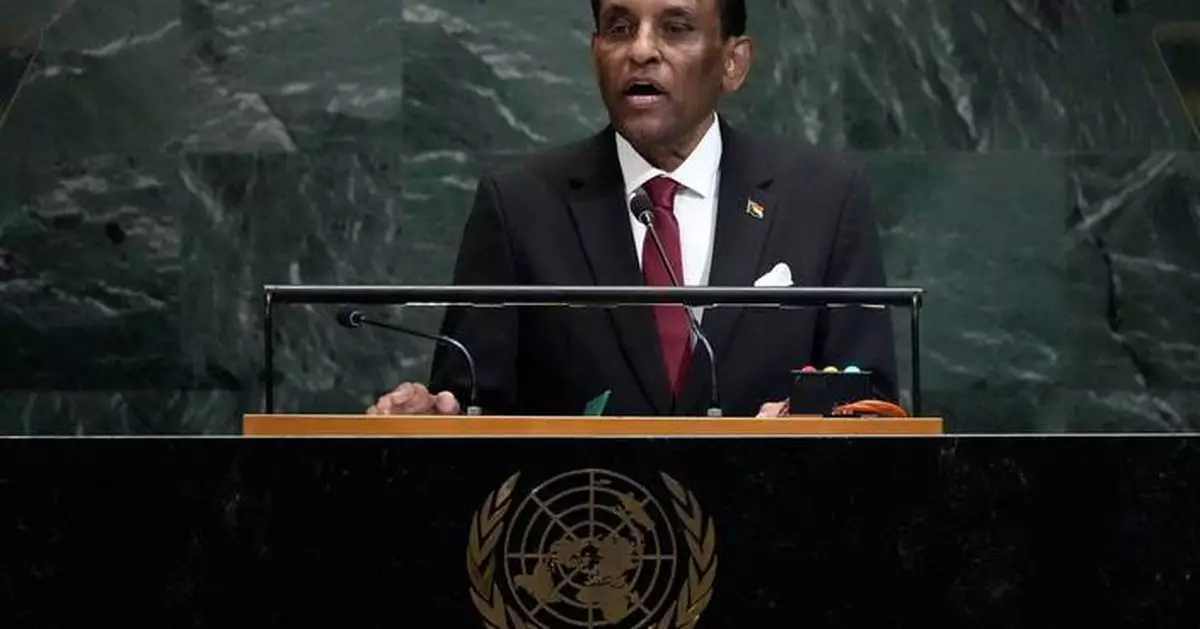
Sudan’s Transitional Prime Minister Kamil El-Tayeb Idris accused the RSF of “systematic killing and torture and looting and rape and humiliation and the savage destruction of all the components of life,” part of its effort “to control Sudan, to plunder its wealth and to change the demographics of its population.”
Speaking to the assembly Thursday, he stressed the country’s sovereignty and said the government is committed to a Sudanese-developed roadmap including a ceasefire, “accompanied by the withdrawal of the terrorist Rapid Support militia from the areas and cities it occupies” including el-Fasher.
El-Tayeb said the civilian government he formed will engage in a national dialogue “that includes all political and societal forces to lay the groundwork for elections that are free and fair, and to engage positively with regional and international communities.”
Chad’s Prime Minister Allah Maye Halina told the General Assembly on Thursday that his country, which borders Darfur, is hosting over 2 million refugees from Sudan, 1.5 million of whom arrived since April 2023. He appealed to the international community to help support the refugees, saying more keep arriving.
“We are convinced that the current crisis in Sudan cannot be resolved through weapons, but rather through peaceful means, through inclusive inter-Sudanese dialogue,” he said, stressing that Chad is strictly neutral in the conflict and is available to contribute to any initiative to end the war.
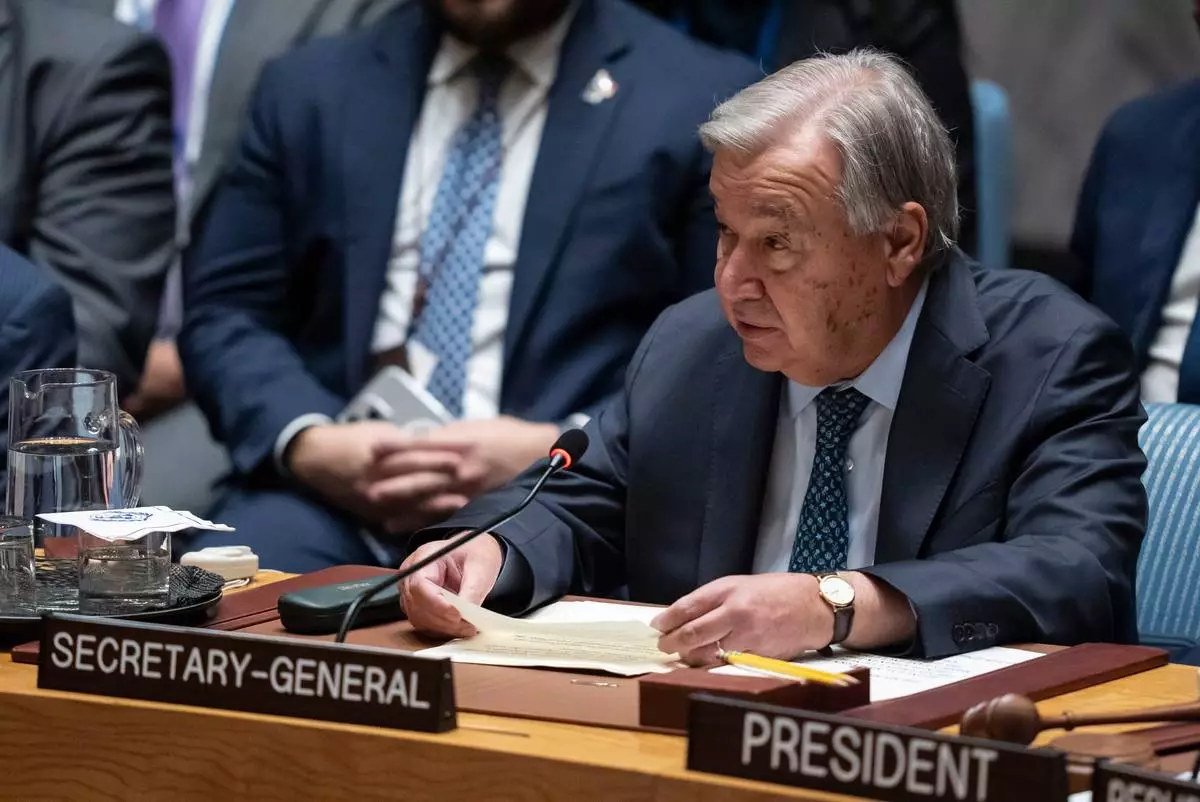
United Nations Secretary-General Antonio Guterres speaks during a Security Council meeting at the United Nations headquarters, Tuesday, Sept. 23, 2025, at U.N. headquarters. (AP Photo/Yuki Iwamura)
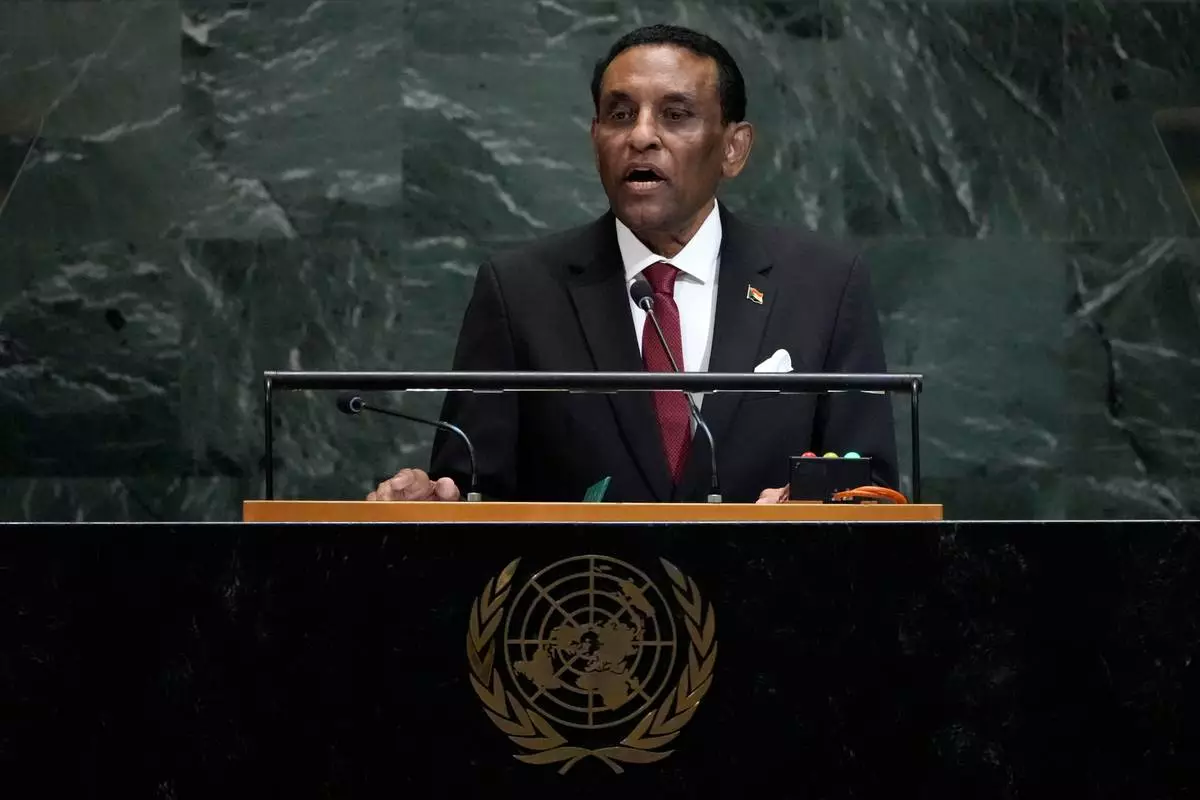
Transitional prime minister of Sudan Kamil El-Tayeb Idris addresses the 80th session of the United Nations General Assembly, Thursday, Sept. 25, 2025, at U.N. headquarters. (AP Photo/Pamela Smith)
LONDON (AP) — Britain’s government is expected to approve a “mega” Chinese Embassy close to London’s financial district after years of controversy and political wrangling over the potential security risks it poses to the U.K.
Lawmakers from across the spectrum have urged planning officials to reject China’s application for the new embassy. Critics fear the proposed new building, on a huge site close to London’s financial district and crucial data cables, will be used as a base for espionage. Others say the supersized embassy — set to be the biggest Chinese Embassy in Europe — will pose a heightened threat of surveillance and intimidation to Chinese dissidents in exile.
The decision was initially slated for October, but it was repeatedly postponed after multiple allegations of Chinese spying and political interference piled pressure on the British government.
British media have reported that the decision to approve the embassy will come this week, ahead of Prime Minister Keir Starmer's expected trip to China. The closely watched visit would be the first made by a British prime minister since 2018.
A final decision on the embassy is expected by Jan. 20, the deadline set by the government.
Here's a look at why the embassy has been the focus of protests and Sino-British tensions for years:
The proposed embassy at Royal Mint Court — the former site of the U.K.’s coin maker, near the Tower of London — will cover about 20,000 square meters (215,278 square feet) and replace several Chinese official buildings across London.
Critics say the new site sits too close to underground fiber optic cables carrying sensitive financial information between London’s two main financial districts.
Conservative Party lawmaker Alicia Kearns said that risks handing over access to data that would give China’s government “a launchpad for economic warfare against our nation.” She cited news reports that the building complex would include 208 secret basement rooms close to the data cables.
Dissidents have also been among hundreds of people who have protested the plans, saying a mega-embassy housing large numbers of officials would further China’s repression of activists abroad.
Lawmakers from the governing Labour Party who oppose the plan say concerns include “the recent track record of Chinese espionage cases, interference activities and issuing of bounties against U.K.-based Hong Kongers.”
The site was bought by China’s government for 225 million pounds ($301 million) in 2018, but plans for the embassy have been delayed since.
Local officials rejected the initial application over concerns that the embassy would attract many large protests, affecting the safety of residents and tourists. China resubmitted its proposals after the Labour government took power last year.
Bronwen Maddox, director of the London think tank Chatham House, said she believed Britain's government should approve the proposed mega-embassy “given that MI5 and MI6 (U.K. intelligence agencies) have said they are not worried about the city cables underneath it."
“I guess that you could see why there is cause for concern, but what I think the government should be much tougher on is what exactly is China going to do with that embassy, never mind the building; what about the people in it? Why does it need so many? What are they going to do?"
China has complained about the seven-year delay in approving the project, saying the U.K. was “constantly complicating and politicizing the matter.”
“The development scheme of the new Chinese Embassy is of high quality and has been highly recognized by local professional bodies,” the Chinese embassy said in a statement in October. “The application complies with diplomatic practice and local regulations and procedures.”
Chinese Foreign Ministry spokesman Lin Jian has warned that if the embassy isn’t approved, “the consequences arising therefrom shall be borne by the U.K. side.”
Recent high-profile cases involving alleged Chinese espionage have raised alarms about the embassy.
In November, the domestic intelligence agency, MI5, issued an alert to lawmakers warning that Chinese agents were making “targeted and widespread” efforts to recruit and cultivate them using LinkedIn or cover companies.
Authorities believe the alleged “headhunters” were trying to gain access to sensitive information about Parliament and Britain’s government.
Beijing has strongly denied the claims, calling them “pure fabrication and malicious slander.”
Earlier, Britain’s government faced questions on whether it had interfered in the trial of two alleged Chinese spies in order to preserve good ties with China.
Former parliamentary researcher Christopher Cash and academic Christopher Berry were charged last year with spying for Beijing. But their trial collapsed at the last minute because the U.K. government refused to brand China a threat to national security, the country’s chief prosecutor said.
Facing criticism that he is not taking a tough enough stance on the security risks, Starmer has stressed that while protecting national security is non-negotiable, Britain needs to keep up diplomatic dialogue and cooperation with the Asian superpower.
“This is not a question of balancing economic and security considerations. We don’t trade off security in one area, for a bit more economic access somewhere else,” he has said.
Last year, Starmer said Chinese President Xi Jinping personally raised the matter during a phone call.
Opposition lawmaker Priti Patel derided Starmer as “Beijing’s useful idiot in Britain.”
“Starmer’s ‘reset’ with Beijing is a naive one-way street, which puts Britain at risk while Beijing gets everything it wants,” she said.
Associated Press writer Danica Kirka contributed to this report.
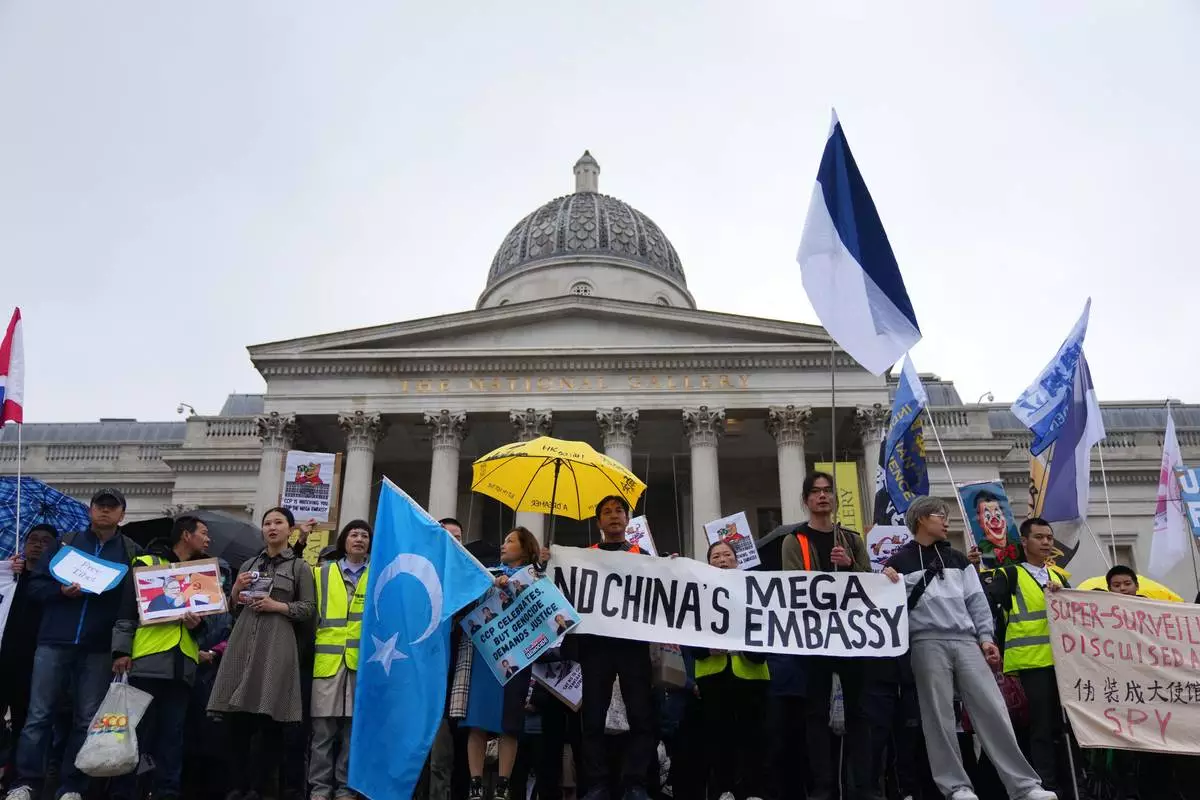
FILE - Protesters hold umbrellas, placards, and flags as they demonstrate against the proposed building of a new Chinese embassy, and to mark the 11th year of the Umbrella Revolution in Hong Kong, in London, Sunday, Sept. 28, 2025. (AP Photo/Joanna Chan, file)
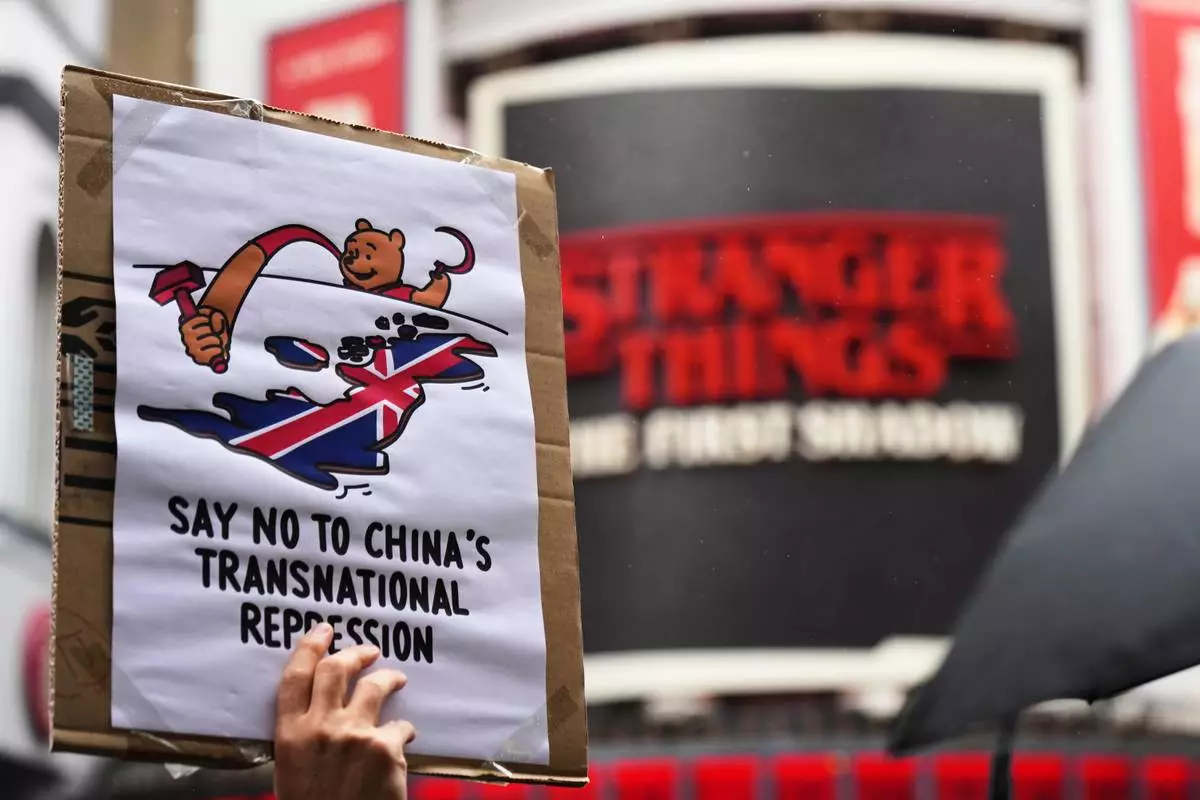
FILE - Protesters hold umbrellas, placards, and flags as they demonstrate against the proposed building of a new Chinese embassy, and to mark the 11th year of the Umbrella Revolution in Hong Kong, in London, Sunday, Sept. 28, 2025. (AP Photo/Joanna Chan, file)