The International Paralympic Committee (IPC) General Assembly voted on Saturday to reinstate the full membership rights of the National Paralympic Committees of Belarus and Russia.
The decision, taken at the 2025 IPC General Assembly in Seoul, South Korea, means NPC (National Paralympic Committee) Belarus and NPC Russia now regain their full rights and privileges of IPC membership, having been partially suspended at the 2023 assembly for breaches of their constitutional membership obligations.
The IPC General Assembly, comprising National Paralympic Committees, International Federations, and International Organizations of Sport for the Disabled, first voted against a motion to fully suspend NPC Russia, with 111 votes against, 55 for, and 11 abstentions. They subsequently voted against a motion to partially suspend NPC Russia, with 91 votes against, 77 for, and eight abstentions.
For NPC Belarus, the assembly voted against motions to fully suspend (119-48 with nine abstentions) and partially suspend (103-63 with 10 abstentions) the NPC. For a motion to be passed, a majority of 50 percent + 1 of all votes cast was required.
The IPC stated it will work with the two members to implement the practical arrangements for their reinstatement as soon as reasonably possible.
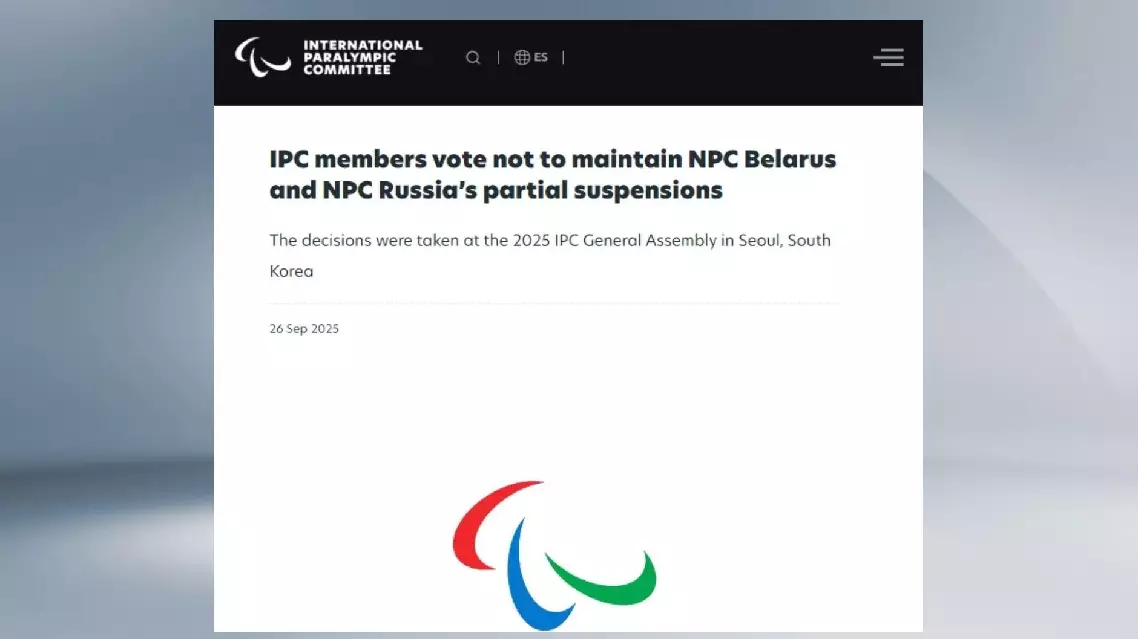
Int'l Paralympic Committee lifts Russia, Belarus partial suspensions
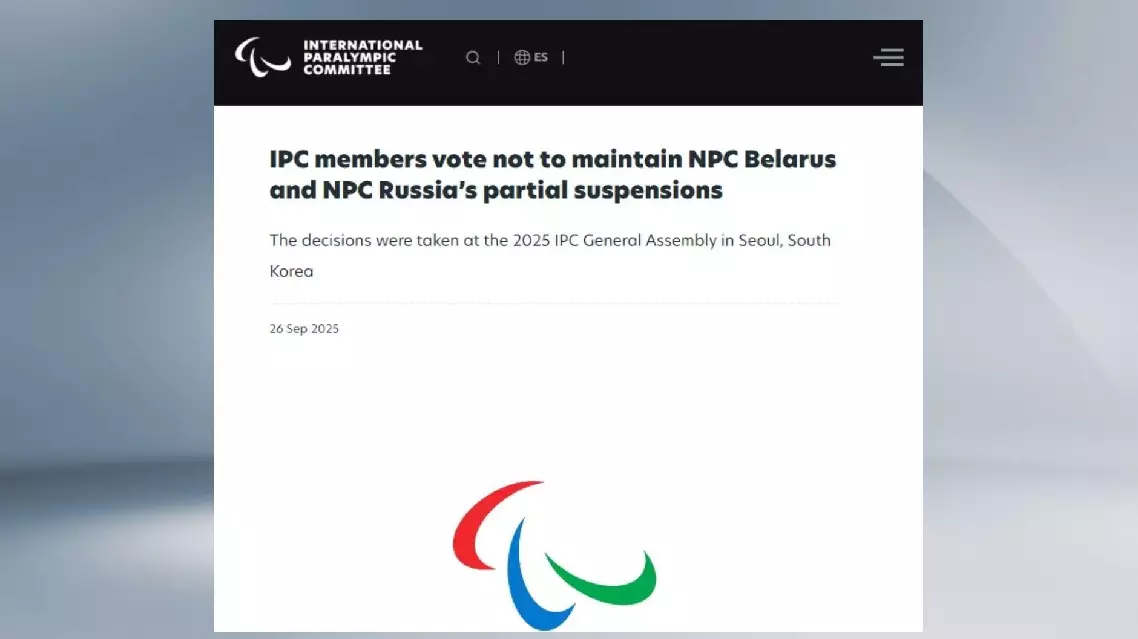
Int'l Paralympic Committee lifts Russia, Belarus partial suspensions
The BRICS cooperation mechanism creates greater predictability for smaller countries in an increasingly unstable world, said an Azerbaijani expert.
Established 20 years ago, the BRICS has now become the world's most influential platform for cooperation among emerging markets and developing countries.
As BRICS leaders are gathering in New Delhi, India for the 18th BRICS Summit this weekend, Farhad Mammadov, director of the Center for Studies of the South Caucasus, sat with the China Global Television Network to talk about the significance of the event and explain the reason why Azerbaijan has formally applied to join the bloc.
"The political dialogue taking place within the framework of BRICS is of great importance to Azerbaijan. Azerbaijan's application to join the cooperation mechanism reflects, first and foremost, the recognition of the value of political dialogue conducted within the organization. The current world order and international relations are facing a crisis, leaving small and medium-sized countries in an unstable environment. The emergence of cooperation mechanisms like BRICS makes it possible to establish at least some degree of predictability," he said.
Mammadov pointed out that as regional conflicts in key waterways force global trade to shift toward alternative land corridors, the BRICS and Chinese initiatives can help Azerbaijan strengthen its role as a regional transit hub.
"Traditional trade routes used for decades are now in high-risk zones. There is a pressing need to develop new overland routes that offer greater safety and predictability for major producers. In this context, financial mechanisms established by China and within the BRICS framework create opportunities for implementing major infrastructure projects, which also involve Azerbaijan to varying degrees. Consequently, cooperation with both Chinese financial institutions and BRICS platforms is a key part of Azerbaijan's efforts to further expand and deepen its role as a transit hub," Mammadov said.
BRICS was initially formed by Brazil, Russia, India and China, later expanding with the addition of South Africa. Today, the bloc has expanded to 11 member countries and 10 partner countries, becoming a force for advancing a multipolar world and greater democracy in international relations.
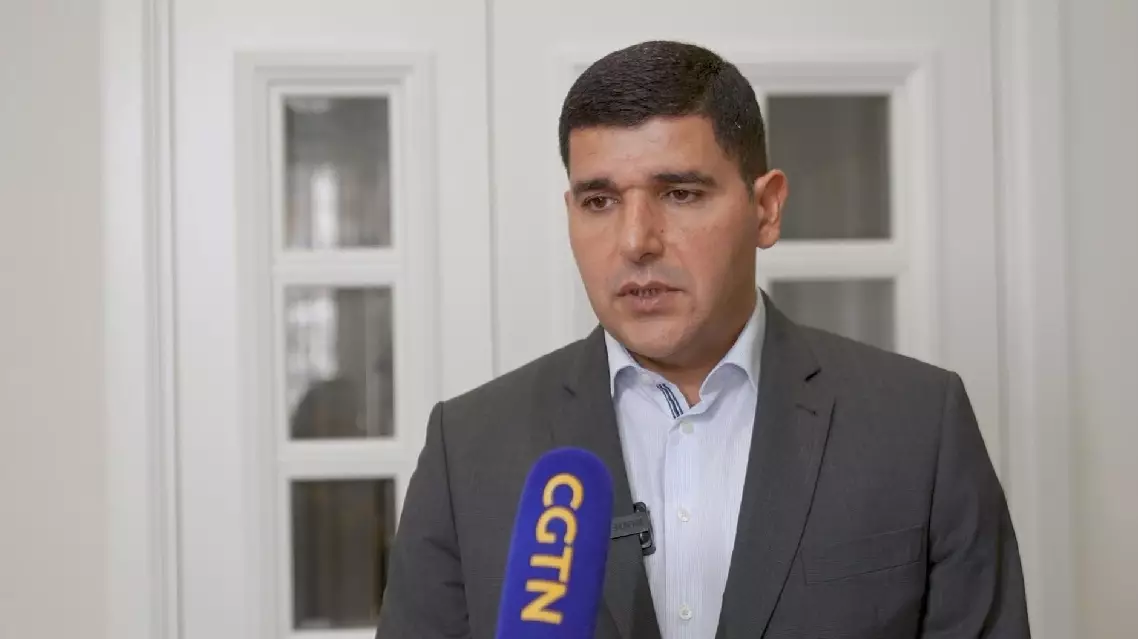
BRICS brings predictability for development of smaller nations: Azerbaijani expert