Skip to Content Facebook Feature Image

South Korean businesses prepare for influx of Chinese travelers

China

China

China

South Korean businesses prepare for influx of Chinese travelers

2025-09-28 15:11 Last Updated At:09-29 00:17

South Korea's tourism sector is preparing for an influx of Chinese travelers as its visa-free policy for Chinese tour groups will take effect on Monday, two days ahead of China's National Day and Mid-Autumn Festival holiday running from Oct 1 to 8.

The visa-free policy will last for nine months until June 30, 2026, as part of efforts to boost local tourism.

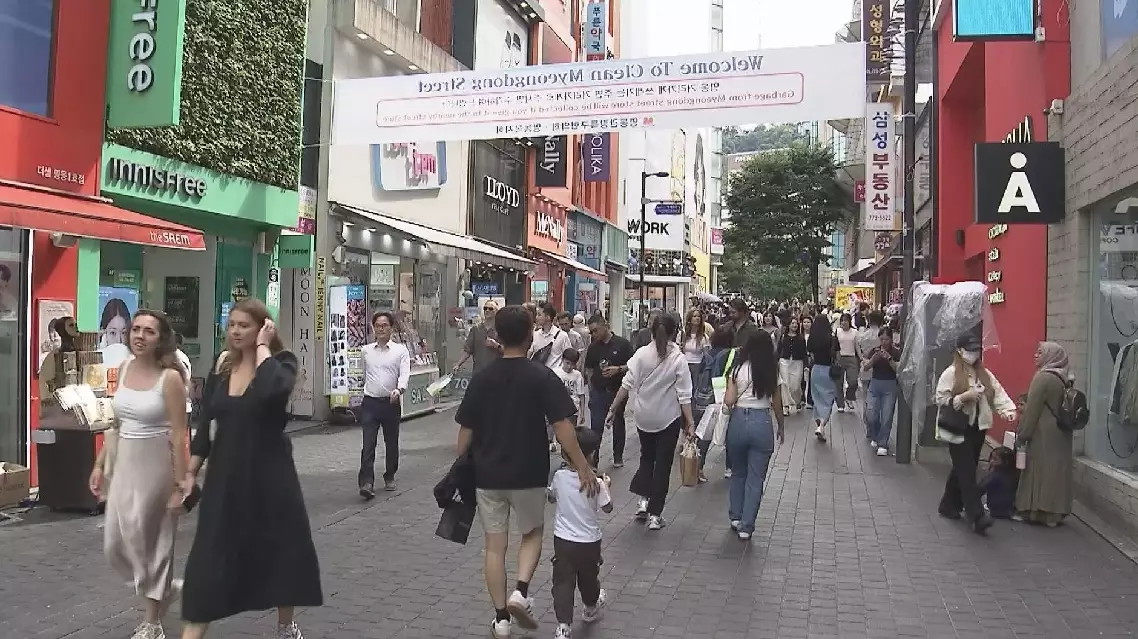
In Seoul's Gangnam District, the owners of a mom-and-pop clothing store are learning the Chinese language. They used to depend on their employees to talk with Chinese customers, but increased tourism has encouraged them to pick it up themselves.

"We'd like to improve our oral communication ability, and we are studying hard," said store-owner Lee Myung-jae.

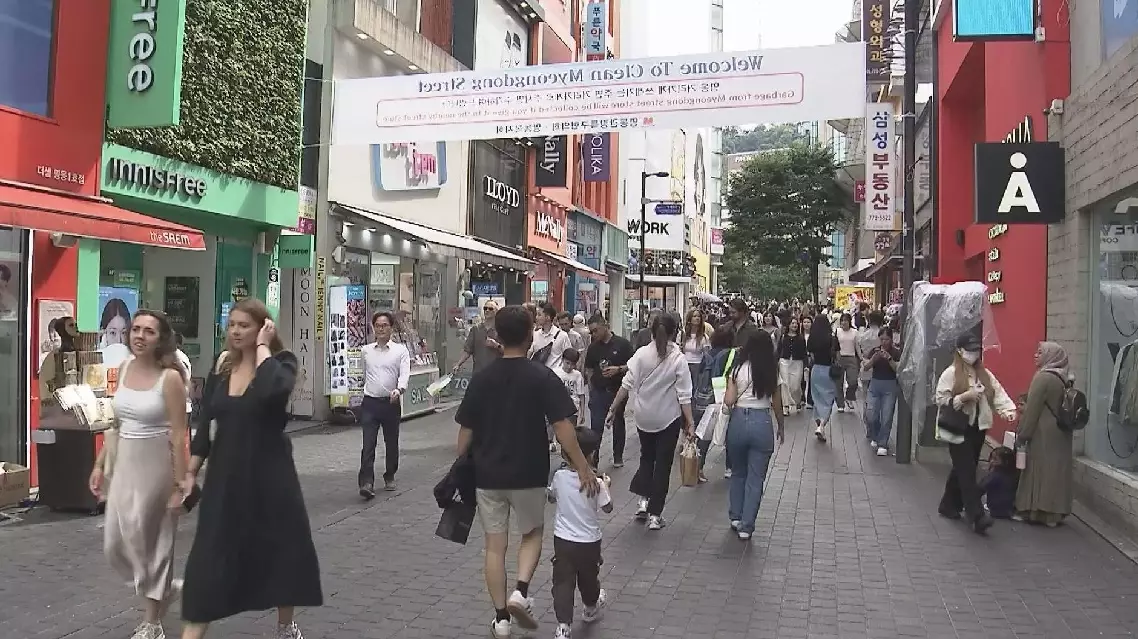
Merchants in Seoul's major commercial districts, such as Myeong-dong, Hongdae and Seongsu-dong, are recruiting employees who can speak Chinese, and many street food stalls have also put up a Chinese-language menu. The merchants have also introduced China's mobile payment services to improve Chinese tourists' shopping experience.

"The arrival of more Chinese tourists has made the nearby commercial districts bustling, and increased our incomes," said a vendor.

China has long been the largest source of inbound tourists to South Korea. According to the latest data from the Korea Tourism Organization, Chinese tourists accounted for 28.6 percent of all foreign tourists to South Korea in the first half of 2025. With the visa-free policy for Chinese group tourists set to come into effect soon, South Korea is expected to receive over 5 million Chinese tourist visits this year.

"As more and more Chinese tourists hope to experience local life in South Korea, we are working hard to launch some products that can offer a deeper understanding of South Korean culture, such as tour routes that include traditional markets and small cities," said a travel agency staffer.

Major South Korean airlines have also increased flights to China, with routes from Incheon to China's Kunming, Fuzhou, Chongqing recently opening or reopening.

South Korean businesses prepare for influx of Chinese travelers
South Korean businesses prepare for influx of Chinese travelers
South Korean businesses prepare for influx of Chinese travelers


South Korean businesses prepare for influx of Chinese travelers
South Korean businesses prepare for influx of Chinese travelers

South Korean businesses prepare for influx of Chinese travelers

The Lhasa-Nyingchi Railway, the first electrified railway in southwest China's Xizang Autonomous Region, has transported more than 6.25 million passengers and over 2 million tonnes of cargo since it began operation five years ago, according to the China State Railway Group Co., Ltd.

Stretching 435.48 kilometers, the railway was designed for speeds of up to 160 kilometers per hour. More than 90 percent of the line lies at elevations above 3,000 meters, and it crosses the Yarlung Zangbo River 16 times. Bridges and tunnels account for about 75 percent of the route.

The railway opened on June 25, 2021, ending the absence of rail service in southeastern Xizang and bringing Fuxing high-speed trains to the plateau.

Over the past five years, monthly passenger trips on the railway increased from about 59,000 in its early days of operation to a record 153,800. Travel time from Lhasa to Shannan and Nyingchi has been reduced to as little as 1 hour and 2 minutes, and 3 hours and 49 minutes, respectively.

The freight-carrying capacity of trains operating on the line has risen from 902 tonnes in 2021 to 1,415 tonnes in 2026. Average daily cargo volume this year has increased 35.7-fold compared with the level recorded in 2021.

The railway has generated strong economic benefits, helping form a three-hour economic circle linking cities including Lhasa and Nyingchi, facilitating the flow of people, goods, capital and information, and promoting regional industrial development and sustainable economic growth.

Over the past five years, the average annual GDP growth rates of Nyingchi and Shannan have remained above 8 percent and 5.8 percent, respectively, both exceeding the national average.

Lhasa-Nyingchi Railway carries over 6.25 mln passengers in last five years

Lhasa-Nyingchi Railway carries over 6.25 mln passengers in last five years

Recommended Articles