A total of 700,000 mu (over 46,666 hectares) of soybeans have achieved a bumper harvest in Horqin Right Wing Front Banner, north China's Inner Mongolia Autonomous Region, thanks to the local authorities’ efforts to introduce good varieties and advanced planting technologies.
At a soybean planting base in E'ergetu Township, in Hinggan League, mature soybean plants stand tall and straight, with plump pods. Multiple large harvesters were steadily advancing along the hillside, operating simultaneously to rapidly complete the harvesting and threshing processes.
Growers said plenty of rainfall this year has ensured the good harvest.
"There is good amount of rainfall this year, and the highest yield per mu has reached over 250 kilograms. The average yield per mu is about 215 kilograms. Our company grows a total of 23,600 mu (about 1,573 hectares) of soybeans, with a total yield of about 5,500 tons, bringing us quite considerable economic benefits," said Zhou Guangyu, planting department manager of the agricultural company running the base.
This year, authorities of Horqin Right Wing Front Banner adjusted its agricultural industrial structure, regarding soybean production as an important industry to ensure food security and farmers' income growth.
Through a series of measures such as cultivating high-yield and high-quality varieties, introducing mechanized large-scale planting, and strengthening technical guidance, the production and quality of soybean was significantly improved in the region.
"The coverage of yield-increasing technology has reached 100 percent. Now, large-scale harvesting has begun from south to north, and the total output is expected to reach 105 million kilograms," said Guo Jingchun, chief of the agricultural technology promotion section of Horqin Right Wing Front Banner Agricultural and Animal Husbandry Sci-tech Development Center.
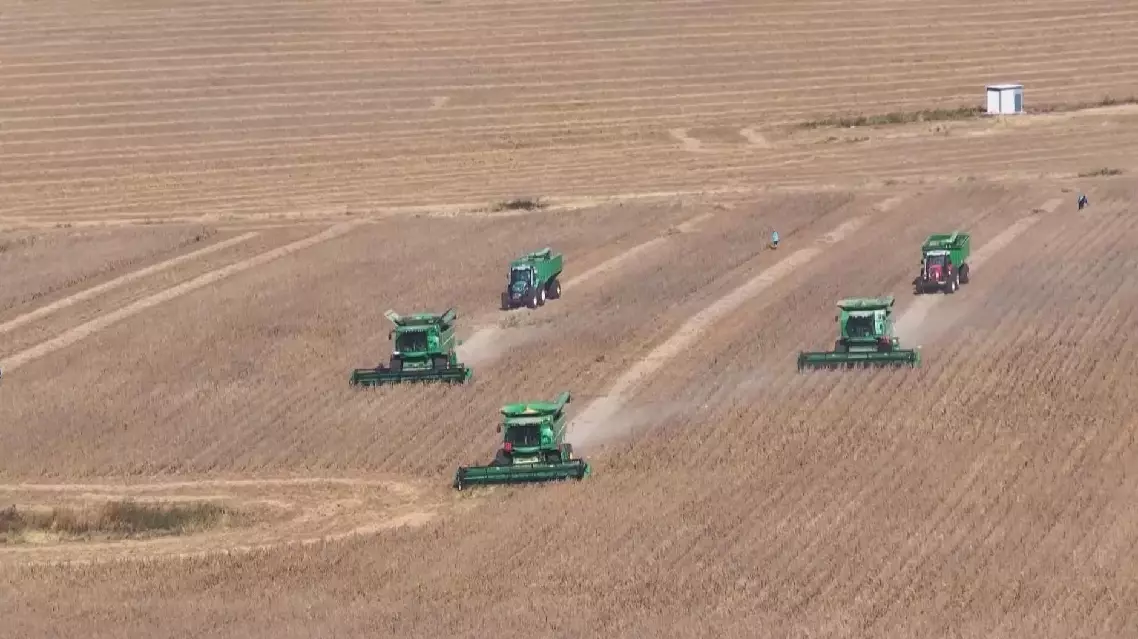
Advanced technologies bring soybean harvest in Inner Mongolia
People in Yemen are struggling for survival as the country continues to grapple with a deepening labor crisis after more than a decade of war, with many lamenting the lack of opportunities which are leaving the livelihoods of many hanging in the balance.
As the world marks International Workers' Day on Friday, the situation in Yemen seems all the more poignant as millions of people are finding it increasingly hard to find any work at all.
In the crowded streets of the capital Sana'a, workers gather on street corners, waiting for jobs that may never come. Ahmed Muawadah is one of the many who are sitting here, watching passing cars, desperately hoping that one will stop and offer work.
"Our suffering is that we sit here without work. Sometimes we spend a whole month without working, except for one day, or just one day every two weeks. Work is very limited, almost non-existent. I have nine children, and I only work one day a month. I cannot support them. Jobs have completely disappeared. If opportunities were opened for us, I and all the workers would work," said Muawadah.
This individual story reflects a broader reality affecting an estimated eight million workers across Yemen. Many of them are hoping to receive a daily wage, but the challenges are mounting in an increasingly strained labor market.
Activity in key sectors such as construction and services has dropped sharply, largely due to the suspension of several international initiatives, including those backed by the World Bank. As a result, income opportunities have narrowed for those who rely primarily on daily wages.
Meanwhile, the widening impact of the U.S.-Israeli war on Iran and the disruption caused along the key Strait of Hormuz -- a key shipping route for global trade -- has brought more misery in recent weeks.
"There has been a significant decline in business activity as a result of the war, the blockade, and the disruption of work. Foreign capital has also left the country, and large companies have moved out of Yemen and stopped their operations. This is one of the main reasons," said Abdul Karim Al, secretary general of the General Federation of Trade Unions in Sana'a.
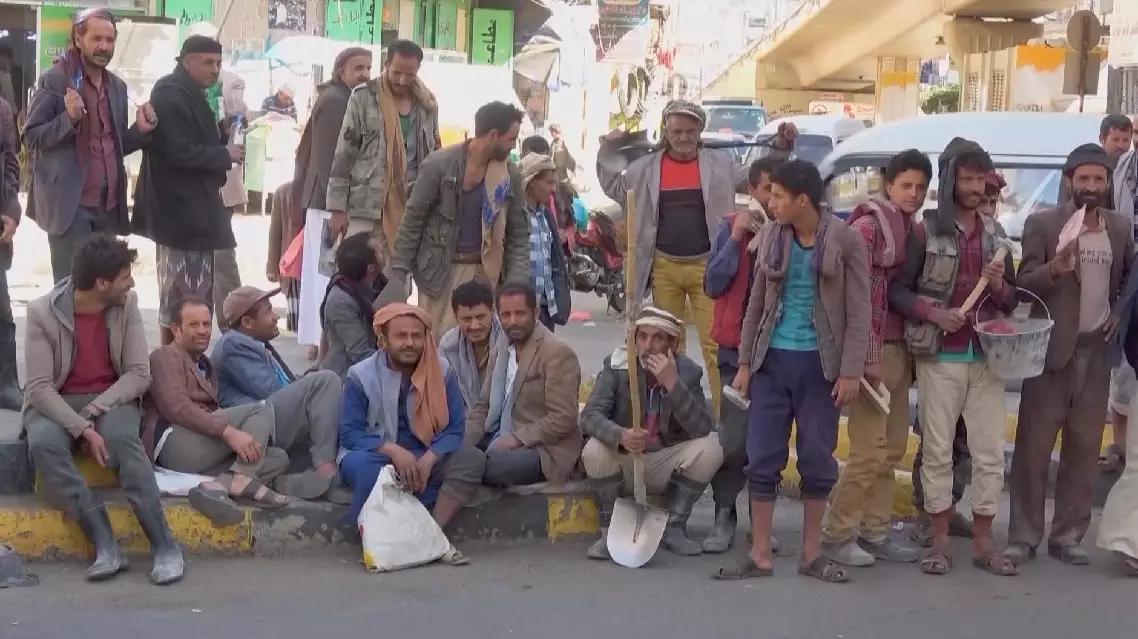
Yemen residents struggling to survive as work dries up amid deepening labor crisis