SAN JUAN, Puerto Rico (AP) — Authorities in the Bahamas closed most schools on Monday as Tropical Storm Imelda dropped heavy rain in the northern Caribbean, including over Cuba where two people died as a result of the storm.
The storm was located about 165 miles (270 kilometers) north of Great Abaco Island of the Bahamas, which is still recovering from Hurricane Dorian after it slammed into parts of the Bahamas as a devastating Category 5 hurricane in 2019.
Click to Gallery
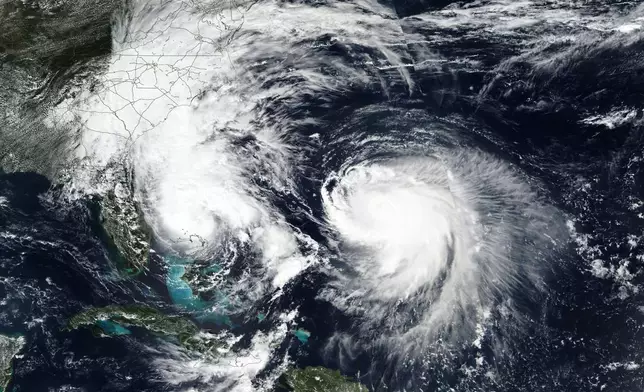
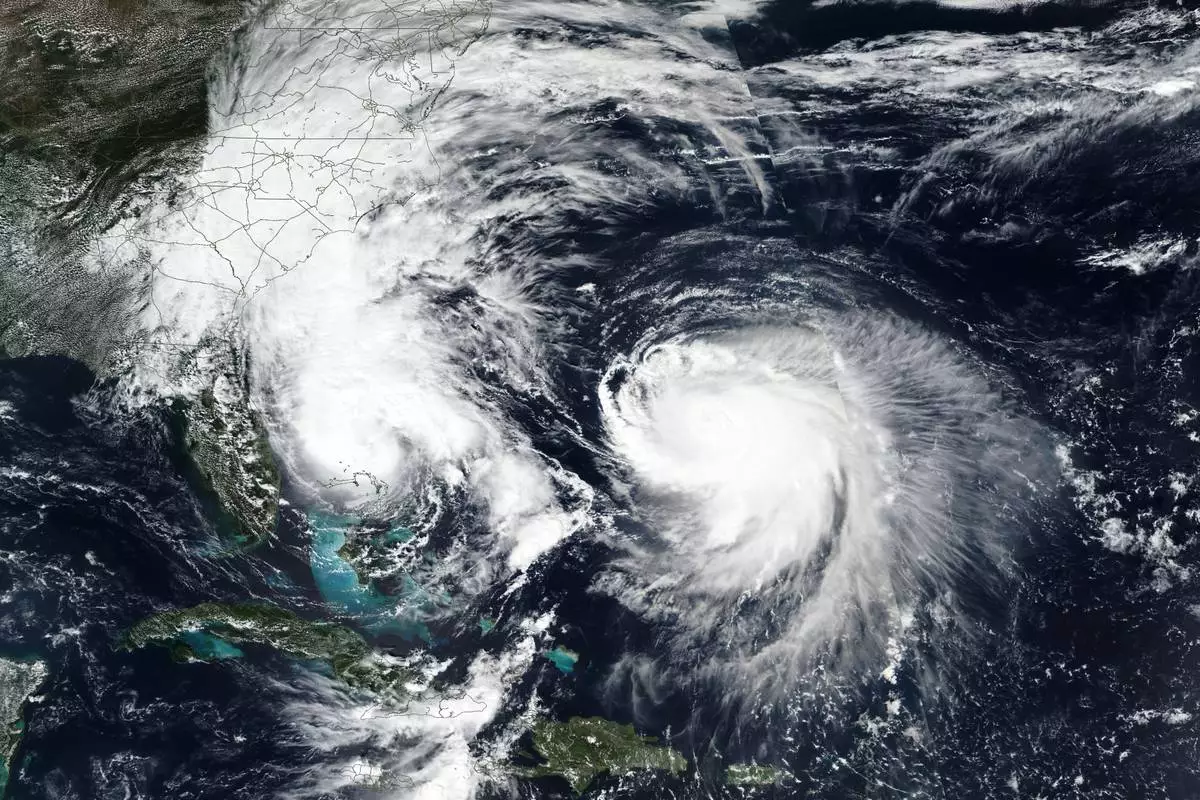
This Monday, Sept. 29, 2025, satellite image released by NASA shows Tropical Storm Imelda, left, and Hurricane Humberto in the Atlantic Ocean. (NASA Worldview, Earth Observing System Data and Information System (EOSDIS) via AP)

A surfer falls off of his board while taking advantage of the large waves kicked up by Tropical Storm Imelda as it passes offshore, Monday, Sept. 29, 2025, in Satellite Beach, Fla. (AP Photo/Phelan M. Ebenhack)
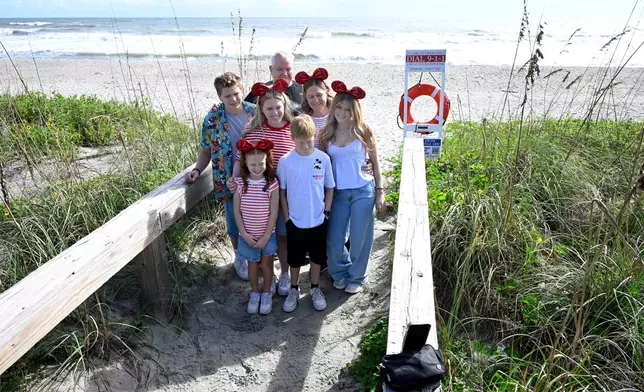
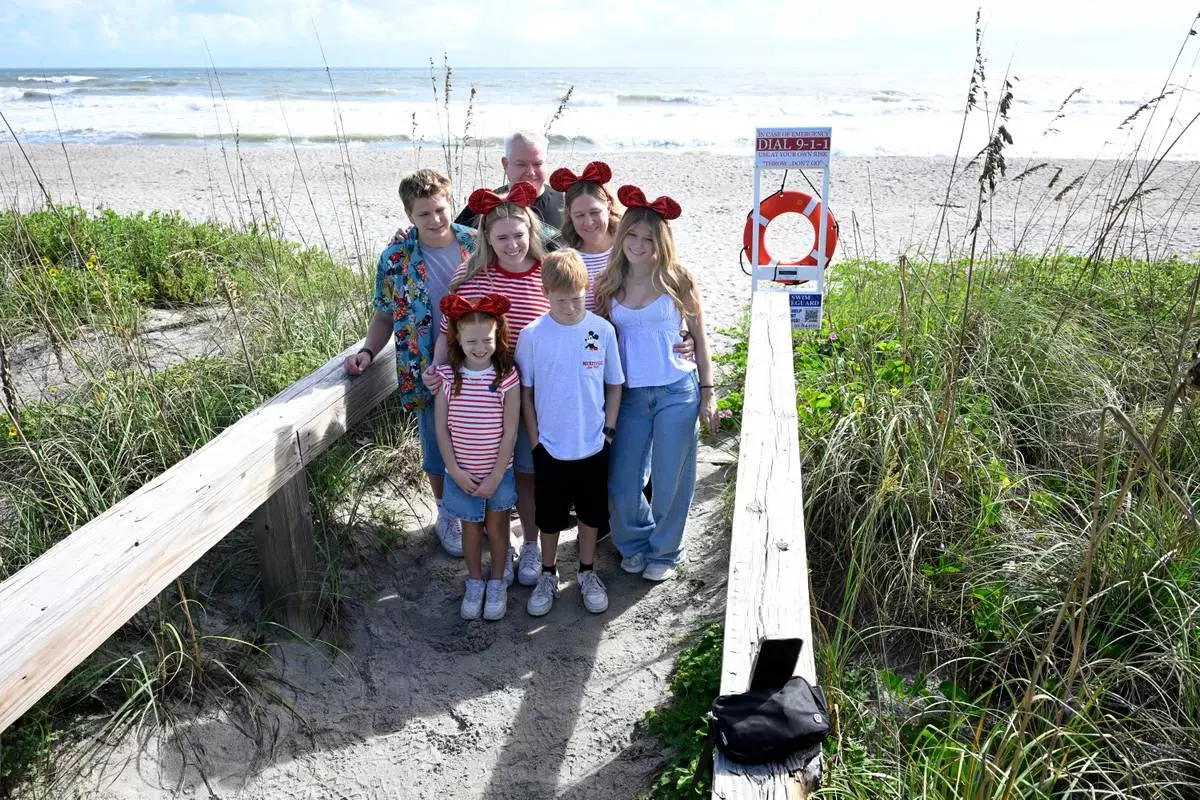
Brian and Carrie Archibald, of Gilbert, Ariz., make a selfie photo with their children at Blockhouse Beach before heading out on a Disney cruise as Tropical Imelda passes offshore, kicking up the surf, Monday, Sept. 29, 2025, at Patrick Space Force Base, Fla. (AP Photo/Phelan M. Ebenhack)
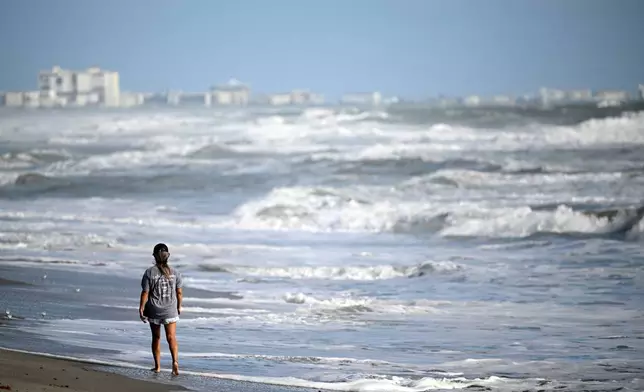
Maiko Russell walks along the sand as Tropical Imelda passes offshore, kicking up the surf at Blockhouse Beach, Monday, Sept. 29, 2025, at Patrick Space Force Base, Fla. (AP Photo/Phelan M. Ebenhack)

A bicyclist rides along the beach with seagulls as Tropical Storm Imelda kicks up the surf, Monday, Sept. 29, 2025, in Cocoa Beach, Fla. (AP Photo/Phelan M. Ebenhack)
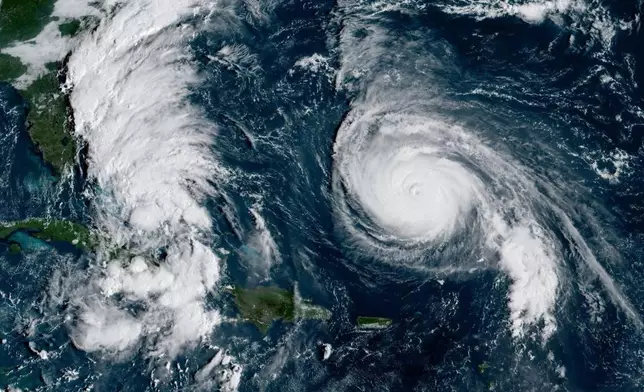
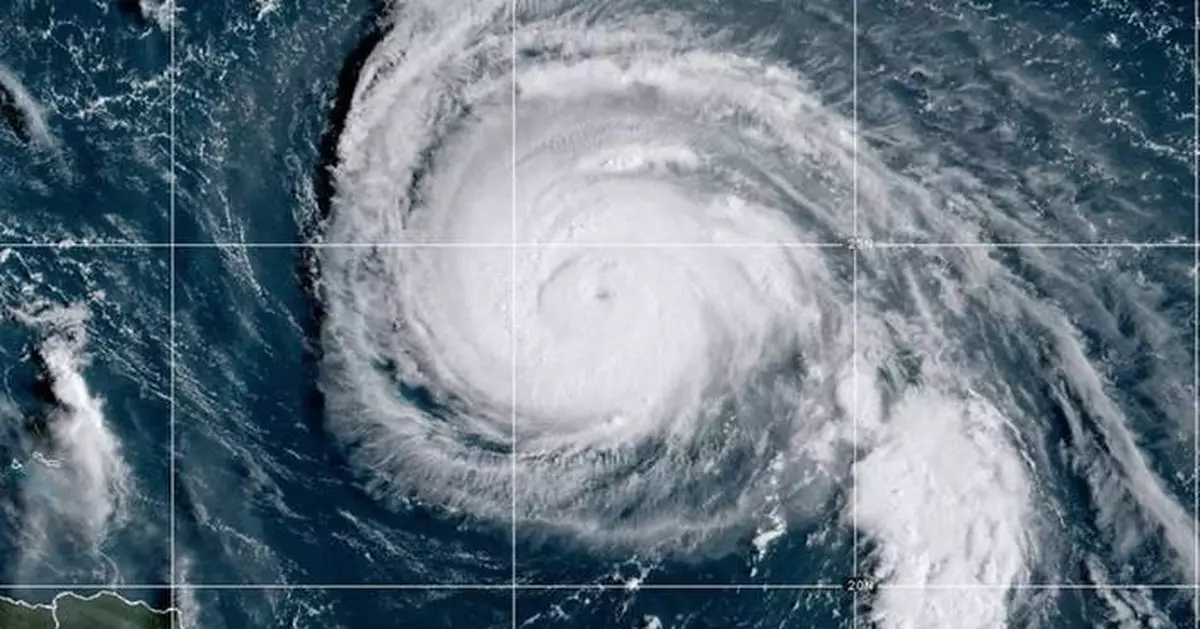
This GOES-19 GeoColor satellite image taken Sunday, Sept. 28, 2025 and provided by NOAA, shows weather systems in the tropical Atlantic Ocean. (NOAA via AP)
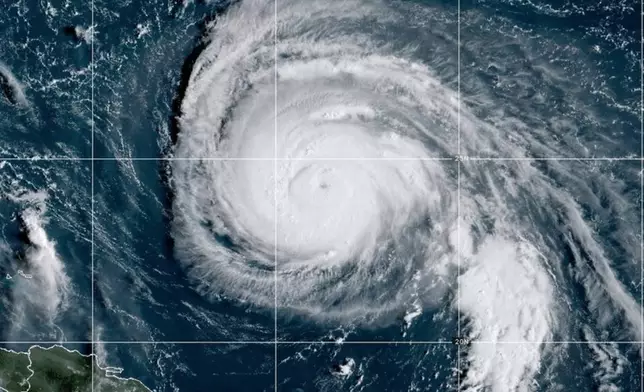
This satellite image provided by NOAA shows Hurricane Humberto on Sunday, Sept. 28, 2025. (NOAA via AP)
Imelda had maximum sustained winds of 70 mph (110 kph) and was moving northeast at 7 mph (11 kph). It was forecast to become a hurricane on Tuesday morning and spin out to open ocean, according to the National Hurricane Center in Miami.
A tropical storm warning that had been in effect for parts of the extreme northwestern Bahamas, including Great Abaco, Grand Bahama Island and the surrounding keys, was lifted early Tuesday. Power outages were reported in some areas, with authorities closing government offices on affected islands and issuing mandatory evacuation orders for some islands over the weekend.
Cuban Prime Minister Manuel Marrero said late Monday that two people died after Imelda impacted eastern Cuba. On his X account, Marrero said the two people died in Santiago de Cuba province, but he didn’t give any details.
Earlier, state media reported that 60-year-old Luis Mario Pérez Coiterio had died in Santiago de Cuba following landslides in that area.
In Santiago de Cuba, flooding and landslides cut off 17 communities, according to the official newspaper Granma. More than 24,000 people live in those communities.
In Guantánamo, another impacted province, more than 18,000 people have been evacuated, according to reports from the state-run Caribe television channel.
Imelda was expected to drop 4 to 8 inches (10 to 20 centimeters) of rain across the northwest Bahamas through Tuesday, and 2 to 4 inches (5 to 10 centimeters) across eastern Cuba.
Meanwhile, Hurricane Humberto, which weakened further to a Category 2 storm on Tuesday, churned in open waters, which forecasters had said would cause Imelda to abruptly turn to the east-northeast, away from the southeastern United States coast.
“This is really what’s going to be saving the United States from really seeing catastrophic rainfall,” said Alex DaSilva, lead hurricane expert for AccuWeather, a private U.S. weather forecasting company.
DaSilva said the two storms would draw closer and start rotating counterclockwise around each other in what's known as the Fujiwhara effect.
“It’s a very rare phenomenon overall in the Atlantic basin,” he said.
Humberto had maximum sustained winds of 100 mph (155 kph). It was located about 275 miles (440 kilometers) west of Bermuda, moving north-northwest at 17 mph (28 kph). No coastal watches or warnings were in effect.
“This is going to be no threat to the United States,” DaSilva said.
Moisture from Imelda was expected to move up the Carolinas, with heavy rain forecast through Tuesday morning. The heaviest rains will be limited to the coastline, from Charleston in South Carolina to Wilmington in North Carolina, while Charlotte and Raleigh might receive only 1 to 2 inches (3 to 5 centimeters) of rain, he said.
The Carolinas might see wind gusts of 40 mph, but only along the coastline, DaSilva said, as he warned of dangerous surf and heavy rip currents all week.
South Carolina Gov. Henry McMaster said authorities were prepositioning search and rescue crews over the weekend.
In North Carolina, Gov. Josh Stein declared a state of emergency even before Imelda formed, while authorities on Tybee Island off the coast of Georgia handed out free sandbags to residents.
Even though Imelda was not making landfall in Florida, its impact was still felt.
At the Loggerhead Marinelife Center in Juno Beach, crews found a couple of turtle hatchlings that rough surf had tossed ashore.
“We actually had two washbacks come in over the weekend," said Justin Perrault, the center’s vice president of research. “We may get more as the day goes along.”
He said typically beachgoers will see a hatchling resting in the seaweed and call the center for help.
Farther south in Fort Lauderdale, Florida, Carl Alexandre exercised at the beach on Monday. He said he was grateful the storm was not heading toward South Florida, but that he would pray for those in the Bahamas.
“It’s great that we’re not having one as of right now,” Alexandre said. “And now we get to run in the Florida sun.”
Authorities in Bermuda hoped neither of the two storms would be a direct hit later in the week, though they were forecast to, at least, come close, with Imelda possibly passing within 15 miles (24 kilometers) as the season's soon-to-be fourth hurricane, Da Silva said.
“It’s going to be a double whammy for Bermuda, Humberto first and Imelda following close behind,” Da Silva said.
Michael Weeks, Bermuda's national security minister, urged residents to prepare, warning that there have been “some near misses this season regarding severe storms."
“Hurricane Humberto is a dangerous storm, and with another system developing to our south, every household in Bermuda should take the necessary steps to be prepared," he said.
Flights to and from the islands in the Bahamas were canceled, with airports expected to reopen after weather conditions improve.
Associated Press videographers Milexsy Durán in Havana, Cody Jackson in Juno Beach, Daniel Kozin in Fort Lauderdale, Florida and writer Jeff Martin in Atlanta contributed to this report.
This Monday, Sept. 29, 2025, satellite image released by NASA shows Tropical Storm Imelda, left, and Hurricane Humberto in the Atlantic Ocean. (NASA Worldview, Earth Observing System Data and Information System (EOSDIS) via AP)

A surfer falls off of his board while taking advantage of the large waves kicked up by Tropical Storm Imelda as it passes offshore, Monday, Sept. 29, 2025, in Satellite Beach, Fla. (AP Photo/Phelan M. Ebenhack)
Brian and Carrie Archibald, of Gilbert, Ariz., make a selfie photo with their children at Blockhouse Beach before heading out on a Disney cruise as Tropical Imelda passes offshore, kicking up the surf, Monday, Sept. 29, 2025, at Patrick Space Force Base, Fla. (AP Photo/Phelan M. Ebenhack)
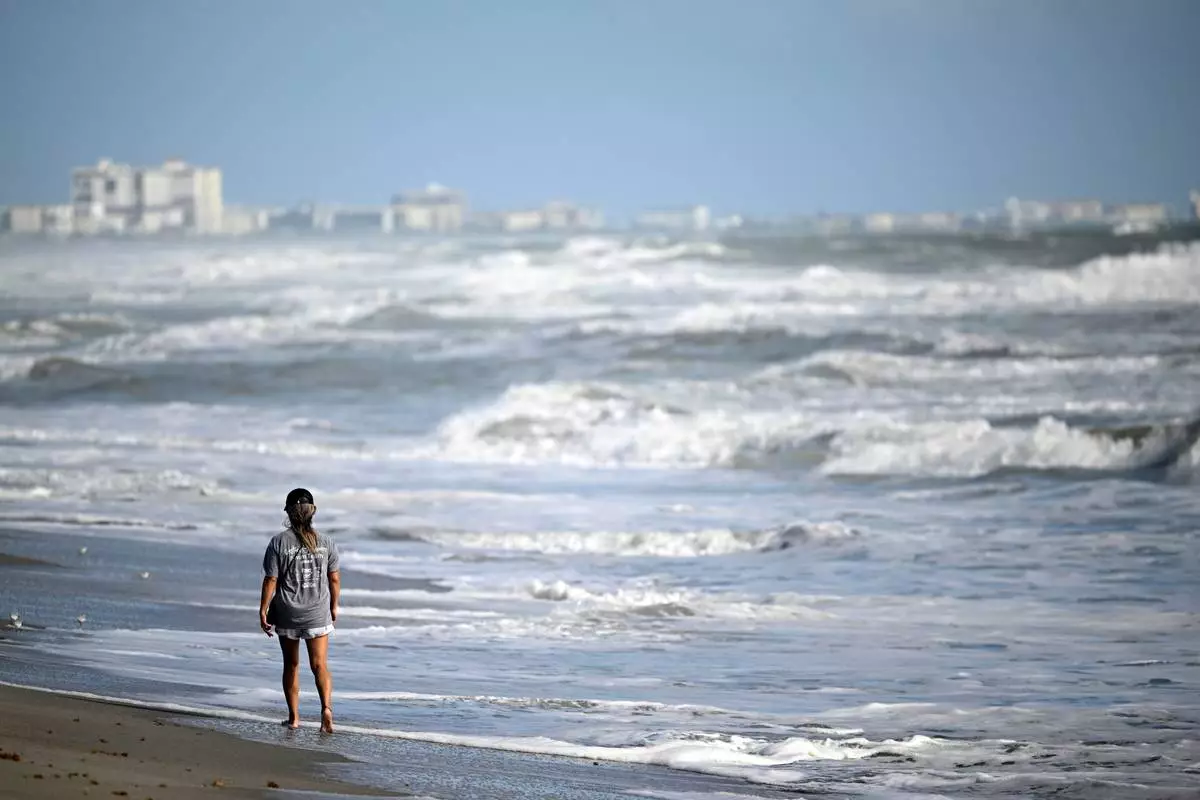
Maiko Russell walks along the sand as Tropical Imelda passes offshore, kicking up the surf at Blockhouse Beach, Monday, Sept. 29, 2025, at Patrick Space Force Base, Fla. (AP Photo/Phelan M. Ebenhack)

A bicyclist rides along the beach with seagulls as Tropical Storm Imelda kicks up the surf, Monday, Sept. 29, 2025, in Cocoa Beach, Fla. (AP Photo/Phelan M. Ebenhack)
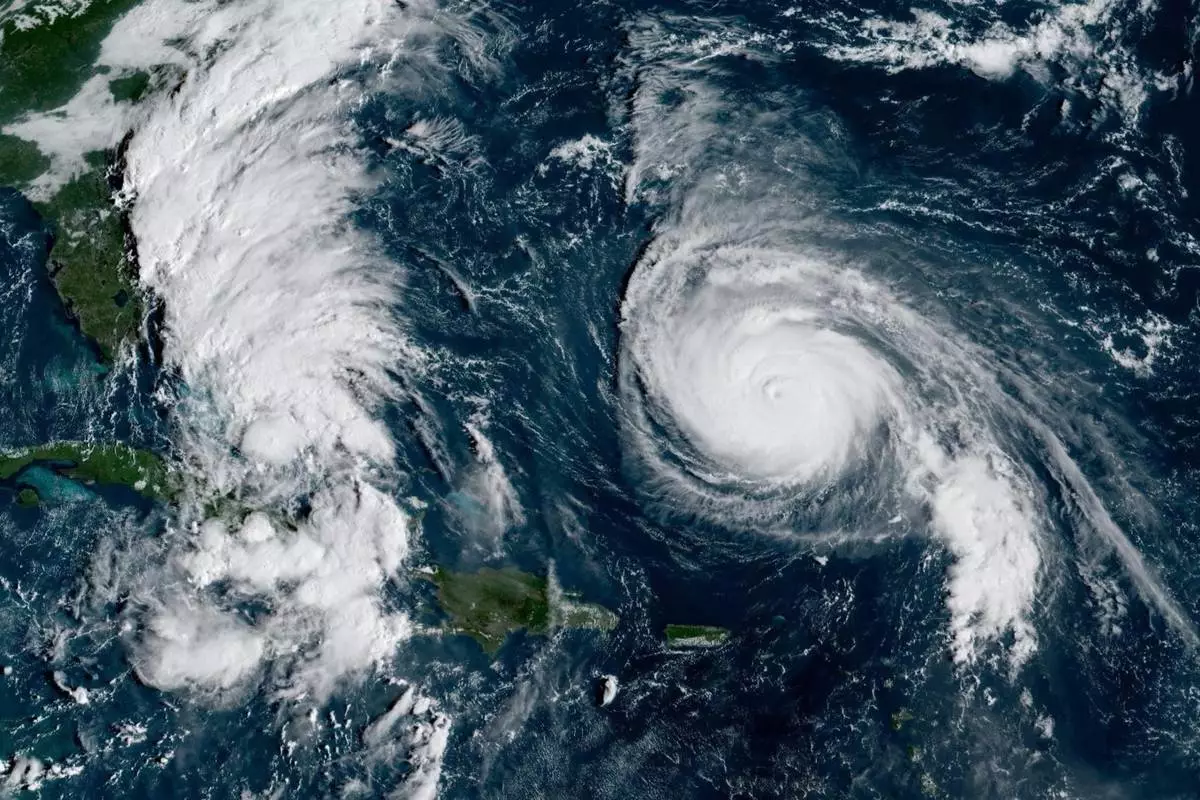
This GOES-19 GeoColor satellite image taken Sunday, Sept. 28, 2025 and provided by NOAA, shows weather systems in the tropical Atlantic Ocean. (NOAA via AP)
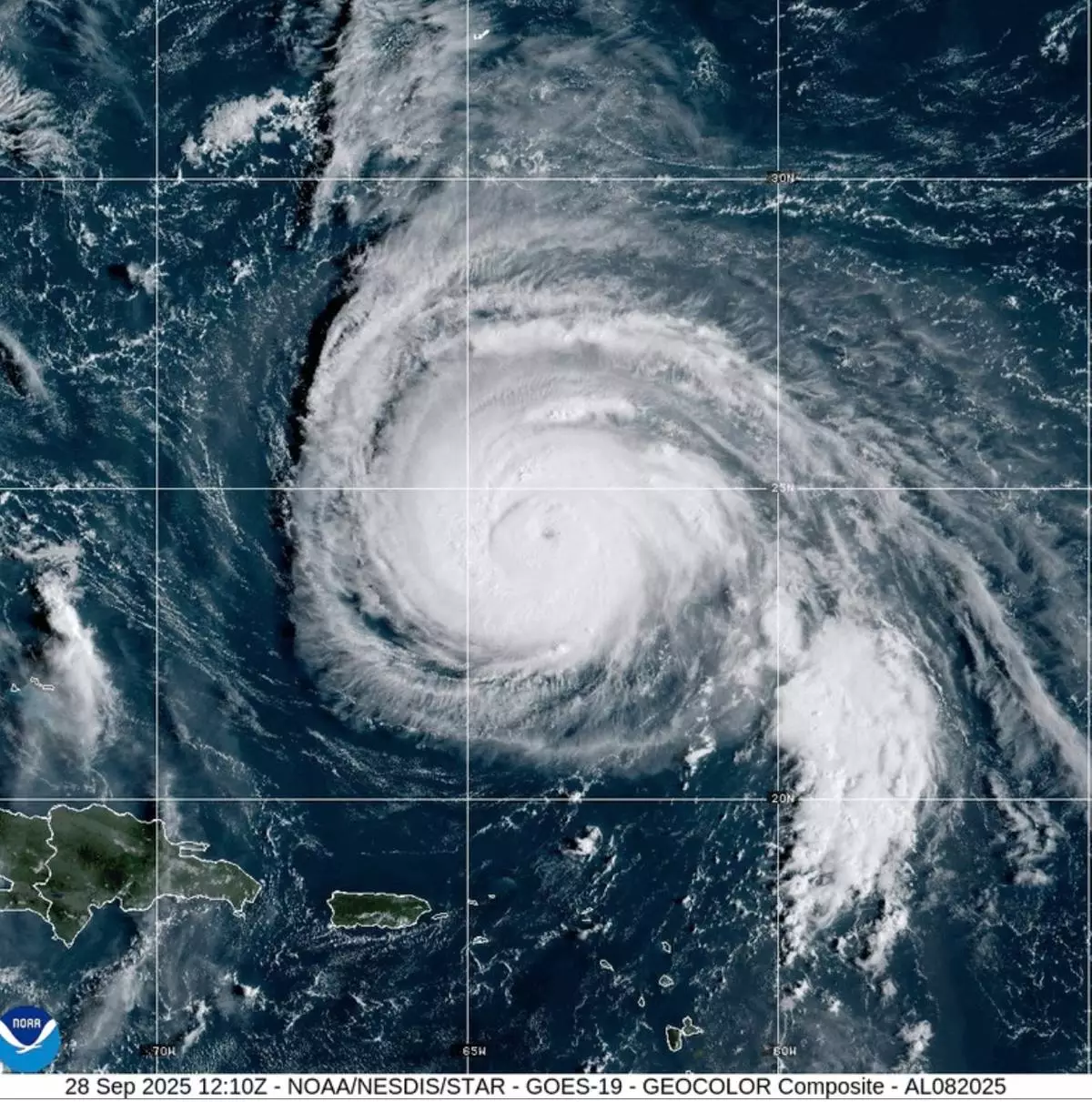
This satellite image provided by NOAA shows Hurricane Humberto on Sunday, Sept. 28, 2025. (NOAA via AP)