The Zhouzhi National Nature Reserve in northwest China's Shaanxi Province was officially approved for inclusion in UNESCO's World Biosphere Reserve Network on Saturday during a UN conference held in east China's Hangzhou City.
The designation marks the first time a protected area on the northern slopes of the Qinling Mountains has received such international recognition.
Spanning 690 square kilometers on both the northern and southern slopes of the Qinling Range, the Zhouzhi reserve is 96 percent forested and rises to 2,904 meters above sea level. Its striking vertical vegetation zones shelter more than 3,630 species of wild flora and fauna, including the Qinling giant pandas, golden snub-nosed monkeys, and golden takins.
"This is a tremendous achievement for the Zhouzhi reserve. We hope that, with this honor, it will fulfill the core concept of the Man and the Biosphere Program by performing its three key functions: conservation, support, and sustainable development," said Wang Ding, secretary general of the Chinese National Committee for Man and the Biosphere Program.
During the 37th Session of the International Coordinating Council of the Man and the Biosphere Program held in Hangzhou, UNESCO announced the designation of 26 new biosphere reserves in 21 countries, including two in China, bringing the world network of biosphere reserves to 785 sites across 142 countries.
Along with Zhouzhi reserve, the other Chinese site designated is Daqingshan Biosphere Reserve in Inner Mongolia Autonomous Region. Covering nearly 3,900 square kilometers in the central Yinshan Mountains, Daqingshan is the richest biodiversity hotspot in the region. The reserve is home to nearly 1,200 higher plant species, 300 vertebrate species, and 1,800 arthropod species.
UNESCO describes biosphere reserves as "learning places for sustainable development" that integrate biodiversity conservation with sustainable use of ecosystems.

China's Zhouzhi reserve in Qinling Mountains joins UNESCO world biosphere network
The Japanese society should do soul-searching regarding its history of aggression and adhere to the pacifist constitution, said Shiradori Hiroshi, a professor of the Hosei University, in an interview with China Central Television (CCTV) in Tokyo on April 30.
He said the government's recent move to discuss revising the three security documents deserve particular attention as the country's foreign and security policies have already witnessed major changes.
"People outside of the country hold that Japan's post-war image as a 'peace state' is now facing a major shift. Against the backdrop of tremendous changes in its foreign and security policies, the revision of the three security documents deserves particular attention. There lacks public debate in terms of the procedure, with policy changes decided unilaterally at Cabinet meetings. It is necessary to fully explain to the public as to whether such a practice is proper," said Hiroshi.
The Japanese government held its first expert panel meeting to discuss revisions to the three security documents at the Prime Minister's Office on April 27, local media reported.
Japan's current National Security Strategy and two related documents, formulated in 2022, were designed to cover the next 10 years, but the government led by Prime Minister Sanae Takaichi has decided to move up the timetable to accelerate the revision process.
Increasing defense spending is one of the key topics of the meeting, according to Kyodo News.
Hiroshi said this year marks the 80th anniversary of the opening of the International Military Tribunal for the Far East, or Tokyo Trials, and the Japanese society must do soul-searching regarding its history of aggression in WWII, when it brought enormous catastrophes on Asian countries.
"Eighty years have passed since the opening of the Tokyo Trials. Japan inflicted enormous suffering on Asian countries during WWII, which should serve as an opportunity for the soul-searching. It is exact on the basis of countless sacrifices that Japan's post-war pacifism and its identity as a 'peace state' took shape. On this 80th anniversary, it is necessary for Japan to re-examine and do soul-searching regarding its history," said Hiroshi.
The Japanese government's effort to revise the pacifist constitution is widely opposed by the public.
On Sunday, around 50,000 people gathered at Tokyo Rinkai Disaster Prevention Park, chanting slogans and holding banners against the government's push for constitutional revision and military expansion, the largest turnout of its kind in recent years.
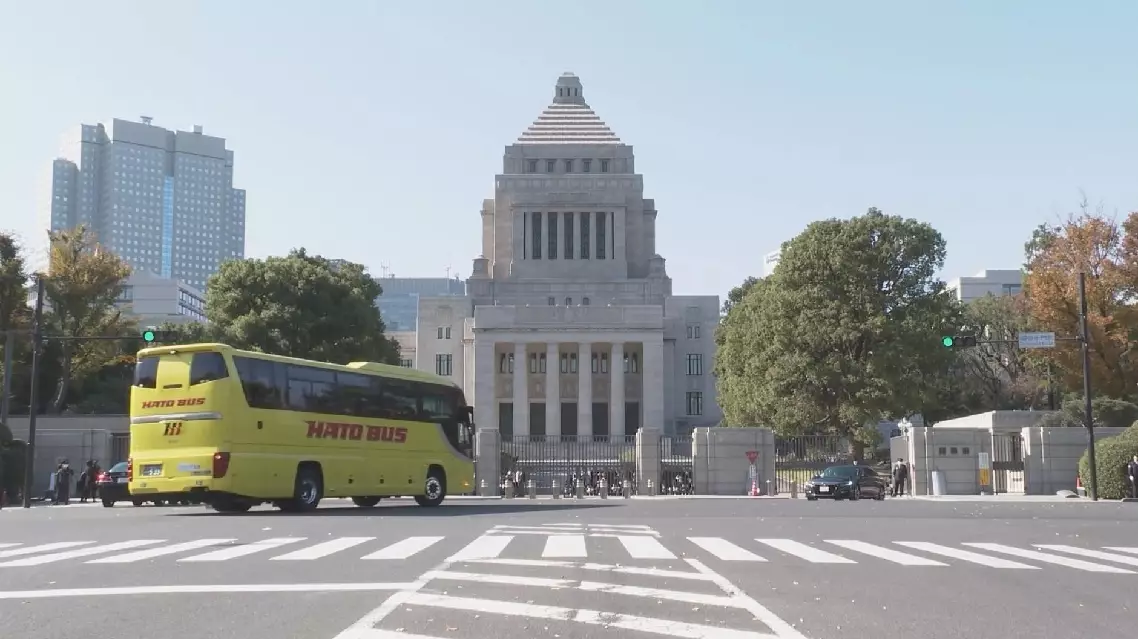
Japan should adhere to pacifist constitution: scholar