The drone industry in southwest China's Chongqing Municipality is continuing to hit new heights with more technological breakthroughs and an increasingly diverse array of application scenarios, driving the steady development of the country's fast-growing low-altitude economy.
China has been making greater efforts to develop its low-altitude economy, which refers to activities involving both manned and unmanned aircraft operating in airspace ranging from 1,000 to 3,000 meters above the ground, recognizing it as a strategic emerging sector with huge potential.
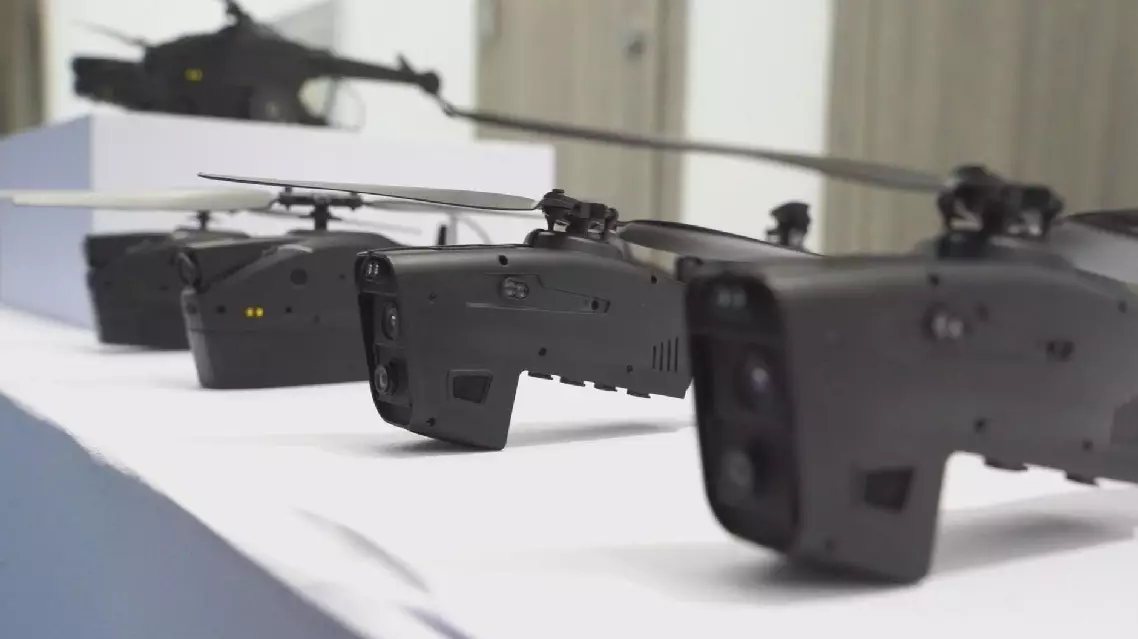
Over the past five years, research and development teams from the Chongqing Yidong Technology company have been continuously working to upgrade their drone technology, collecting extensive terrain data and integrating their various innovations into the compact "Black Thorn" micro drone.
Since entering mass production last December, it has been deployed in several key roles including in building inspections, emergency response efforts in confined spaces, and in tunnel monitoring. As a result, orders have already reached 20 million yuan (over 2.8 million U.S. dollars), signaling the importance of the micro-drone industrial chain in Chongqing.
"We have overcome challenges in micro-nano drone propulsion technology, flight control system technology, and integrated navigation technology," said Le Fang, chief executive officer of the Chongqing Yidong Technology company.
Beyond achieving these technical advances, the drone industry in Chongqing is also moving toward more diversified applications across a wider range of fields, including some with potentially life-saving consequences.
An integrated air-ground medical logistics network in Chongqing's western Yongchuan District enables drones to rapidly deliver urgent supplies to hospitals, enhancing the efficiency of healthcare. Meanwhile, in the municipality's Liangping District, 20 medium-sized drones and 60 government-registered drones are already in operation to form a smart emergency response system, strengthening urban safety.
While many are being used for critical functions, drones are also serving more colorful purposes, and are even becoming a major tourism attraction in Chongqing.
Weekend drone light shows have become a regular fixture across the city since April, while one stand-out performance back in June featuring a staggering 11,787 drones set a Guinness World Record for an aerial image formed by the largest number of drones.
Following that mesmerizing show, tourists from across the nation gave their reaction to the stunning spectacle which unfolded above their heads.
"It's breathtaking, only the word 'breathtaking' [describes it]. This is my first time watching such performance, and I felt truly excited. Chongqing's drone show captivated me from the very first sight," said Li Yan, a local resident.
"The drone show really attracts tourists. I came from Shanghai. It's particularly stunning and incredibly cool. You can feel Chongqing's impressive development," said Hong Tao, a visitor who traveled from Shanghai.
"It showed me how technology brings joy to life. You can really feel how Chinese blessings are now expressed through such high-tech means. It's genuinely impressive. I hope this event continues, improves, and becomes even more beautiful. I'll definitely come back," said Shi Yanxia, a tourist from northwest China's Xinjiang Uygur Autonomous Region.
These diverse applications epitomize the rapid growth of Chongqing's low-altitude economy during China's 14th Five-Year Plan period (2021-2025). The city now is building a more complete drone industry chain, accelerating infrastructure construction, and improving airspace management. Back in June, Chongqing also issued the first batch of low-altitude economic application scenarios list, officially announcing 42 items in Chongqing's first batch of low-altitude economic application scenario opportunities list and 40 items in the capability list.
According to forecasts from China's civil aviation authority, the country's low-altitude economy is expected to reach a market size of 3.5 trillion yuan (over 491 billion U.S. dollars) by 2035, highlighting its massive market potential.
Drone industry diversifies as low-altitude economy takes off in Chongqing